

Security system must-haves: 5 core components in 2026
Choosing the right security system can feel overwhelming with countless options claiming to offer complete protection. You need a clear framework to evaluate cameras, alarms, safes, and integration capabilities without overpaying or missing critical features. This guide breaks down the five essential components and selection criteria that deliver reliable, scalable protection for your home or business in 2026.
Table of Contents
- How To Choose Security Systems: Key Selection Criteria
- Surveillance Cameras: Features, Strengths, And Usage
- Alarm Systems: Types, Effectiveness, And Recommendations
- Safes: Fire And Burglary Resistance, Costs, And Benefits
- Integration And Scalability: Future-Proofing Your Security Setup
- Summary Comparison Of Security System Must-Haves
- Situational Recommendations: Matching Systems To Needs
- Explore Top Security Products And Expert Guidance
- Frequently Asked Questions
Key takeaways
| Point | Details |
|---|---|
| Integration capability | Integrated security systems improve property protection effectiveness by 30% compared to standalone devices. |
| Wireless cameras reduce costs | Wireless IP cameras cut maintenance expenses by approximately 15% while offering flexible placement. |
| Monitored alarms excel | Monitored alarm systems achieve a 99% detection success rate versus 85% for unmonitored options. |
| Dual-certified safes pay off | Fire and burglary resistant safes cost 25% more upfront but reduce insurance premiums by 15%. |
| Scalability matters | Expandable systems allow future upgrades without complete replacement, reducing long-term costs by up to 3x. |
How to choose security systems: key selection criteria
Before diving into specific products, understand the five criteria that separate effective security from wasted money. These factors help you evaluate any component and build a cohesive system tailored to your property.
Integration capability tops the list because integrated systems improve protection effectiveness by 30%. Cameras, alarms, and access controls that communicate through a central hub respond faster to threats and eliminate gaps between disconnected devices. Your smartphone becomes a command center instead of juggling multiple apps.
Reliability and uptime mean your system works when you need it most. Power outages and network failures shouldn’t leave you vulnerable. Look for battery backup, cellular connectivity options, and brands with proven track records in harsh conditions.
Advanced technology like AI-powered motion detection and remote management adds measurable value. These features reduce false alarms, provide real-time alerts, and let you verify events from anywhere. Avoid gimmicks marketed as innovation without clear benefits.
Scalability protects your investment as needs change. Growing businesses or expanding properties require additional cameras or sensors without replacing the entire infrastructure. Systems designed for expansion save thousands compared to starting over.
Budget balance requires calculating total cost of ownership, not just purchase price. Monthly monitoring fees, installation labor, and maintenance expenses add up quickly. The cheapest option rarely delivers adequate protection, while premium systems may include unnecessary features.
Pro Tip: Request integration testing before committing to multiple brands. Some manufacturers claim compatibility but require expensive middleware or custom programming to work together.
When evaluating options, prioritize these criteria in order:
- Integration capability for seamless operation
- Reliability to ensure continuous protection
- Scalability for future growth
- Advanced features that solve specific problems
- Budget fit without compromising core security
Understanding why security integration matters helps you avoid common mistakes that leave properties vulnerable despite significant spending.
Surveillance cameras: features, strengths, and usage
Cameras serve as your eyes when you’re away and provide crucial evidence during incidents. The right choice depends on your property layout, power availability, and monitoring preferences.
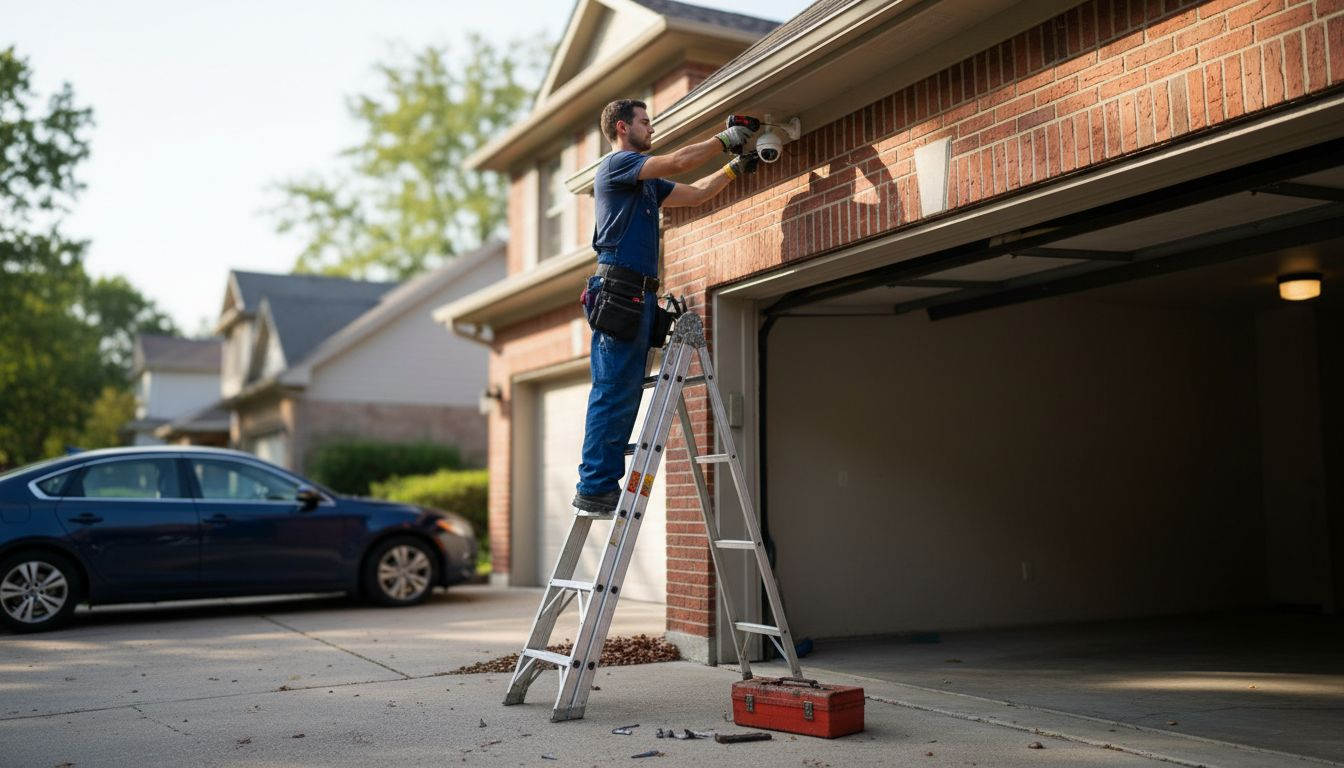
Wired cameras deliver consistent performance for large properties with accessible power sources. They eliminate battery changes and wireless interference but require professional installation. Businesses with existing infrastructure often find wired systems more cost effective long term.
Wireless IP cameras offer flexible placement and reduce maintenance costs by about 15% compared to wired alternatives. You can reposition them as needs change without running new cables. Small businesses and homes with limited attic or wall access benefit most from wireless flexibility.
AI motion detection represents the biggest advancement in reducing false alarms. AI-powered cameras reduce false alarms by 50% by distinguishing people and vehicles from trees, animals, and weather. This technology prevents alert fatigue and ensures you respond to genuine threats.
Installation and costs vary dramatically by camera type. Wireless systems start around $150 per camera with DIY installation, while professional wired installations run $300 to $800 per camera including labor. Factor in ongoing cloud storage fees ranging from $5 to $30 monthly per camera.
Best camera applications match features to situations. Wireless cameras excel in retail environments needing frequent layout changes. Wired systems suit warehouses and parking lots requiring 24/7 recording without battery concerns.
Pro Tip: Install cameras at entry points first, then expand to cover high-value areas. This staged approach spreads costs while establishing baseline protection quickly.
Key camera selection factors include:
- Resolution of at least 1080p for facial recognition
- Night vision range matching your property dimensions
- Weather resistance rated IP65 or higher for outdoor use
- Local storage backup if internet connectivity is unreliable
- Integration with existing alarm systems
Explore detailed surveillance camera cost guides to understand total ownership expenses. Learn strategic camera setup strategies for optimal coverage without blind spots.
Alarm systems: types, effectiveness, and recommendations
Alarms detect breaches cameras might miss and trigger immediate response. The monitoring type you choose directly impacts protection effectiveness and costs.
Monitored alarm systems detect unauthorized entries at a 99% success rate compared to 85% for unmonitored options. Professional monitoring centers verify alerts and dispatch authorities within minutes. This rapid response often stops crimes in progress.
Video verification integration takes monitoring further by reducing false dispatch by 60%. When an alarm triggers, operators view live camera feeds to confirm the threat before calling police. This prevents costly false alarm fees and maintains good relationships with local law enforcement.
Entry point sensors boost accuracy by detecting door and window breaches the moment they occur. Glass break sensors add another layer by identifying forced entry attempts. Combining multiple sensor types creates overlapping protection zones.
Alarm suitability depends on property characteristics. Small homes function well with self-monitored systems and smartphone alerts costing $10 to $25 monthly. Large commercial properties require professional monitoring at $40 to $100 monthly due to multiple zones and higher liability.
Total costs include equipment ($200 to $1,500), installation ($100 to $500 for professional setup), and ongoing monitoring. Calculate three-year total ownership costs to compare options fairly.
Effective alarm system components:
- Door and window contacts on all entry points
- Motion detectors covering main pathways
- Glass break sensors for ground floor windows
- Environmental sensors for fire, flood, and carbon monoxide
- Backup cellular communication if internet fails
- Battery backup maintaining 24-hour operation during outages
Review comprehensive alarm system installation guides covering DIY and professional approaches. Understanding proper placement prevents coverage gaps that criminals exploit.
Safes: fire and burglary resistance, costs, and benefits
Safes protect irreplaceable documents, cash, jewelry, and electronics from theft and disaster. Proper selection requires matching protection ratings to your specific threats.
Fire resistance ratings indicate how long contents survive extreme heat. Fire resistance ratings reduce loss risk by 40% for critical documents and media. A one hour rating protects paper documents, while two hour ratings safeguard digital media and hard drives.
Dual-certified safes combine fire and burglary protection through reinforced construction and advanced locking mechanisms. Dual-certified safes cost 25% more but reduce insurance premiums by 15%, often recovering the price difference within five years. They’re essential for businesses storing client data or high-value inventory.
Safe installation impacts both security and accessibility. Floor-mounted safes resist removal attempts, while wall safes offer concealment. Improper installation negates even the best safe’s protection by allowing thieves to remove the entire unit.
Cost variations reflect protection levels. Entry-level fire safes start at $150, burglary-resistant models run $500 to $2,000, and dual-certified safes range from $1,500 to $5,000. Commercial safes with TL-15 or TL-30 ratings (resisting 15 or 30 minutes of torch attacks) cost $3,000 to $15,000.
Insurance benefits extend beyond premium reductions. Many insurers require documented safe storage for coverage of jewelry, cash, and collectibles exceeding policy limits. Proper documentation can increase coverage limits without additional premiums.
Critical safe selection factors:
- Fire rating matching your most valuable items
- Burglary rating appropriate for your threat level
- Size accommodating growth without immediate replacement
- Lock type balancing security and access speed
- Installation location accessible yet secure
Explore burglary-resistant safes for urban homes and fireproof safe selection guides for detailed comparisons.
Integration and scalability: future-proofing your security setup
Individual components provide value, but integrated systems multiply effectiveness through coordinated response and centralized management.
Integrated systems deliver 30% improved protection effectiveness by linking cameras, alarms, and access controls. When a door sensor triggers, cameras automatically record the area while sending alerts. This coordinated response captures evidence and enables faster intervention.
Remote access via smartphone apps transformed security management. You can arm systems, view live feeds, unlock doors for deliveries, and verify alarms from anywhere. User satisfaction increases dramatically when security adapts to your schedule rather than dictating it.
Scalability allows adding cameras, sensors, or access points without replacing your base system. Growing businesses save thousands by expanding incrementally. Systems designed for 100+ devices prevent the costly rip-and-replace cycle plaguing poorly planned installations.
Wireless versus wired infrastructure presents tradeoffs. Wireless systems offer unmatched flexibility for changing spaces but require battery management and face potential interference. Wired systems provide rock-solid reliability but limit future modifications without significant labor.
Upgrade cost reduction through scalability can cut expenses by up to three times compared to replacing entire systems. A $5,000 system expandable to 50 cameras costs far less than a $3,000 system requiring complete replacement at 20 cameras.
Pro Tip: Choose systems supporting both wireless and wired devices. This hybrid approach uses wired connections where practical while maintaining wireless flexibility for difficult locations.
Essential integration features include:
- Single app controlling all security components
- Automated responses linking sensors to cameras and alarms
- Cloud backup ensuring footage survives local damage
- User permission levels restricting access appropriately
- Activity logs tracking who accessed what and when
Discover smart home security benefits including insurance savings and enhanced control. Integration transforms disconnected devices into cohesive protection.
Summary comparison of security system must-haves
This table consolidates technical specifications, costs, and effectiveness metrics to simplify your decision process.
| Component | Key Features | Effectiveness | Typical Cost | Best Use Case |
|---|---|---|---|---|
| Wireless IP Cameras | AI motion detection, flexible placement, 15% lower maintenance | 50% fewer false alarms with AI | $150-$400 per camera plus $5-$30/month storage | Small properties, frequently changing layouts, DIY installation |
| Wired Cameras | Consistent power, no battery changes, stable connectivity | Reliable 24/7 recording without downtime | $300-$800 per camera installed | Large properties, permanent installations, professional monitoring |
| Monitored Alarms | 99% detection rate, professional verification, rapid dispatch | 60% fewer false dispatches with video integration | $40-$100/month plus $400-$1,500 equipment | High-value properties, commercial spaces, comprehensive protection |
| Unmonitored Alarms | Self-monitoring via smartphone, no monthly fees | 85% detection rate, user-dependent response | $200-$800 equipment, $0-$25/month app fees | Budget-conscious homeowners, low-crime areas, supplementary protection |
| Fire-Resistant Safes | 1-2 hour protection, document and media ratings | 40% loss risk reduction for critical items | $150-$1,000 | Protecting irreplaceable documents, digital media, small valuables |
| Dual-Certified Safes | Fire and burglary protection, insurance benefits | Combined threat protection, 15% insurance premium reduction | $1,500-$5,000 | High-value assets, business records, jewelry and cash storage |
| Integrated Systems | Centralized control, automated responses, remote access | 30% improved overall effectiveness | $1,000-$10,000 initial, varies by components | Properties requiring comprehensive protection, businesses, tech-savvy users |
Situational recommendations: matching systems to needs
Apply these scenario-based guidelines to translate technical knowledge into personalized security solutions.
-
Small residential properties: Wireless IP cameras with AI motion detection paired with self-monitored alarms provide solid protection at $500 to $1,500 total investment. Add a fire-resistant safe for documents and backup drives. This setup installs in one day without professional help.
-
Large commercial properties: Wired camera networks with professional monitoring and video verification deliver enterprise-grade security. Budget $5,000 to $25,000 for comprehensive coverage including access control integration. Monthly monitoring costs $75 to $200 but prevent losses far exceeding these expenses.
-
High-value homes: Dual-certified safes combined with monitored alarm systems and integrated cameras protect irreplaceable assets. Expect $3,000 to $8,000 for equipment plus $60 to $100 monthly monitoring. Insurance premium reductions typically offset monitoring costs within two years.
-
Growing businesses: Scalable systems supporting 50+ devices prevent costly replacements during expansion. Start with core protection at $2,000 to $5,000, then add cameras and sensors as you grow. Cloud-based management simplifies multi-location security.
-
Budget-conscious buyers: Entry-level wireless cameras ($150 each), self-monitored alarms ($300), and basic fire safes ($200) create layered security under $1,000. While not as robust as premium systems, this approach significantly reduces risk compared to no protection.
-
Rental properties: Portable wireless systems you can take when moving avoid losing your investment. Focus on battery-powered cameras and self-monitored alarms requiring no permanent installation. Total cost stays under $800 with full portability.
Explore physical security for small and medium enterprises and how cameras deter burglary for implementation strategies.
Explore top security products and expert guidance
Now that you understand must-have components and selection criteria, explore professional-grade solutions designed for reliable, long-term protection. Safes and Security Direct offers curated security products combining proven technology with scalable design.
Our range includes wireless and wired surveillance cameras with AI capabilities, monitored and self-monitored alarm systems, and fire and burglary resistant safes protecting assets from multiple threats. Each product undergoes rigorous testing to ensure integration compatibility and real-world effectiveness.
Browse top home security products featuring the latest technology at competitive prices. Access security system maintenance tips keeping your investment performing optimally for years. Visit Safes and Security Direct to build your customized security solution with expert support every step of the way.
Frequently asked questions
What are the must-have components for a reliable home security system?
A reliable system combines integrated surveillance cameras with AI motion detection, monitored alarm systems featuring video verification, and dual-certified safes protecting valuables from fire and burglary. Integration between components improves effectiveness by 30% compared to standalone devices. Professional installation ensures proper coverage and scalability for future expansion.
How do wireless cameras compare to wired cameras in terms of reliability and cost?
Wireless IP cameras reduce installation and maintenance costs by approximately 15% while offering flexible placement ideal for changing layouts or rental properties. Wired cameras provide more consistent power for 24/7 recording without battery management. Both deliver reliable performance when properly installed, with choice depending on your property characteristics and installation preferences.
What advantages do monitored alarm systems offer over unmonitored ones?
Monitored alarms achieve a 99% detection rate compared to 85% for unmonitored systems through professional verification and rapid emergency dispatch. Integration with video verification reduces false dispatches by 60%, preventing costly fees and maintaining positive law enforcement relationships. Monthly monitoring fees of $40 to $100 provide round-the-clock protection even when you’re unavailable to respond.
Why should I consider safes with dual fire and burglary certification?
Dual-certified safes reduce fire loss risk by 40% while providing enhanced burglary protection through reinforced construction and advanced locking mechanisms. Though they cost approximately 25% more than single-purpose safes, they reduce insurance premiums by 15%, recovering the price difference within five years. They’re essential for protecting high-value assets, business records, and irreplaceable items in homes and commercial properties.
Recommended
- Why Upgrade Security Systems: Essential 2026 Impact – Safes and Security Direct
- How to Maintain Security Systems for Reliable Protection – Safes and Security Direct
- Business Security Needs: Protecting Assets in 2026 – Safes and Security Direct
- 7 Top Security Features Every Property Owner Should Know – Safes and Security Direct