

Business Security Needs: Protecting Assets in 2026
Protecting your business is no longer a simple checklist. Owners in retail and service industries face daily threats to both physical and digital assets. The Global Cybersecurity Outlook 2026 warns that cybersecurity must be a foundational part of every business strategy, as new risks driven by AI and complex supply chains impact organizations worldwide. This guide shares the practical solutions and expert tips you need to build a security approach that safeguards your property and supports your long-term growth.
Table of Contents
- Defining Business Security Needs Today
- Core Security Solutions for SMBs
- Emerging Threats and Advanced Protections
- Compliance, Insurance, and Legal Requirements
- Practical Steps for Reducing Security Risks
Key Takeaways
| Point | Details |
|---|---|
| Importance of Proactive Security | Businesses must adopt a proactive approach to security, integrating both physical and digital protection strategies to ensure organizational resilience. |
| Strategic Investment in SMBs | Small and medium-sized businesses should prioritize strategic investments in comprehensive security solutions and continuous employee training. |
| Emerging Threat Awareness | Organizations need to anticipate and prepare for evolving threats, including AI-driven attacks and supply chain vulnerabilities, by adopting adaptive security architectures. |
| Compliance as a Strategic Necessity | Legal compliance must be viewed as a core aspect of business strategy, requiring robust documentation, regular audits, and close collaboration with legal and insurance experts. |
Defining Business Security Needs Today
Business security in 2026 has transformed from a simple protective measure into a complex strategic imperative. As technological landscapes evolve rapidly, organizations must develop comprehensive security approaches that protect both digital and physical assets. The Global Cybersecurity Outlook 2026 underscores the critical nature of proactive security planning in an increasingly interconnected world.
Modern business security needs encompass multiple critical dimensions:
- Physical Infrastructure Protection: Safeguarding physical locations, equipment, and tangible assets
- Digital Asset Security: Protecting electronic data, networks, and technology systems
- Personnel Security: Ensuring employee safety and preventing internal security breaches
- Technological Risk Management: Identifying and mitigating emerging technological vulnerabilities
Businesses today must recognize that security is no longer optional but fundamental to organizational sustainability. The cybersecurity landscape demands continuous adaptation, with threats becoming more sophisticated and unpredictable. Small to medium enterprises are particularly vulnerable, requiring strategic investments in robust security frameworks that can dynamically respond to evolving risks.
Security is not a destination, but an ongoing journey of vigilance and strategic adaptation.
Risk Assessment becomes paramount in defining security needs. Organizations must conduct comprehensive evaluations that identify potential vulnerabilities across technological, human, and infrastructural domains. This involves mapping potential threat vectors, understanding organizational weak points, and developing tailored mitigation strategies.
Here’s a summary of how different security domains impact organizational resilience:
| Security Domain | Business Impact | Priority Level |
|---|---|---|
| Physical Infrastructure | Prevents asset loss and disruption | High |
| Digital Asset Security | Protects sensitive information | Critical |
| Personnel Security | Reduces internal threats | Important |
| Technological Risk Management | Minimizes new vulnerability exposure | Essential |
Pro tip: Conduct a quarterly security audit that examines both technological systems and human protocols to stay ahead of emerging threats.
Core Security Solutions for SMBs
Small and medium-sized businesses (SMBs) face increasingly complex security challenges that demand comprehensive, strategic approaches. Cybersecurity best practices have evolved to provide targeted solutions that address the unique vulnerabilities of smaller organizations with limited resources and technical infrastructure.
Key core security solutions for SMBs include:
- Network Protection: Implementing robust firewalls and secure private networks
- Data Encryption: Securing sensitive information across digital platforms
- Access Control: Establishing strict user authentication and permission protocols
- Endpoint Security: Protecting individual devices connected to organizational systems
- Threat Detection: Using advanced monitoring tools to identify potential security breaches
Modern SMBs must adopt a multi-layered security strategy that combines technological solutions with human-centric approaches. This means not just investing in sophisticated software, but also developing a comprehensive security culture that empowers employees to recognize and respond to potential threats.
Effective security is not about building walls, but creating intelligent, adaptive defense mechanisms.
Implementing these solutions requires a strategic approach that balances cost-effectiveness with comprehensive protection. Small businesses can leverage cloud-based security services, which offer enterprise-grade protection without requiring extensive in-house technical infrastructure. Regular security assessments, continuous employee training, and staying updated on emerging technological threats are crucial components of a robust security framework.
Pro tip: Develop a quarterly security review process that evaluates both technological systems and human protocols to maintain an adaptive and responsive security posture.
Emerging Threats and Advanced Protections
The cybersecurity landscape of 2026 has become increasingly complex, with threat actors leveraging sophisticated technologies to exploit organizational vulnerabilities. Global cybersecurity outlook reports highlight the unprecedented sophistication of emerging cyber threats that challenge traditional security paradigms.
Key emerging threats businesses must anticipate include:
- AI-Powered Cyber Attacks: Machine learning algorithms generating advanced social engineering tactics
- Supply Chain Vulnerabilities: Sophisticated infiltration methods targeting interconnected business networks
- Quantum Computing Risks: Potential breaches of existing cryptographic protection systems
- Geopolitical Cyber Warfare: State-sponsored digital attack strategies targeting economic infrastructure
- Advanced Fraud Schemes: Increasingly complex financial manipulation techniques
Modern businesses require adaptive security architectures that can rapidly respond to dynamic threat landscapes. This means moving beyond traditional defensive strategies and implementing intelligent, predictive security systems that can anticipate and neutralize potential risks before they manifest.
Cybersecurity is no longer about prevention, but continuous adaptation and resilience.
Advanced protections now demand a holistic approach that integrates technological solutions with human intelligence. Organizations must invest in continuous employee training, implement zero-trust security models, and develop robust incident response protocols that can quickly mitigate potential breaches.

Compare emerging cyber threats with advanced protections businesses should adopt:
| Threat Type | Advanced Protection Tactic | Example Benefit |
|---|---|---|
| AI-Powered Attacks | Machine learning based threat detection | Rapid anomaly response |
| Supply Chain Vulnerabilities | Zero-trust security model | Blocks lateral movement |
| Quantum Computing Risks | Post-quantum encryption algorithms | Maintains data integrity |
| Geopolitical Cyber Warfare | Incident response automation | Shortens recovery time |
Pro tip: Implement a monthly threat intelligence briefing that reviews emerging cyber risks and updates organizational defense strategies accordingly.
Compliance, Insurance, and Legal Requirements
Navigating the complex landscape of business security requires a comprehensive understanding of international security standards, which have become increasingly critical for organizational risk management. The evolving regulatory environment demands that businesses not only protect their assets but also demonstrate systematic approaches to security and compliance.
Key compliance and legal considerations for businesses include:
- Information Security Management: Implementing internationally recognized security frameworks
- Data Protection Regulations: Ensuring compliance with regional and global privacy laws
- Cybersecurity Insurance: Developing robust coverage strategies for digital and physical risks
- Risk Management Protocols: Creating comprehensive documentation of security measures
- Incident Response Legal Requirements: Establishing clear reporting and mitigation procedures
Businesses must recognize that legal compliance is no longer a optional checkbox but a fundamental aspect of organizational strategy. This involves developing comprehensive security frameworks that not only meet current regulatory requirements but also anticipate future legal and technological challenges.
Compliance is not about avoiding penalties, but about creating a culture of proactive risk management.
The intersection of insurance, legal requirements, and security has become increasingly complex. Organizations must invest in robust documentation, regular security audits, and comprehensive insurance coverage that addresses both traditional and emerging risk vectors. This means working closely with legal experts, insurance providers, and security professionals to develop holistic protection strategies.
Pro tip: Conduct an annual comprehensive review of your security compliance, involving legal, IT, and insurance professionals to ensure complete coverage and alignment with current regulations.
Practical Steps for Reducing Security Risks
Reducing security risks requires a strategic and comprehensive approach that goes beyond traditional defensive measures. Cybersecurity best practices provide organizations with actionable frameworks for systematically minimizing potential vulnerabilities and protecting critical assets.
Practical steps for comprehensive security risk reduction include:
- Asset Inventory Management: Maintaining detailed records of all technological and physical resources
- Continuous Vulnerability Assessment: Regular scanning and identification of potential security weaknesses
- Access Control Optimization: Implementing strict authentication and permission protocols
- Employee Security Training: Developing comprehensive awareness programs
- Incident Response Planning: Creating robust protocols for rapid threat mitigation
Businesses must adopt a proactive security mindset that anticipates potential risks rather than simply reacting to them. This involves developing adaptive security strategies that can quickly evolve in response to emerging technological and human-centric threats.
Security is not a destination, but an ongoing journey of continuous improvement and vigilance.
Successful risk reduction requires a multifaceted approach that integrates technological solutions, human expertise, and strategic planning. Organizations must invest in advanced monitoring tools, regular security audits, and comprehensive training programs that empower employees to become active participants in the security ecosystem.
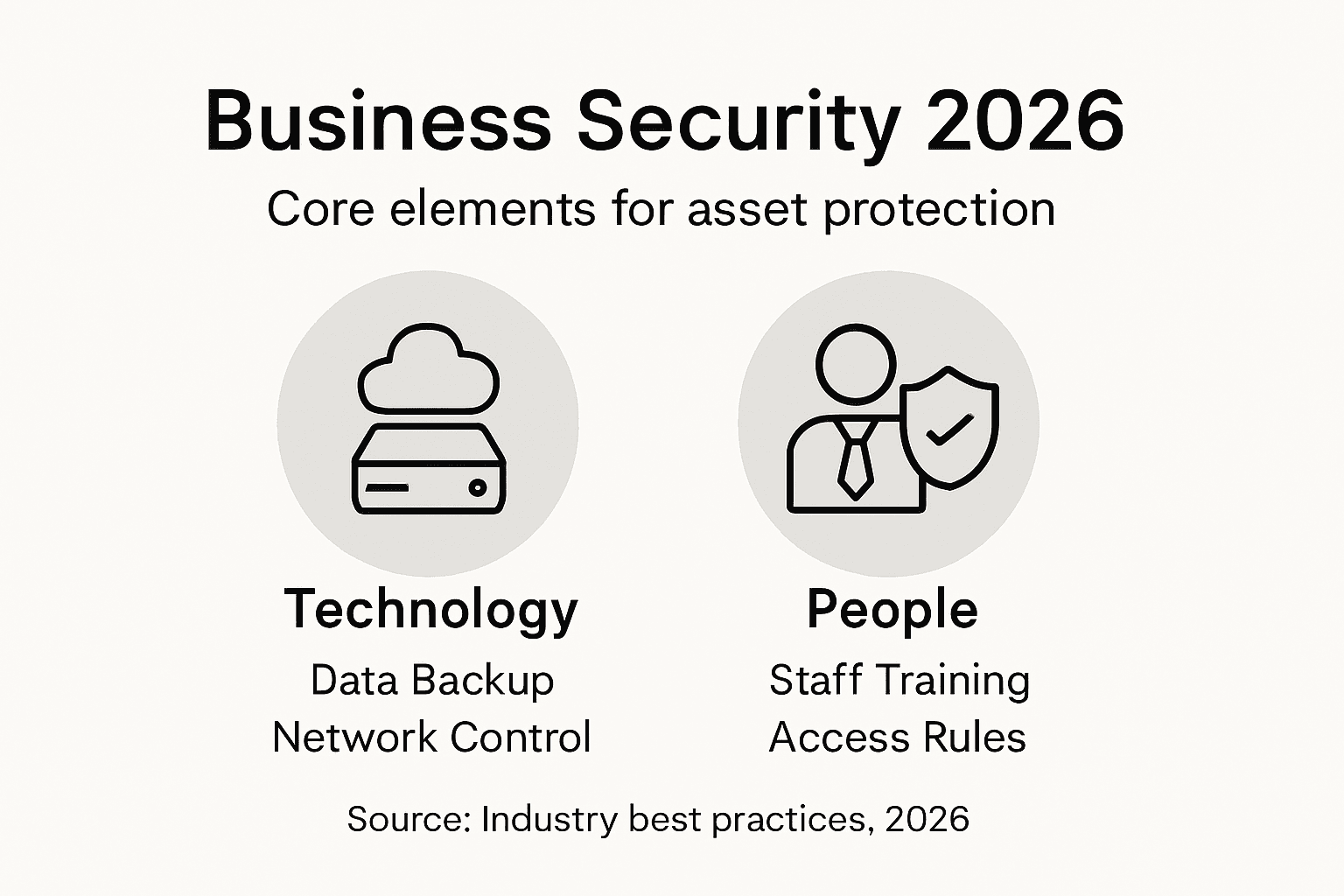
Pro tip: Develop a quarterly security risk assessment process that combines technological scanning with human intelligence to identify and mitigate potential vulnerabilities.
Strengthen Your Business Security for 2026 and Beyond
Businesses today face evolving challenges in protecting their physical and digital assets. The article highlights critical needs like physical infrastructure protection, advanced surveillance, and proactive risk management to stay ahead of emerging threats. If you are looking to build a resilient security framework that addresses these pain points, it starts with reliable, professional-grade equipment.
Explore our wide range of high-quality products at Safes and Security Direct including advanced surveillance cameras, secure safes, and robust security systems designed specifically to safeguard your business assets against theft, fire, and other risks. Investing in proven, adaptive defense solutions can help you implement the multi-layered protection recommended in the article and reduce vulnerability exposure effectively.
Take control of your security strategy now and prevent costly disruptions. Discover our security systems and upgrade your protection with cutting-edge technology. Don’t wait for threats to materialize. Visit Safes and Security Direct today and secure your business future.
Frequently Asked Questions
What are the key dimensions of business security that organizations should focus on in 2026?
Modern business security involves protecting physical infrastructure, securing digital assets, ensuring personnel safety, and managing technological risks.
How can small and medium-sized businesses develop effective security strategies?
SMBs should adopt a multi-layered security strategy that includes network protection, data encryption, access control, endpoint security, and threat detection while fostering a security culture among employees.
What emerging threats should businesses prepare for in the current cybersecurity landscape?
Businesses must anticipate AI-powered cyber attacks, supply chain vulnerabilities, risks from quantum computing, geopolitical cyber warfare, and advanced fraud schemes.
How important is compliance in shaping an organization’s security framework?
Compliance with information security management standards and data protection regulations is essential for creating a proactive risk management culture and avoiding legal penalties.
Recommended
- Why Secure Commercial Assets: Protecting Profit and Growth – Safes and Security Direct
- Asset Protection Workflow Guide for Maximum Security – Safes and Security Direct
- Physical Security for SMEs: Protecting Assets and Growth – Safes and Security Direct
- Role of Security Standards in Asset Protection – Safes and Security Direct