

Physical Security for SMEs: Protecting Assets and Growth
Locking doors and hoping for the best is not enough when protecting your business from real threats. Small and medium-sized business owners worldwide face risks including theft, vandalism, and unauthorized access, with limited resources making every security decision matter more. By focusing on a clear definition of physical security and adopting a layered protection approach, you can better safeguard your people, property, and operations against losses that disrupt growth.
Table of Contents
- Defining Physical Security For SMEs
- Key Systems And Technologies Explained
- Major Threats Facing Small Businesses Today
- Integrating Physical And Cybersecurity
- Compliance, Costs, And Common Pitfalls
Key Takeaways
| Point | Details |
|---|---|
| Understand Vulnerabilities | SMEs must identify their unique risks and tailor security measures accordingly to effectively protect their assets. |
| Integrate Security Systems | Combining physical security with cybersecurity enhances overall protection, allowing defenses to work in concert against threats. |
| Focus on Training | Employee awareness and training are crucial; staff should understand their role in maintaining security protocols. |
| Conduct Regular Assessments | Regular evaluations of security measures ensure they are effective and align with the evolving threat landscape for the business. |
Defining Physical Security for SMEs
Physical security for small and medium-sized enterprises isn’t about hiring guards or installing expensive surveillance everywhere. It’s a deliberate, organized approach to protecting your business assets, employees, and operations from tangible threats like theft, vandalism, and unauthorized access. For SMEs, physical security means understanding what you have that needs protection, who might want to take it, and what realistic measures will actually work within your budget and operational reality.
The scope of physical security for SMEs covers multiple layers. Your building’s perimeter—doors, windows, fences—forms the first line of defense. Next comes your interior controls: who can access specific areas, how you monitor movement through your facility, and what happens if someone tries to enter unauthorized spaces. Then there’s your inventory and valuables protection, which includes safes, locked cabinets, and secured storage areas. Employee access management matters too. Knowing who’s in your building at any given time, having clear protocols for entry and exit, and training staff on security awareness create a human layer of protection. Physical security culture integrated within your organization’s operations proves more effective than isolated security measures, particularly when facing threats that exploit gaps in your existing systems.
What distinguishes effective physical security from mere security theater is that it addresses your actual vulnerabilities. An SME warehouse doesn’t need the same approach as a retail storefront, which differs from an office environment. Your security strategy should reflect what you’re protecting, your facility’s layout, your staff size, and your operational patterns. This is where layered protection approaches become essential—combining multiple security methods so if one fails, others remain in place. For example, a locked door alone doesn’t stop determined thieves, but a locked door plus security cameras plus alarm sensors plus employee awareness creates meaningful resistance to theft attempts.
The financial reality matters here. Most SMEs operate with limited budgets, so physical security must deliver real protection without draining resources needed for core operations. This is why prioritizing threats makes sense. Identify what losses would hurt your business most—whether that’s cash, equipment, inventory, or intellectual property—then build your security measures around those priorities. A small manufacturing business might focus on securing raw materials and finished goods. A consulting firm might prioritize protecting client documents and computer equipment. A retail operation needs to prevent both external theft and internal inventory shrinkage. Your security definition starts with understanding your unique risk profile.
Pro tip: Start your physical security planning by listing your three most valuable or vulnerable assets, then walk through your facility asking yourself “How would someone steal or damage this?” This simple exercise immediately reveals your actual security gaps rather than problems you assume exist.
Key Systems and Technologies Explained
Physical security for SMEs boils down to three core technology categories: access control, surveillance, and alarm systems. These work together to create a complete defense strategy rather than standing alone as isolated measures. Understanding how each component functions helps you make smarter decisions about what your business actually needs versus what sounds impressive in a sales pitch.
Access control systems manage who enters your facility and when. The simplest version is a keyed lock on the front door. More sophisticated setups include keypad entry codes, magnetic card readers, or biometric scanners that only grant access to authorized personnel. For SMEs, electronic access control offers real advantages: you can instantly revoke someone’s access without changing physical locks, you get logs showing who entered when, and you can restrict certain areas to specific employees. A manufacturing plant might grant warehouse staff access to inventory areas but not the executive offices. A medical office might allow reception staff into waiting areas but not patient records storage. The beauty of modern access control is that it adapts to your actual business structure.
Video surveillance cameras provide both deterrence and evidence. Visible cameras discourage casual theft because potential thieves know they’re being recorded. If something does get stolen, footage becomes your proof for insurance claims or law enforcement. SMEs benefit from hybrid security models that combine traditional cameras with intelligent software. Modern systems can detect unusual movement patterns, send alerts when someone lingers in restricted areas, or even recognize faces. You don’t need cameras everywhere. Strategic placement matters more. Cover entry points, valuable inventory areas, cash registers, and any space where theft or vandalism poses real risk. Many SMEs start with just a few quality cameras rather than dozens of cheap ones that produce unclear footage.
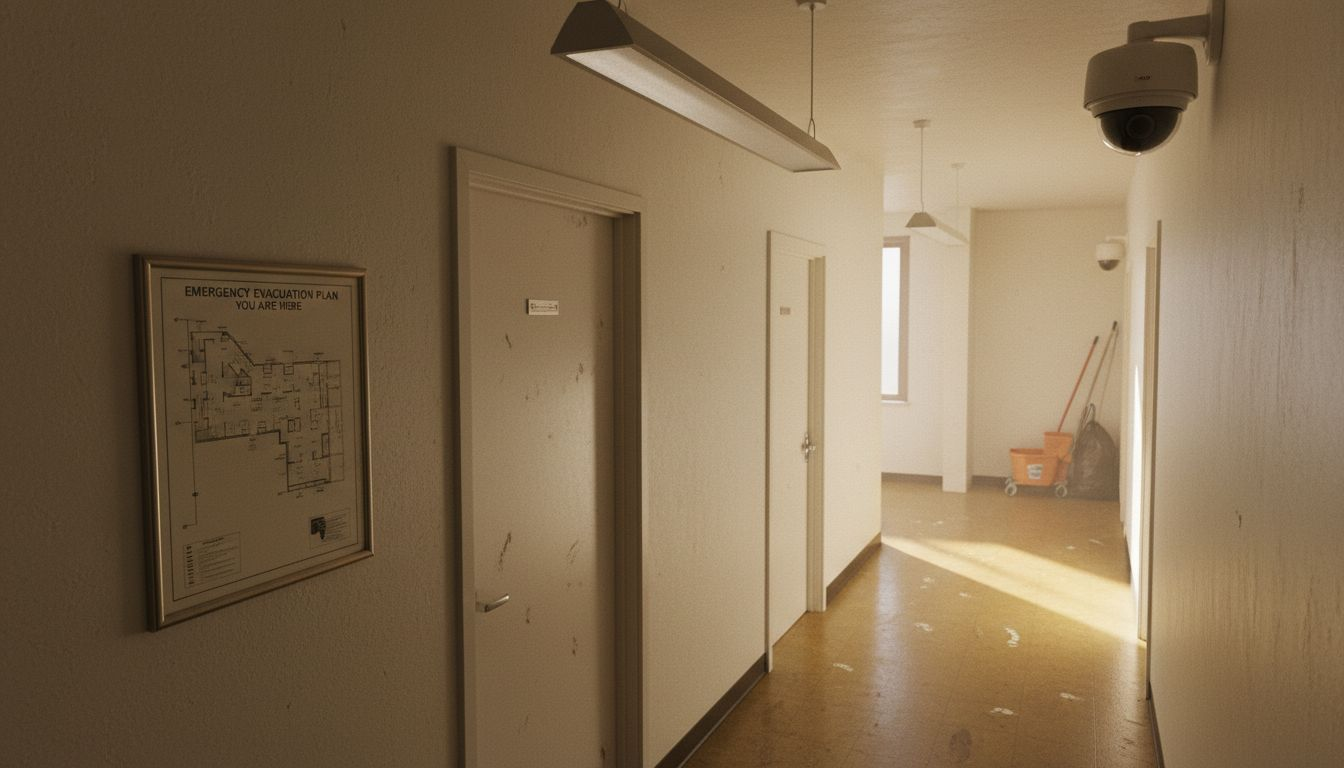
Alarm systems create consequences for intrusion attempts. When someone tries to force a door or break a window, sensors trigger an alarm that either sounds loudly or alerts a monitoring service. That audible alarm often stops a theft in progress because the thief wants no attention. A monitored alarm sends a signal to a professional company that can dispatch police. For SMEs, the decision comes down to whether you want local alarms that sound loud and hope neighbors call police, or monitored alarms that guarantee professional response. Monitored systems cost more monthly but provide real accountability.
Beyond these core three, safes and secure storage deserve specific attention for SMEs. A quality safe protects cash, important documents, backup drives, and other high-value items that fit inside. Unlike general security measures protecting your whole facility, a safe is your last line of defense for your most critical assets. The key word is quality. A cheap safe from a box store gets opened by determined thieves in minutes. Professional-grade safes resist drilling, prying, and torch attacks for hours. For SMEs storing significant cash, valuable merchandise, or irreplaceable documents, investing in a role of security systems that includes proper safes protects what matters most.
The technology landscape evolving toward smarter, more integrated systems. AI-powered cameras learn your normal operations and flag genuinely suspicious behavior rather than triggering false alarms when a regular employee moves through their usual area. IoT connectivity means your access control, cameras, and alarms share information so if a door forced open while the building is empty, your system immediately alerts you. These innovations make security more reliable and less burdensome on your staff.
Below is a summary of key physical security systems, their main functions, and SME business impact:
| System Type | Main Function | Example Business Impact |
|---|---|---|
| Access Control | Manage entry permissions | Limits access to sensitive areas |
| Surveillance | Monitor and record events | Deters theft, supports insurance |
| Alarms | Alert on unauthorized entry | Reduces break-ins, faster response |
| Safes/Storage | Secure valuables/documents | Protects cash and critical files |
| Integration | Combine cyber & physical | Fewer gaps, better overall defense |
Pro tip: Start with access control and surveillance before investing heavily in other systems, since these two categories address most SME theft risks and provide the data you need to identify where additional security measures will deliver the most value.
Major Threats Facing Small Businesses Today
Small businesses operate under the mistaken assumption that criminals focus on large corporations. Reality tells a different story. SMEs are actually preferred targets because they typically have fewer defenses, less sophisticated security infrastructure, and leaner staff who wear multiple hats. A criminal organization can hit dozens of small businesses more easily than attempting to breach one Fortune 500 company’s fortress. Understanding the actual threats your business faces allows you to prioritize your security investments where they matter most.
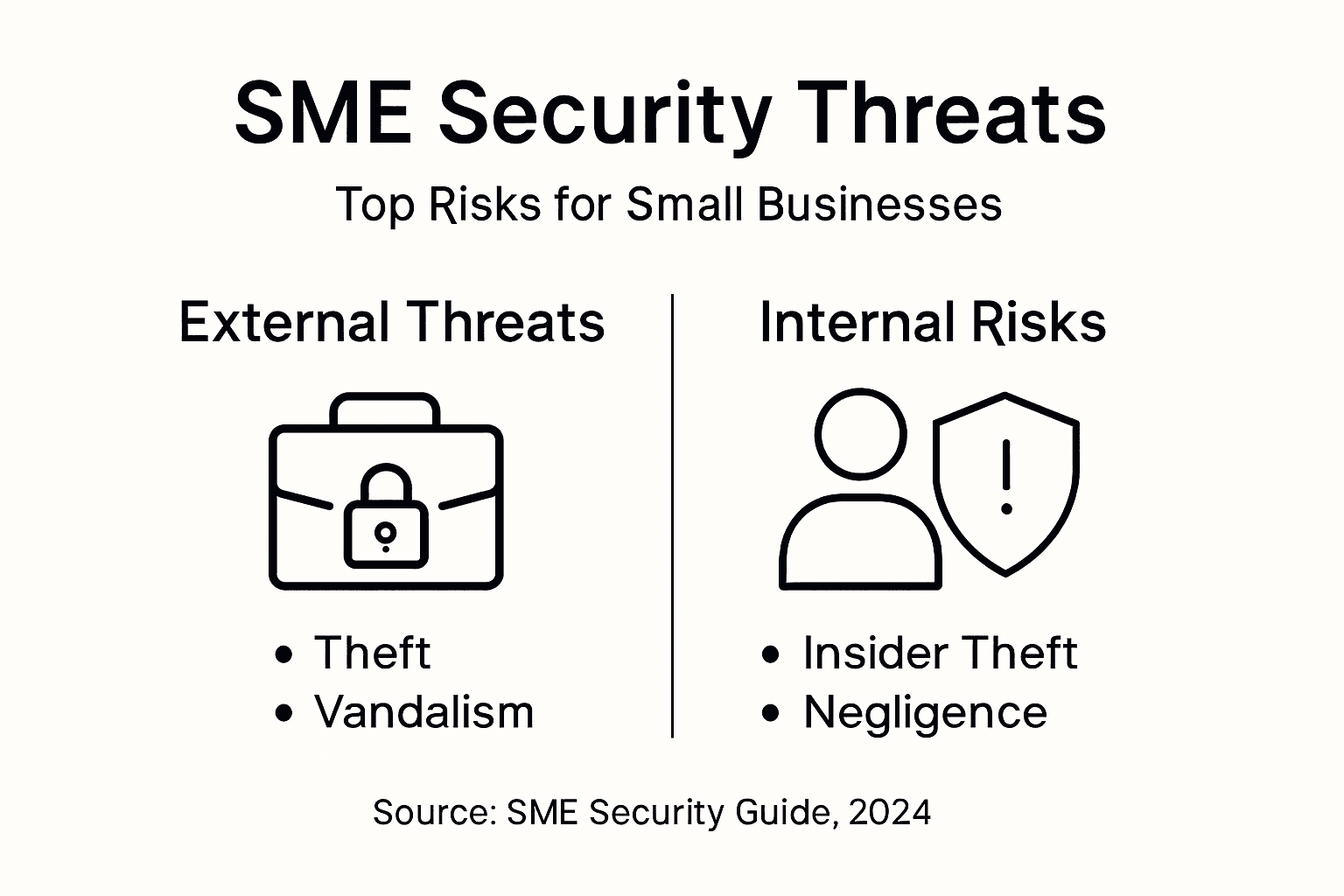
Theft remains the most obvious physical threat, but it takes multiple forms. External theft happens when outsiders break in to steal merchandise, equipment, or cash. This might be smash-and-grab robberies hitting retail stores, warehouse burglaries targeting high-value inventory, or office break-ins targeting computers and electronics. Internal theft cuts deeper because it involves your own employees or trusted contractors. They know your routines, your security gaps, where valuable items sit, and when cameras aren’t watching. A dishonest employee might gradually steal inventory, pocket cash from the register, or even remove expensive equipment piece by piece. Then there’s organized retail theft, where criminal groups systematically target stores for resale merchandise. Vandalism compounds the problem, destroying property and equipment even when thieves don’t profit directly. Ransomware and data breaches show how digital and physical threats intertwine, as criminals increasingly demand payment before returning encrypted files or stolen information.
Insider threats deserve special attention because they’re often invisible until damage is done. An employee with access to sensitive areas can steal far more than an outside burglar. They understand your inventory systems, know which items move fastest, understand your physical security blind spots, and can time theft when witnesses aren’t present. Contractors, cleaning crews, and delivery personnel also present risk. These individuals have legitimate access to your facility but work without the supervision of regular employees. A dishonest cleaning contractor knows when your office is empty and unmonitored. A delivery driver might case your location to identify valuable inventory. Some threats come from employees with legitimate access who commit fraud rather than theft, manipulating records or misappropriating company assets without physically stealing anything.
Environmental and opportunistic threats round out the picture. Fire damage destroys inventory, equipment, and critical documents. Water damage from storms or plumbing failures ruins merchandise and creates costly operational disruption. Break-ins motivated purely by vandalism cost money to repair without yielding criminal profit. Squatters illegally occupy abandoned or unused spaces. Workplace violence, though less common, poses real danger to your staff. SMEs face all these threats simultaneously, which is why comprehensive physical security addressing multiple risk vectors works better than single-focused measures. A business protected only by alarm systems remains vulnerable to insider theft. One relying only on cameras but lacking access control can’t prevent determined break-ins. One storing valuables in unsecured areas loses everything to opportunistic theft.
Here’s how common SME security threats compare:
| Threat Type | Typical Source | Main Impact | Hardest to Detect |
|---|---|---|---|
| External Theft | Outsiders/Intruders | Inventory loss | No, usually visible |
| Internal Theft | Employees/Contractors | Cash, data, inventory | Yes, often unnoticed |
| Vandalism | Opportunists/Gangs | Property damage | Sometimes, after hours |
| Cyber-Physical Attack | Hackers, Insiders | System, data loss | Yes, can be hidden |
| Environmental Threat | Fire, Floods | Equipment loss | No, usually evident |
| Workplace Violence | Staff, Visitors | Injury, disruption | Yes, before event |
The vulnerability often stems from limited resources and awareness. Many SME owners haven’t conducted formal risk assessments identifying their actual exposure. They lack formal security protocols, haven’t trained staff on threat awareness, and haven’t invested in basic security infrastructure. This combination makes SMEs appear as low-effort, high-reward targets to criminals. The good news is that modest security improvements dramatically reduce your attractiveness compared to completely unprotected competitors. SMEs encounter diverse cyber and physical threats requiring comprehensive and scalable protective measures that grow with your business.
Pro tip: Conduct a simple threat inventory by asking your team “What could someone steal from us, damage, or access that would hurt the business?” This reveals your actual vulnerabilities better than generic security checklists designed for larger organizations.
Integrating Physical and Cybersecurity
Most SMEs treat physical security and cybersecurity as separate problems handled by different people using different budgets. This approach leaves dangerous gaps. A hacker who breaches your network can access security camera footage, disable alarm systems, or unlock electronic doors remotely. A burglar who steals a computer gains access to everything stored on its hard drive. An employee who photographs confidential documents with a smartphone circumvents expensive firewall protections. The threats work together, and your defenses must too. Physical and digital security are no longer distinct domains but interconnected systems protecting the same assets.
The connection works both directions. Poor physical security enables cyber attacks. If a hacker can physically access your server room, they don’t need to crack passwords from thousands of miles away. They simply plug in a device, copy your data, and leave. An unlocked office means a burglar can plant malware on computers or steal backup drives containing customer information. An unsecured network cabinet allows tampering with internet connections. Meanwhile, weak cybersecurity undermines physical security. Physical security and cybersecurity are deeply interconnected, with breaches in one domain directly compromising the other. A hacked security system becomes useless. Compromised access control software allows unauthorized entries. Infected surveillance cameras can be disabled or manipulated to hide criminal activity. An SME that invests in excellent cameras but ignores cybersecurity might as well have no cameras if hackers can remotely shut them down or loop false footage to cover theft.
Effective integration means treating your business as a unified system rather than isolated security functions. Your IT team and facilities manager need to communicate regularly, not work in silos. When you purchase new access control systems, they should integrate with your cybersecurity monitoring. When you upgrade network security, include plans for protecting physical infrastructure like servers and networking equipment. Create policies that address both domains. For instance, a policy requiring strong passwords for network accounts should also require those same employees to wear ID badges and maintain physical access logs. When training staff on security awareness, cover both cyber hygiene like avoiding phishing links and physical security like not propping open doors or leaving documents unattended. Integrated security policies and coordinated technology applications protect IT infrastructure while restricting unauthorized physical access and managing security events holistically.
Practical integration involves specific technology decisions. Choose access control systems that log events and can integrate with your network monitoring tools. Select security cameras with encrypted video transmission so hackers cannot intercept footage. Implement backup power systems that keep your security infrastructure running during power outages when cyber attacks or physical break-ins might occur. Store backup drives and critical documents in safes with restricted physical access and encrypted contents. Require multi-factor authentication for sensitive areas, combining something you know (a password), something you have (a key card), and potentially something you are (biometric data). This makes it harder for a single compromised credential to grant access.
The payoff extends beyond blocking specific attacks. Integrated security creates resilience. Your business continues operating even when one system fails because redundancy exists across physical and cyber domains. A compromised network camera doesn’t blind your security because you maintain backup recording. A disabled access control system doesn’t leave doors open because physical locks still function. Integrated defense forces attackers to overcome multiple obstacles across different domains simultaneously, dramatically increasing the effort required. For SMEs with limited budgets, this integration also improves efficiency. You avoid purchasing redundant monitoring equipment or hiring separate teams when one coordinated approach accomplishes both objectives. You identify gaps faster because security risks are evaluated holistically rather than separately.
Pro tip: When evaluating any new security technology, whether physical or digital, always ask how it connects to your other systems and what happens if that new system fails; this simple discipline prevents expensive isolated solutions that don’t work together.
Compliance, Costs, and Common Pitfalls
Physical security isn’t purely a business decision. Laws, regulations, and industry standards often dictate what you must do. The challenge for SMEs is navigating these requirements without bankrupting the company or getting so tangled in complexity that nothing gets implemented. Understanding the compliance landscape, budgeting realistically, and avoiding common mistakes separates businesses that actually get secure from those that struggle with half measures.
Compliance obligations vary dramatically by location, industry, and business type. A retail store handling credit card payments must comply with Payment Card Industry Data Security Standards, which includes physical security for payment processing areas. A healthcare provider storing patient records faces HIPAA requirements covering both data protection and physical access to medical information. A manufacturer in certain jurisdictions might need to comply with occupational safety regulations requiring secure storage of hazardous materials. Financial institutions face regulatory requirements for vault security and evidence preservation. Employment law in many countries mandates that employers provide a reasonably safe workplace, which includes protection from foreseeable theft or workplace violence. Data protection regulations like GDPR in Europe require securing personal information physically and digitally. The reality is that compliance practices vital for sustainable growth extend across multiple regulatory domains, and SMEs must understand their specific obligations rather than assuming generic security measures suffice.
The cost challenge cuts both ways. Implementing compliance costs money upfront through equipment, installation, and staff training. An inadequate security system costs far more through theft, data breaches, regulatory fines, and business disruption. Many SME owners make the mistake of seeing security as a cost center that produces no revenue rather than as an investment preventing losses. The math changes when you calculate what happens if you don’t invest. A small retail business losing just 3% of inventory to theft annually experiences significant impact. An office break-in that steals computers, destroys equipment, and requires costly repairs creates massive operational disruption. A data breach exposing customer information triggers regulatory fines, legal liability, and customer loss. A business without security investing resources in recovery after a disaster spends far more than preventive investment would have cost. Budget realistically by identifying your actual compliance requirements first, then determining the minimum investment needed to meet those requirements rather than guessing at generic security needs.
Common pitfalls tend to repeat across SMEs. The first is treating security as a one-time purchase rather than ongoing maintenance. You buy a camera system, install it, then forget it exists. The cameras need regular inspection, lenses cleaned, software updated, and footage reviewed. Access control systems need passwords changed periodically and unused accounts deleted. Alarms need testing to ensure they function properly. The second pitfall is implementing security so rigid that it disrupts normal operations, causing staff to circumvent it. A door lock so restrictive that employees prop it open defeats the purpose. Passwords so complex that staff write them on sticky notes compromise security. The third pitfall is focusing security dollars on visible measures while ignoring actual vulnerabilities. Installing impressive cameras in the front lobby while leaving the back storage area completely unmonitored addresses appearance rather than risk. The fourth pitfall involves purchasing incompatible systems that don’t work together, creating gaps and redundancy.
Another significant pitfall is poor employee training and awareness. You implement excellent physical security measures, but staff don’t understand why or how to use them properly. They fail to lock doors, lose access badges, or share passwords. Challenges like limited awareness and financial constraints hinder SME compliance efforts, highlighting the need for culturally and operationally tailored security solutions. Training should address the actual role each employee plays in security rather than generic lectures. A warehouse worker needs to understand inventory security and why they shouldn’t allow unauthorized people into secure areas. A receptionist needs to understand visitor protocols. Everyone needs to know what to do if they notice suspicious activity. The fifth pitfall is neglecting to document your security measures and policies. If an incident occurs, you need proof that you took reasonable precautions. If a regulatory audit happens, you need evidence of compliance. Written security policies, access logs, camera footage archives, and incident reports create that documentation.
Cost management for SMEs requires prioritization. Start by identifying your most valuable assets and actual vulnerabilities specific to your business and location. Invest in securing those first. Spread investment over time rather than attempting everything at once. A phased approach starting with basic access control and surveillance before adding advanced features allows you to see what works and adjust before spending on unnecessary additions. Look for efficiency gains through integration rather than buying separate systems. Share monitoring responsibilities across your team rather than hiring dedicated security staff if your operation is small enough. Review your security measures periodically, asking whether they’re actually preventing problems or just creating hassle. Adjust based on what you learn rather than holding onto measures that don’t deliver value.
Pro tip: Contact your industry association or local small business development center to learn specific compliance requirements for your business type and location before you spend money on generic security measures that might not address your actual legal obligations.
Strengthen Your SME’s Physical Security with Trusted Solutions
Protecting your small or medium-sized business is about addressing real vulnerabilities with reliable, professional-grade equipment that fits your unique needs. Whether you face risks from theft, insider threats, or property damage, Safes and Security Direct offers a broad range of security products designed to help you build a strong defense. From advanced surveillance cameras that deter and record criminals to high-quality safes protecting your most valuable assets, our solutions integrate seamlessly into your security strategy.
Take control of your security now by choosing durable and efficient products tailored for SMEs. Visit Safes and Security Direct to explore our selection of access control systems, alarm systems, and secure storage options. Don’t wait for an incident to expose your vulnerabilities. Act today to secure your business and safeguard your growth.
Frequently Asked Questions
What is the importance of physical security for SMEs?
Physical security for SMEs is essential to protect business assets, employees, and operations from risks like theft, vandalism, and unauthorized access. It involves a systematic approach to understanding vulnerabilities and implementing effective measures within budget constraints.
How can SMEs prioritize their physical security measures?
SMEs should start by identifying their most valuable or vulnerable assets and assessing potential risks. Then, implement security measures that focus on those priorities, considering factors like facility layout, staff size, and operational patterns.
What types of access control systems are effective for small businesses?
Effective access control systems range from basic keyed locks to more advanced electronic systems, such as keypad entry, magnetic card readers, and biometric scanners. These systems help manage who can enter specific areas of your business, enhancing security.
Why should SMEs integrate physical security and cybersecurity?
Integrating physical security and cybersecurity is crucial because vulnerabilities in one domain can compromise the other. For instance, unauthorized physical access can lead to cyber breaches, while weak digital security can enable physical attacks. A unified approach strengthens overall security.
Recommended
- Asset Protection Workflow Guide for Maximum Security – Safes and Security Direct
- 7 Smart Ways to Improve Commercial Security Solutions – Safes and Security Direct
- Why Use Commercial Safes: Protecting Business Assets – Safes and Security Direct
- Role of Security Systems: Protecting Homes and Businesses – Safes and Security Direct