

Asset Protection Workflow Guide for Maximum Security
More than half of American property managers report asset losses every year due to theft and fire incidents. Protecting buildings and business assets is a constant concern, whether you oversee an office in London or a shop in Sydney. Understanding how advanced security workflows work can help prevent costly damage and disruption. This practical guide walks you through proven steps for identifying risks, selecting solutions, and maintaining effective asset protection systems that work for any location.
Table of Contents
- Step 1: Evaluate Risks And Identify Vulnerable Assets
- Step 2: Design A Custom Security Strategy
- Step 3: Select And Install Appropriate Security Products
- Step 4: Establish Maintenance And Monitoring Routines
- Step 5: Verify System Effectiveness And Adjust As Needed
Quick Summary
| Main Insight | Detailed Explanation |
|---|---|
| 1. Conduct a Thorough Risk Assessment | Use the RAMCAP methodology to evaluate vulnerabilities in your assets and identify possible threats. |
| 2. Prioritize Critical Assets | Focus on high-value and mission-critical assets for tailored protection based on their specific risks. |
| 3. Customize Security Strategy | Design a security strategy that aligns with the unique vulnerabilities identified during the risk assessment. |
| 4. Implement Continuous Monitoring | Establish regular maintenance routines and monitoring processes for your security systems to identify weaknesses. |
| 5. Regularly Assess System Effectiveness | Continuously evaluate security performance and update strategies based on threat assessments and testing results. |
Step 1: Evaluate risks and identify vulnerable assets
Securing your property starts with a systematic risk assessment to pinpoint potential vulnerabilities and protect what matters most. In this crucial step, you will develop a comprehensive understanding of your asset landscape and potential threat scenarios.
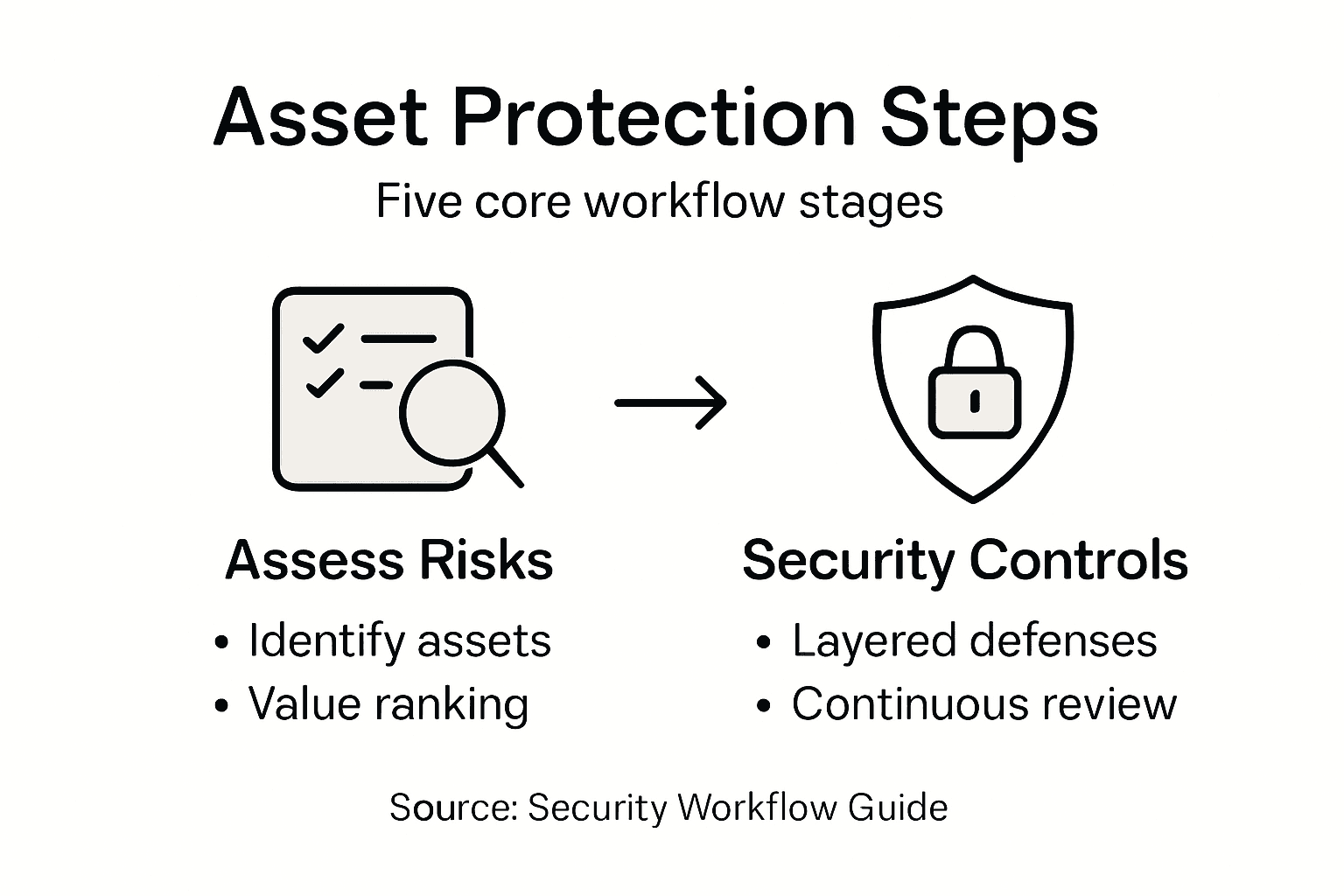
Begin by conducting a thorough risk analysis using RAMCAP methodology. This seven-step process helps you evaluate risks by examining multiple factors including threats, vulnerabilities, consequences, resilience, and existing countermeasures. Systematically document each asset and assess its potential exposure to risks like theft, damage, or unauthorized access. Create a detailed inventory that includes physical assets location, current security measures, and potential weak points.

Next, prioritize your assets based on their value and vulnerability. Not all assets carry equal risk or require identical protection strategies. Focus on high value or mission critical items first. Consider both monetary worth and operational significance when ranking your assets. For comprehensive risk management, leverage the NIST Cybersecurity Framework guidelines to develop a structured approach that aligns security efforts with your specific business context and operational needs.
Here’s a summary of asset types and typical risks to help structure your risk assessment:
| Asset Type | Common Vulnerabilities | Typical Risk Impact |
|---|---|---|
| Physical Equipment | Theft, damage, unauthorized access | Operational disruption |
| Data/Information | Cyber attacks, data leaks | Loss of confidentiality |
| Personnel | Insider threat, social engineering | Safety and policy breaches |
| Intellectual Property | Espionage, disclosure | Competitive disadvantage |
Pro tip: Conduct your risk assessment annually and after any significant organizational changes to ensure your asset protection strategy remains current and effective.
Step 2: Design a custom security strategy
Developing a robust security strategy requires a thoughtful approach that addresses your specific organizational vulnerabilities and protection needs. This step transforms your risk assessment into a comprehensive blueprint for safeguarding your most critical assets.
Start by implementing security design principles that integrate protection mechanisms directly into your systems and processes. Customize your strategy by mapping specific security controls to the unique risks identified in your previous assessment. Consider factors like asset criticality, potential threat vectors, and your organization’s operational context. This means not just selecting generic security measures but tailoring solutions that align precisely with your infrastructure and potential vulnerabilities.
Next, establish a dynamic security framework that allows for continuous adaptation. Focus on creating layered defense mechanisms that provide multiple checkpoints and protection levels. This might include physical security protocols, technological safeguards, access control systems, and employee training programs. Pay special attention to embedding security by design and default principles that proactively minimize risks rather than simply reacting to potential threats.
This table compares physical and technological security controls to clarify their respective roles:
| Control Type | Main Purpose | Example Systems | Typical Strengths |
|---|---|---|---|
| Physical Controls | Prevent unauthorized entry | Locks, security doors, fences | Deters onsite threats |
| Technological | Monitor and respond | Cameras, sensors, alarms | Enables real-time detection |
Pro tip: Schedule quarterly reviews of your security strategy to ensure it remains responsive to emerging threats and organizational changes.
Step 3: Select and install appropriate security products
Picking the right security products is more than just buying expensive equipment. Your goal is to create a comprehensive protection system that addresses the specific vulnerabilities identified in your previous risk assessment and strategy design.
Begin by selecting security technologies aligned with your organizational needs. This means matching each security product to specific threat scenarios you have already identified. Look for solutions that integrate seamlessly with your existing infrastructure and provide multiple layers of protection. Consider a mix of physical and technological security products such as surveillance cameras, access control systems, motion sensors, and alarm mechanisms. Prioritize products that offer scalability and compatibility with your current setup.
Import standards-based cybersecurity technologies to monitor and manage hardware and software assets effectively. Pay close attention to installation requirements, ensuring each product is positioned strategically to maximize coverage and minimize potential blind spots. Test each component thoroughly before considering the installation complete. This might involve simulating potential breach scenarios to verify the effectiveness of your selected security products.
Pro tip: Always maintain documentation of each security product purchase, installation date, and technical specifications for future reference and potential warranty claims.
Step 4: Establish maintenance and monitoring routines
Creating consistent maintenance and monitoring routines transforms your security system from a static installation to a dynamic protective shield. Your goal is to develop a proactive approach that continuously assesses and responds to potential security risks.
Begin by implementing comprehensive vulnerability management procedures. This involves establishing regular inspection schedules for all security equipment, including physical inspections of cameras, sensors, locks, and alarm systems. Set up a systematic approach to checking battery levels, cleaning optical sensors, verifying network connections, and ensuring all components remain fully operational. Create a standardized checklist that covers every aspect of your security infrastructure, allowing you to quickly identify and address potential weaknesses before they become critical issues.
Develop a continuous monitoring strategy that provides real time insights into your security system performance. This means implementing digital tracking mechanisms that log system activities, generate automated alerts for unusual patterns, and provide comprehensive reporting. Schedule periodic comprehensive reviews that go beyond routine checks, including simulated breach tests and thorough system diagnostics. Train designated team members to understand and respond to monitoring reports, ensuring your security infrastructure remains adaptive and responsive to emerging threats.
Pro tip: Create a digital maintenance log that tracks every inspection, repair, and system update to maintain a comprehensive record of your security infrastructure.
Step 5: Verify system effectiveness and adjust as needed
Evaluating your security system is not a one time task but an ongoing process of refinement and adaptation. Your objective is to transform raw performance data into actionable insights that continuously enhance your protection strategy.
Begin by analyzing physical security and asset protection methodologies through comprehensive performance assessments. This involves conducting systematic evaluations that go beyond surface level observations. Schedule periodic penetration testing where you simulate potential security breaches to identify potential weaknesses. Document every test result meticulously, tracking not just where your system succeeds but specifically where vulnerabilities exist. Compare these findings against your original security design to understand how your infrastructure performs under realistic threat scenarios.
Implement a comprehensive program protection review process that integrates continuous evaluation throughout your security system lifecycle. This means establishing a structured approach to reviewing system performance, technological capabilities, and emerging threat landscapes. Create a dynamic feedback loop where monitoring results directly inform system upgrades and strategic adjustments. Pay special attention to technological components that may become outdated and require replacement or significant reconfiguration. Develop a flexible mindset that treats your security system as a living entity requiring constant nurturing and strategic realignment.
Pro tip: Create a standardized scorecard that quantifies your security system performance across multiple metrics to facilitate objective and consistent effectiveness evaluations.
Strengthen Your Asset Protection with Proven Security Solutions
The article highlights crucial steps like risk evaluation, designing a custom security strategy, and installing effective products to maximize asset protection. If you are concerned about vulnerabilities such as unauthorized access or operational disruptions, you need reliable and tailored security measures. Protect your physical equipment, data, and personnel by using trusted solutions that align with your unique risk profile.
Discover high-quality surveillance cameras, access control systems, and safes that support layered defense and continuous monitoring. At Safes and Security Direct, we offer professional-grade security products designed to fit the specific needs identified through your risk assessment and strategic planning. Take control of your security today and minimize dangers before they emerge.
Secure your assets confidently by exploring our extensive range of options and get expert support to build a customized protection system. Visit Safes and Security Direct now to find the right products for your security strategy and start protecting what matters most.
Frequently Asked Questions
What is the first step in the Asset Protection Workflow?
To start the Asset Protection Workflow, conduct a comprehensive risk assessment to identify vulnerable assets. Systematically evaluate risks using a structured methodology to ensure you document all potential threats and weak points clearly.
How do I prioritize my assets during risk assessment?
Prioritize your assets based on their value and vulnerability by focusing on high-value or mission-critical items first. Use a ranking system that considers both monetary worth and operational significance to guide your protection strategies.
What principles should I follow while designing a security strategy?
When designing a security strategy, implement security design principles that integrate protection mechanisms into your existing systems. Tailor your approach to match the specific risks identified in your risk assessment to ensure effective coverage.
How can I ensure my security products are effective?
To ensure the effectiveness of your security products, select technologies that align with your identified needs and threat scenarios. Thoroughly test each component before finalizing installations to confirm that they adequately cover potential vulnerabilities.
What regular maintenance should I conduct on my security systems?
Establish a schedule for regular inspections and monitoring routines of your security systems. Create a checklist to ensure all components are operational and address any issues before they escalate, ideally conducting these checks monthly.
How do I evaluate the effectiveness of my security system?
Evaluate your security system by conducting periodic performance assessments, including penetration testing. Use the results to create a feedback loop that informs necessary adjustments, ensuring your system continues to adapt to emerging threats.
Recommended
- Future of American Security: Trends & Strategies – Safes and Security Direct
- Business Money Safety: Use Money Drop Safes – Safes and Security Direct
- Secure Your Valuables: Home & Business Vaults Benefits – Safes and Security Direct
- In-Home Jewelry Safe: Secure Your Valuables – Safes and Security Direct