

Role of Security Systems: Protecting Homes and Businesses
Bold reports reveal that theft rates in major American cities have climbed by more than 30 percent over the last few years. As crime continues to spread through busy urban neighborhoods, homeowners and business owners now see advanced security systems as a vital line of defense. This guide demystifies the core principles behind modern security solutions, empowering readers to make informed decisions that protect their property and support peace of mind.
Table of Contents
- Defining Security Systems and Key Concepts
- Types of Security Systems for Property Protection
- Essential Features: How Systems Work
- Benefits for Homes and Businesses
- Financial, Legal, and Operational Implications
- Risks, Common Mistakes, and Best Practices
Key Takeaways
| Point | Details |
|---|---|
| Comprehensive Protection | Security systems integrate hardware, software, and human intelligence to provide multilayered protection for physical and digital assets. |
| Importance of Planning | Assessment of property characteristics and potential vulnerabilities is crucial for designing an effective security strategy. |
| Financial and Legal Implications | Robust security systems can reduce insurance premiums and ensure compliance with regulations, protecting organizations from legal liabilities. |
| Avoiding Common Mistakes | Regular updates, training, and a proactive approach are essential to mitigate risks associated with security system failures. |
Defining Security Systems and Key Concepts
Security systems represent sophisticated technological frameworks designed to protect physical and digital assets from potential threats. Foundational security engineering principles emphasize comprehensive protection strategies that extend far beyond simple alarm mechanisms, integrating complex networks of sensors, monitoring technologies, and responsive protocols.
At their core, security systems function as proactive defense mechanisms that combine hardware, software, and human intelligence to detect, analyze, and mitigate potential risks. These systems typically incorporate multiple layers of protection, including physical barriers like locks and gates, electronic surveillance technologies such as motion sensors and cameras, and advanced digital monitoring platforms that can track and respond to unusual activities in real time.
Modern security systems have evolved from traditional military and geopolitical contexts into nuanced approaches that address broader societal protection frameworks. They now encompass comprehensive strategies addressing residential, commercial, and institutional security needs, integrating sophisticated technologies like biometric authentication, artificial intelligence threat detection, and remote monitoring capabilities.
Pro tip: When evaluating security systems, prioritize integrated solutions that offer multiple layers of protection and can be easily scaled or updated to match emerging technological capabilities.
Types of Security Systems for Property Protection
Property protection requires a comprehensive approach to security, with multiple layers of defensive strategies designed to safeguard against potential threats. These systems range from simple mechanical locks to sophisticated electronic monitoring networks that provide comprehensive protection for homes and businesses.
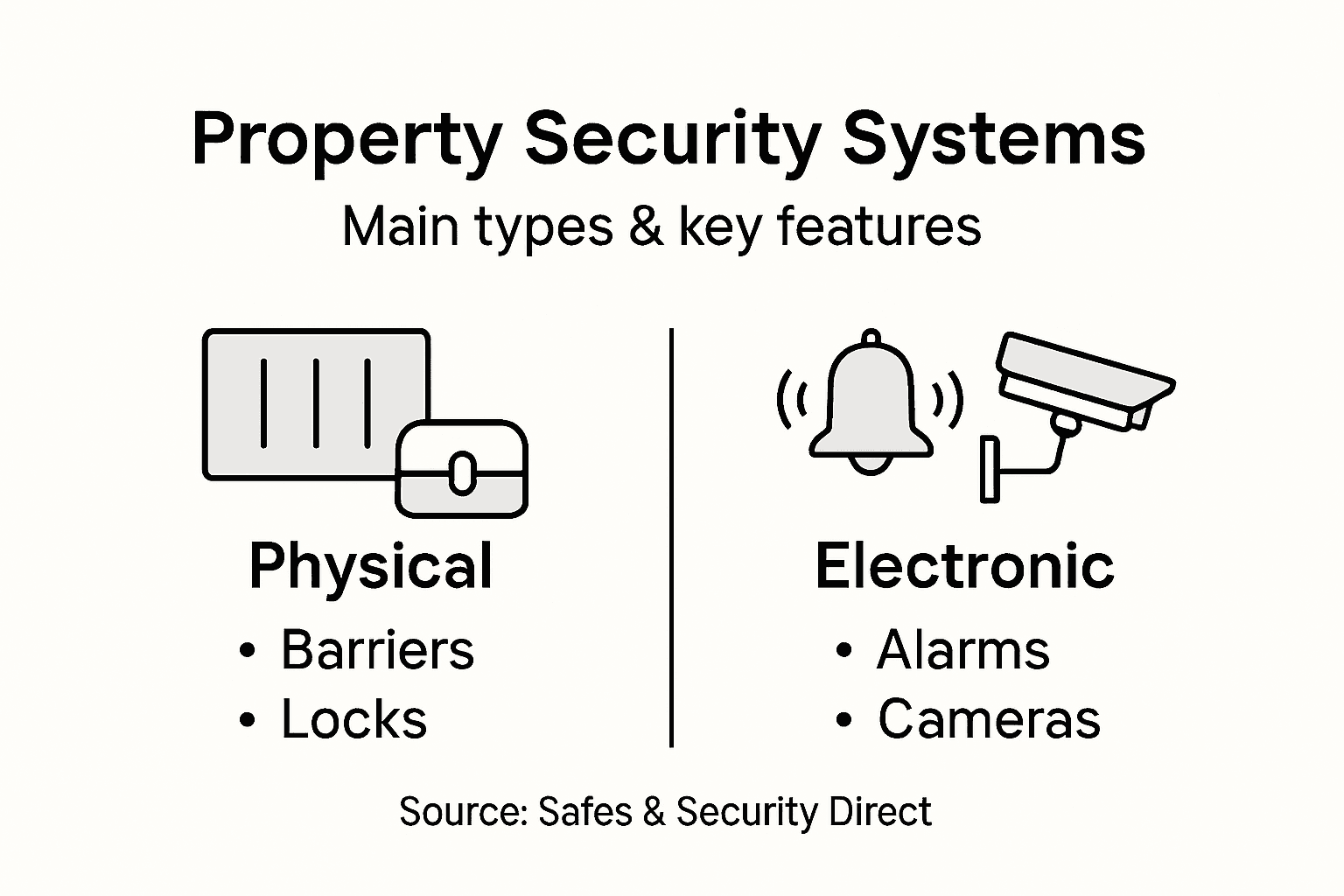
Traditional security systems typically include several core components. Physical barriers like reinforced doors, window locks, and security gates form the first line of defense. Electronic surveillance technologies such as motion sensors, CCTV cameras, and alarm systems provide active monitoring and rapid threat detection. Comprehensive physical security methods also incorporate strategic deterrence techniques like improved lighting, visible security signage, and access control mechanisms that limit unauthorized entry.
Modern security systems can be categorized into several key types: perimeter protection systems that monitor property boundaries, interior motion detection systems, video surveillance networks, access control platforms, and integrated smart home security solutions. Each system offers unique advantages, with advanced technologies now enabling remote monitoring, real-time alerts, and seamless integration with smartphones and digital platforms.
Here’s how core security system types compare for property protection:
| System Type | Main Function | Ideal For | Key Benefit |
|---|---|---|---|
| Perimeter Protection | Monitors property boundaries | Large properties | Early threat detection |
| Interior Motion | Detects unusual indoor movement | Homes, offices | Immediate alerting |
| Video Surveillance | Records and analyzes activities | High-risk locations | Crime documentation |
| Access Control | Restricts entry to approved users | Businesses, institutions | Limits unauthorized access |
| Smart Home Security | Integrates multiple technologies | Residences | Remote monitoring |
Pro tip: Evaluate security systems holistically by considering your specific property characteristics, budget constraints, and potential vulnerability points to design a tailored protection strategy.
Essential Features: How Systems Work
Security systems operate through a complex network of interconnected components designed to detect and respond to potential threats. These systems function by continuously monitoring environments through sophisticated sensors, cameras, and detection mechanisms that track unusual activities or unauthorized access attempts.
The core functionality of modern security systems involves multiple critical layers of protection. Authentication mechanisms verify authorized personnel through techniques like biometric scanning, keycard access, or password entry. Intrusion detection systems use advanced algorithms to differentiate between normal and suspicious activities, triggering immediate alerts when potential security breaches are identified. Strategic security architecture integrates technological controls with human monitoring to create comprehensive protection strategies.
Advanced security systems now incorporate intelligent technologies that provide real-time monitoring, remote access, and predictive threat analysis. These systems can automatically document security events, send instant notifications to property owners or security personnel, and even interface with local law enforcement or emergency response teams. The integration of artificial intelligence and machine learning allows for increasingly sophisticated threat detection and rapid response protocols.
Pro tip: Regularly update and test your security system’s settings and components to ensure optimal performance and identify potential vulnerabilities before they can be exploited.
Benefits for Homes and Businesses
Security systems offer transformative advantages for both residential and commercial properties, providing comprehensive protection that extends far beyond simple intrusion prevention. Home security technologies create multiple layers of defense that significantly reduce the risk of property crimes and enhance overall safety for occupants and assets.

For homeowners, security systems deliver critical benefits including reduced break-in risks, lower insurance premiums, and increased property value. Advanced systems now integrate smart home technologies, allowing remote monitoring and instant notifications that provide peace of mind even when residents are away. These systems can automatically alert homeowners and local authorities during potential security breaches, creating a proactive defense mechanism.
Property crime prevention strategies are equally crucial for businesses, where security systems protect valuable assets, ensure employee safety, and maintain operational continuity. Advanced surveillance and access control mechanisms help organizations minimize theft, vandalism, and unauthorized entry. By documenting potential incidents and providing comprehensive monitoring, these systems not only deter criminal activities but also provide critical evidence for investigations if security breaches occur.
Pro tip: Choose a security system that offers scalable features and seamless integration with your existing technology infrastructure to maximize protection and adaptability.
Financial, Legal, and Operational Implications
Security systems carry profound implications that extend far beyond simple technological investments, impacting an organization’s financial stability, legal compliance, and operational effectiveness. Comprehensive cyber risk management has become critical for businesses seeking to protect their assets and maintain regulatory adherence.
Financial considerations are multifaceted, with security systems potentially reducing insurance premiums, preventing costly theft, and minimizing potential legal liabilities. Organizations that implement robust security measures can demonstrate proactive risk management, which often translates into lower insurance rates and reduced potential for expensive litigation. The direct and indirect cost savings can be substantial, making security investments strategically important for long-term financial planning.
Information system security controls play a crucial role in legal compliance and risk mitigation. Businesses must navigate complex regulatory landscapes that require specific security standards across various industries. These standards mandate comprehensive protection mechanisms, incident response protocols, and data protection strategies that help organizations avoid significant penalties and maintain stakeholder trust. Failure to implement adequate security measures can result in severe financial penalties, reputational damage, and potential legal actions.
The following table summarizes key legal and financial impacts of robust security systems:
| Impact Area | Strategic Benefit | Operational Outcome |
|---|---|---|
| Insurance | Potential rate reduction | Lower recurring costs |
| Legal | Improved compliance | Avoids penalties |
| Financial | Theft prevention | Safeguards assets |
| Operations | Enhanced continuity | Reduces downtime |
Pro tip: Conduct an annual comprehensive security audit to identify potential vulnerabilities and ensure your security systems remain aligned with evolving legal and operational requirements.
Risks, Common Mistakes, and Best Practices
Security systems are complex ecosystems vulnerable to numerous potential risks that can compromise their effectiveness and reliability. Comprehensive security control strategies are essential for identifying and mitigating potential vulnerabilities before they can be exploited by malicious actors.
Common mistakes in security system implementation often stem from inadequate planning and poor configuration. These include using default passwords, neglecting regular system updates, insufficient employee training, and failing to implement multi-layered authentication protocols. Businesses frequently underestimate the importance of continuous monitoring and adaptive security approaches that can respond dynamically to emerging threats. Misconfigured access controls, outdated software, and incomplete incident response plans create significant security gaps that can be easily exploited.
Web application security risks highlight the critical need for proactive security measures. Best practices involve adopting a defense-in-depth approach that combines technological solutions with human expertise. This includes implementing robust authentication mechanisms, conducting regular security audits, maintaining comprehensive patch management protocols, and creating a culture of security awareness among personnel. Organizations must view security as an ongoing process rather than a one-time implementation, continuously evaluating and adapting their strategies to address evolving technological landscapes.
Pro tip: Develop a comprehensive security incident response plan that includes clear escalation procedures, designated team responsibilities, and regular simulation exercises to test system resilience.
Secure Your Home and Business with Trusted Solutions
The article highlights the critical challenge of protecting homes and businesses from evolving threats through layered security systems and advanced technologies. Many property owners face the risk of burglary, unauthorized access, and costly legal or financial consequences without reliable protection measures. If you are looking to enhance your security posture with professional-grade equipment such as surveillance cameras, access control tools, and robust safes, it is essential to choose integrated solutions that fit your unique needs and budget.

Start securing your property today with Safes and Security Direct. Explore our wide selection of high-quality security products designed to provide multiple layers of defense, from fire-resistant safes to cutting-edge digital monitoring systems. Benefit from expert guidance and reliable technology that helps you reduce risks, protect valuables, and gain peace of mind. Don’t wait for vulnerabilities to become costly problems—visit Safes and Security Direct now and invest in security solutions tailored for your home or business.
Frequently Asked Questions
What are security systems and how do they work?
Security systems are technological frameworks designed to protect physical and digital assets. They work by combining hardware, software, and human intelligence to detect, analyze, and mitigate potential risks through continuous monitoring and real-time alerts.
What types of security systems are available for property protection?
There are several types of security systems, including perimeter protection systems, interior motion detection systems, video surveillance networks, access control platforms, and integrated smart home security solutions, each offering unique benefits for safeguarding homes and businesses.
What essential features should a good security system have?
A good security system should incorporate features like authentication mechanisms, intrusion detection systems, real-time monitoring, remote access, and integration with local authorities to ensure comprehensive protection and rapid response to potential threats.
How do security systems impact financial and legal aspects for businesses?
Security systems can reduce insurance premiums and prevent theft, thereby enhancing financial stability. They also help organizations comply with legal regulations, avoiding penalties and ensuring stakeholder trust through effective risk management.
Recommended
- Top Home Security Products: Essential Devices – Safes and Security Direct
- Security Alarm System Installation: Essential Guide – Safes and Security Direct
- Cameras Deterring Burglary: Effective Security Insight – Safes and Security Direct
- Optimize Business Security with CCTV Installation – Safes and Security Direct
- How Fire Protection System Help Businesses Save Money
- Access Control Setup Guide: Secure Your Property Easily - A To Z Locksmith Inc