

Why Secure Commercial Assets: Protecting Profit and Growth
Protecting your most valuable resources can feel like an ongoing challenge when daily operations demand constant attention. For small and medium-sized business owners, securing commercial assets means safeguarding everything from physical inventory to digital information and financial holdings. A risk-managed approach is the foundation of effective asset protection, giving businesses the confidence to minimize theft, disruption, and costly losses. Discover proven strategies to shield your organization and keep your commercial property safe from emerging threats.
Table of Contents
- Securing Commercial Assets Defined
- Types of Commercial Assets at Risk
- Modern Security Solutions for Businesses
- Financial and Legal Implications of Asset Loss
- Common Mistakes and How to Avoid Them
Key Takeaways
| Point | Details |
|---|---|
| Understanding Commercial Assets | Businesses should recognize the importance of both tangible and intangible assets for generating revenue and sustaining growth. |
| Risk-Managed Approach | Adopting systematic risk management strategies is essential for identifying vulnerabilities and enhancing protection measures. |
| Integrated Security Solutions | Implementing advanced, multi-layered security technologies is crucial for safeguarding both physical and digital assets. |
| Financial and Legal Implications | Organizations must prepare for potential financial losses and legal liabilities from asset loss by establishing comprehensive risk management protocols. |
Securing Commercial Assets Defined
Commercial assets represent more than just physical property - they are the financial backbone of any successful business. These tangible and intangible resources generate revenue, support operations, and drive organizational growth. Understanding how to protect these critical components is essential for long-term business sustainability.
The concept of securing commercial assets involves a comprehensive strategy that encompasses multiple dimensions of protection. Governments worldwide recognize the importance of asset management as a critical component of financial health and organizational resilience. This approach includes:
- Physical protection of equipment and infrastructure
- Safeguarding intellectual property
- Protecting digital and financial resources
- Managing potential risk exposure
- Maintaining accurate asset inventories
Businesses must adopt a risk-managed approach to effectively secure their commercial assets. This means systematically identifying potential vulnerabilities, implementing targeted security measures, and continuously monitoring and updating protection strategies. Security policy frameworks provide critical guidelines for developing robust asset protection protocols.
Key Components of Commercial Asset Security:
- Comprehensive asset documentation
- Regular risk assessment
- Advanced security technologies
- Employee training and awareness
- Continuous monitoring and adaptation
Pro tip: Conduct a quarterly asset audit to ensure your protection strategies remain current and effective.
Types of Commercial Assets at Risk
Businesses possess a wide range of commercial assets that represent critical value and require comprehensive protection strategies. These assets extend far beyond simple physical property, encompassing multiple dimensions of organizational value. Public commercial assets include diverse economic resources that demand sophisticated security approaches.
The primary categories of commercial assets at risk include:
- Physical Infrastructure
- Financial Resources
- Digital and Technology Assets
- Intellectual Property
- Human Capital
- Operational Equipment
- Supply Chain Resources
Within each category, businesses face unique vulnerabilities that can potentially compromise organizational stability. Physical infrastructure represents tangible assets like buildings, manufacturing facilities, vehicles, and specialized equipment. These resources often require robust physical security measures to prevent theft, damage, or unauthorized access.
Digital and technology assets have become increasingly critical in modern business landscapes. Government reports highlight the economic impact of protecting digital resources, including:
- Computer systems and networks
- Data repositories
- Software and proprietary technologies
- Cloud-based platforms
- Digital communication infrastructure
Financial resources constitute another significant asset category, encompassing cash reserves, investment portfolios, accounts receivable, and other monetary instruments. These assets demand sophisticated protection strategies to mitigate risks of fraud, embezzlement, and unauthorized transactions.
Pro tip: Conduct a comprehensive asset inventory annually to identify and prioritize protection strategies for each asset category.
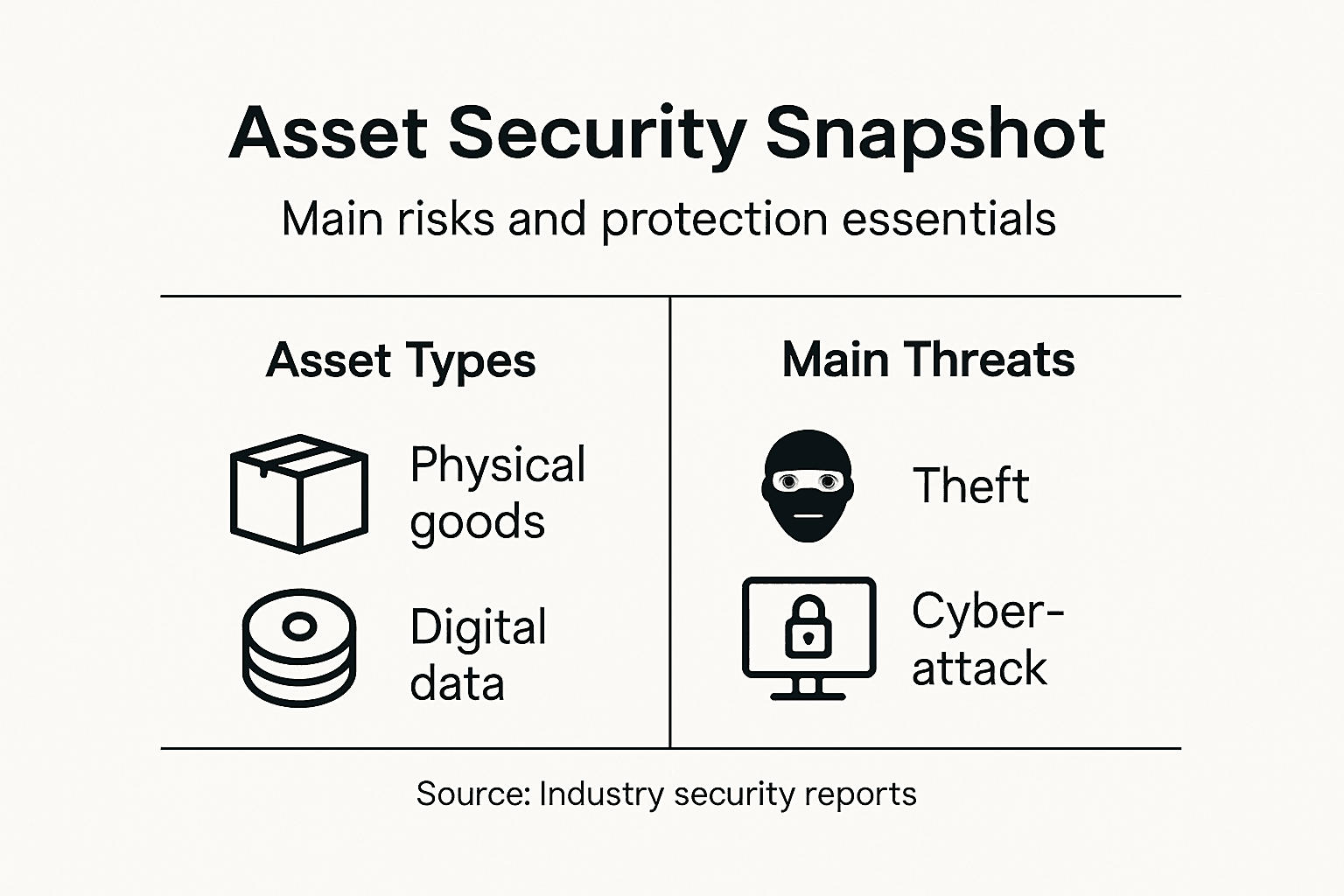
Here is a comparison of physical, digital, and financial asset security focus areas:
| Asset Type | Main Threats | Essential Safeguard |
|---|---|---|
| Physical Infrastructure | Theft, damage | Access control systems |
| Digital Assets | Cyberattacks, data loss | Encryption, monitoring |
| Financial Resources | Fraud, embezzlement | Segregation of duties |
Modern Security Solutions for Businesses
Today’s business landscape demands sophisticated, multi-layered security approaches that go beyond traditional protection methods. Integrated security systems have emerged as a critical strategy for safeguarding commercial assets across physical and digital domains. Network security frameworks help businesses prevent cyber threats by creating comprehensive protective ecosystems.
Modern security solutions encompass several key technological innovations:
- Advanced Surveillance Systems
- Biometric Access Controls
- Cybersecurity Platforms
- Artificial Intelligence Monitoring
- Cloud-Based Security Management
- Integrated Alarm and Response Systems
- Real-Time Threat Detection Technologies
Physical security technologies have dramatically evolved, incorporating smart sensors, high-resolution cameras, and intelligent monitoring systems. These solutions provide real-time tracking, unauthorized access prevention, and instantaneous threat assessment capabilities that traditional security methods cannot match.
Cybersecurity solutions represent another critical dimension of modern business protection. These sophisticated platforms offer:
- Endpoint protection
- Network monitoring
- Intrusion detection systems
- Automated threat response mechanisms
- Encryption technologies
- Secure authentication protocols
- Continuous vulnerability assessments
Businesses must adopt a holistic approach that integrates physical and digital security strategies, recognizing that modern threats transcend traditional boundaries. Comprehensive security solutions now require seamless communication between different technological systems, creating an adaptive and responsive protective infrastructure.
Pro tip: Conduct a comprehensive security audit annually to identify and address potential vulnerabilities across physical and digital domains.
Financial and Legal Implications of Asset Loss
Asset loss can inflict devastating financial consequences that extend far beyond immediate monetary damage. Business financial vulnerability represents a critical risk management challenge, with potential impacts reaching well into organizational sustainability and long-term economic health. Financial inefficiencies from asset mismanagement can result in substantial economic disruptions for businesses worldwide.
The primary financial and legal implications of asset loss include:
- Direct monetary losses
- Regulatory compliance penalties
- Potential legal litigation
- Insurance premium increases
- Reputation and brand damage
- Operational disruption costs
- Potential shareholder/investor litigation
Legal frameworks play a crucial role in defining responsibilities and potential liabilities associated with asset protection. Comprehensive financial protection guidelines establish critical mechanisms for mitigating risks and ensuring proper asset management.
The financial ramifications of asset loss can be profound and multifaceted. Businesses may encounter significant challenges including:
- Immediate revenue reduction
- Increased insurance costs
- Potential legal settlements
- Reduced investor confidence
- Long-term economic performance impact
Comprehensive risk management strategies must address both preventative measures and potential recovery mechanisms. Organizations need robust documentation, insurance coverage, and legal frameworks to minimize potential financial exposure and maintain operational resilience.

Pro tip: Develop a comprehensive asset documentation system with detailed tracking and regular independent audits to minimize potential financial and legal risks.
Below is a summary of the financial and legal impacts of asset loss with key response strategies:
| Impact Type | Typical Consequence | Recommended Response |
|---|---|---|
| Financial Loss | Reduced cash flow | Insurance, audits |
| Legal Liability | Regulatory fines, lawsuits | Contract review, compliance |
| Reputation Damage | Lost customer trust | Public relations plan |
| Operational Disruption | Delayed services | Contingency planning |
Common Mistakes and How to Avoid Them
Business asset protection is fraught with potential pitfalls that can compromise organizational security and financial stability. Common governance mistakes undermine asset management and create significant vulnerabilities for businesses across multiple sectors.
The most frequent mistakes in commercial asset protection include:
- Inadequate documentation
- Inconsistent security protocols
- Poor risk assessment processes
- Fragmented security strategies
- Limited employee training
- Outdated technological infrastructure
- Insufficient monitoring mechanisms
Transparency and accountability represent critical components of effective asset protection. Strategic asset management practices help businesses identify and mitigate potential risks before they escalate.
Businesses frequently encounter specific challenges that compromise their asset protection strategies:
- Neglecting regular security audits
- Underestimating potential cybersecurity threats
- Failing to update security technologies
- Overlooking employee access management
- Ignoring emerging technological vulnerabilities
Comprehensive asset protection requires a holistic approach that integrates technological solutions, employee training, and continuous strategic assessment. Organizations must develop adaptive frameworks that can evolve with changing technological and security landscapes.
Pro tip: Implement a quarterly comprehensive security review to identify and address potential vulnerabilities across your organization.
Protect Your Commercial Assets With Trusted Security Solutions
The article highlights the critical challenge of securing commercial assets against theft, cyberattacks, and operational risks. Protecting physical infrastructure, digital assets, and financial resources demands a comprehensive approach that includes advanced technology and consistent risk management. Businesses face real vulnerabilities such as unauthorized access, data loss, and financial fraud that threaten growth and profitability. At Safes and Security Direct, we understand these pressures and offer professional-grade security products engineered to help you mitigate these risks effectively.
Take control of your asset protection strategy today by exploring our broad range of high-quality security cameras, safes, and integrated security systems. Designed for durability and reliability, our solutions empower you to prevent theft, secure digital infrastructure, and maintain operational resilience. Don’t wait until an incident disrupts profit and growth. Visit Safes and Security Direct now to secure your business with trusted equipment. Discover how our advanced security solutions can safeguard your critical assets and provide peace of mind for your organization’s future.
Frequently Asked Questions
What are commercial assets and why are they important for businesses?
Commercial assets are tangible and intangible resources that generate revenue and support operations within a business. They are essential for driving organizational growth and financial stability.
What strategies can businesses use to secure their commercial assets?
Businesses can secure their commercial assets by conducting regular risk assessments, implementing advanced security technologies, maintaining accurate documentation, and training employees on security protocols.
What are the potential financial implications of losing commercial assets?
Losing commercial assets can lead to direct monetary losses, increased insurance premiums, legal liabilities, operational disruptions, and long-term damage to reputation and brand trust.
How often should businesses conduct security audits for their assets?
Businesses should conduct comprehensive security audits at least annually to identify vulnerabilities and ensure that their protection strategies remain effective against evolving threats.
Recommended
- Why Use Commercial Safes: Protecting Business Assets – Safes and Security Direct
- Asset Protection Workflow Guide for Maximum Security – Safes and Security Direct
- 7 Smart Ways to Improve Commercial Security Solutions – Safes and Security Direct
- Physical Security for SMEs: Protecting Assets and Growth – Safes and Security Direct