

Role of Security Standards in Asset Protection
Keeping assets safe has become a daily challenge for every organization, not just global corporations. Security professionals and business owners need reliable ways to protect sensitive data, fulfill compliance obligations, and reduce the risk of costly breaches. By understanding security standards as structured protocols, teams can avoid the confusion of conflicting practices, create unified protections, and take practical steps that shield business operations from evolving threats.
Table of Contents
- Defining Security Standards And Their Purpose
- Major Security Standards In Home And Business Protection
- Real-World Applications For Security Solutions
- Compliance, Liabilities, And Risk Mitigation
- Common Pitfalls And Effective Implementation
Key Takeaways
| Point | Details |
|---|---|
| Establish Security Standards | Organizations should implement systematic security standards to ensure uniform protection mechanisms and reduce vulnerabilities. |
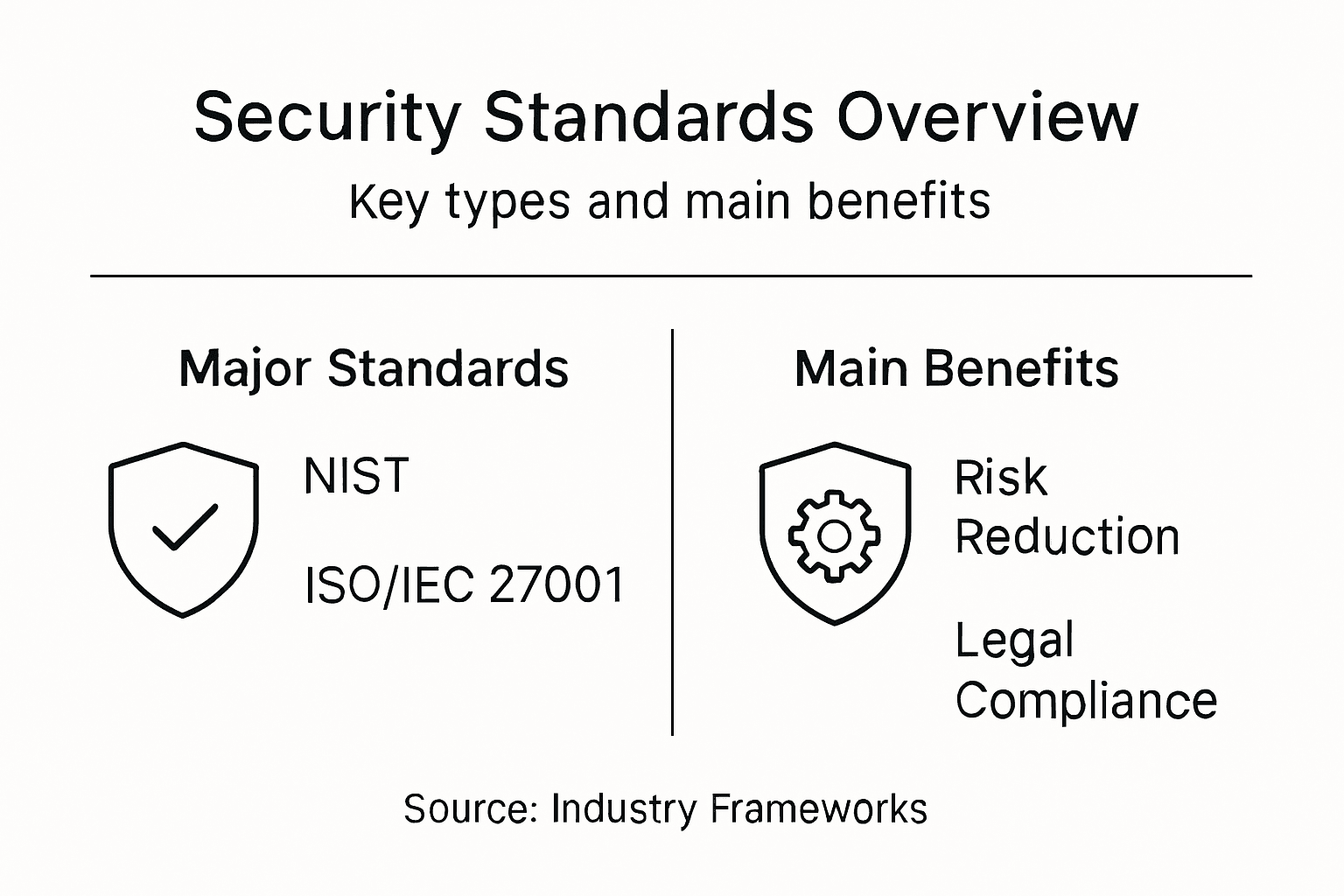
| Utilize Major Frameworks | Leverage recognized security frameworks like NIST and ISO/IEC 27001 for effective risk management and asset protection. |
| Regular Compliance Audits | Conduct periodic security audits and cross-comparisons against multiple standards to identify improvement opportunities and minimize protection gaps. |
| Holistic Implementation Approach | Adopt a comprehensive approach to security standards that includes education, continuous improvement, and effective communication within the organization. |
Defining Security Standards and Their Purpose
Security standards are systematic protocols designed to establish consistent and reliable protection mechanisms across organizations. Repeatable methods for implementing security policies ensure that critical safety measures are applied uniformly, reducing potential vulnerabilities from inconsistent practices.
At their core, security standards function as comprehensive frameworks that define precise guidelines for protecting digital and physical assets. These standards outline specific requirements for critical security elements such as:
- Password complexity rules
- Session management protocols
- Data backup frequency and procedures
- Access control mechanisms
- Network security configurations
Organizations rely on these standards to create a structured approach to risk management. By establishing clear, measurable criteria, businesses can systematically evaluate and enhance their security posture. The goal is not just compliance, but creating a proactive defense strategy that anticipates potential threats and mitigates risks before they can cause significant damage.
Pro tip: Develop a security standards checklist that maps your current practices against recognized frameworks like NIST or ISO to quickly identify potential gaps in your protection strategy.
Major Security Standards in Home and Business Protection
Security professionals recognize several key frameworks that establish critical guidelines for protecting assets in both home and business environments. Comprehensive cybersecurity standards have emerged to provide structured approaches to risk management and asset protection across diverse settings.
The most prominent security standards include:
-
NIST Cybersecurity Framework: Developed by the National Institute of Standards and Technology, this standard provides detailed guidelines for managing and reducing cybersecurity risks. It offers a flexible approach applicable to organizations of all sizes and sectors.
-
ISO/IEC 27001: An international standard that specifies requirements for establishing, implementing, maintaining, and continuously improving an information security management system. Global information security management guidelines help organizations systematically protect their digital and physical assets.
-
SOC 2: Specifically designed for service organizations, this standard focuses on five core trust service criteria: security, availability, processing integrity, confidentiality, and privacy. It ensures that companies implement robust controls to protect customer data and maintain operational integrity.
-
CIS Controls: Created by the Center for Internet Security, these standards provide a prioritized set of actions to protect organizations from the most prevalent cyber attacks. They offer practical, implementation-focused guidance for reducing organizational vulnerabilities.
Each of these standards serves a unique purpose in the broader landscape of asset protection. While they share common goals of reducing risk and enhancing security, they approach protection through different lenses. NIST focuses on comprehensive risk management, ISO/IEC 27001 provides a systematic management approach, SOC 2 emphasizes trust and privacy, and CIS Controls offer tactical defensive strategies.
The following table highlights the unique focus and benefits of major security standards:
| Standard | Primary Focus | Main Benefit |
|---|---|---|
| NIST | Risk management guidance | Adaptable for all industries |
| ISO/IEC 27001 | Structured management | Continuous improvement cycle |
| SOC 2 | Trust and privacy | Enhanced client confidence |
| CIS Controls | Practical defense measures | Reduced vulnerability risks |
Pro tip: Conduct an annual cross-comparison of your current security practices against multiple standards to identify comprehensive improvement opportunities and potential protection gaps.
Real-World Applications for Security Solutions
Voluntary cybersecurity standards play a critical role in translating theoretical security frameworks into practical protective measures across various industries. Organizations leverage these standards to develop robust defense strategies that address complex digital and physical security challenges.
Real-world applications of security solutions span multiple domains:
-
Cloud Services Protection: Cloud providers implement stringent security protocols to safeguard sensitive data storage and transmission. By adopting standardized frameworks, they ensure consistent protection against unauthorized access and potential breaches.
-
Financial Sector Defense: Banks and financial institutions use security standards to protect customer data, prevent fraud, and maintain regulatory compliance. These frameworks help establish multi-layered authentication processes and advanced threat detection mechanisms.
-
Healthcare Information Security: Medical organizations apply security standards to protect patient records, ensure HIPAA compliance, and secure electronic health information systems against potential cyber threats.
-
Government Infrastructure: Government cloud security implementations demonstrate how standardized controls create trusted environments for sensitive information management. These frameworks validate service providers’ ability to meet rigorous security requirements.
The practical implementation of security standards goes beyond theoretical guidelines. They provide actionable blueprints for organizations to systematically identify vulnerabilities, implement protective measures, and continuously monitor their security posture. By translating complex security concepts into executable strategies, these standards enable businesses to proactively defend against evolving digital threats.

This table summarizes the organizational outcomes of applying security standards in different industries:
| Industry | Key Security Outcome | Example of Implementation |
|---|---|---|
| Cloud | Consistent data protection | Multi-factor authentication |
| Financial | Fraud reduction | Layered threat detection |
| Healthcare | Regulatory compliance | HIPAA-compliant access controls |
| Government | Trusted information sharing | Standardized provider assessments |
Pro tip: Conduct periodic security audits that map your current infrastructure against multiple security standards to identify and address potential protection gaps.
Compliance, Liabilities, and Risk Mitigation
Security policies and standards serve as critical mechanisms for managing organizational risk and establishing clear legal boundaries. These frameworks not only protect assets but also define explicit responsibilities that help businesses navigate complex liability landscapes.
Compliance involves multiple strategic dimensions:
-
Legal Protection: Security standards create a documented framework that demonstrates an organization’s proactive approach to risk management. This documentation can significantly reduce potential legal vulnerabilities in case of security incidents.
-
Risk Assessment: Comprehensive security policies enable systematic identification of potential threats, allowing organizations to develop targeted mitigation strategies before vulnerabilities can be exploited.
-
Regulatory Alignment: Different industries have specific compliance requirements. Security standards help organizations align their practices with regulatory expectations, avoiding potential financial penalties and reputational damage.
-
Liability Limitation: By establishing clear protocols and demonstrating due diligence, businesses can minimize their exposure to potential legal claims related to data breaches or security failures.
Effective risk mitigation is not about eliminating all potential threats but creating robust, adaptive systems that can quickly identify, respond to, and recover from security challenges. Organizations must view compliance as an ongoing process of continuous improvement, regularly updating their standards to address emerging technological and threat landscapes.
Pro tip: Develop a comprehensive incident response plan that clearly outlines roles, communication protocols, and recovery strategies to minimize potential legal and financial risks during security events.
Common Pitfalls and Effective Implementation
Cybersecurity standard implementation challenges require strategic planning and comprehensive organizational alignment. Many businesses struggle to translate theoretical security frameworks into practical, actionable defense strategies.
Common implementation pitfalls include:
-
Inconsistent Application: Organizations often fail to uniformly implement security standards across different departments, creating potential vulnerability gaps.
-
Resource Limitations: Smaller organizations may lack the technical expertise or financial resources to fully adopt comprehensive security frameworks.
-
Inadequate Verification: Cybersecurity standard integration requires ongoing monitoring and validation to ensure continuous effectiveness. Many businesses perform initial implementation without establishing robust verification mechanisms.
-
Technical Complexity: Security standards can be intricate, leading to partial or superficial implementation that does not address underlying security risks.
Successful implementation demands a holistic approach that goes beyond technical configurations. Organizations must view security standards as living frameworks that require continuous education, adaptation, and organizational culture transformation. This means investing in staff training, creating clear communication channels, and developing flexible processes that can quickly respond to emerging technological challenges.
Pro tip: Conduct quarterly cross-departmental security workshops to ensure consistent understanding and implementation of security standards across your entire organization.
Strengthen Your Asset Protection with Trusted Security Solutions
The article highlights the crucial role of security standards such as NIST, ISO/IEC 27001, and SOC 2 in creating reliable, repeatable methods for protecting your valuables and digital assets. Implementing these frameworks is vital to managing risks, complying with regulations, and reducing vulnerabilities within your home or business environment. At Safes and Security Direct, we understand that translating these standards into practical, effective security can be challenging without the right tools.
Protect your assets today by exploring our wide selection of professional-grade safes, advanced surveillance cameras, and robust security systems. All our products align with the principles of consistent, standards-based security, helping you achieve true peace of mind through dependable risk mitigation. Don’t wait until a security gap exposes your property. Visit Safes and Security Direct now to find solutions designed to meet rigorous protection demands and support your compliance efforts. Secure your future by taking action now.
Frequently Asked Questions
What are security standards, and why are they important?
Security standards are systematic protocols that provide guidelines for consistent protection of digital and physical assets. They are important as they help organizations reduce vulnerabilities, manage risks effectively, and establish a proactive defense strategy against potential threats.
How can organizations implement security standards effectively?
Organizations can implement security standards effectively by developing a comprehensive security checklist, conducting regular audits, providing staff training, and continuously monitoring compliance with established guidelines. It’s crucial to ensure consistent application across all departments.
What are some common security standards used for asset protection?
Common security standards include the NIST Cybersecurity Framework, ISO/IEC 27001, SOC 2, and CIS Controls. Each of these frameworks offers unique approaches to managing risk and protecting assets in various environments.
How do security standards help with compliance and risk management?
Security standards help with compliance by providing a documented framework that aligns organizational practices with regulatory requirements. They enable systematic risk assessment, facilitate the identification of potential threats, and develop strategies to mitigate vulnerabilities, ultimately limiting legal liability in case of incidents.
Recommended
- Asset Protection Workflow Guide for Maximum Security – Safes and Security Direct
- Role of Security Systems: Protecting Homes and Businesses – Safes and Security Direct
- Future of American Security: Trends & Strategies – Safes and Security Direct
- 7 Smart Ways to Improve Commercial Security Solutions – Safes and Security Direct