

Why Invest In a Safe for Valuables: Real Protection
Losing valuables to theft or fire is an everyday risk many American homeowners and small business owners face in major cities. Urban living brings convenience and opportunity, but it also exposes important assets to crime and environmental threats. Investing in a reliable safe is one of the most effective ways to protect irreplaceable documents, jewelry, and cash. Discover the key features that separate basic storage units from true security solutions designed for today’s world.
Table of Contents
- What Is a Safe for Valuables?
- Types of Safes: Fire, Burglary, Wall, More
- Key Features and Security Certifications
- Risks of Not Securing Valuables Properly
- Common Mistakes When Choosing a Safe
Key Takeaways
| Point | Details |
|---|---|
| Importance of Safes | A safe for valuables is essential for protecting important items from theft, fire, and environmental damage. |
| Types of Safes | Different safes serve specific purposes, such as fire-resistant, burglary, and wall safes, tailored to individual security needs. |
| Key Features | Look for features like reinforced steel walls and biometric locks to ensure maximum security and protection. |
| Common Mistakes | Avoid selecting a safe that is either too small or large, and ensure proper installation to enhance its effectiveness. |
What Is a Safe for Valuables?
A safe for valuables is a secure, specialized storage solution designed to protect important personal and financial items from potential risks like theft, fire, and environmental damage. Safes are typically constructed from durable metal materials such as steel, engineered with sophisticated locking mechanisms to provide maximum security for your most cherished possessions.
These protective storage units come in various sizes and configurations, ranging from compact home safes to larger vault-style systems. They are specifically engineered to offer multiple layers of protection against different threats. Some safes focus on burglar resistance with reinforced steel walls and complex locking systems, while others prioritize fire protection with specialized insulation materials that can withstand extreme temperatures.
Unlike simple storage containers, home safes and bank safe deposit boxes represent professional-grade security options for storing critical documents, jewelry, cash, family heirlooms, and other irreplaceable items. These secure storage solutions provide peace of mind by creating a dedicated, controlled environment that shields your valuables from potential loss or damage.
Pro tip: When selecting a safe, always consider the specific types of items you want to protect and choose a model with appropriate security and environmental protection features.
Types of Safes: Fire, Burglary, Wall, More
Security safes are not a one-size-fits-all solution. Different types of safes are engineered to protect against specific threats and cater to unique storage requirements. Understanding these variations helps homeowners and business owners select the most appropriate protection for their valuable possessions.
The primary categories of safes include fire-resistant safes, which are designed to shield contents from extreme temperatures, burglary safes with reinforced steel construction and complex locking mechanisms, and wall safes that offer discreet, space-efficient storage. Gun safes represent another specialized category, incorporating advanced security features like biometric locks to prevent unauthorized firearm access while providing protection against environmental risks.

Beyond these core types, the safe market offers nuanced options like waterproof safes for sensitive documents, floor safes embedded directly into building structures, and digital safes with cutting-edge electronic locking systems. Each type provides distinct advantages, whether you’re protecting important legal documents, family heirlooms, expensive jewelry, or critical business records. The key is matching the safe’s specific protective capabilities with the unique vulnerabilities of your most treasured items.
Here is a comparison of popular types of safes and the protection they offer:
| Safe Type | Main Threat Protection | Typical Use Case |
|---|---|---|
| Fire-Resistant Safe | Protects from high heat | Important documents, records |
| Burglary Safe | Prevents forced entry | Jewelry, cash, personal valuables |
| Wall Safe | Hidden, space-efficient | Small valuables, documents |
| Gun Safe | Firearms access control | Firearm storage and safety |
| Waterproof Safe | Blocks water damage | Certificates, media backups |
Pro tip: Assess your specific security needs by cataloging the types of items you want to protect and their individual risk factors before selecting a safe.
Key Features and Security Certifications
Security certifications and key features represent the critical benchmarks that determine a safe’s reliability and effectiveness in protecting valuable assets. Modern safes are engineered with sophisticated security technologies that go far beyond simple metal boxes, incorporating advanced mechanisms designed to withstand multiple types of potential threats.
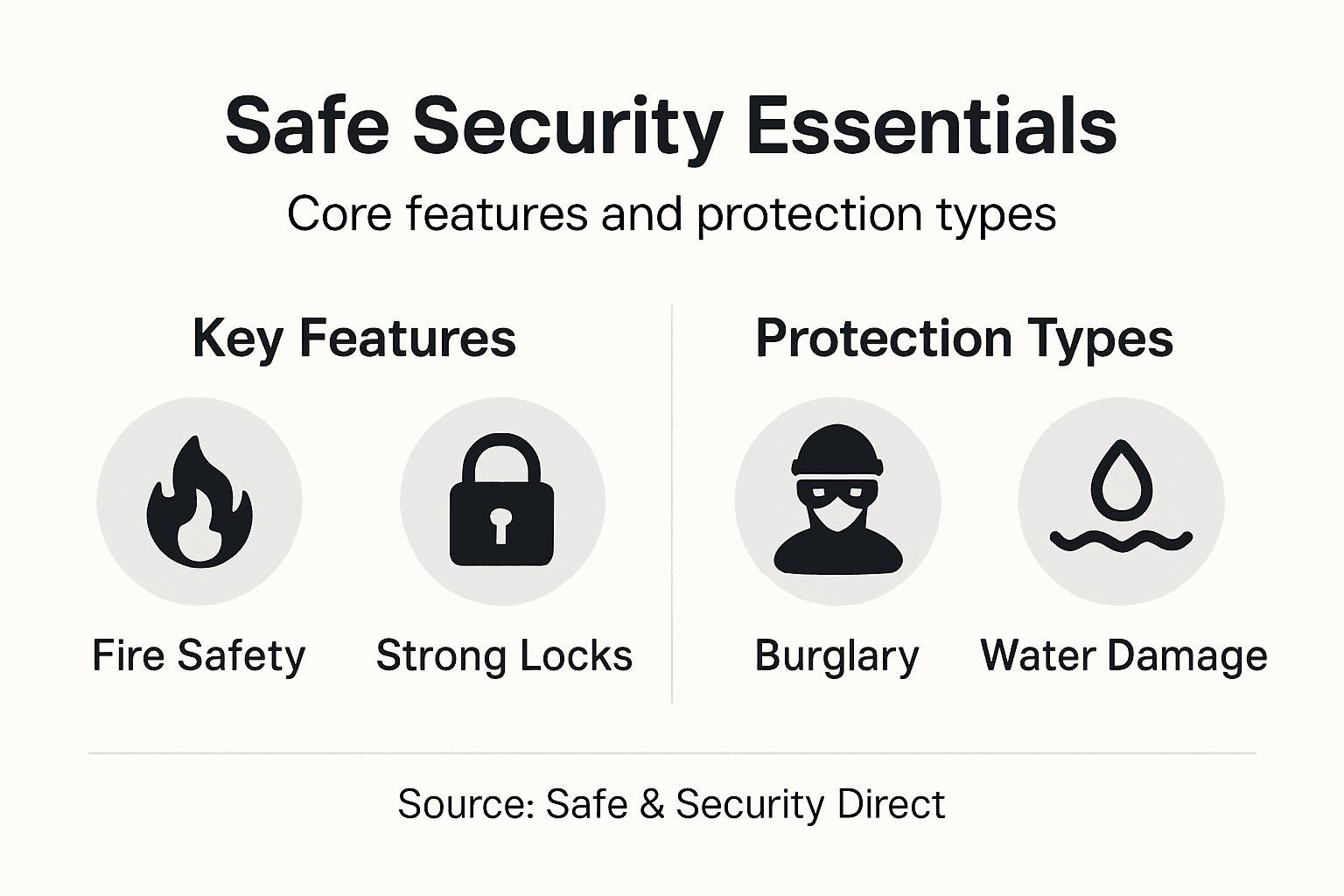
The primary features consumers should evaluate include burglar resistance, fire protection, and locking mechanism complexity. Burglary-resistant safes typically feature reinforced steel walls, multiple locking bolts, and intricate door designs that prevent forced entry. Fire-resistant models utilize specialized insulation materials capable of maintaining internal temperatures below critical damage thresholds during extreme heat exposure. Government security certifications provide rigorous standards that validate these protective capabilities, ensuring safes meet comprehensive testing criteria for environmental and physical security challenges.
Advanced safes now integrate smart technologies like biometric locks, electronic monitoring systems, and remote access controls. These innovations offer enhanced security tracking, allowing owners to monitor their valuables through smartphone applications and receive instant alerts about potential unauthorized access attempts. The most sophisticated safes combine multiple security layers, transforming them from simple storage containers into comprehensive protection systems that adapt to evolving security threats.
Below is a summary of key security features to look for when evaluating a safe:
| Feature | Why It Matters | Example Benefit |
|---|---|---|
| Reinforced Steel Walls | Resists physical attacks | Withstands drill attempts |
| Fire Insulation | Shields contents from extreme heat | Keeps documents undamaged in fires |
| Biometric Locking | Ensures only authorized access | Prevents unauthorized entry |
| Certification Ratings | Confirms protection meets standards | Assures tested security level |
Pro tip: Always request official certification documentation when purchasing a safe, and verify the specific protection ratings against your unique security requirements.
Risks of Not Securing Valuables Properly
Failing to secure valuables properly can lead to catastrophic financial and emotional consequences that extend far beyond simple monetary loss. Unprotected valuables become prime targets for criminals, creating significant vulnerability for homeowners and business owners who neglect basic security precautions. The potential risks range from immediate financial devastation to long-term personal trauma caused by irreplaceable item theft.
Burglars typically target homes and businesses with visible, unsecured valuables, making opportunistic theft increasingly common during high-risk periods like holidays or major local events. Unprotected jewelry, important documents, family heirlooms, and electronic devices can vanish within minutes, leaving victims facing substantial replacement costs and emotional distress. Travel-related security risks compound these challenges, with unattended valuables becoming especially vulnerable during transit or in temporary accommodations.
The psychological impact of losing cherished possessions can be profound, creating lasting emotional scars that extend well beyond the immediate financial setback. Insurance may cover monetary value, but sentimental items like inherited jewelry, rare collectibles, or irreplaceable personal documents cannot be replaced. The potential for identity theft increases dramatically when critical personal documentation is left unsecured, exposing individuals to additional layers of risk that can take years to fully resolve.
Pro tip: Create a comprehensive inventory of your most valuable possessions, complete with photographs and serial numbers, to streamline recovery and insurance claims in the event of unexpected loss.
Common Mistakes When Choosing a Safe
Selecting the right safe involves more than simply purchasing a storage container. Many individuals make critical errors that compromise their valuable assets’ security, often without realizing the potential vulnerabilities they’re creating. Understanding these common mistakes can help consumers make more informed decisions about protecting their most important possessions.
One of the most significant errors is underestimating protection requirements, which typically manifests in three primary ways. First, buyers often choose safes that are either too small to accommodate their valuables or too large, creating unnecessary expense and inefficiency. Second, many people neglect to verify security certifications, assuming all safes provide equivalent protection. Residential safe room design requires careful planning to ensure genuine security, which means checking fire resistance ratings, burglar protection standards, and environmental durability beyond surface-level marketing claims.
Additionally, consumers frequently overlook critical installation considerations that can dramatically reduce a safe’s effectiveness. Improper mounting, selecting inappropriate lock mechanisms, and failing to consider environmental factors like humidity, temperature fluctuations, and potential flood risks can render even an expensive safe virtually useless. The lock mechanism itself requires careful selection, matching both security needs and personal accessibility preferences to create a practical yet robust protection strategy.
Pro tip: Always request comprehensive documentation about a safe’s security ratings and conduct a thorough assessment of your specific protection needs before making a purchase.
Protect What Matters Most With Professional-Grade Safes
The article highlights the critical challenge of securing valuables against theft, fire, and environmental damage. If you have important documents, jewelry, or irreplaceable items, simply storing them without proper protection exposes you to serious risks that can lead to financial loss and emotional distress. Choosing the right safe means understanding features like fire resistance, burglar protection, and sophisticated locking mechanisms.
At Safes and Security Direct, we offer a comprehensive selection of durable, certified safes designed to meet your specific security needs. Whether you need a fire-resistant safe for important records, a burglary safe for cash and valuables, or a discreet wall safe, our professionally engineered solutions provide peace of mind and real protection. Take action now to safeguard your most prized possessions against unforeseen threats.
Explore our broad range of safes today and benefit from expert guidance, secure payment options, and trusted customer support. Do not wait until it is too late. Visit Safes and Security Direct to find the ideal safe tailored for your home or business security needs. Your valuables deserve the highest level of protection.
Frequently Asked Questions
What is a safe for valuables?
A safe for valuables is a secure storage solution designed to protect important personal and financial items from theft, fire, and environmental damage. They are typically made of durable metal materials and are equipped with advanced locking mechanisms.
What types of safes are available for securing valuables?
There are several types of safes, including fire-resistant safes, burglary safes, wall safes, and gun safes. Each type offers specific protection features designed to address different risks associated with securing various items.
What features should I look for when investing in a safe?
When selecting a safe, you should look for features like reinforced steel walls for burglar resistance, fire insulation to protect against extreme heat, complex locking mechanisms for security, and official certification ratings to ensure the safe meets established standards.
What are the risks of not securing valuables properly?
Failing to secure valuables can lead to theft and loss of irreplaceable items. Unprotected valuables are prime targets for criminals, which can result in significant financial loss and emotional distress, especially for sentimental items that cannot be replaced.
Recommended
- Secure Your Valuables: Home & Business Vaults Benefits – Safes and Security Direct
- In-Home Jewelry Safe: Secure Your Valuables – Safes and Security Direct
- Top Jewelry Safe: Secure & Stylish Protection – Safes and Security Direct
- Top Long Gun Safes for Secure Firearm Storage – Safes and Security Direct
- 7 Top Benefits of Burglar Alarms for Homes and Businesses - 247 CCTV Security Ltd