

Why Security Integration Matters for Business Safety
Protecting your business involves much more than adding a few cameras or upgrading an alarm system. When your assets, data, and staff routines are in play, gaps in security can quickly become expensive vulnerabilities. Small and medium-sized business owners need a coordinated approach that combines technology, proper procedures, and ongoing training to keep property safe and respond quickly to new threats. Discover how true security integration adapts to your risks and protects what matters most.
Table of Contents
- Security Integration Defined and Common Misconceptions
- Types of Security Integration Systems Explained
- How Integration Enhances Threat Response
- Real-World Business Applications and Compliance
- Risks of Fragmented Security and Cost Implications
Key Takeaways
| Point | Details |
|---|---|
| Comprehensive Security Integration | Effective security requires a coordinated approach involving technology, processes, and organizational practices, not just equipment installation. |
| Ongoing Adaptation is Essential | Treat security as a continuous process; regularly update protocols based on emerging threats and staff training needs. |
| Integration is Crucial for Small Businesses | Even small businesses need integrated security to protect against vulnerabilities, as deficiencies can have significant impacts. |
| Avoid Fragmentation for Cost Efficiency | Fragmented systems create vulnerabilities and increase costs; aim for integrated solutions to enhance efficiency and response time. |
Security Integration Defined and Common Misconceptions
Security integration is far more than buying a camera system or installing an alarm. It’s a coordinated approach combining technology, processes, and organizational practices to protect your business assets effectively.
Think of it like building a house. You wouldn’t just install a front door lock and assume you’re safe. You’d also secure windows, reinforce frames, establish rules about who holds keys, and maintain the locks over time. Security integration works the same way across your business.
What Security Integration Actually Means
According to comprehensive security standards, security integration combines three essential layers:
- Technical measures: Cameras, safes, alarm systems, and access controls
- Procedural measures: Policies, regular maintenance, and response protocols
- Organizational measures: Staff training, accountability, and oversight
These three elements work together. A camera without procedures for reviewing footage wastes money. Procedures without technology don’t catch actual threats. Both without organizational support collapse under pressure.
Real security integration is ongoing, not a one-time purchase—it adapts as your business grows and threats evolve.
Common Misconception #1: Technology Solves Everything
Many business owners believe installing advanced equipment automatically secures their property. This isn’t how real-world security operates.
A state-of-the-art surveillance system sitting in a drawer helps no one. Without procedures, no one reviews the footage. Without training, staff can’t respond appropriately. Without maintenance, the system fails when you need it most.
Equipment is your foundation, not your entire solution.
Common Misconception #2: One-Time Installation Is Enough
Security threats change constantly. New vulnerabilities emerge. Staff turnover means new people need training. Criminals adapt their tactics.
Integration requires continuous adjustment aligned with:
- Emerging threats in your industry
- Changes to your facility layout or operations
- Updates to legal and regulatory requirements
- New employee onboarding
Treating security as “done” leaves gaps that expand over time.
Common Misconception #3: Your Business Is Too Small to Need Integration
Small and medium-sized businesses often feel security integration is unnecessary overhead. The reality is different.
Smaller operations frequently lack redundancy. One loss impacts you significantly more than it would a larger company. Thieves actually target smaller businesses because they assume weaker defenses.
Integrated security protects your specific vulnerabilities, regardless of business size.
Why Integration Matters for Your Bottom Line
Proper integration delivers measurable business benefits:
- Reduced losses from theft and damage
- Lower insurance premiums with documented security measures
- Faster incident response when trained staff follow clear procedures
- Legal compliance with industry-specific requirements
- Peace of mind knowing assets are genuinely protected
It’s an investment that pays dividends through prevention and protection.
Pro tip: Start your security integration by documenting what you currently have (equipment, policies, training), then identify gaps systematically rather than making reactive purchases.
Types of Security Integration Systems Explained
Not all security systems work the same way. Different types handle different threats and protect different parts of your business. Understanding what each type does helps you build a system that actually addresses your vulnerabilities.
Security integration systems fall into three major categories, each playing a distinct role in protecting your business assets and operations.
Physical Security Integration
Physical security protects tangible assets—cash, inventory, equipment, documents. This is what most small and medium-sized business owners think about first.
Physical systems include:
- Surveillance cameras that record activities in real time
- Safes and vaults for securing valuables and sensitive documents
- Access control systems that limit who enters specific areas
- Alarm systems that detect unauthorized entry or movement
- Environmental controls that protect against fire and climate damage
These work best when connected. A camera alone doesn’t stop theft—but a camera plus a safe plus trained staff responding to alarms creates real protection.
Here’s a quick comparison of the three main types of security integration:
| Integration Type | Key Focus Areas | Business Impact |
|---|---|---|
| Physical Security | Assets, entry points, alarms | Prevents theft and property damage |
| Network & Information Security | Data, systems, access | Protects sensitive information, reduces cyber risks |
| Operational & Procedural | Staff, policies, training | Ensures consistent response, compliance, and coordination |
Network and Information Security Integration
Your digital assets need protection just as much as physical ones. Security architecture approaches protect your business data, customer information, and operational systems.
This type includes:
- Firewalls blocking unauthorized digital access
- Intrusion detection systems identifying suspicious network activity
- Data encryption protecting sensitive business information
- Access authentication verifying who accesses digital systems
- Backup systems ensuring data recovery after incidents
For small businesses, this might mean securing point-of-sale systems, customer databases, or employee records from cyber threats.
Operational and Procedural Integration
Your people and processes make or break security. Even excellent equipment fails without proper procedures and training.
This layer includes:
- Staff training on security protocols and incident response
- Regular maintenance schedules for all equipment
- Clear policies on access, passwords, and asset handling
- Documentation of security measures for insurance and compliance
- Regular reviews and updates as threats evolve
The best security systems combine all three types working together—physical protection, digital safeguards, and solid procedures executed by trained staff.
How These Systems Work Together
Imagine a retail business with high-value inventory. Physical cameras alone don’t stop organized theft. But cameras plus access controls plus staff trained to respond plus digital tracking of inventory movements creates layers of protection. When one fails, others compensate.
Integrating multiple security controls across technical and operational areas builds resilience—your ability to withstand and recover from threats.
Your specific mix depends on your industry, location, asset value, and threat environment. A jewelry store needs different integration than a tech startup. A warehouse needs different protection than an office.
Pro tip: Map your specific assets and threats first, then select integration types that address each—don’t copy another business’s security setup without considering your own vulnerabilities.
How Integration Enhances Threat Response
A threat doesn’t announce itself. It arrives quietly, exploits a gap, and vanishes before you realize what happened. Integration changes this dynamic by turning your security systems into an early warning network that detects problems faster and responds smarter.
When systems work alone, threats slip through the gaps between them. Integration closes those gaps.
Speed Matters in Security Response
Time is your enemy in a security incident. Every second a breach goes undetected costs money and compounds damage.
Without integration, your response looks like this:
- Something happens (theft, intrusion, system compromise)
- One system detects it (maybe a camera catches movement)
- Someone eventually reviews the footage
- They notify management
- Management decides what to do
- Response finally begins
This process takes hours or days. By then, the damage is done.
How Integration Accelerates Response
Integrated systems work together automatically. When one system detects a threat, it triggers coordinated action across your entire security network.
A camera detects unauthorized movement. Instantly, it:
- Alerts your access control system to lock specific doors
- Sends notifications to staff trained to respond
- Records high-resolution video for investigation
- Logs the incident with timestamps
- Documents everything for insurance and law enforcement
Embedded threat intelligence within security operations enables faster prioritization of threats and immediate response actions. Your systems communicate what they see instantly.
Threat Intelligence Drives Smarter Responses
Integration allows your security system to learn. Modern integrated systems include threat intelligence—information about how criminals operate, what patterns signal danger, and which vulnerabilities face active exploitation.
This means:
- Systems recognize suspicious patterns automatically
- Responses adapt to emerging threat types
- False alarms decrease as systems learn your normal operations
- Your team focuses on real threats, not noise
Integrated systems detect threats in minutes, not hours—the difference between stopping an incident and suffering a loss.
Real-World Response Advantage
Consider a retail store with integrated security. A break-in attempt triggers multiple systems simultaneously: cameras zoom on entry points, alarms alert staff, access controls restrict movement, and authorities receive instant notification with video evidence.
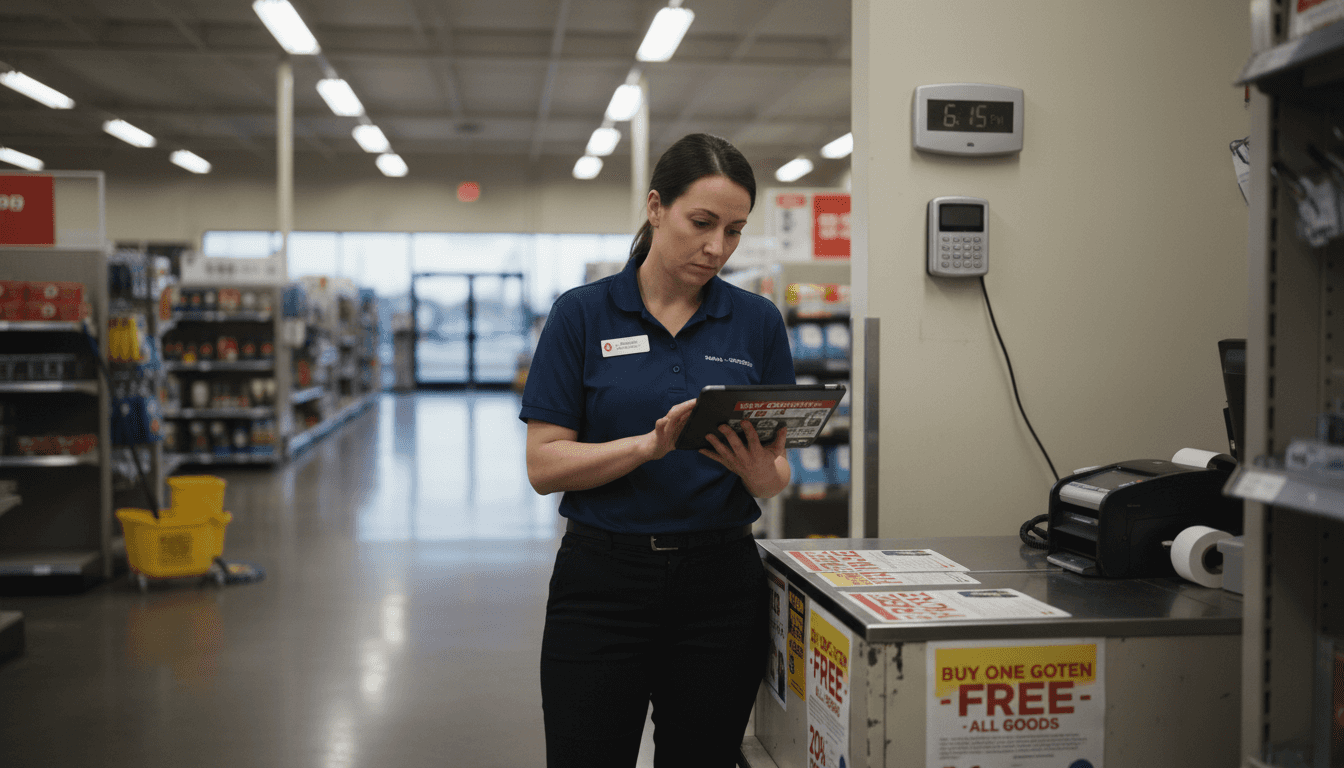
Without integration, a single camera might record everything, but no one sees it happening until the next morning.
Consolidating threat intelligence with security tools enables organizations to automate detection and reduce breach likelihood significantly. Your safes, cameras, alarms, and staff procedures work as one organism instead of separate pieces.
This coordinated response reduces losses, speeds recovery, and provides clear evidence for insurance claims and investigations.
Pro tip: Test your integrated response annually—simulate a security incident and measure how quickly each system reacts and communicates with others, then address any delays.
Real-World Business Applications and Compliance
Security integration isn’t abstract—it solves actual business problems while keeping you on the right side of the law. Compliance regulations exist worldwide, and ignoring them costs far more than building security properly from the start.
Your industry likely has specific compliance requirements. Integration ensures you meet them while protecting assets simultaneously.
Why Compliance Matters for Your Business
Regulations like GDPR, PCI-DSS, and industry-specific standards aren’t optional suggestions. They’re legal mandates with real penalties for violations.
Non-compliance consequences include:
- Heavy fines (often percentage-based on revenue)
- Legal liability if breaches occur
- Damaged reputation and lost customer trust
- Operational shutdowns or license revocation
- Personal liability for business owners
Integrated security addresses compliance requirements directly while protecting your actual assets—you accomplish both with one system.
Retail and Point-of-Sale Security
Retail businesses handle customer payment data daily. This data requires specific protection under PCI-DSS standards.
Integrated retail security includes:
- Camera systems positioned to monitor transaction areas
- Safe storage for cash, valuables, and sensitive documents
- Access controls limiting who enters cash handling areas
- Audit trails documenting all transactions and system access
- Employee training on data handling and security protocols
When systems integrate, they create documented evidence of compliance. Cameras record transactions, safes restrict access, and procedures ensure consistent handling.
Healthcare and Sensitive Records
Healthcare providers protect patient data under HIPAA regulations. This data is attractive to criminals and thieves.
Healthcare integration addresses:
- Physical security for records storage areas
- Digital controls limiting access to patient information
- Surveillance in secure areas with restricted access
- Documentation systems proving compliance efforts
- Staff training on confidentiality and security protocols
Aligning security risk management with regulatory requirements enables organizations to satisfy legal obligations while building operational resilience simultaneously.
Financial Services and Data Protection
Banks, credit unions, and financial advisors handle sensitive data requiring multi-layered protection.
Integrated security transforms compliance from a checkbox exercise into continuous operational reality—protection and documentation happen together, not separately.
Building Your Compliance Integration
Start by identifying which regulations apply to your specific industry and location. Then map those requirements to security controls you can implement and document.
Your integration should provide:
- Documented evidence of security measures for auditors
- Incident response procedures aligned with regulatory requirements
- Regular testing and updates to stay current with threats
- Training records showing staff preparation
- Clear policies defining security responsibilities
Integration proves you took compliance seriously—not just during an audit, but continuously throughout operations.
Pro tip: Consult with a compliance specialist in your industry to identify specific regulations you must meet, then design your security integration to address each requirement explicitly.
Risks of Fragmented Security and Cost Implications
Fragmented security is like having multiple locks on different doors that don’t communicate. A thief finds the weakest lock, slips through, and your expensive systems never coordinate a response. This approach bleeds money while leaving you vulnerable.
When systems don’t talk to each other, problems compound exponentially.
The Hidden Costs of Fragmentation
Businesses often buy security equipment piece by piece without planning how systems work together. This creates costly inefficiencies invisible until a problem occurs.
Fragmented systems generate:
- Duplicate spending on overlapping capabilities
- Staff confusion about which system handles what
- Manual processes replacing automated coordination
- Slow response times due to communication gaps
- Evidence loss when systems don’t record incidents consistently
You’re paying for protection multiple times over without getting protection.
Compare integrated versus fragmented security systems for business operations:
| Aspect | Integrated System | Fragmented System |
|---|---|---|
| Response Speed | Immediate, coordinated actions | Delayed, manual coordination |
| Compliance | Automated evidence and records | Difficult documentation, audit issues |
| Cost Efficiency | Avoids duplication, lowers expenses | Overlapping spending, higher recovery costs |
| Vulnerability | Gaps minimized, learns threats | Gaps exploited, repeated incidents |
Vulnerability Creation Through Gaps
Fragmented security infrastructures create disparate incompatible systems that complicate threat detection and mitigation. When your camera system doesn’t communicate with your access control system, criminals exploit that gap.
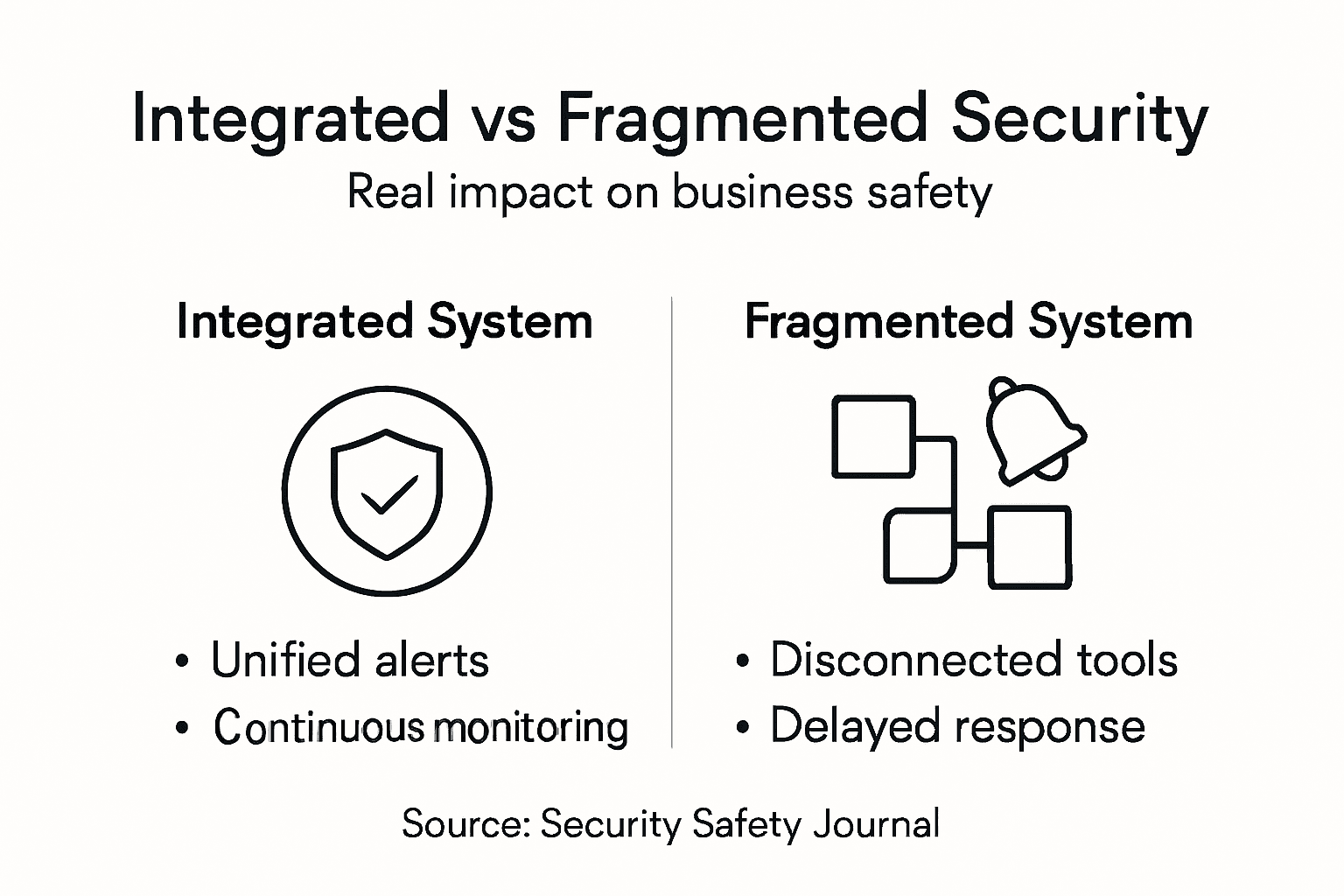
A thief enters through a door your access control misses. The camera records them, but no alert triggers because systems don’t share information.
Gaps enable:
- Delayed threat detection (hours instead of seconds)
- Incomplete response coordination
- Evidence gaps in incident documentation
- Repeated vulnerabilities across locations
- Contractor confusion about security procedures
Operational and Recovery Costs
When a security incident occurs with fragmented systems, recovery is painful and expensive.
You face:
- Longer downtime while determining what happened
- Higher investigation costs gathering evidence from multiple systems
- Incomplete documentation for insurance claims
- Staff overtime managing manual workarounds
- Delayed recovery coordinating across unconnected systems
Fragmentation in cybersecurity defenses raises costs of incident management and recovery significantly. What should take hours takes days because your systems can’t talk.
The Reputational Damage Factor
Fragmented security isn’t just expensive—it’s predictable. Criminals know exactly where systems fail to communicate, and they exploit those gaps methodically.
A breach at one location using fragmented security teaches thieves your vulnerabilities. They hit other locations the same way knowing your systems won’t coordinate response.
When breaches happen repeatedly, customers notice. Suppliers get concerned. Insurance rates climb. Your reputation suffers.
Compliance Complexity and Penalties
Fragmented systems make proving compliance nearly impossible. Auditors need clear documentation that security measures work. Disconnected systems create documentation chaos.
You might face:
- Audit failures due to incomplete evidence
- Compliance penalties from regulators
- Insurance claim denials lacking proper documentation
- Legal liability for inadequate security measures
Integration solves this by creating automatic, documented evidence that security measures operate continuously.
Pro tip: Before buying any new security equipment, verify it integrates with your existing systems—integration compatibility should be a required specification, not an afterthought.
Strengthen Your Business Safety with Integrated Security Solutions
The article highlights the crucial need for a coordinated security approach that combines technology, procedures, and staff training to effectively protect your business. If you are concerned about vulnerabilities caused by fragmented systems or want to avoid common misconceptions like relying solely on technology, it is time to explore professional-grade security products tailored to your specific needs. At Safes and Security Direct, you can find everything from advanced surveillance cameras to burglary-resistant safes designed to integrate seamlessly for comprehensive protection.

Take control of your asset protection today by building a security framework that truly works together. Visit Safes and Security Direct to discover durable, reliable equipment and expert guidance that transforms your security from isolated pieces into a unified defense. Do not wait for a breach to expose your gaps act now and secure your business with trusted integrated solutions.
Frequently Asked Questions
What is security integration and why is it important for businesses?
Security integration combines technology, processes, and organizational practices to protect business assets effectively. It is important because it creates a comprehensive security strategy that addresses various threats and vulnerabilities, leading to improved overall safety.
How does security integration enhance response to security threats?
Integrated security systems work together automatically. When one system detects a threat, it triggers coordinated actions across the network, allowing for faster response times and minimizing damage compared to isolated systems.
Why is ongoing adjustment and maintenance important in security integration?
Security threats are constantly evolving, and systems must be regularly updated and maintained to stay effective. Continuous adjustment ensures that security measures are aligned with emerging threats and changes within the business, reducing vulnerabilities.
How can small businesses benefit from security integration?
Small businesses often face significant risks due to resource limitations. Security integration provides robust protection by addressing specific vulnerabilities, improving incident response, and ensuring compliance with legal requirements, which can be crucial for their survival and growth.
Recommended
- Business Security Needs: Protecting Assets in 2026 – Safes and Security Direct
- Physical Security for SMEs: Protecting Assets and Growth – Safes and Security Direct
- Why Invest in High Security Solutions – Safes and Security Direct
- Role of Security Standards in Asset Protection – Safes and Security Direct