

Why Invest in High Security Solutions
City living brings a unique mix of excitement and everyday concerns, with safety topping the list for many urban homeowners. Modern threats now target both your digital networks and physical spaces, making traditional alarms and locks feel outdated. This article explains what truly defines high security solutions, exploring ways to protect your home using smart, integrated technologies that balance strong defense with practical, cost-efficient installation.
Table of Contents
- Defining High Security For Homes And Businesses
- Types Of High Security Systems Available
- Essential Features And Technologies Explained
- Real Risks And Threats Facing Urban Homeowners
- Cost, Savings, And Long-Term Value
- Common Pitfalls And What To Avoid
Key Takeaways
| Point | Details |
|---|---|
| High Security Integration | High security encompasses both physical and digital protection, requiring a strategic framework that adapts to emerging threats. |
| Customized Solutions | High security systems are not one-size-fits-all; tailored approaches are essential for addressing specific vulnerabilities and risk environments. |
| Technological Advancements | Modern security solutions leverage advanced technologies such as AI, biometric systems, and zero trust architectures for comprehensive defense. |
| Continuous Assessment | Regular security audits and updates are crucial for identifying vulnerabilities and ensuring long-term effectiveness of security systems. |
Defining High Security for Homes and Businesses
High security represents a comprehensive approach to protecting physical and digital assets through integrated technological and strategic measures. Unlike basic security solutions, high security systems provide multi-layered protection that addresses complex modern risks facing homes and businesses.
According to the U.S. Department of Energy’s cybersecurity research, high security now encompasses both physical and digital infrastructure protection. This means contemporary security solutions must defend against threats across multiple domains:
- Physical intrusion prevention
- Digital network protection
- Access control systems
- Real-time monitoring technologies
- Comprehensive threat detection mechanisms
The Security Planning Workbook by CISA emphasizes that effective high security requires a strategic, adaptable framework. Urban homeowners and business operators need solutions that can:
- Identify potential vulnerabilities
- Implement scalable protective measures
- Continuously assess and update security protocols
- Integrate advanced technological interventions
High security solutions are not one-size-fits-all. They demand customized approaches tailored to specific environmental contexts, threat landscapes, and organizational requirements. Modern security strategies must balance technological sophistication with practical implementation and cost-effectiveness.
Pro Tip: Conduct a comprehensive security audit before investing in high security solutions to identify your specific vulnerabilities and most critical protection needs.
Types of High Security Systems Available
High security systems have evolved dramatically, offering sophisticated protection mechanisms for homes and businesses. These advanced solutions go far beyond traditional locks and alarms, integrating complex technological frameworks to defend against multifaceted threats.
The NIST Secure Systems and Applications Group highlights several critical categories of high security systems that provide comprehensive protection:
-
Integrated Access Control Systems
- Biometric verification
- Smart card technologies
- Multi-factor authentication protocols
-
Advanced Surveillance Networks
- High-resolution cameras
- AI-powered threat detection
- Remote monitoring capabilities
-
Cybersecurity Infrastructure
- Network intrusion prevention
- Digital perimeter protection
- Encrypted communication channels
Modern high security systems typically incorporate physical and digital defense strategies. This means protecting not just against potential break-ins, but also preventing unauthorized digital access, data breaches, and sophisticated cyber threats.

For urban homeowners and businesses, comprehensive security solutions now require layered approaches that blend technological sophistication with strategic implementation. These systems must adapt quickly, providing real-time threat assessment and immediate response mechanisms.
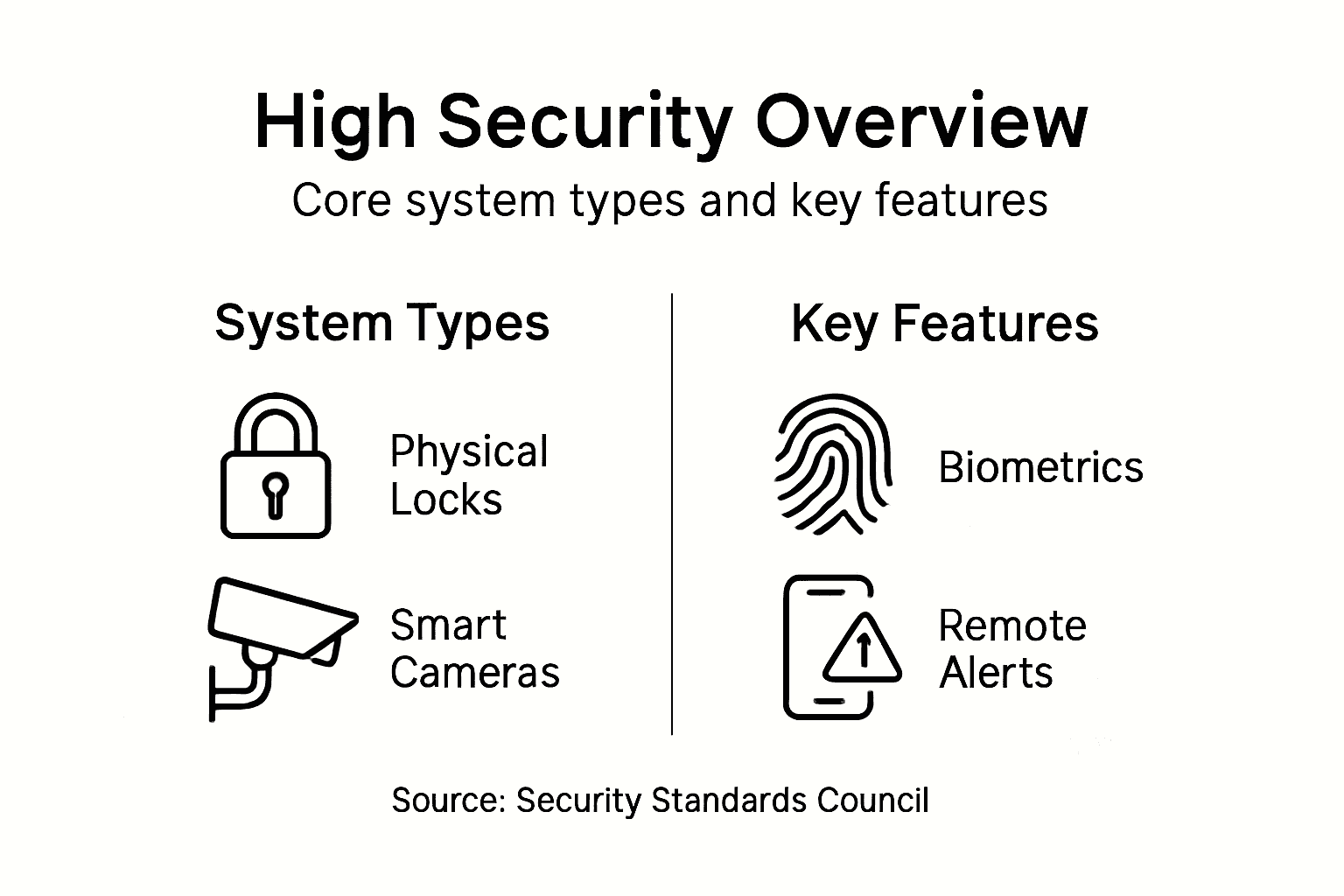
Key system types include:
Here’s a comparison of major high security system types and their core benefits for homes and businesses:
| Security System Type | Primary Protection Focus | Ideal Application | Scalability Potential |
|---|---|---|---|
| Perimeter Security System | Physical access barriers | Single-family residences | Moderate, add sensors |
| Smart Home/Office Network | Automation and monitoring | Urban homes, offices | High, modular components |
| Enterprise Protection Platform | Centralized defense control | Large businesses, offices | Very high, integrates many |
| Hybrid Physical-Digital Solution | Combined threat mitigation | Mixed-use facilities | Flexible, custom tailored |
- Perimeter Security Systems
- Smart Home/Office Security Networks
- Enterprise-Level Integrated Protection Platforms
- Hybrid Physical-Digital Security Solutions
Advanced security is no longer about barriers, but about creating intelligent, responsive protection ecosystems.
Pro Tip: Invest in security systems with modular designs that allow future technological upgrades and seamless integration of emerging protective technologies.
Essential Features and Technologies Explained
The landscape of high security technologies continues to evolve rapidly, offering increasingly sophisticated defense mechanisms for homes and businesses. Understanding these essential features requires a deep dive into the complex world of modern security technologies.
According to the NIST Secure Systems and Applications Group, cutting-edge security systems now incorporate multiple layers of advanced technological protections:
-
Authentication Technologies
- Biometric scanning
- Multi-factor authentication
- Behavioral recognition systems
-
Monitoring Technologies
- AI-powered threat detection
- Real-time video analytics
- Predictive risk assessment
-
Access Control Systems
- Digital credential management
- Encrypted access protocols
- Dynamic permission frameworks
The NSA’s cybersecurity advisories emphasize the critical importance of zero trust architectures, which assume no automatic trust and require continuous verification for every access attempt. This approach represents a fundamental shift from traditional perimeter-based security models.
Key technological innovations driving modern security solutions include:
For quick reference, here are key technologies driving advanced high security, with their purpose and unique impact:
| Technology | Primary Purpose | Unique Impact |
|---|---|---|
| Machine Learning | Threat pattern recognition | Faster anomaly detection |
| Cloud Monitoring | Off-site real-time access | Remote alerts and management |
| Quantum Encryption | Ultra-secure data transfer | Prevents data interception |
| Autonomous Response | Immediate threat handling | Reduces human error |
- Machine learning algorithms
- Cloud-based monitoring systems
- Quantum encryption technologies
- Autonomous threat response mechanisms
Security is no longer about building walls, but creating intelligent, adaptive defense ecosystems.
Pro Tip: Prioritize security systems with modular architectures that enable seamless technological upgrades and integrate emerging protective technologies.
Real Risks and Threats Facing Urban Homeowners
Urban homeowners face an increasingly complex landscape of security challenges that extend far beyond traditional physical break-in risks. Modern threats now encompass sophisticated digital vulnerabilities and interconnected technological risks that can compromise personal safety and property.
Research from the Universitat Oberta de Catalunya highlights the rising cybersecurity risks associated with smart home technologies. Connected devices have dramatically expanded potential attack surfaces for cybercriminals, creating unprecedented vulnerabilities:
-
Digital Vulnerability Vectors
- Internet-connected home devices
- Unsecured wireless networks
- Smart home automation systems
-
Physical Security Threats
- Urban property targeting
- Sophisticated burglary techniques
- Social engineering approaches
-
Technological Exploitation Risks
- IoT device hacking
- Network infiltration
- Personal data breaches
According to FEMA’s comprehensive threat assessment, urban homeowners must prepare for a wide range of potential hazards including:
- Cyber attacks targeting personal information
- Physical intrusion attempts
- Technology-enabled surveillance
- Advanced persistent threats
Vulnerability is no longer about locked doors, but about sophisticated digital and physical defense strategies.
Pro Tip: Conduct a comprehensive home security audit annually to identify and address emerging technological and physical vulnerabilities before they become critical risks.
Cost, Savings, and Long-Term Value
Investing in high security solutions represents a strategic financial decision that extends far beyond immediate protection. While upfront costs might seem significant, the long-term economic benefits create substantial value for urban homeowners and businesses.
According to academic research on cybersecurity investments, implementing robust security measures can dramatically reduce financial risks and potentially lower an organization’s overall cost of capital:
-
Direct Financial Protection
- Prevents potential theft losses
- Reduces insurance premiums
- Minimizes potential legal liabilities
-
Indirect Economic Benefits
- Enhances property value
- Increases investor confidence
- Provides operational continuity
-
Risk Mitigation Savings
- Prevents expensive data breaches
- Reduces potential reputation damage
- Eliminates emergency response costs
The economic calculus of security investments involves understanding both tangible and intangible returns. Urban homeowners should consider multiple dimensions of potential savings:
- Immediate property protection
- Reduced insurance expenditures
- Potential tax deductions
- Enhanced property marketability
Security is not an expense, but a strategic investment in long-term financial stability.
Pro Tip: Calculate your potential annual savings by comparing potential loss scenarios against security system investment costs to make a data-driven security decision.
Common Pitfalls and What to Avoid
Navigating high security solutions requires a strategic approach, with numerous potential missteps that can compromise your protection strategy. Urban homeowners and businesses must be acutely aware of the most common vulnerabilities that can undermine their security investments.
According to federal cybersecurity incident planning guidelines, organizations frequently encounter critical security implementation errors:
-
Planning Vulnerabilities
- Inadequate risk assessment
- Overlooking potential threat vectors
- Failing to establish comprehensive protocols
-
Technical Implementation Errors
- Inconsistent system updates
- Weak access control configurations
- Insufficient data encryption practices
-
Human Factor Risks
- Limited security awareness training
- Poor password management
- Ignoring social engineering tactics
Critical mistakes that urban homeowners must avoid include:
- Selecting generic, one-size-fits-all security solutions
- Neglecting regular system maintenance
- Underestimating the importance of user training
- Failing to integrate physical and digital security approaches
Security is a continuous process, not a one-time investment.
Pro Tip: Conduct quarterly security audits and maintain a dynamic, adaptable security strategy that evolves with emerging technological threats.
Elevate Your Protection with Expert High Security Solutions
The challenges of safeguarding your home or business have never been greater. With rising physical threats and digital vulnerabilities, investing in a tailored high security system is essential for comprehensive protection. Whether you are concerned about unauthorized access, advanced surveillance, or safeguarding valuables against fire and theft, understanding your unique risks is the first step. At Safes and Security Direct, we specialize in professional-grade security solutions designed to meet these critical needs.

Secure your property with confidence by exploring our broad selection of advanced surveillance cameras, state-of-the-art security systems, and durable safes. The key to effective high security lies in combining cutting-edge technology with reliable products that adapt as threats evolve. Don’t wait until vulnerabilities turn into costly losses. Visit Safes and Security Direct now and start customizing your security plan. Experience peace of mind by choosing trusted solutions that protect what matters most today and tomorrow.
Frequently Asked Questions
What are high security solutions?
High security solutions are comprehensive protection systems that safeguard both physical assets and digital data through advanced technologies and strategies, offering multi-layered defenses against a range of modern threats.
Why is it important to invest in high security measures for homes and businesses?
Investing in high security measures protects against theft, cyberattacks, and other risks, ultimately reducing potential financial losses, enhancing property value, and ensuring the continuity of operations.
How do high security solutions differ from traditional security systems?
High security solutions incorporate advanced technologies such as biometrics, AI-driven monitoring, and integrated digital protections, whereas traditional systems primarily rely on basic locks, alarms, and surveillance cameras.
What are common pitfalls in implementing high security systems?
Common pitfalls include inadequate risk assessments, neglecting regular maintenance, and failing to integrate physical and digital security strategies, which can compromise the overall effectiveness of security investments.
Recommended
- Role of Security Hardware: Protecting Multi-Unit Buildings – Safes and Security Direct
- Role of Security Hardware: Protecting Multi-Unit Buildings – Safes and Security Direct
- 7 Smart Ways to Improve Commercial Security Solutions – Safes and Security Direct
- Why Invest in Safes: Protecting Urban Homes – Safes and Security Direct