

Role of Security Hardware: Protecting Multi-Unit Buildings
Most American property managers know that over 60 percent of multi-unit residential thefts occur due to outdated security hardware. Protecting tenants is no longer just about locking doors. Property managers in every country face rising threats and tougher expectations, driving demand for smarter hardware solutions. This guide reveals how advanced security systems can dramatically strengthen building defenses, reduce legal risk, and set a new standard for tenant safety.
Table of Contents
- Defining Security Hardware And Its Purpose
- Major Types Of Security Hardware Solutions
- Key Features And Technologies Explained
- How Security Hardware Enhances Tenant Safety
- Mitigating Risks And Legal Responsibilities
Key Takeaways
| Point | Details |
|---|---|
| Security Hardware Importance | Security hardware is essential for protecting buildings and tenants from unauthorized access and threats, integrating advanced technologies for comprehensive safety. |
| Regular Security Assessments | Conduct security assessments every 18-24 months to ensure hardware remains up-to-date with current technological standards and vulnerabilities. |
| Legal Compliance | Property managers must maintain compliance with local safety regulations and document security measures to mitigate legal risks and enhance tenant safety. |
| Integrated Security Solutions | Implement a multi-layered security approach using various hardware types to ensure comprehensive protection without single points of vulnerability. |
Defining Security Hardware and Its Purpose
Security hardware represents the physical technological infrastructure designed to protect buildings, assets, and people from unauthorized access, intrusion, and potential threats. These systems go far beyond simple locks and keys, encompassing a comprehensive network of sophisticated devices that work together to create robust protection mechanisms. Hardware security foundations involve complex semiconductor-based technologies that form critical electronic defense systems.
At its core, security hardware includes electronic devices like surveillance cameras, access control systems, motion sensors, alarm mechanisms, and integrated security panels. These components communicate and collaborate to monitor, detect, and respond to potential security breaches in multi-unit residential environments. By creating layered defense strategies, security hardware provides property managers with sophisticated tools to mitigate risks and protect tenant safety.
The purpose of security hardware extends well beyond basic intrusion prevention. Modern systems leverage advanced technologies to verify device integrity and establish comprehensive monitoring frameworks. These systems can track entry and exit points, record suspicious activities, generate real-time alerts, and provide detailed documentation that can be crucial for post-incident investigations. Property managers can integrate these technologies to create adaptive, intelligent security ecosystems that respond dynamically to changing threat landscapes.
Pro tip: Conduct a comprehensive security assessment of your multi-unit building every 18-24 months to ensure your hardware remains current with emerging technological standards and potential security vulnerabilities.
Major Types of Security Hardware Solutions
Property managers navigating multi-unit building security must understand the diverse landscape of cybersecurity hardware solutions. These solutions fall into three primary categories: network security appliances, endpoint security hardware, and specialized security modules, each serving unique protective functions in comprehensive security ecosystems.
Network Security Appliances form the first critical defense layer, including:
- Firewalls that monitor and control incoming and outgoing network traffic
- Intrusion prevention systems (IPS) that actively detect and block potential security threats
- Router-level security devices that manage access points and validate network connections
Endpoint security hardware represents another crucial component, encompassing devices directly interfacing with individual access points. These include:
- Biometric scanners for advanced access control
- Security tokens and smart cards
- Specialized authentication devices that provide multi-factor verification mechanisms
Specialized Security Modules like hardware security modules (HSMs) offer advanced cryptographic protection, creating tamper-resistant environments for sensitive computational processes. Secure hardware techniques can include secure chip design, hardware Trojan detection mechanisms, and side-channel attack protections that go beyond traditional security approaches.
Pro tip: Develop a comprehensive security hardware strategy that integrates multiple hardware types, ensuring no single point of vulnerability exists in your multi-unit building’s protection framework.
Here’s a quick comparison of major security hardware types and their primary applications:
| Hardware Type | Core Application | Example Technology |
|---|---|---|
| Network Security Appliance | Protects network traffic | Firewalls, IPS |
| Endpoint Security Hardware | Secures access points | Biometric scanners, smart cards |
| Specialized Security Module | Handles cryptographic operations | Hardware security modules (HSMs) |
Key Features and Technologies Explained
Security hardware for multi-unit buildings relies on sophisticated hardware security technologies that create robust defense mechanisms. These advanced systems integrate multiple protective features designed to detect, prevent, and respond to potential security threats across complex residential environments.
Core Security Technologies include:
- Hardware Roots of Trust: Cryptographic foundations that verify device authenticity
- Physically Unclonable Functions (PUFs): Unique device identification mechanisms
- Secure Boot Processes: Ensuring system integrity before full operation
- Trusted Execution Environments: Isolated computational spaces preventing unauthorized access
Advanced security hardware incorporates sophisticated secure hardware techniques that go beyond traditional protective measures. These technologies implement real-time monitoring, anomaly detection, and adaptive response systems that can identify and neutralize potential security breaches before they escalate. Cryptographic modules and hardware-level protection mechanisms create multi-layered defense strategies that protect against sophisticated intrusion attempts.
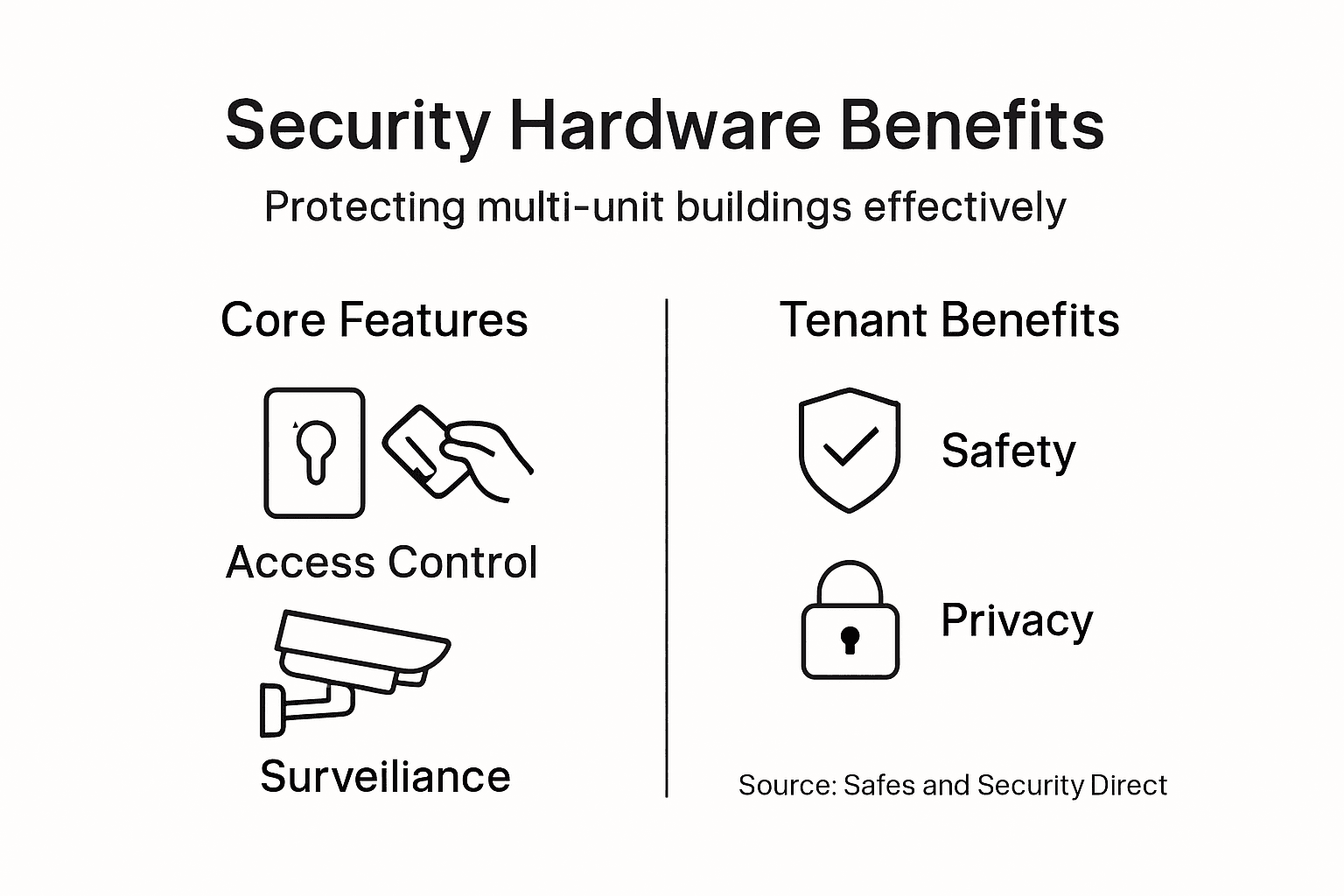
The most advanced security hardware systems now integrate artificial intelligence and machine learning algorithms, enabling predictive threat detection and automated response protocols. These intelligent systems can analyze patterns, recognize potential vulnerabilities, and dynamically adjust security parameters to maintain optimal protection for multi-unit residential environments.
Pro tip: Invest in security hardware with modular design capabilities, allowing seamless updates and integration of emerging protective technologies without complete system replacement.
How Security Hardware Enhances Tenant Safety
Multi-unit residential buildings require comprehensive security strategies that go beyond traditional protective measures. Access control systems transform tenant safety by eliminating vulnerabilities associated with conventional security approaches, creating intelligent, responsive environments that proactively protect residents.
Key Safety Enhancement Mechanisms include:
- Elimination of physical key risks
- Real-time entry monitoring and logging
- Immediate unauthorized access detection
- Remote management capabilities
- Comprehensive digital credential systems
Digital security hardware introduces multiple layers of protection that traditional security methods cannot match. Biometric scanners, smart card systems, and PIN-based entry mechanisms create granular control over building access, allowing property managers to track and verify every single entry and exit. These technologies provide unprecedented insights into building traffic, enabling rapid response to potential security incidents and creating a transparent, accountable security environment.
Advanced security hardware integrates sophisticated surveillance technologies that work synergistically to create comprehensive protection networks. Video analytics, motion detection systems, and automated alert mechanisms transform passive security infrastructure into active, intelligent defense platforms. By combining physical access control with real-time monitoring, these systems dramatically reduce potential security threats and provide tenants with a profound sense of safety and confidence in their living environment.
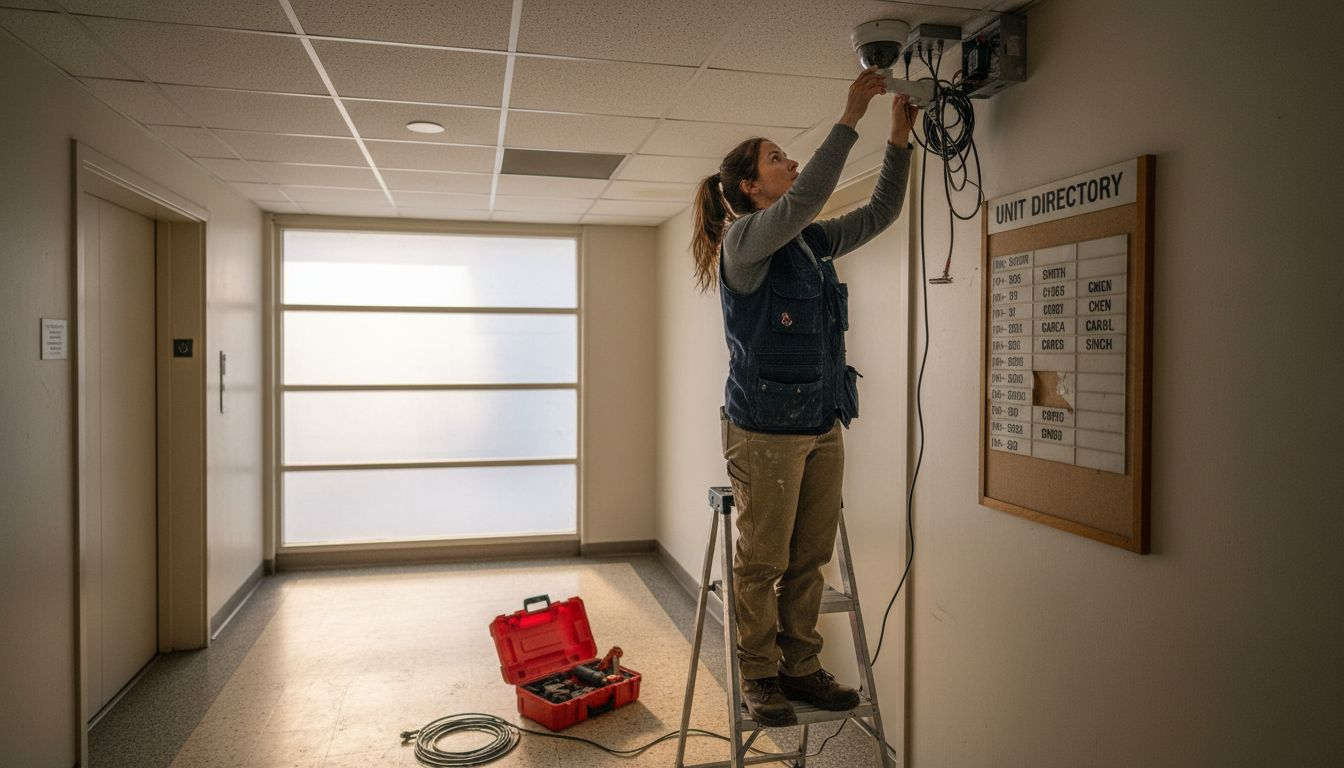
Pro tip: Conduct quarterly security hardware assessments to ensure your multi-unit building’s protection systems remain current with emerging technological standards and potential vulnerability patches.
Mitigating Risks and Legal Responsibilities
Property managers must recognize that security hardware represents more than technological solutions—it is a critical component of legal risk management and tenant protection. Security risk management requires a comprehensive approach that systematically identifies, evaluates, and addresses potential vulnerabilities within multi-unit residential environments.
Key Legal Risk Mitigation Strategies include:
- Conducting regular security vulnerability assessments
- Documenting security protocol implementations
- Maintaining comprehensive incident response plans
- Ensuring compliance with local safety regulations
- Implementing transparent security reporting mechanisms
Legal responsibilities extend beyond physical protection to encompass data privacy, tenant confidentiality, and demonstrable due diligence in security infrastructure. Property managers must develop robust documentation that proves proactive security measures, creating a defensible position in potential litigation scenarios. This involves not just installing security hardware, but maintaining detailed records of system upgrades, maintenance, and response protocols.
Cybersecurity compliance frameworks provide essential guidance for navigating complex legal landscapes. These frameworks help property managers establish accountability, define ethical boundaries, and create systematic approaches to protecting sensitive information. By adopting structured risk management strategies, multi-unit building administrators can reduce potential liability while simultaneously enhancing overall tenant safety and building reputation.
Pro tip: Develop a comprehensive security risk documentation system that captures every security hardware installation, update, and incident response, creating a clear audit trail for legal protection.
The following table summarizes key legal and operational responsibilities for property managers:
| Responsibility | Business Impact | Compliance Consideration |
|---|---|---|
| Vulnerability Assessment | Proactive risk identification | Required by many standards |
| Incident Response Documentation | Ensures swift, organized actions | Crucial for legal defense |
| Regulatory Compliance | Avoids penalties and liability | Mandated by local laws |
| Security System Maintenance | Maintains consistent protection | Proof of due diligence |
Strengthen Your Multi-Unit Building Security with Proven Hardware Solutions
Securing multi-unit buildings presents challenges like managing access control, preventing unauthorized entry, and maintaining tenant safety through advanced monitoring. The article highlights critical concepts such as biometric scanners, network security appliances, and hardware security modules, which play a vital role in creating layered protection. Property managers face the demanding task of integrating these technologies to reduce risks, comply with legal responsibilities, and foster trust among residents.
At Safes and Security Direct, we understand these challenges and offer a wide selection of professional-grade security hardware designed to meet the unique needs of multi-unit buildings. Our range includes sophisticated surveillance cameras, biometric access systems, and secure safes that protect valuables and sensitive information alike. By choosing our reliable solutions, you can transform your building’s security infrastructure, enhance tenant confidence, and stay ahead of evolving threats.
Explore our comprehensive security systems to build a resilient defense tailored for multi-unit residential environments.
Secure your property today with advanced security hardware that safeguards what matters most.

Discover how advanced security hardware can protect your multi-unit building now. Visit Safes and Security Direct to find the ideal products empowering you to manage security proactively. Upgrade your security approach to ensure tenant safety and legal compliance without delay.
Frequently Asked Questions
What is the primary purpose of security hardware in multi-unit buildings?
Security hardware is designed to protect buildings, assets, and individuals from unauthorized access and potential threats. It encompasses a range of devices that work together, such as surveillance cameras, access control systems, and alarm mechanisms, to create a comprehensive security framework.
How can security hardware enhance tenant safety?
Security hardware enhances tenant safety by implementing advanced access control systems that eliminate risks associated with physical key usage, provide real-time monitoring and logging of entries and exits, and feature immediate detection of unauthorized access, creating a more secure living environment.
What types of security hardware solutions are commonly used in multi-unit buildings?
Common types of security hardware solutions include network security appliances such as firewalls and intrusion prevention systems, endpoint security hardware like biometric scanners and smart cards, and specialized security modules such as hardware security modules (HSMs) that offer cryptographic protection.
How often should property managers assess their security hardware systems?
Property managers should conduct a comprehensive security assessment every 18-24 months to ensure that their hardware remains current with emerging technological standards and addresses any potential vulnerabilities.
Recommended
- Office Building Video Surveillance: Enhance Security & Efficiency – Safes and Security Direct
- Office Building Video Surveillance Solutions – Safes and Security Direct
- Top Home Security Products: Essential Devices – Safes and Security Direct
- Cameras Deterring Burglary: Effective Security Insight – Safes and Security Direct