

Fireproof Safe Selection Guide for Secure Home Protection
Losing important documents or cherished heirlooms to a fire is a risk no homeowner wants to face. Protecting passports, property deeds, and jewelry from disasters means choosing the right fireproof safe for your space and needs. This guide breaks down how to evaluate your valuables, compare essential safety features, and interpret fire resistance ratings so you can feel confident in your decision when safeguarding what matters most.
Table of Contents
- Step 1: Assess Your Storage Needs And Valuables
- Step 2: Determine Required Fire And Security Ratings
- Step 3: Measure Your Available Installation Space
- Step 4: Compare Essential Fireproof Safe Features
- Step 5: Verify Product Certifications And Warranties
Quick Summary
| Main Insight | Detailed Explanation |
|---|---|
| 1. Assess Your Valuables | Create an inventory of items including important documents, jewelry, and digital media to determine safe size and features. |
| 2. Know Fire Ratings | Understand fire resistance ratings for different items to select a safe that keeps your belongings protected during a fire. |
| 3. Measure Installation Space | Ensure the safe fits in your chosen location by measuring space and accounting for clearance, obstacles, and weight support. |
| 4. Compare Safe Features | Evaluate features such as lock mechanisms, waterproofing, and bolt down capability to secure your valuables effectively. |
| 5. Verify Certifications | Check manufacturer warranties and certifications from testing organizations to ensure product reliability and safety compliance. |
Step 1: Assess your storage needs and valuables
Selecting the right fireproof safe starts with a comprehensive evaluation of your specific valuables and storage requirements. Understanding the types of items needing protection helps you make an informed decision about safe size, features, and security level.
Begin by creating a detailed inventory of your valuables. Consider documents like passports, birth certificates, property deeds, and marriage licenses that are difficult to replace. Include financial records such as tax documents and investment certificates. Jewelry, family heirlooms, digital storage devices with critical data, and precious collectibles should also be cataloged. Assess each item’s monetary and sentimental value, physical dimensions, and vulnerability to fire or water damage.
Measure your items to determine the appropriate safe dimensions. Some safes are compact and perfect for documents, while others offer larger storage for bulky items or multiple valuables. Consider weight restrictions, shelf configurations, and interior compartments that can help organize different types of items. Think about accessibility you might need in emergencies and how frequently you will access the safe.
Pro Tip: Create a digital backup of critical documents and store them in a secure cloud service as an additional layer of protection beyond your physical fireproof safe.
Step 2: Determine required fire and security ratings
Selecting the right fireproof safe requires understanding fire resistance rating standards that protect your most valuable possessions. These ratings indicate how long a safe can withstand extreme temperatures and maintain the integrity of its contents during a fire emergency.
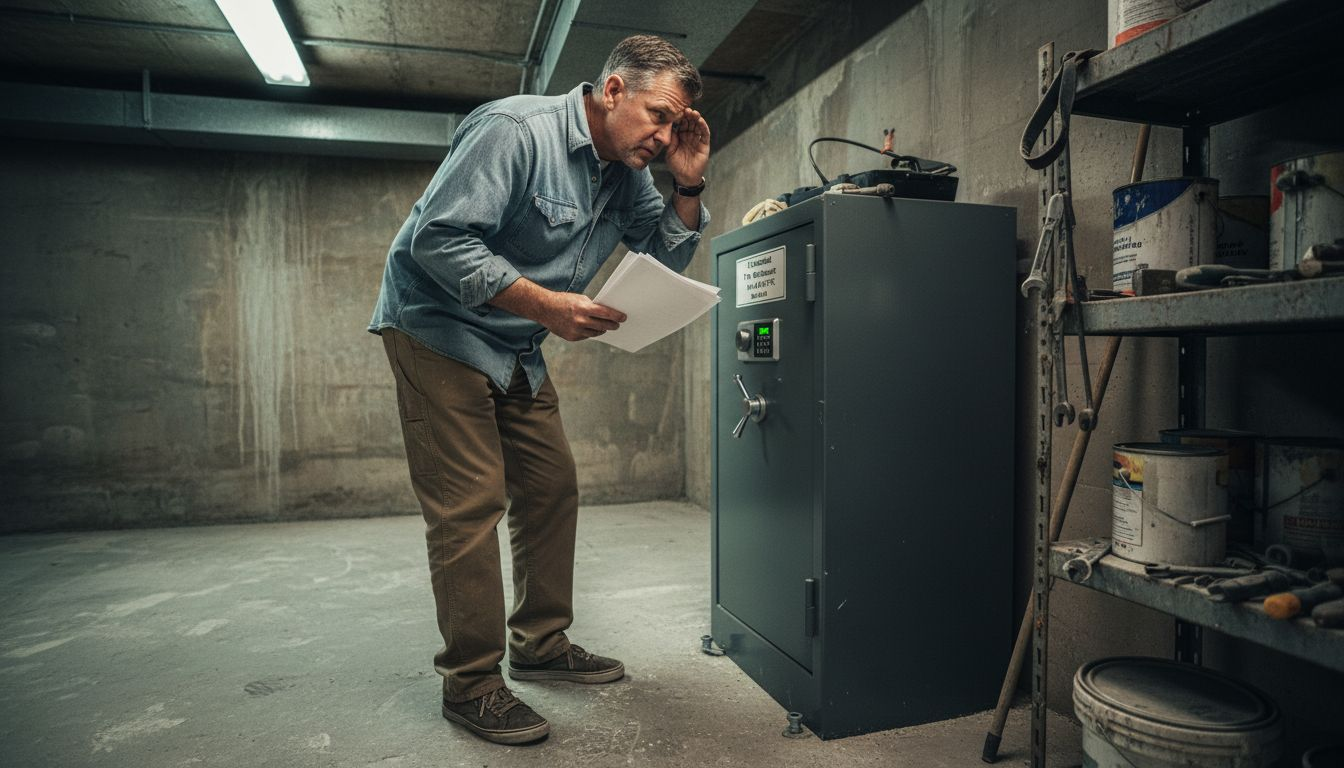
Fireproof safes are evaluated through standardized testing protocols that measure their ability to protect items under specific temperature and duration conditions. Different rating levels exist based on the type of items you want to preserve. Paper documents typically require protection up to 350 degrees Fahrenheit, while digital media and electronic devices need lower temperature thresholds around 125 degrees. Look for safes with independent testing certifications from recognized organizations that specify exact fire resistance times typically ranging from 30 minutes to 2 hours.
Consider additional security features beyond fire protection. Look for safes with robust locking mechanisms, drill resistant construction, and impact testing ratings. Some safes offer multiple layers of protection including fire resistance, water protection, and burglary deterrence. Match the safe’s security rating to the value and sensitivity of the items you plan to store.
Pro Tip: Request certification documentation from manufacturers to verify the specific fire and security ratings of the safe you are considering.
Below is a quick reference of fire resistance ratings and their recommended uses:
| Rating Type | Max Temp Resistance | Best For |
|---|---|---|
| Basic Document Protection | 350°F | Papers, certificates |
| Media/Data Safe | 125°F | Hard drives, electronics |
| Extended Fire Endurance | 2 hours, 1700°F | High-value collections |
| Impact + Water Resistance | Fire + drop + water | Jewelry, rare coins |
Step 3: Measure your available installation space
Before selecting a fireproof safe, carefully evaluate the installation space requirements in your home. Understanding the precise dimensions and location will help ensure your safe fits perfectly and provides maximum protection without compromising your living space.
Start by measuring the exact width, height, and depth of the area where you plan to install the safe. Use a reliable tape measure and record measurements in both inches and centimeters. Consider not just the safe’s exterior dimensions but also the clearance needed for opening doors, potential shelving, and ease of access. Pay attention to potential obstacles like electrical outlets, wall studs, baseboards, or heating vents that might interfere with installation. Check the floor strength to ensure it can support the safe’s weight especially for larger models that can weigh several hundred pounds.
Think strategically about placement. Ideal locations balance accessibility with discretion keeping the safe away from direct sunlight, high humidity areas, and potential water damage sources. Closets, home offices, or dedicated security areas work well. Ensure the location allows you to bolt the safe securely to the floor or wall to prevent unauthorized removal. Consider proximity to your most frequently accessed valuables while maintaining an element of surprise for potential intruders.
Pro Tip: Leave at least 2 to 3 inches of additional space around the safe during measurements to accommodate potential installation hardware and ensure smooth placement.
Step 4: Compare essential fireproof safe features
When selecting a fireproof safe, carefully evaluate the critical features that protect your valuables beyond basic fire resistance. Understanding the nuanced characteristics will help you choose a safe that provides comprehensive protection for your most important belongings.
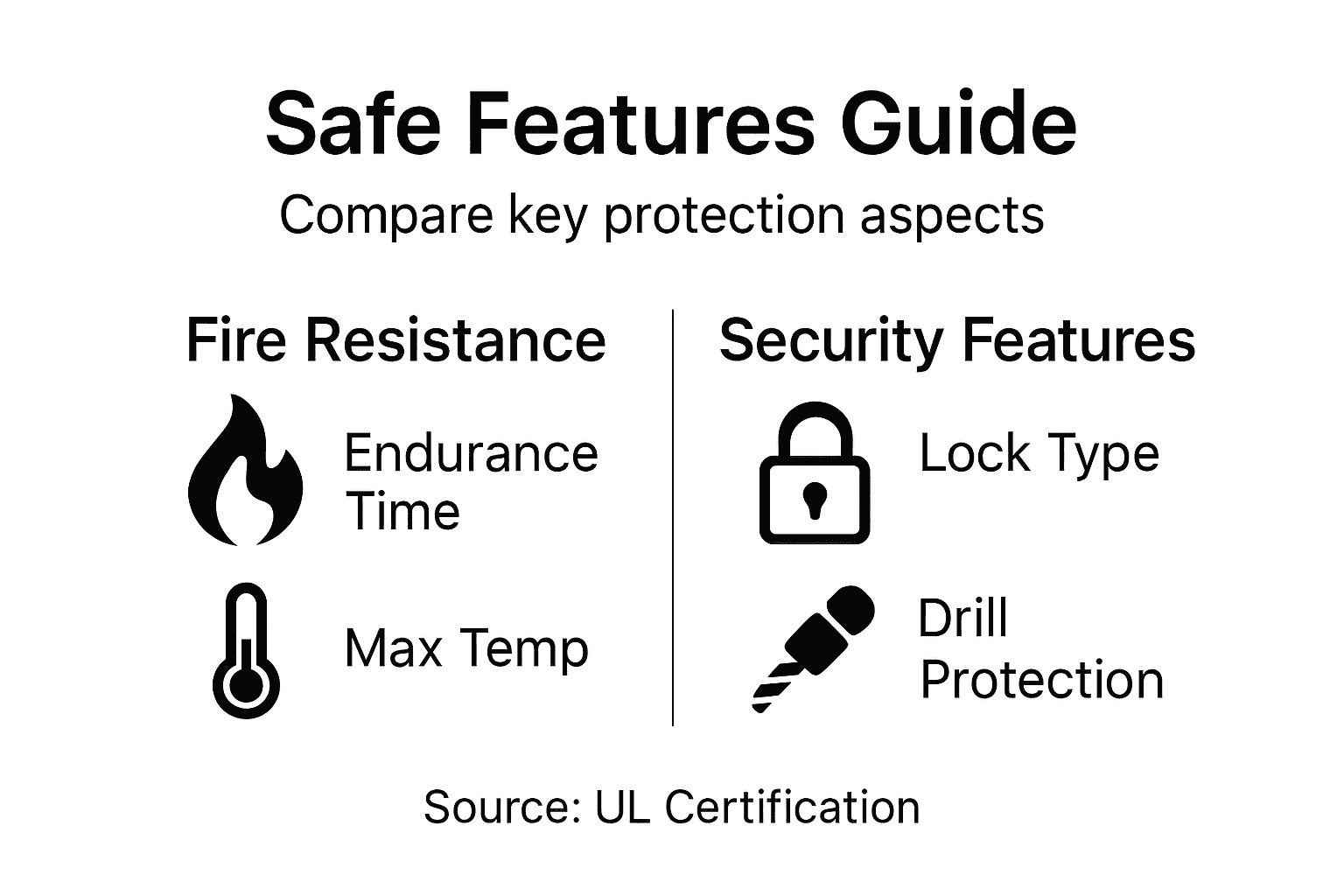
Focus on key performance specifications that directly impact your safe’s effectiveness. Fire endurance time represents a crucial metric you cannot overlook. Most quality safes offer protection ranging from 30 minutes to 2 hours at temperatures between 1200 and 1700 degrees Fahrenheit. Pay close attention to lock mechanisms available in digital keypad, combination dial, and traditional key formats. Digital locks provide convenience with programmable codes, while mechanical combination locks offer reliability without battery dependency. Interior design matters significantly waterproof seals, adjustable shelving, and protective padding can prevent damage to sensitive items like electronics and important documents.
Look beyond basic fire protection to evaluate additional security features. Consider bolt down capabilities that prevent safe removal, interior lighting for easier access, and warranties that guarantee replacement after fire damage. Examine the safe’s construction materials thickness of steel walls, quality of insulation, and third party certifications from recognized testing organizations. Some safes offer multiple layers of protection including fire resistance, water protection, and impact durability.
Here’s a summary of recommended fireproof safe features and the additional advantages they provide:
| Feature | Description | Added Benefit |
|---|---|---|
| Fire Endurance Time | 30 min to 2 hours at high temps | Greater item protection |
| Lock Mechanism | Digital, combination, or key options | Versatile access control |
| Waterproof Seals | Prevent water intrusion | Safeguards sensitive items |
| Bolt Down Capability | Allows anchoring to floors or walls | Enhanced theft prevention |
| Interior Lighting | Built-in LED or similar light source | Improved ease of access |
| Third Party Certification | UL, ETL, or equivalent testing | Verified safety and security |
| Warranty Coverage | Comprehensive repair or replacement | Long-term peace of mind |
Pro Tip: Request detailed certification documentation from manufacturers to verify the specific performance ratings and protection capabilities of each safe model.
Step 5: Verify product certifications and warranties
Validating the authenticity of product certification credentials is crucial when selecting a fireproof safe. Understanding how to verify these certifications will protect you from fraudulent claims and ensure you invest in a truly reliable security solution.
Begin by examining third party certifications from recognized testing organizations. Look for marks from reputable bodies like Underwriters Laboratories (UL), which conduct rigorous fire resistance and security testing. Check that certifications are current and applicable to the specific safe model. The documentation should clearly outline fire endurance times, temperature resistance levels, and specific protection standards met. Pay close attention to the scope of certification whether it covers fire protection, impact resistance, or water damage prevention.
Carefully review warranty terms that accompany your safe. Comprehensive warranties should cover replacement or repair in case of fire damage, manufacturing defects, and potential structural failures. Request detailed warranty documentation that specifies exact coverage conditions, duration, and claim procedures. Some manufacturers offer extended warranties that provide additional protection beyond standard terms. Verify if the warranty is transferable should you sell your home and if there are any specific maintenance requirements to keep the warranty valid.
Pro Tip: Cross reference certification numbers with official accreditation databases to confirm the legitimacy of product testing credentials.
Secure Your Valuables with the Right Fireproof Safe Today
Choosing the perfect fireproof safe can feel overwhelming when you consider factors like fire resistance ratings, space constraints, and the security features necessary to protect your most treasured documents and valuables. This guide highlights common challenges such as matching safe dimensions to your inventory, verifying fire endurance certifications, and ensuring you get comprehensive protection against fire, water, and theft.
At Safes and Security Direct, we understand how critical it is to safeguard your home and assets with trusted solutions. Our extensive collection includes fireproof safes that meet rigorous testing standards, featuring durable construction and versatile locking mechanisms to fit your security needs. From compact models perfect for important papers to larger safes designed to secure jewelry and digital media, we provide quality products backed by reliable warranties and certifications.
Don’t wait until it’s too late to protect what matters most. Explore our selection now and let us help you find a fireproof safe tailored to your requirements. Visit Safes and Security Direct to browse options and get expert advice on the best security fit for your home or business.
Frequently Asked Questions
How do I assess my storage needs for a fireproof safe?
To assess your storage needs, create a detailed inventory of your valuables, including essential documents, jewelry, and electronics. Measure the dimensions of these items to determine the appropriate size of the fireproof safe you need.
What fire and security ratings should I look for in a fireproof safe?
Look for fireproof safes with independent testing certifications that specify fire endurance times from 30 minutes to 2 hours at high temperatures. Additionally, consider security features like robust locking mechanisms and drill-resistant construction for enhanced protection.
How do I measure the space available for installing a fireproof safe?
Measure the width, height, and depth of the area where you plan to install the safe, leaving at least 2 to 3 inches of additional space for hardware. Ensure the installation area can support the safe’s weight and is clear of any obstacles that might hinder access or installation.
What are the critical features to evaluate in a fireproof safe?
Evaluate features such as fire endurance time, lock mechanisms, waterproof seals, and bolt-down capabilities. Choose a safe that offers the right combination of fire protection, security, and interior organization tailored to your specific needs.
How can I verify the product certifications and warranties for a fireproof safe?
To verify product certifications, check for recognized testing marks and review the certification documents for their applicable standards. Additionally, review the warranty terms to understand what is covered and ensure the warranty offers sufficient protection in case of fire damage or defects.
Recommended
- Buying Guide For Fire Resistant Home Safe in the United States – Safes and Security Direct
- Role of Fireproof Safes in Asset Protection – Safes and Security Direct
- Fireproof Filing Cabinets: Secure Your Documents – Safes and Security Direct
- Step-by-Step Guide to Choosing Safes for Home Security – Safes and Security Direct