

Role of Fireproof Safes in Asset Protection
Most American homeowners and business owners underestimate the impact a single fire can have, with damages often surpassing $12 billion annually in cities worldwide. Protecting important documents, digital backups, and irreplaceable valuables has become urgent, especially as theft and disasters rise in urban settings. Understanding how fireproof safes work helps you choose the right solution for your unique home or business, ensuring peace of mind and security where it matters most.
Table of Contents
- What Are Fireproof Safes and Their Function
- Types of Fireproof Safes for Different Needs
- Core Features and How Fireproofing Works
- Practical Home and Business Applications
- Cost, Risks, and Common Mistakes
- Fireproof Safes vs Other Protection Options
Key Takeaways
| Point | Details |
|---|---|
| Fireproof Safes Protect Valuables | Fireproof safes are engineered to shield important assets from extreme heat, ensuring internal temperatures remain stable. |
| Types of Fireproof Safes | Different classifications exist, including document safes for personal use and media safes for digital infrastructure, each offering varying levels of fire resistance. |
| Understanding UL Ratings | Evaluating Underwriters Laboratories (UL) ratings is essential to ensure the safe meets specific fire resistance requirements tailored to your needs. |
| Avoid Common Mistakes | Many consumers misjudge fireproof safe capabilities; always verify protection levels and consider potential environmental risks beyond fire damage. |
What Are Fireproof Safes and Their Function
Fireproof safes are specialized protective enclosures designed to shield critical valuables from fire damage through advanced engineering techniques. These robust security solutions utilize complex material technologies to maintain internal temperatures during extreme heat events, preserving documents, digital media, jewelry, and other irreplaceable possessions.
At their core, fireproof safes are constructed with specialized heat-resistant composites containing gypsum-based fillers and concrete composites. These materials work through a sophisticated thermal protection mechanism. When exposed to high temperatures, the internal insulation layers absorb and dissipate heat through a process called calcination, where water-containing materials strategically prevent temperature increases inside the safe.
The structural design of fireproof safes includes multiple protective elements. Steel outer shells provide physical durability, while heat-activated intumescent seals automatically expand during fire conditions to block smoke and heat penetration. This multi-layered approach ensures that internal temperatures remain stable, typically maintaining environments below 350 degrees Fahrenheit even when external temperatures reach 1700 degrees.
Modern fireproof safes are engineered to protect various asset types, including paper documents, digital storage devices, and valuable personal items. Different models offer varying levels of protection, with ratings specifying duration of fire resistance (30 minutes, 1 hour, or more) and maximum temperature tolerances.
Pro tip: When selecting a fireproof safe, always verify its specific Underwriters Laboratories (UL) rating to ensure it matches your precise protection requirements.
Types of Fireproof Safes for Different Needs
Fireproof safes are not a one-size-fits-all solution. Different environments and protection requirements demand specialized designs tailored to specific asset types and security needs. From residential to commercial applications, manufacturers have developed a range of fireproof safe categories to address diverse protection scenarios.
Home and personal use safes typically fall into several key categories. Document safes are compact units designed specifically for storing paper records, passports, birth certificates, and other critical personal documents. These safes often provide 30-60 minutes of fire protection at temperatures up to 1700 degrees Fahrenheit. Document storage solutions have become increasingly sophisticated, offering digital media protection alongside traditional paper preservation.
Commercial and business-oriented fireproof safes represent another critical category. Large media safes protect digital infrastructure like hard drives, servers, and backup systems. These units often feature more robust thermal insulation and longer fire resistance ratings, sometimes extending protection for up to 2-3 hours. Data center and server room applications require specialized safes that can maintain internal temperatures below critical failure points during extreme heat events.
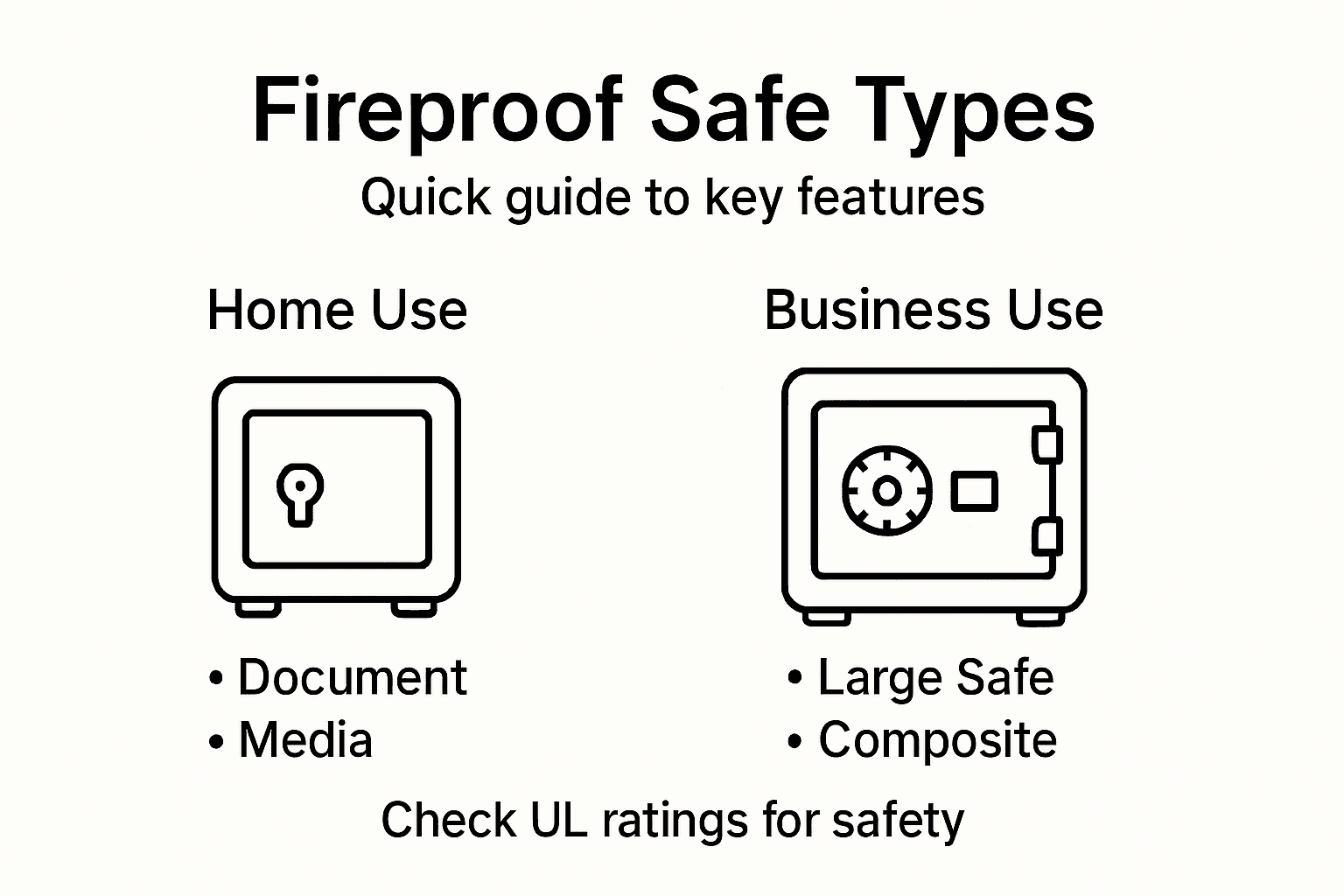
For high-security environments, composite fireproof safes offer multilayered protection. These advanced units combine fire resistance with burglar-proofing mechanisms, using reinforced steel shells, complex locking systems, and advanced thermal barrier technologies. They are particularly suitable for financial institutions, legal offices, and businesses handling sensitive physical and digital assets.
Pro tip: Always verify the specific Underwriters Laboratories (UL) fire rating when selecting a fireproof safe to ensure it matches your precise protection requirements.
Here is a comparison of common fireproof safe types and their typical protection features:
| Safe Type | Ideal Use Cases | Typical Fire Rating | Additional Security |
|---|---|---|---|
| Document Safe | Home papers, IDs, wills | 30–60 min at 1700°F | Basic |
| Media/Data Safe | Hard drives, servers | 2–3 hours at 1700°F | Enhanced insulation |
| Composite Safe | High-value items, cash | 1–2 hours at 1700°F | Burglar-resistant |
| Specialty Safe | Lab, tech, medical assets | Custom, varies by use | Environmental shields |
Core Features and How Fireproofing Works
Fireproof safes represent a sophisticated engineering solution designed to protect valuable assets from extreme thermal environments. The core functionality of these security devices revolves around sophisticated materials and structural designs that actively resist heat transfer and maintain stable internal temperatures during fire events.
Thermal Barrier Technology is the fundamental principle behind fireproof safe protection. Scientific mechanisms of heat resistance involve complex chemical and physical interactions within the safe’s construction. Manufacturers utilize specialized insulating materials like gypsum-based composites containing chemically bound water molecules. When exposed to high temperatures, these materials undergo a process called calcination, where the water molecules release steam, effectively absorbing and dissipating thermal energy.
The structural design of fireproof safes includes multiple protective layers. Steel outer walls create a robust external shell, while interior insulation materials work dynamically to prevent heat penetration. Intumescent seals represent a critical technological feature, automatically expanding when exposed to high temperatures to create additional thermal and smoke barriers. These seals form a critical protective mechanism, blocking potential heat and smoke intrusion points during fire incidents.
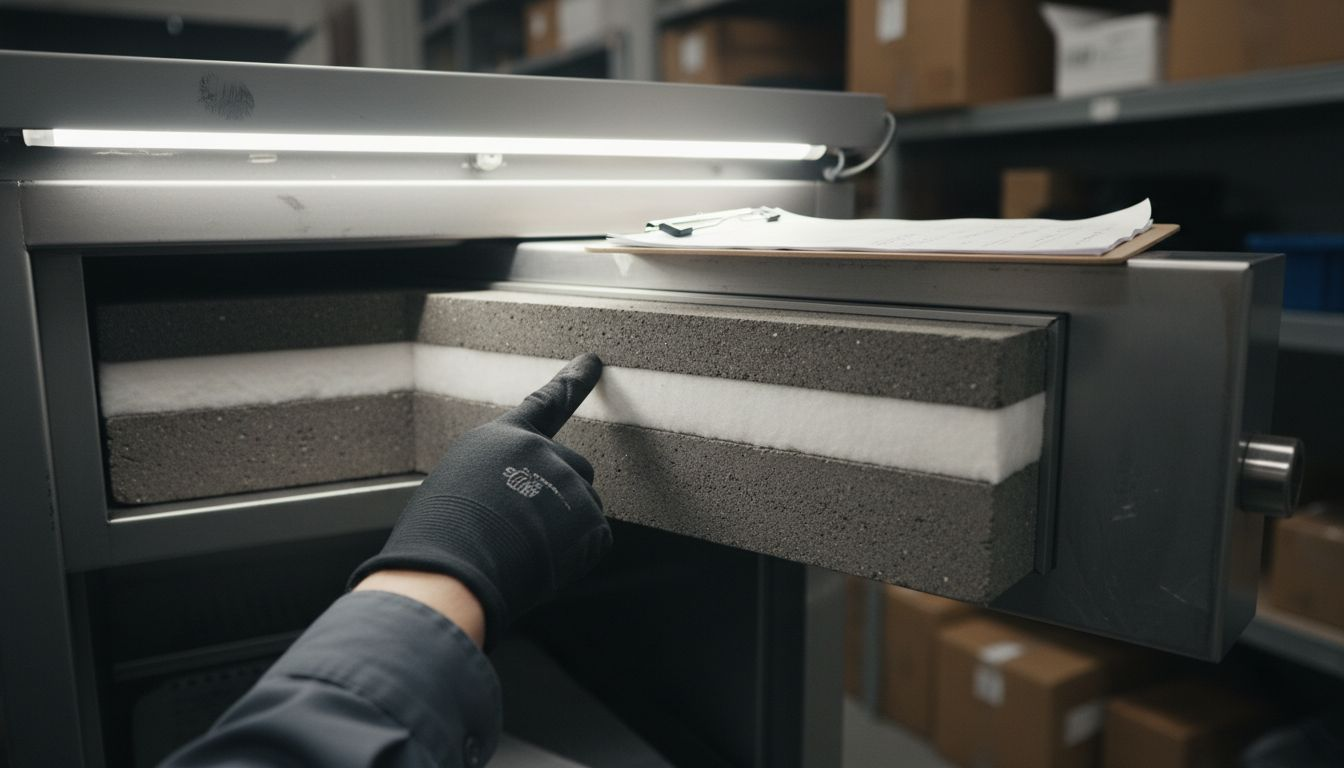
Underwriters Laboratories (UL) provides standardized rating systems that quantify a safe’s fire resistance capabilities. These ratings specify critical performance metrics such as maximum internal temperature maintenance, duration of protection, and specific environmental resistance levels. Ratings typically range from 30 minutes to several hours of guaranteed thermal protection, allowing users to select safes matched precisely to their specific asset protection requirements.
Pro tip: Always compare multiple UL ratings and verify the specific temperature and duration specifications when selecting a fireproof safe for your most critical assets.
This table summarizes key UL fireproof safe rating aspects for easy reference:
| UL Rating Example | Maximum Internal Temp | Rated Duration | Protected Contents |
|---|---|---|---|
| UL 350 | 350°F | 1–2 hours | Paper documents |
| UL 125 | 125°F | 1–3 hours | Digital media, disks |
| UL 72 Class 350 | 350°F | 30 min–4 hours | Paper, some electronics |
| UL 72 Class 125 | 125°F | 30 min–4 hours | Magnetic storage media |
Practical Home and Business Applications
Fireproof safes have become essential protective solutions across diverse environments, addressing critical asset preservation needs for both residential and commercial settings. The versatility of these security devices extends far beyond simple storage, offering strategic protection for irreplaceable documents, digital media, and valuable personal items.
In residential contexts, home protection requires strategic asset management. Fire resistant home safes serve multiple purposes beyond fire protection. Homeowners typically use these safes to secure important documents like birth certificates, passports, property deeds, insurance policies, and family medical records. Additionally, they provide secure storage for precious jewelry, family heirlooms, and rare collectibles that cannot be easily replaced.
Business environments demand more comprehensive protection strategies. Corporate asset preservation involves safeguarding critical infrastructure including financial records, client databases, intellectual property documentation, and sensitive digital media. Small businesses and professional offices rely on fireproof safes to maintain regulatory compliance, protect confidential information, and ensure business continuity during unexpected disaster scenarios. Legal firms, medical practices, and financial institutions particularly benefit from advanced fireproof storage solutions that can protect complex record-keeping systems.
Specialized fireproof safes have emerged for unique industry requirements. Research laboratories, medical facilities, and technology companies often need safes capable of protecting specialized equipment, research data, and critical scientific documentation. These advanced units offer protection not just from fire, but also from environmental factors like humidity, electromagnetic interference, and potential physical damage.
Pro tip: Consider creating digital backups of critical documents and storing backup drives in separate fireproof locations to maximize your asset protection strategy.
Cost, Risks, and Common Mistakes
Selecting the right fireproof safe involves carefully balancing financial investment, security requirements, and potential risk mitigation. Understanding the nuanced landscape of protection costs and potential pitfalls is crucial for making an informed purchasing decision that genuinely safeguards your most valuable assets.
Initial investment costs for fireproof safes vary dramatically based on size, protection rating, and technological sophistication. Fire resistant home safe options range from modest personal units costing $100 to comprehensive commercial systems exceeding $5,000. Homeowners and businesses must consider not just the upfront expense, but the potential financial impact of losing irreplaceable documents and digital assets during an unexpected fire event.
Common mistakes in safe selection can significantly compromise asset protection. Many consumers mistakenly assume all fireproof safes offer identical protection levels. Critical errors include overlooking UL ratings, neglecting specific environmental resistance requirements, and failing to understand the difference between fire resistance and burglar protection. Some individuals purchase inadequately rated safes that provide minimal protection, creating a false sense of security while leaving critical assets vulnerable to potential destruction.
Risk assessment requires comprehensive evaluation beyond simple fire protection metrics. Factors like humidity resistance, electromagnetic shielding, and structural durability play crucial roles in comprehensive asset preservation. Businesses and individuals must consider potential secondary damage mechanisms, such as water damage from firefighting efforts or smoke contamination, which can be equally destructive to sensitive documents and electronic media.
Pro tip: Always budget for a safe that exceeds your current protection requirements, allowing for potential future asset expansion and more comprehensive security coverage.
Fireproof Safes vs Other Protection Options
Comparing fireproof safes with alternative asset protection methods reveals significant differences in comprehensive security strategies. While multiple approaches exist for preserving valuable documents and digital assets, fireproof safes offer unique advantages that distinguish them from conventional storage solutions.
Traditional storage methods like bank safety deposit boxes and home filing cabinets present notable limitations. Home security solutions demonstrate that on-site protection provides immediate accessibility and control unavailable through external storage options. Bank deposit boxes, while secure, involve limited access hours, potential transportation risks, and additional fees. Fireproof safes eliminate these constraints by providing 24/7 personal asset management with robust thermal and physical protection.
Digital backup alternatives offer partial protection but cannot replace comprehensive physical safeguarding. Cloud storage and external hard drives provide data redundancy but remain vulnerable to systemic risks like widespread infrastructure failures, cyber attacks, or regional disasters. Fireproof safes uniquely combine physical document preservation with potential digital media protection, offering a multilayered approach that digital-only solutions cannot match. Advanced models now incorporate electromagnetic shielding, protecting digital storage devices from potential technological degradation.
Insurance and replacement strategies represent another comparative protection method. However, certain assets like family photographs, historical documents, and irreplaceable personal records cannot be financially compensated. Fireproof safes provide a proactive protection strategy that goes beyond monetary reimbursement, preserving sentimental and historical value that no insurance policy can truly replace.
Pro tip: Consider a hybrid protection approach that combines fireproof safe storage with digital backups to maximize comprehensive asset preservation.
Protect What Matters Most with Professional Fireproof Safes
The article highlights the critical challenge of safeguarding irreplaceable documents, digital media, and valuables from devastating fire events. If you are concerned about maintaining stable internal temperatures for your assets during extreme heat or looking for certified UL-rated fire protection, choosing the right fireproof safe is key. Important features such as intumescent seals, gypsum-based insulation, and comprehensive fire ratings demand a trusted solution designed to meet your protection goals.
At Safes and Security Direct you can explore a wide selection of high-quality fireproof safes engineered for homes and businesses. Our inventory includes reliable and durable safes that combine advanced fire resistance with burglary deterrence. Whether you need document safes for critical papers or media safes to shield digital backups, our products offer peace of mind against fire damage and other threats. Learn more about how scientific thermal barrier technology works and find a secure fit that matches your asset protection needs by visiting our Safes and Security Direct homepage.
Secure your irreplaceable assets now by choosing from our professional-grade fireproof safes. Protecting your valuables starts with selecting the right safe designed to resist fire according to industry standards. Visit Safes and Security Direct to browse detailed product specifications and enjoy expert customer support to help you make the best choice for your safety. Don’t wait for disaster to strike take action today.
Frequently Asked Questions
What is the main function of fireproof safes?
Fireproof safes are designed to protect important valuables from fire damage. Their specialized construction helps maintain stable internal temperatures during extreme heat events, preserving documents, digital media, jewelry, and other irreplaceable items.
How do I choose the right fireproof safe for my needs?
When selecting a fireproof safe, consider what items you need to protect, the amount of fire resistance required, and the specific Underwriters Laboratories (UL) rating. Different safes are rated for various durations and temperatures, so choose one that matches your protection requirements.
What types of fireproof safes are available for personal use?
Common types of fireproof safes include document safes, which protect paper records and personal documents, and media/data safes, which safeguard digital storage devices. Each type offers different fire ratings and security features to meet various needs.
Can fireproof safes also protect against water damage?
While fireproof safes are primarily designed to resist heat, many models also feature water-resistant capabilities. This can help protect contents from water damage that may occur during firefighting efforts or other emergencies. Always check the specifications for water resistance options.
Recommended
- Buying Guide For Fire Resistant Home Safe in the United States – Safes and Security Direct
- Fireproof Filing Cabinets: Secure Your Documents – Safes and Security Direct
- Fire Resistant Metal Filing Cabinets: Essential Fire Safety – Safes and Security Direct
- Why Invest In a Safe for Valuables: Real Protection – Safes and Security Direct
- Insurance-Approved Locks: Security and Compliance Explained
- 7-Step High-Security Lock Checklist for Business Safety - A To Z Locksmith Inc