

Why Upgrade Security Systems: Essential 2026 Impact
Traditional locks and simple alarms no longer offer the security confidence many property owners expect. As threats become more clever and technology keeps changing, outdated systems leave valuable assets at risk for theft and cyber attacks. Understanding the difference between old-fashioned approaches and modern, integrated security networks will help you make informed decisions, protect your property, and stay ahead of emerging risks in a rapidly advancing world.
Table of Contents
- Defining Modern Security Systems And Misconceptions
- Key Types Of Security Systems And Technologies
- How Upgrades Address Evolving Threats
- Legal, Regulatory, And Insurance Implications
- Risks And Costs Of Outdated Security Systems
- Comparing Upgrades Vs Alternatives For Protection
Key Takeaways
| Point | Details |
|---|---|
| Modern Security Systems are Integrated | Today’s security systems combine physical and digital protections for comprehensive threat management. |
| Proactive Vulnerability Management is Essential | Organizations must shift from reactive solutions to proactive strategies that address potential risks before they manifest. |
| Invest in Advanced Technologies | Utilizing AI, machine learning, and other advanced technologies enhances threat detection and response capabilities. |
| Regular Security Audits are Crucial | Annual audits help identify vulnerabilities and ensure systems are aligned with the latest technological standards. |
Defining Modern Security Systems and Misconceptions
Today’s security systems have evolved far beyond traditional locks and alarms, transforming into sophisticated, integrated networks that protect physical and digital spaces. Contemporary security mechanisms now combine multiple layers of protection across technological domains.
Modern security systems represent a complex ecosystem encompassing several critical components:
- Network Security: Digital infrastructure protection
- Physical Access Controls: Electronic locks, biometric scanners
- Surveillance Technologies: Advanced cameras and monitoring systems
- Cybersecurity Protocols: Digital threat prevention mechanisms
Contrary to popular misconceptions, security is not a static concept but a dynamic, continuously adapting framework. Secure-by-design principles now emphasize proactive vulnerability management rather than reactive solutions.
Businesses and homeowners must recognize that modern security transcends traditional boundaries. The integration of artificial intelligence, machine learning, and real-time threat analysis has fundamentally transformed how we understand protection. Each system now functions as an intelligent, interconnected network capable of anticipating and mitigating potential risks.
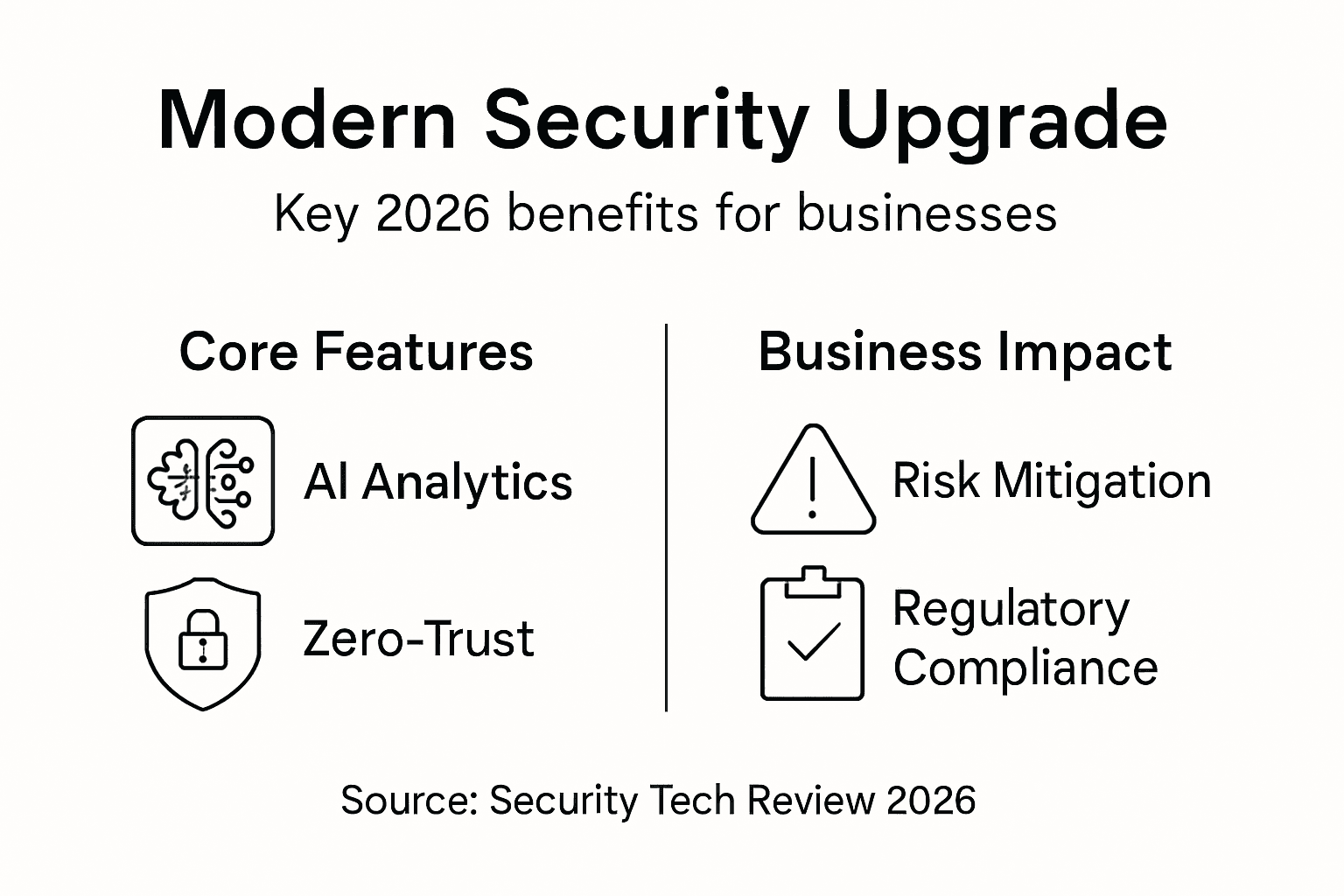
Here’s a summary highlighting how modern security system features impact organizations and property owners:
| Modern Security Feature | Key Function | Strategic Business Benefit |
|---|---|---|
| AI-driven threat analytics | Detects new risks in real time | Faster and smarter threat response |
| Integrated network security | Links digital and physical protections | Reduces vulnerabilities, enhances control |
| Zero-trust authentication | Verifies each access attempt | Minimizes risk of unauthorized breaches |
| Regular automated vulnerability scans | Finds weaknesses before attacks happen | Enables proactive risk mitigation |
Pro tip: Conduct a comprehensive security audit annually to identify potential vulnerabilities and ensure your security systems remain current with emerging technological standards.
Key Types of Security Systems and Technologies
Modern security technologies have dramatically expanded beyond traditional surveillance, evolving into sophisticated, interconnected systems that protect against physical and digital threats. Security technologies now encompass multiple comprehensive domains designed to safeguard critical infrastructure across diverse sectors.
Key types of security systems include:
-
Physical Security Technologies:
- Video surveillance cameras
- Biometric access control systems
- Motion detection sensors
- Electronic perimeter barriers
-
Digital Security Technologies:
- Firewall protection
- Network intrusion detection
- Encryption protocols
- AI-driven threat monitoring
The landscape of security technologies continues to transform rapidly, integrating advanced capabilities that anticipate and neutralize potential risks. Cybersecurity frameworks for 2026 emphasize adaptive security practices that blend sophisticated software and hardware solutions, creating intelligent defense mechanisms.
Businesses and property owners must recognize that modern security is no longer about standalone systems but about creating comprehensive, interconnected networks that communicate and respond dynamically. Advanced technologies like artificial intelligence, machine learning, and zero-trust architectures are reshaping how we conceptualize protection, moving from reactive responses to proactive threat prevention.
Pro tip: Invest in integrated security systems that offer seamless communication between physical and digital protection mechanisms, ensuring comprehensive threat management.
How Upgrades Address Evolving Threats
The digital landscape is continuously transforming, presenting increasingly sophisticated security challenges that demand proactive and adaptive defense strategies. Cybersecurity best practices are evolving to create more resilient and intelligent security infrastructures that can anticipate and neutralize emerging threats.
Key strategies for addressing evolving threats through system upgrades include:
-
Threat Intelligence Integration:
- Real-time threat monitoring
- Predictive risk analysis
- Automated vulnerability scanning
- Continuous security assessment
-
Advanced Defense Mechanisms:
- AI-powered threat detection
- Multi-layered security architectures
- Adaptive incident response protocols
- Zero-trust authentication frameworks
Modern security upgrades are no longer about simple technological improvements but represent comprehensive transformations in threat management philosophy. Cybersecurity professionals emphasize continuous learning and adaptive strategies that enable organizations to stay several steps ahead of potential attackers.
The most effective security upgrades focus on creating dynamic, intelligent systems that can learn, adapt, and respond to threats in real-time. By incorporating advanced technologies like machine learning, behavioral analytics, and automated threat hunting, organizations can build security infrastructures that are not just reactive, but predictive and proactive in preventing potential breaches.
Pro tip: Implement a regular security assessment schedule that includes comprehensive vulnerability testing and threat simulation to identify and address potential weaknesses before they can be exploited.
Legal, Regulatory, and Insurance Implications
The evolving landscape of cybersecurity has transformed legal and regulatory requirements, creating complex frameworks that demand comprehensive security strategies. Recent regulatory standards mandate enhanced cybersecurity disclosure and require organizations to implement robust risk management practices that go far beyond traditional compliance approaches.
Key legal and regulatory considerations include:
-
Disclosure Requirements:
- Mandatory cybersecurity risk reporting
- Transparent incident documentation
- Board-level governance oversight
- Financial impact assessments
-
Insurance Compliance Factors:
- Proactive security system upgrades
- Risk management documentation
- Continuous threat monitoring
- Comprehensive security audits
Cyber insurance markets are rapidly adapting to the increasing complexity of digital threats, fundamentally changing how organizations approach risk mitigation. Cyber insurance providers now demand rigorous security standards before offering coverage, effectively compelling businesses to invest in advanced security technologies and comprehensive risk management strategies.
Organizations must recognize that modern security upgrades are no longer optional but critical components of legal and financial risk management. By implementing state-of-the-art security systems and maintaining transparent documentation of their cybersecurity practices, businesses can simultaneously reduce potential legal liabilities, lower insurance premiums, and demonstrate corporate responsibility in an increasingly regulated digital environment.
Pro tip: Develop a comprehensive documentation strategy that tracks all security system upgrades, incidents, and risk mitigation efforts to ensure compliance with evolving regulatory requirements.
Risks and Costs of Outdated Security Systems
Outdated security systems represent a critical vulnerability that can expose organizations and individuals to devastating financial and operational risks. Legacy systems create significant cybersecurity vulnerabilities that compromise entire digital infrastructures, making them prime targets for sophisticated cyber attacks and systemic breaches.
Key risks associated with outdated security technologies include:
-
Technological Vulnerabilities:
- Unpatched software vulnerabilities
- Incompatible security protocols
- Reduced system resilience
- Increased attack surface
-
Financial Consequences:
- Higher remediation costs
- Potential data breach expenses
- Compliance penalty risks
- Reputation damage
Embedded software vulnerabilities pose significant organizational risks that extend far beyond immediate technological concerns. Attackers continuously evolve their strategies, targeting known weaknesses in legacy systems that lack modern defensive capabilities, creating a persistent and escalating security challenge.

The economic implications of maintaining outdated security systems are profound. Organizations that delay technological upgrades often discover that the cumulative costs of potential breaches, operational disruptions, and reactive security measures far exceed the investment required for proactive system modernization. Modern security infrastructure is not just a technological upgrade but a critical risk management strategy that directly impacts an organization’s long-term financial health and operational integrity.
The following table compares the risks and costs of outdated security systems with the benefits of regular upgrades:
| Factor | Outdated Systems | Upgraded Systems |
|---|---|---|
| Vulnerability to attacks | High due to legacy flaws | Low with adaptive defenses |
| Compliance and legal risk | Often fails new standards | Meets or exceeds requirements |
| Operational disruption | Frequent and severe | Minimized with fast response |
| Insurance premiums | Increased by weak protections | Lowered through advanced coverage |
Pro tip: Conduct a comprehensive security vulnerability assessment annually to identify and prioritize system upgrade requirements before they become critical liability points.
Comparing Upgrades vs. Alternatives for Protection
Navigating security protection strategies requires a comprehensive understanding of the strengths and limitations of various approaches. Modern security systems offer significantly enhanced capabilities compared to traditional standalone alternatives, creating a more robust and intelligent defense ecosystem.
Comparative analysis of protection strategies reveals key differences:
-
Upgraded Security Systems:
- AI-driven threat analytics
- Comprehensive network integration
- Real-time adaptive responses
- Scalable infrastructure
-
Alternative Protection Methods:
- Manual monitoring
- Isolated device protections
- Limited threat detection
- Static security configurations
Security alternatives frequently fall short of comprehensive protection standards by lacking the sophisticated technological capabilities required in today’s complex threat landscape. Managed services and legacy infrastructure patches represent temporary solutions that cannot match the agility and intelligence of fully upgraded security platforms.
The economic argument for system upgrades becomes increasingly compelling when considering long-term risk mitigation. While alternative approaches might appear cost-effective initially, they ultimately expose organizations to greater potential financial losses through increased vulnerability, slower threat response, and reduced operational resilience. Modern security upgrades represent an investment in proactive defense rather than a mere technological expense.
Pro tip: Conduct a comprehensive cost-benefit analysis that evaluates not just the immediate implementation expenses, but the potential long-term risk reduction and operational efficiency gains of upgraded security systems.
Secure Your Future with Upgraded Protection Today
The article highlights how outdated security systems increase vulnerabilities and regulatory risks while upgraded solutions offer proactive threat prevention through technologies like AI-driven analytics and zero-trust authentication. If you are concerned about safeguarding your home or business against evolving digital and physical threats, the key is in investing in intelligent, integrated security that adapts and responds in real-time. At Safes and Security Direct, we understand these critical challenges and provide a wide selection of professional-grade security cameras, advanced alarm systems, and resilient safes that elevate your risk management strategy.

Don’t wait for a costly breach or compliance failure to act. Explore our range of advanced security products designed to protect valuables and assets with state-of-the-art technology. Take control of your security upgrade now and experience peace of mind knowing you have invested in systems built for 2026 and beyond. Visit Safes and Security Direct to start securing what matters most with trusted, durable solutions.
Frequently Asked Questions
What are the main benefits of upgrading security systems?
Upgrading security systems enhances threat detection, reduces vulnerabilities, and improves response times through advanced technologies such as AI and real-time monitoring. This proactive approach minimizes potential financial losses and operational disruptions.
How do outdated security systems pose risks to organizations?
Outdated security systems are more vulnerable to cyber attacks due to unpatched software and reduced system resilience. These vulnerabilities can lead to higher remediation costs, compliance penalties, and reputation damage if breaches occur.
What security technologies should I consider when upgrading my system?
Key technologies to consider include AI-driven threat analytics, zero-trust authentication, integrated physical and digital security measures, and automated vulnerability scanning. These technologies create a more robust, interconnected defense mechanism.
How can regular security assessments benefit my organization?
Regular security assessments help identify and prioritize vulnerabilities, ensuring your security systems remain effective against emerging threats. They also support compliance with legal and regulatory requirements while enhancing overall security resilience.
Recommended
- Top Asset Protection Methods 2026 for Secure Homes – Safes and Security Direct
- Why Choose Security Systems: Protecting Homes and Businesses – Safes and Security Direct
- Why Choose Security Systems: Protecting Homes and Businesses – Safes and Security Direct
- Why Invest in High Security Solutions – Safes and Security Direct
- 7 Crucial Steps for a Complete Home Safety Inspection Checklist | Chicago Home Inspect LLC