

Why Choose Security Systems: Protecting Homes and Businesses
More than 60 percent of American homeowners and business owners in major cities report rising concerns about break-ins and property damage. With urban environments rapidly evolving, threats like theft and vandalism have become a daily reality for people worldwide. Understanding what makes modern security systems truly effective helps you make confident choices that protect both your property and peace of mind.
Table of Contents
- Defining Security Systems And Their Purpose
- Key Types Of Security Systems Explained
- How Modern Security Technology Works
- Major Benefits For Property Owners
- Cost Factors, Limitations, And Comparisons
Key Takeaways
| Point | Details |
|---|---|
| Comprehensive Security Systems | Modern security systems integrate technology and strategic measures to offer protection against threats, going beyond simple alarms. |
| Tailored Solutions | Different types of security systems are designed for specific environments such as residential, commercial, and enterprise settings, each with unique features. |
| Economic Benefits | Investing in security systems can lead to significant savings on insurance premiums and reduced risk exposure for property owners. |
| Considerations for Investment | Property owners should evaluate installation costs, maintenance needs, and system compatibility when selecting security solutions for optimal long-term benefits. |
Defining Security Systems and Their Purpose
A security system represents a comprehensive network of technological and strategic components designed to protect physical spaces, assets, and individuals from potential threats. These systems are far more than simple alarm mechanisms; they represent sophisticated layers of protection that combine hardware, software, and human monitoring to create robust defense strategies.
Security systems fundamentally operate on principles of threat detection and prevention. They serve multiple critical functions including monitoring unauthorized access, detecting potential breaches, alerting property owners and authorities, and creating deterrent psychological barriers against criminal activities. Modern security systems integrate advanced technologies like motion sensors, surveillance cameras, biometric access controls, and real-time communication networks to provide comprehensive protection.
The core purpose of security systems extends beyond immediate threat response. These systems aim to create an environment of proactive protection by implementing systematic risk management principles. They establish secure defaults, minimize potential vulnerabilities, ensure accountability, and provide continuous monitoring that adapts to evolving threat landscapes. By creating layered defense mechanisms, security systems help individuals and organizations maintain control over their environments and reduce potential risks.
Pro tip: Invest in a security system that offers scalable solutions, allowing you to upgrade and expand protection as your property’s needs change over time.
Key Types of Security Systems Explained
Security systems are not one-size-fits-all solutions but rather specialized networks designed to address specific protection needs. The landscape of security technology encompasses several distinct types, each tailored to provide comprehensive protection for different environments and scenarios. Residential security systems, commercial security systems, and enterprise-level security solutions represent the primary categories that serve unique protective requirements.
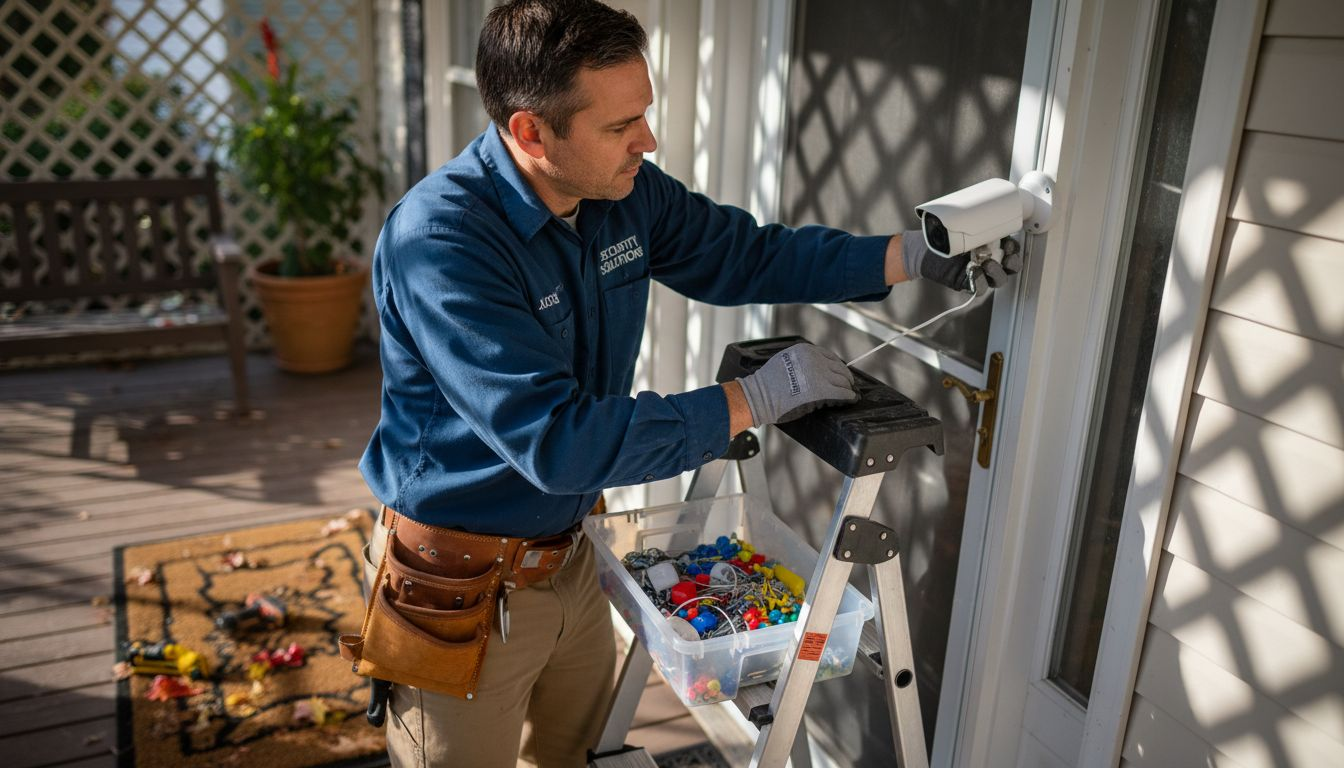
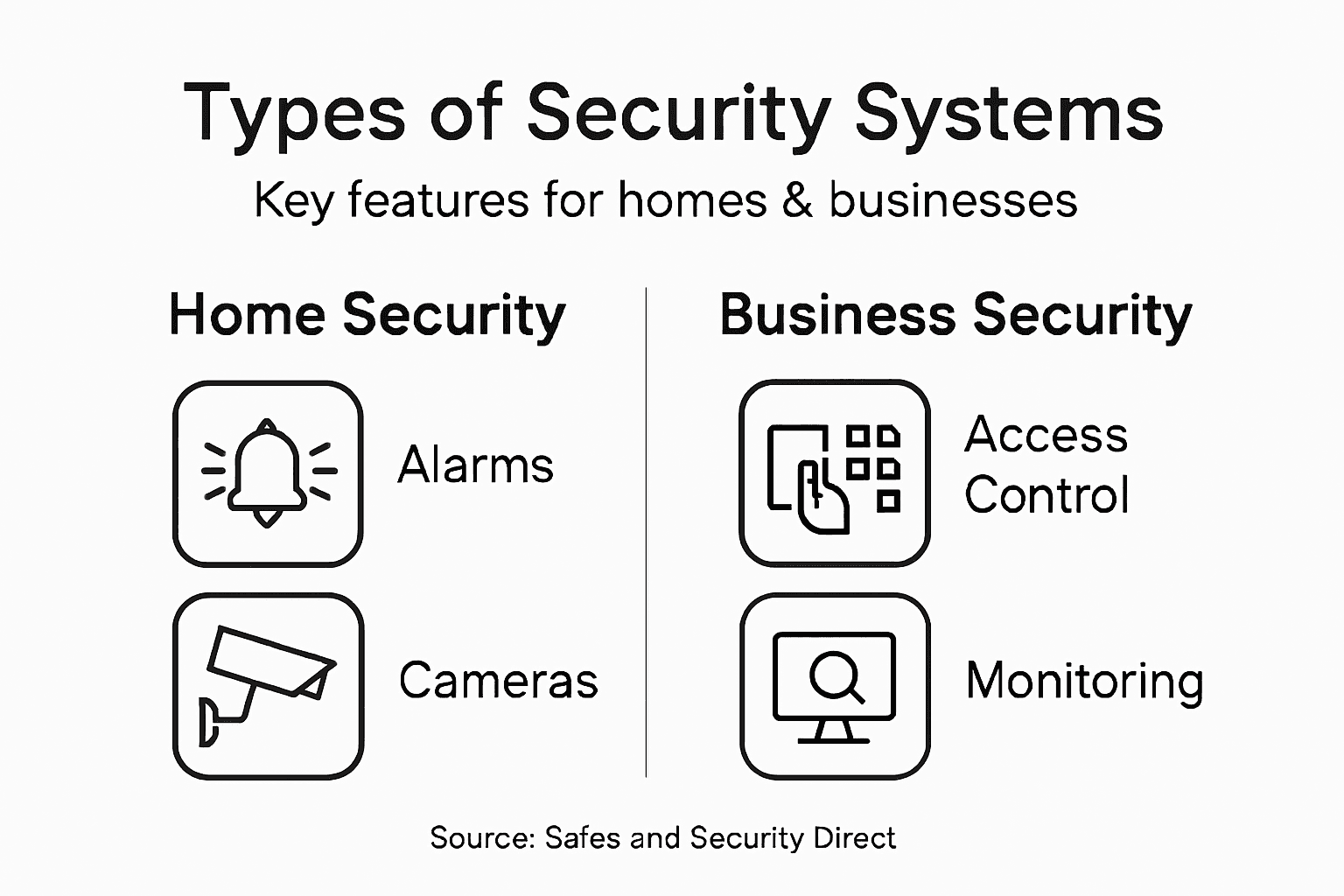
For residential properties, home security systems typically include access control technologies such as door and window sensors, motion detectors, and surveillance cameras. These systems create multiple layers of defense by monitoring entry points, detecting unauthorized movement, and providing real-time alerts to homeowners. Advanced residential systems now integrate smart home technologies, allowing remote monitoring through smartphone applications and enabling instant communication with local law enforcement.
Commercial and enterprise security systems expand upon residential frameworks with more sophisticated features. These systems often incorporate comprehensive surveillance networks, including high-resolution IP cameras, advanced biometric access controls, and integrated alarm systems. Professional security solutions go beyond simple intrusion detection, offering detailed analytics, facial recognition technologies, and centralized monitoring capabilities that help businesses track and respond to potential security threats in real-time.
Pro tip: When selecting a security system, prioritize scalability and compatibility with existing infrastructure to ensure seamless future upgrades and integration.
Here’s a quick comparison of security system types and their primary use cases:
| System Type | Main Environments | Key Features | Common Technologies |
|---|---|---|---|
| Residential | Homes, apartments | Basic intrusion detection | Door sensors, cameras |
| Commercial | Offices, retail stores | Advanced surveillance, access | Biometric scanners, IP cams |
| Enterprise-Level | Large campuses, HQs | Centralized analytics, remote ops | AI-powered platforms |
How Modern Security Technology Works
Modern security technology has evolved far beyond simple alarm systems, transforming into sophisticated intelligent defense networks that leverage cutting-edge technologies to provide comprehensive protection. These advanced systems integrate multiple components, creating a holistic approach to identifying, analyzing, and responding to potential security threats in real-time.
At the core of contemporary security technologies are unified security operations platforms that combine artificial intelligence, machine learning, and complex data analysis. These platforms enable seamless integration of various security elements like surveillance cameras, motion sensors, access control systems, and biometric identification tools. By processing massive amounts of data instantly, these systems can detect anomalies, predict potential security breaches, and initiate automated response protocols before threats escalate.
The technological architecture of modern security systems emphasizes interconnectivity and adaptive intelligence. Unlike traditional security approaches that relied on reactive measures, contemporary solutions proactively analyze patterns, learn from historical data, and continuously refine their threat detection capabilities. This means security technologies can now distinguish between routine activities and genuine security risks, reducing false alarms while providing more precise and intelligent monitoring. Advanced systems incorporate features like facial recognition, behavioral analytics, and predictive modeling to create multi-layered security environments that adapt to changing threat landscapes.
Pro tip: Prioritize security systems with modular designs that allow for future technological upgrades and seamless integration of emerging protective technologies.
Major Benefits for Property Owners
Security systems have transformed from simple protective measures to comprehensive solutions that deliver substantial value beyond traditional crime prevention. Property owners now gain multifaceted advantages that extend far beyond basic security, offering financial protection, operational efficiency, and peace of mind across residential and commercial environments.
Through advanced IoT integration, modern security systems provide property owners with unprecedented control and monitoring capabilities. These intelligent networks enable remote management through smartphone applications, allowing real-time surveillance, instant alerts, and comprehensive property monitoring from anywhere in the world. Homeowners and business managers can track activities, receive immediate notifications about potential security breaches, and even control access mechanisms with unprecedented convenience and precision.
Beyond immediate security benefits, these systems generate significant economic advantages for property owners. Insurance companies frequently offer substantial premium reductions for properties equipped with comprehensive security technologies, recognizing their effectiveness in preventing losses. The deterrent effect of visible security infrastructure significantly reduces the likelihood of break-ins, vandalism, and theft, which translates into tangible financial savings and reduced risk exposure. Additionally, advanced security systems can integrate with smart home and business management technologies, providing insights into energy usage, occupancy patterns, and potential maintenance requirements.
Pro tip: Consider security systems as strategic investments that provide ongoing protection and potential long-term financial benefits, not just as expense items.
Cost Factors, Limitations, and Comparisons
Investing in security systems requires a nuanced understanding of the complex financial and technological landscape. Property owners must navigate a multifaceted decision-making process that balances upfront costs, long-term benefits, and the specific protection requirements of their unique environments.
The financial considerations of security systems involve more than simple price comparisons. Cost-benefit analysis frameworks reveal that effective security investments require evaluating both direct implementation expenses and potential risk mitigation benefits. These analyses must account for installation costs, ongoing maintenance, technology upgrades, and the potential financial impact of prevented security incidents.
Technological limitations present another critical dimension of security system selection. Property owners frequently encounter challenges related to system compatibility, scalability, and integration with existing infrastructure. Legacy system constraints can create significant barriers, requiring careful evaluation of how new security technologies will interact with current networks and equipment. Some systems may offer advanced features but require substantial additional investment in supporting technologies, while others provide more flexible, modular approaches that allow gradual implementation and upgrades.
The following table summarizes critical cost and limitation factors to consider for security systems:
| Consideration | Description | Impact on Decision |
|---|---|---|
| Installation Expenses | Upfront costs for equipment and labor | Affects initial budget |
| Maintenance Requirements | Ongoing service and update needs | Influences long-term costs |
| System Compatibility | Integration with existing tech | May require infrastructure |
| Upgrade Flexibility | Ability to expand or enhance system | Ensures future scalability |
Pro tip: Request detailed cost projections that include not just initial installation expenses, but also projected maintenance, upgrade, and potential expansion costs over a five-year period.
Secure Your Home and Business with Trusted Technology from Safes and Security Direct
Protecting your property means overcoming challenges like unauthorized access, costly theft, and evolving threats. This article highlights the importance of proactive protection, advanced surveillance, and scalable security systems to keep your home or business safe. If you want peace of mind knowing your assets are effectively shielded by reliable technology designed to detect, deter, and respond to risks, look no further.
Explore our comprehensive security solutions that align perfectly with modern security concepts such as biometric access, intelligent surveillance, and layered defense.

Discover a wide selection of professional-grade security systems, smart cameras, and safes engineered for durability and high performance. Act now to take advantage of customizable setups that grow with your security needs. Visit Safes and Security Direct today to upgrade your protection and secure your valuable assets with confidence.
Frequently Asked Questions
What are the main functions of security systems?
Security systems monitor unauthorized access, detect potential breaches, alert property owners and authorities, and create deterrent effects against criminal activities.
How do modern security technologies differ from traditional systems?
Modern security technologies utilize intelligent defense networks that integrate AI, machine learning, and data analysis to detect threats in real-time, differing from traditional systems which primarily rely on reactive measures.
What benefits do security systems provide to property owners?
Security systems offer remote management capabilities, potential reductions in insurance premiums, and significant deterrent effects against crime, leading to financial savings and peace of mind.
What factors should I consider when investing in a security system?
Consider installation and maintenance costs, system compatibility with existing infrastructure, and the flexibility for upgrades and expansions to ensure your security solution meets long-term needs.
Recommended
- Top Home Security Products: Essential Devices – Safes and Security Direct
- Security Alarm System Installation: Essential Guide – Safes and Security Direct
- Best Alarm System for Apartment: Top Picks & Tips – Safes and Security Direct
- Optimize Business Security with CCTV Installation – Safes and Security Direct