

Security audit checklist guide for asset protection
TL;DR:
- Physical security gaps can lead to costly breaches and data exposure.
- Regular, comprehensive security audits help identify and prioritize vulnerabilities.
- Combining checklists with unexpected spot checks and staff training enhances protection.
A single unlocked utility door or an unmonitored back entrance can cost your business far more than you’d expect. Over 60% of companies experienced a security breach in the past year, with average losses for mid-sized businesses hitting $450,000. For property managers and small business owners, those numbers aren’t abstract. They represent lost inventory, damaged reputations, and months of recovery. This guide walks you through a practical, step-by-step security audit checklist so you can identify vulnerabilities before they become costly incidents, and build a protection strategy that actually holds up.
Table of Contents
- Why security audits matter: Understanding the risks
- Preparing for your audit: Tools, team, and prerequisites
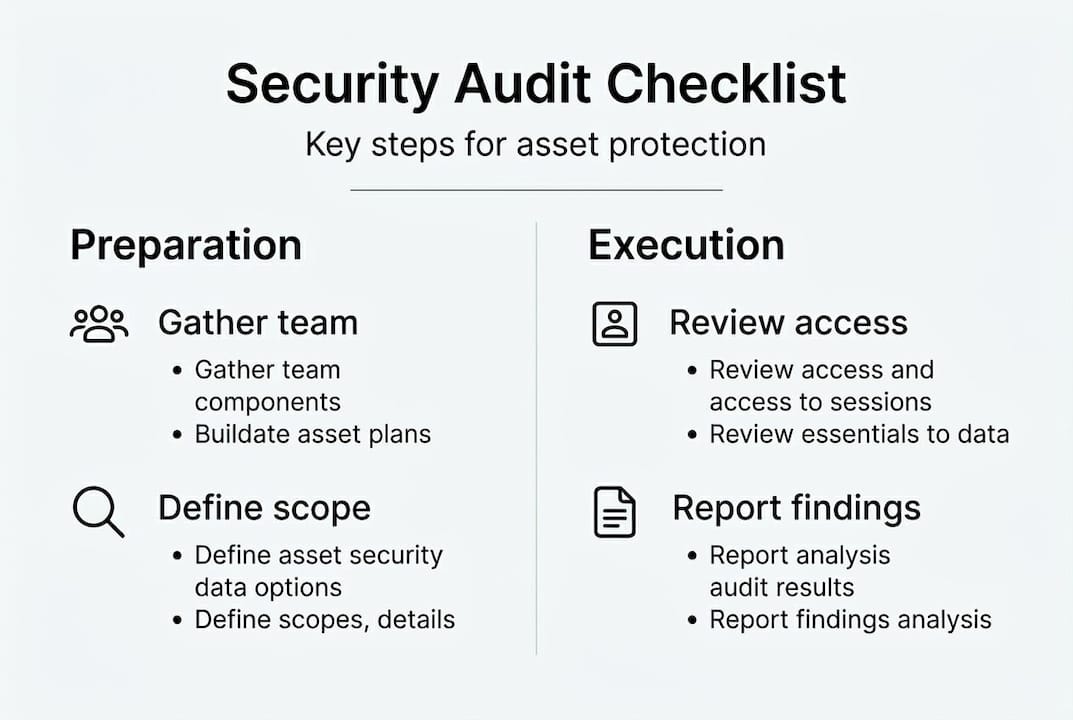
- Step-by-step security audit checklist: Execution and walkthrough
- Common pitfalls and how to verify improvements
- A smarter approach: Why checklists aren’t enough
- Get expert help with your security solutions
- Frequently asked questions
Key Takeaways
| Point | Details |
|---|---|
| Breach risks are real | Most small businesses and properties face significant security threats costing hundreds of thousands. |
| Preparation is critical | Gather the right tools and team before any audit for best results. |
| Follow a clear checklist | Sequential, layered audits find and fix overlooked vulnerabilities faster. |
| Don’t skip verification | Test and document all improvements to ensure real security gains. |
| Go beyond checklists | Integrate ongoing training, testing, and expert input for lasting asset protection. |
Why security audits matter: Understanding the risks
Most security failures don’t happen because of sophisticated attacks. They happen because of overlooked side doors, expired access cards, or staff who never received proper training. Physical security gaps are far more common than most property managers realize, and the consequences extend beyond theft.
Physical lapses cause 1 in 10 data breaches, meaning a propped-open server room door or an unmonitored reception area can expose sensitive business data just as easily as a cyberattack. That connection between physical and digital risk is something many small businesses completely miss.
“A security audit is not a one-time event. It is a structured process that helps you see your property through the eyes of someone who wants to exploit it.”
So what exactly is a security audit? At its core, it is a systematic review of your property, people, and processes to identify weaknesses in your protection setup. It covers everything from perimeter lighting and door locks to how your staff handles visitor sign-ins and key management.
Here is why audits matter beyond just checking boxes:
- Vulnerabilities compound over time. A weak lock combined with poor lighting and no camera coverage creates a perfect entry point.
- Threats evolve. What worked three years ago may not stop today’s methods.
- Insurance and liability. Documented audits can support claims and demonstrate due diligence.
- Staff accountability. Audits reveal process failures, not just physical ones.
Reviewing essential property security tips before your first walkthrough gives you a strong baseline. And if you want to understand the broader case for auditing, our guide on why security audits protect property breaks down the strategic value in detail.
The bottom line is this: a security audit checklist turns reactive thinking into proactive prevention. Instead of responding to incidents, you are preventing them.
Preparing for your audit: Tools, team, and prerequisites
Walking through your property with fresh eyes sounds simple, but without the right preparation, you will miss things. Preparation is what separates a thorough audit from a surface-level walkthrough.
Start by gathering your tools. A good audit requires:
- Checklist template (printed or digital)
- Floor plans of all areas, including utility spaces
- A flashlight for checking poorly lit areas
- A camera or smartphone to document findings
- A notepad or audit app to record observations in real time
Next, build your audit team. A layered security approach requires input from people, procedures, and technology. That means your team should include at least one person familiar with physical access (locks, keys, cameras) and one who understands your digital or network setup. For small businesses, this might just be you and a trusted staff member.

| Audit role | Responsibility |
|---|---|
| Physical security lead | Perimeter, locks, lighting, cameras |
| IT or network contact | Server rooms, badge access, network jacks |
| Operations manager | Staff procedures, visitor logs, key control |
| External reviewer (optional) | Independent perspective, blind spot detection |
Define your scope before you start. Are you auditing one building or multiple locations? Are you covering just physical access or also data storage and IT infrastructure? Knowing your boundaries prevents scope creep and keeps the audit focused.
Schedule the audit during normal business hours so you can observe real behaviors, not staged ones. Let staff know a review is happening, but avoid giving too much detail so you get an accurate picture of daily routines.
Pro Tip: Run one unannounced walkthrough after your formal audit. You will almost always find something different when people are not expecting you.
For a detailed breakdown of the full process, our security audit guide steps covers each phase from planning to reporting. Pairing that with security best practices gives you a solid framework before your first walkthrough.
Step-by-step security audit checklist: Execution and walkthrough
With your team assembled and tools in hand, it is time to execute. Work through the audit in layers, starting from the outside and moving inward.
- Audit the perimeter. Check all exterior lighting, especially around entry points, parking areas, and dumpsters. Verify that fencing is intact and that surveillance cameras cover all blind spots.
- Test all access points. Try every door, gate, and window. Check that locks are functioning, that access control systems require valid credentials, and that no doors are propped open.
- Review alarm systems. Confirm that motion sensors, door contacts, and panic buttons are operational. Test response times if possible.
- Inspect visitor controls. Check sign-in logs, visitor badge procedures, and whether reception staff challenge unescorted visitors.
- Examine asset storage. Look at how cash, equipment, documents, and inventory are stored. Verify that safes and locked cabinets are in use and properly secured.
- Check IT and server rooms. Confirm that only authorized personnel have access. Look for unmonitored network jacks in public or shared spaces.
- Review cyber-physical overlaps. Badge access to data closets, shared passwords on physical whiteboards, or unlocked workstations are all red flags.
- Record and prioritize findings. Categorize each issue by risk level: critical, moderate, or low.
Physical breaches enable up to 10% of cyber attacks, which is why step seven is not optional. Bridging your physical and cyber reviews is one of the most overlooked steps in a standard audit.
| Risk level | Example finding | Recommended action |
|---|---|---|
| Critical | Unlocked server room | Immediate access restriction |
| Moderate | Broken exterior light | Replace within 48 hours |
| Low | Outdated visitor log format | Update within 30 days |
Pro Tip: Use your camera to photograph every issue you find. A photo record makes it far easier to verify fixes later and supports any insurance documentation.
For a broader look at what to include, the business security items checklist is a strong companion resource. Property managers overseeing residential units will also find value in security solutions for homes when applying these steps to tenant-occupied spaces.
Common pitfalls and how to verify improvements
Completing the checklist is only half the job. Many property managers finish a walkthrough, fix the obvious issues, and consider the audit done. That is where things fall apart.
Here are the most common mistakes made after a security audit:
- Skipping non-obvious access points. Roof hatches, utility tunnels, and basement windows are frequently missed.
- Poor documentation. Without written records, you cannot prove what was fixed or track recurring issues.
- Neglecting staff training. A new lock means nothing if staff still prop doors open or share access codes.
- Treating the audit as a one-time event. Threats change, staff turn over, and facilities evolve. Your audit process must keep pace.
Once you have made changes, verify that they actually work. Do not assume a fix is effective just because it was completed. Walk the same route again and test every improvement.
“Penetration testing and periodic re-audits catch gaps that checklists alone will miss.”
Real-world simulations are powerful. Have a trusted colleague attempt to tailgate through a secured door or access a restricted area without credentials. If they succeed, your controls are not working.
Schedule follow-up audits at least annually, and immediately after any major change such as a renovation, staff restructuring, or new equipment installation. Document every audit cycle with dates, findings, and corrective actions.
Our home security workflow guide shows how a structured process keeps protections current over time. For a broader asset review, the asset protection checklist covers both residential and commercial scenarios in practical detail.
A smarter approach: Why checklists aren’t enough
Here is something most security guides won’t tell you: a checklist, no matter how thorough, can become a liability if you treat it as the finish line.
Checklists create structure, and that is genuinely valuable. But they also create routine. Once your team knows the checklist, they start preparing for it rather than actually improving security. The audit becomes a performance instead of a real assessment.
The businesses with the strongest security cultures do something different. They run unexpected spot checks. They reward staff who flag vulnerabilities. They treat every near-miss as data, not embarrassment. They also integrate physical and cyber reviews so nothing falls through the gap between departments.
The most resilient approach pairs your checklist with adaptive testing. That means rotating who conducts the audit, changing the timing, and occasionally bringing in an outside reviewer who has no stake in the outcome. Our guide on proven home security steps reflects this mindset: continuous improvement beats a perfect checklist every time.
Security is not a project you complete. It is a habit you build.
Get expert help with your security solutions
Knowing what to audit is one thing. Having the right equipment to act on your findings is another. Whether your walkthrough revealed gaps in surveillance coverage, inadequate safe storage, or access control weaknesses, the next step is sourcing solutions you can trust.
At Safes and Security Direct, we carry professional-grade cameras, fire-resistant and burglary-resistant safes, and complete security systems built for both property managers and small business owners. Every product is selected for durability and real-world performance, not just specs on a page. If you want guidance on where to start after your audit, our security audit guide steps connects your findings directly to practical solutions.
Frequently asked questions
What is the most overlooked area in security audits?
Employee habits and forgotten access points such as back doors or utility connections are most often missed. Physical lapses cause 1 in 10 data breaches, making human behavior just as critical as hardware.
How often should I perform a security audit for my property or business?
At least once per year, and immediately after any major change to equipment, staffing, or facility layout. More frequent audits are recommended for high-traffic or high-value properties.
Can one checklist cover both online and physical risks?
No single checklist covers everything, but reviewing cyber-physical overlaps is essential since physical gaps enable cyber attacks in roughly 10% of cases.
What’s the typical cost of a physical security breach?
The average loss is $450,000 for mid-sized businesses, and that figure does not include long-term reputational damage or regulatory penalties.
Are self-audits effective or do I need external help?
Self-audits strengthen your baseline defenses, but external reviewers consistently catch blind spots that internal teams overlook due to familiarity with the space.
Recommended
- Security audit guide: meaning, steps, and property protection – Safes and Security Direct
- Asset protection checklist 2026: secure home and business – Safes and Security Direct
- Asset Protection Workflow Guide for Maximum Security – Safes and Security Direct
- Asset Protection Strategies 2026: Safeguard Your Business Assets – Safes and Security Direct
- Security Risk Assessment: Protecting Commercial Assets - A To Z Locksmith Inc