

15 essential property security tips for homes and businesses
Properties without visible security measures face a 300% higher burglary risk than those with systems in place. That single statistic should change how you think about your front door, your windows, and your business’s back entrance. Whether you own a home in the suburbs or run a small retail shop downtown, the threat is real and the solutions are within reach. This guide walks you through 15 proven, practical strategies that cover everything from alarm placement to vacation planning, so you can protect what matters most without guesswork.
Table of Contents
- Understand the threat: Burglary patterns and risk factors
- Layer your defenses: Alarm systems, cameras, and lighting
- Secure entry points: Doors, windows, and access controls
- Outsmart opportunists: Visible deterrents and landscape management
- Plan for absences: Vacation and away-period security
- Manage internal risk: Staff protocols and inventory control for businesses
- Connect with expert solutions for lasting security
- Frequently asked questions
Key Takeaways
| Point | Details |
|---|---|
| Visible deterrents matter | Alarm signs and cameras drastically reduce burglary risk. |
| Layered security is best | Combining locks, alarms, lights, and cameras buys critical time and increases safety. |
| Internal controls prevent losses | Businesses must address employee theft with protocols and regular audits. |
| Landscaping affects security | Trimmed bushes and clear sightlines deter opportunistic intruders. |
| Prepare for absences | Timers and neighbor checks protect properties from repeat victimization when you’re away. |
Understand the threat: Burglary patterns and risk factors
Before you spend a dollar on security hardware, you need to know how burglars actually operate. Most people picture a masked figure sneaking around at night, but the reality is very different. 65% of home burglaries happen during daylight hours, and the front door is the primary entry point in 34% of cases. Burglars are opportunists. They look for easy targets, not challenges.
For small business owners, the picture is equally serious. Burglary consistently ranks as a top property insurance claim, and businesses with poor perimeter security are disproportionately targeted. What makes this worse is repeat victimization. Once a property is hit, burglars often return within weeks because they already know the layout and the weaknesses.
Here are the key risk factors to assess for your property:
- Unlocked or hollow-core front doors
- No visible alarm signage or cameras
- Overgrown shrubs that create hiding spots
- Poor lighting around entry points
- No neighborhood watch or community awareness
Understanding these patterns is the first step. Our burglary protection overview breaks down how different property types are targeted and what countermeasures work best. The Small Business Administration also offers a practical guide on preventing burglary and theft specifically for commercial property owners.
Layer your defenses: Alarm systems, cameras, and lighting
Knowing the threat is one thing. Building a response is another. The most effective security setups don’t rely on a single tool. They layer multiple deterrents so that even if one fails, others pick up the slack.
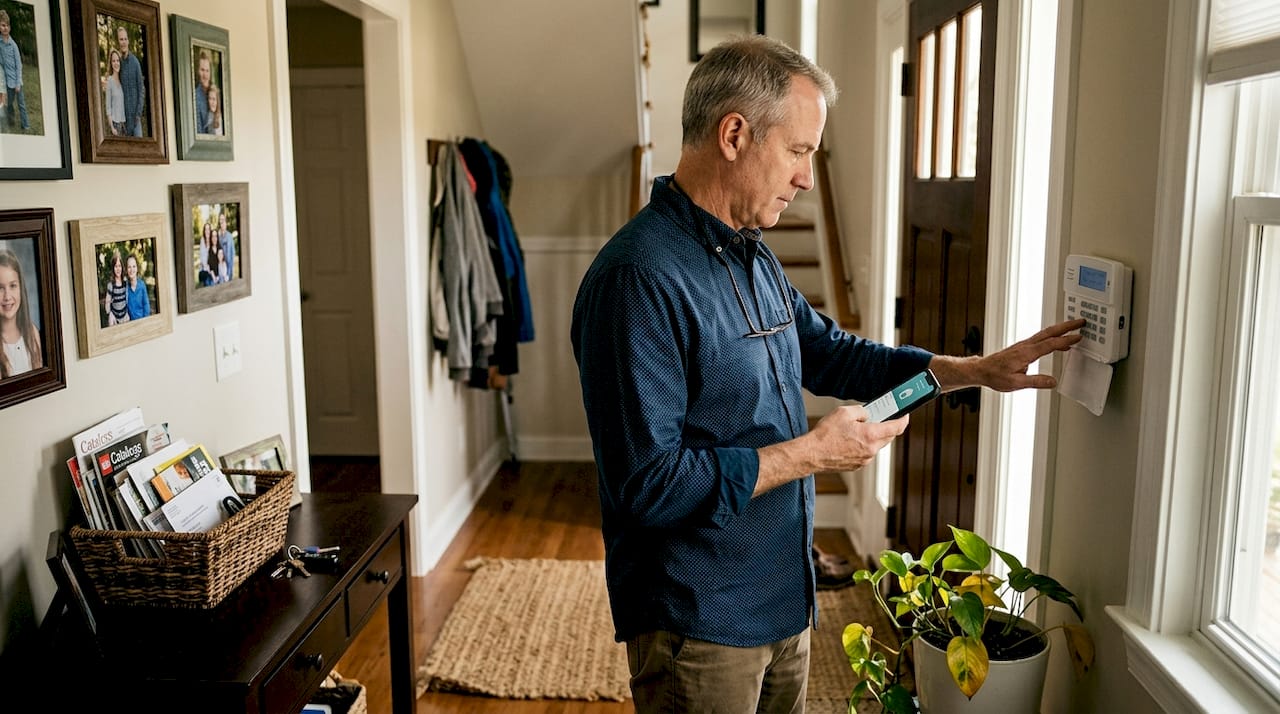
Start with a visible alarm system. Research shows that 60% of convicted burglars would choose a different target if they spotted an alarm. That’s not a small margin. A yard sign and a keypad visible through a window can redirect a would-be intruder before they even try your door.
Cameras add another layer. They increase the perceived risk for burglars and provide usable evidence if a break-in does occur. Placement matters enormously. Focus on entry doors, driveways, and for businesses, cash register areas. Our guide on strategic security camera setup covers optimal angles and blind spot elimination. If you’re still deciding on camera type, the choosing security cameras resource walks through the tradeoffs between wired, wireless, and PTZ models.
Motion-activated lighting is the third pillar. It exposes activity instantly and signals to anyone watching that this property is actively monitored. Combined with alarms and cameras, layered security pushes the time needed to break in beyond 4 to 5 minutes, which is the threshold where most burglars give up and leave.
Pro Tip: Avoid common placement errors that create blind spots or wash out camera footage with glare. Our breakdown of camera installation mistakes is worth reviewing before you mount anything permanently.
| Security layer | Primary benefit | Best placement |
|---|---|---|
| Alarm system | Deters before entry | Entry doors, windows |
| Security cameras | Evidence and deterrence | Driveways, entrances, registers |
| Motion lighting | Exposes activity | Perimeter, side gates, parking |
| Reinforced locks | Slows physical entry | All exterior doors |
Secure entry points: Doors, windows, and access controls
Even the best alarm system is undermined by weak entry points. Reinforcing your physical barriers is non-negotiable.
Here’s a step-by-step approach to hardening your entry points:
- Upgrade to deadbolt locks on all exterior doors. Standard knob locks are easy to bypass.
- Install reinforced strike plates with 3-inch screws that anchor into the door frame stud, not just the trim.
- Add window security film to ground-floor windows. It won’t stop a determined intruder, but it slows them down significantly.
- Use window bars or grilles in high-risk areas like basement windows or rear-facing ground-floor openings.
- Install access control systems for business back doors. Keypad or card-based entry creates an audit trail and limits who can enter.
- Invest in a quality safe for cash, documents, and high-value items. Placement inside a closet or bolted to a floor dramatically reduces the chance of removal.
Properties without security systems are 300% more likely to be burglarized, and that risk compounds when entry points are weak. Our front door alarm tips offer DIY-friendly upgrades, and if you’re considering a safe, the guide on burglary-resistant safes explains what ratings to look for.
Pro Tip: Many insurance providers offer premium discounts when you install deadbolts and alarm systems that meet their approved hardware standards. Call your insurer before you buy to confirm which products qualify.
Outsmart opportunists: Visible deterrents and landscape management
Beyond hardware, visual and landscaping tactics help you outthink opportunists. Burglars are risk-averse. They scan a property in seconds and move on if the risk looks too high. Your goal is to make your property look like the wrong choice.
Visible deterrents like alarm signs, camera decals, and motion lights consistently outperform hidden measures because they work before anyone even approaches your door. A burglar who sees a camera dome and a yard sign will often skip your property entirely.
Landscaping plays a bigger role than most people realize. Follow these guidelines:
- Trim shrubs to under 3 feet along walkways and entry points to eliminate hiding spots.
- Raise tree canopies to 6 feet or higher so there’s no cover at eye level near windows.
- Use gravel paths around the perimeter. The crunching sound provides an audible alert that’s surprisingly effective.
- Maintain your yard consistently. An overgrown property signals absence and neglect, both of which attract opportunists.
The city of Albuquerque’s landscape prevention guide offers detailed recommendations for residential properties. For DIY-focused homeowners, our DIY surveillance ideas resource pairs well with these landscaping strategies.
Pro Tip: A “Beware of Dog” sign adds a layer of psychological deterrence even if you don’t own a dog. Pair it with other visible measures for maximum effect.
Plan for absences: Vacation and away-period security
Periods when properties sit empty demand extra vigilance. An unoccupied home or business is a prime target, and the risk doesn’t end after the first incident. Repeat victimization affects roughly 50% of burglary victims within 4 weeks of the initial break-in, because the burglar already knows the layout.
Follow this checklist before any extended absence:
- Set timers for interior lights and a TV or radio. Randomized schedules look more convincing than fixed on/off patterns.
- Ask a trusted neighbor to collect packages, check for anything unusual, and vary their visits.
- Place a mail hold with your postal service. A stuffed mailbox is one of the clearest signals that nobody’s home.
- Avoid posting travel plans on social media. Even a vague “heading out for the week” post can be enough information for someone watching your accounts.
- Secure all valuables in a rated safe before you leave. Our guide on protecting valuables at home covers safe selection and placement for extended absences.
Pro Tip: Smart plugs cost under $15 each and let you control lights and electronics remotely from your phone. They’re one of the cheapest and most effective tools for simulating occupancy.
Manage internal risk: Staff protocols and inventory control for businesses
Security isn’t just about external threats. For businesses, internal risks can be just as damaging. The average retail shrinkage rate sits at 1.6% of revenue, with internal theft accounting for 29% of losses and external theft at 37%. That means nearly a third of your losses may be coming from inside your own operation.
Here’s how to address it systematically:
- Screen employees thoroughly before hiring. Background checks are standard practice for a reason.
- Maintain access logs for stockrooms, safes, and server areas. Know who entered and when.
- Conduct regular inventory checks on a schedule that staff can’t predict. Surprise audits catch discrepancies early.
- Review camera footage periodically, not just after an incident. Routine reviews normalize accountability.
- Use locking storage for cash drawers, high-value merchandise, and sensitive documents.
| Risk type | Share of shrinkage | Primary countermeasure |
|---|---|---|
| Internal theft | 29% | Access logs, audits, background checks |
| External theft | 37% | Cameras, alarms, reinforced entry |
| Administrative error | 21% | Inventory software, dual sign-off |
| Vendor fraud | 6% | Purchase order controls, audits |
The U.S. Chamber of Commerce offers a detailed business security guide that covers both physical and procedural controls for small businesses.
Pro Tip: Rotate which employees have access to high-value storage areas on a regular basis. Familiarity breeds complacency, and limiting long-term access reduces opportunity.
Connect with expert solutions for lasting security
You now have a clear picture of the threats and the tools to address them. The next step is putting the right hardware and systems in place, and that’s where having a trusted source matters.
At Safes and Security Direct, we specialize in professional-grade security solutions for homeowners and small business owners. From burglary-resistant and fire-rated safes to advanced surveillance cameras and alarm-ready systems, every product in our catalog is selected for real-world performance. Whether you’re hardening a single entry point or building a layered security setup from scratch, our team and our resources are here to help you make confident, informed decisions. Browse our full range and find the right fit for your property today.
Frequently asked questions
What is the single most effective property security tip?
Visible alarm systems are the most effective single measure. 60% of convicted burglars say they would choose a different target if they spotted an alarm on the property.
How can small businesses reduce internal theft?
Combine background checks, access controls, and surprise inventory audits. Internal theft accounts for 29% of retail shrinkage, so procedural controls are just as important as physical ones.
Are camera systems worth the investment for home security?
Absolutely. Cameras deter burglars and provide evidence when needed. Properties without security systems are 300% more likely to be targeted, making cameras a high-return investment.
What should I do when leaving my property for vacation?
Set light timers, hold your mail, ask a neighbor to check in, and avoid sharing travel plans online. Repeat victimization is common within 4 weeks of a break-in, so extra precautions before you leave are essential.
Does securing doors and windows affect insurance premiums?
Yes, in many cases. Installing deadbolts and approved security hardware often qualifies homeowners and business owners for meaningful discounts on their property insurance premiums.
Recommended
- 7 Top Security Features Every Property Owner Should Know – Safes and Security Direct
- How to secure property effectively: A practical guide – Safes and Security Direct
- 7 Examples of Security Solutions for Urban Homeowners – Safes and Security Direct
- Top Asset Protection Methods 2026 for Secure Homes – Safes and Security Direct