

Burglary Protection – How It Safeguards Your Home
Locking the door at night brings a sense of security, yet many urban homeowners still worry about clever intruders finding new ways in. Protecting property goes far beyond sturdy locks, as modern burglars analyze weak points much like skilled professionals. This guide breaks down comprehensive burglary protection by separating myth from reality and reveals how the right blend of strategies can make your home a far less appealing target for crime.
Table of Contents
- Defining Burglary Protection And Misconceptions
- Key Types Of Burglary Prevention Solutions
- Advanced Technology Enhancing Home Security
- Choosing The Right System For Your Needs
- Risks, Costs, And Common Pitfalls To Avoid
Key Takeaways
| Point | Details |
|---|---|
| Understanding Burglary Protection | Comprehensive protection includes physical, technological, and behavioral strategies to deter intruders. Psychological deterrence, such as perceived security, is critical alongside physical barriers. |
| Key Prevention Solutions | Effective burglary prevention uses layered security approaches, combining physical barriers, technological solutions, and behavioral strategies to enhance protection. |
| Smart Home Security Advancements | Technological innovations like smart sensors and AI tracking revolutionize home security by enabling real-time monitoring and predictive threat detection. |
| Tailored Security System Selection | Homeowners should assess their unique vulnerabilities and select security systems that align with property characteristics and personal needs to ensure optimal protection. |
Defining Burglary Protection and Misconceptions
Burglary protection represents a comprehensive approach to preventing unauthorized property intrusion and theft. Criminal entry into structures involves intentional illegal access with criminal objectives, making understanding protection strategies critical for homeowners.
Understanding what constitutes burglary helps develop effective defense mechanisms. Key characteristics include:
- Intentional unauthorized property entry
- Specific intent to commit theft or another felony
- Forcible or non-forcible entry methods
- Targeting residential or commercial structures
Many people misunderstand burglary protection, believing it involves only physical barriers. In reality, comprehensive protection integrates multiple security layers - technological, physical, and behavioral strategies that work together to deter potential intruders.
Most homeowners overlook critical psychological aspects of security. Burglars often target properties appearing vulnerable, making visual deterrence as important as physical obstacles. Perceived security can be just as effective as actual security infrastructure.
Pro tip: Conduct a comprehensive security audit of your property, examining potential entry points from a burglar’s perspective to identify and address vulnerabilities.
Key Types of Burglary Prevention Solutions
Burglary prevention encompasses a range of strategic approaches designed to protect residential and commercial properties from unauthorized entry. Effective crime prevention interventions focus on multiple layers of security that work together to deter potential intruders.
The primary types of burglary prevention solutions include:
-
Physical Barriers
- Reinforced door locks
- Window security systems
- Security gates and grilles
- Solid perimeter fencing
-
Technological Solutions
- Alarm systems
- Motion-activated lighting
- Security cameras
- Smart home monitoring devices
-
Behavioral Strategies
- Community watch programs
- Property visibility management
- Consistent security routines
- Strategic landscaping to reduce hiding spots
Target hardening represents a critical approach to burglary prevention. This method involves systematically strengthening potential entry points and making property access increasingly difficult for unauthorized individuals. European prevention networks recommend combining multiple prevention techniques for maximum effectiveness.
Psychological deterrence plays an equally important role in security. Properties that appear well-maintained, monitored, and protected are significantly less attractive to potential burglars. Visual cues of security can be as powerful as actual physical barriers.
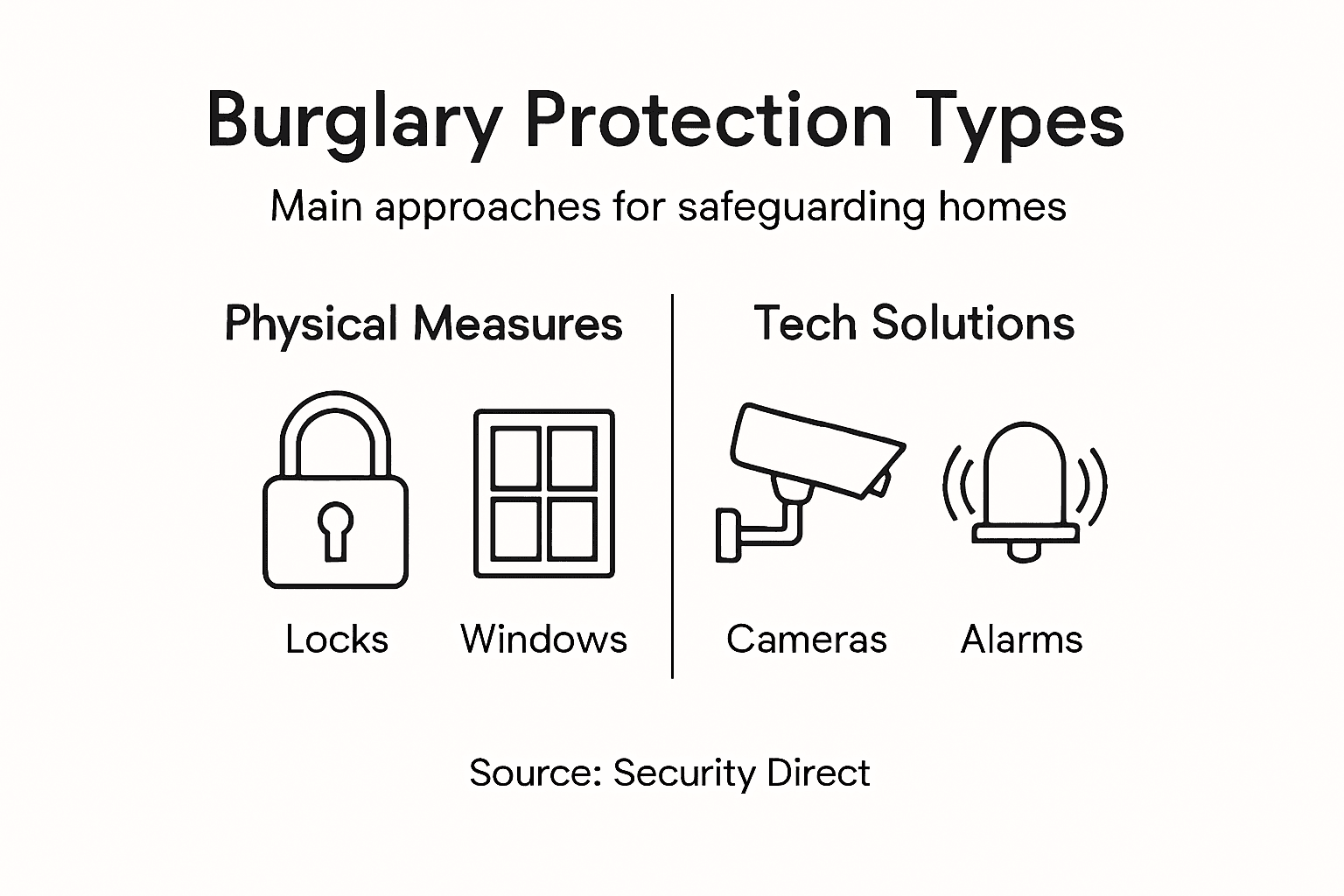
To help clarify how major types of burglary prevention differ, see this summary:
| Prevention Type | Main Focus | Typical Benefit | Notable Limitations |
|---|---|---|---|
| Physical Barriers | Block entry | Immediate intrusion delay | May be bypassed by skilled entry |
| Technological Solutions | Detect & alert | Fast response, evidence | Susceptible to power outages |
| Behavioral Strategies | Change habits | Increased visible deterrence | Requires ongoing community effort |
Pro tip: Conduct a comprehensive security assessment of your property, identifying and reinforcing potential vulnerabilities while creating a multi-layered defense strategy.
Advanced Technology Enhancing Home Security
Smart home security has revolutionized property protection through cutting-edge technological innovations. Internet of Things technologies are transforming traditional security approaches by introducing sophisticated monitoring and real-time threat detection capabilities.
Key technological advancements in home security include:
-
Intelligent Sensor Networks
- Motion detection systems
- Perimeter breach alerts
- Environmental monitoring sensors
- Wireless connectivity platforms
-
Advanced Surveillance Technologies
- High-resolution digital cameras
- Artificial intelligence-powered tracking
- Night vision capabilities
- Remote monitoring applications
-
Machine Learning Security Solutions
- Suspicious behavior detection systems
- Predictive threat analysis
- Automated alert mechanisms
- Intelligent pattern recognition
Modern security systems go beyond traditional monitoring. They now integrate complex algorithms that can differentiate between normal household activities and potential security threats. This proactive approach transforms home protection from reactive responses to predictive prevention.
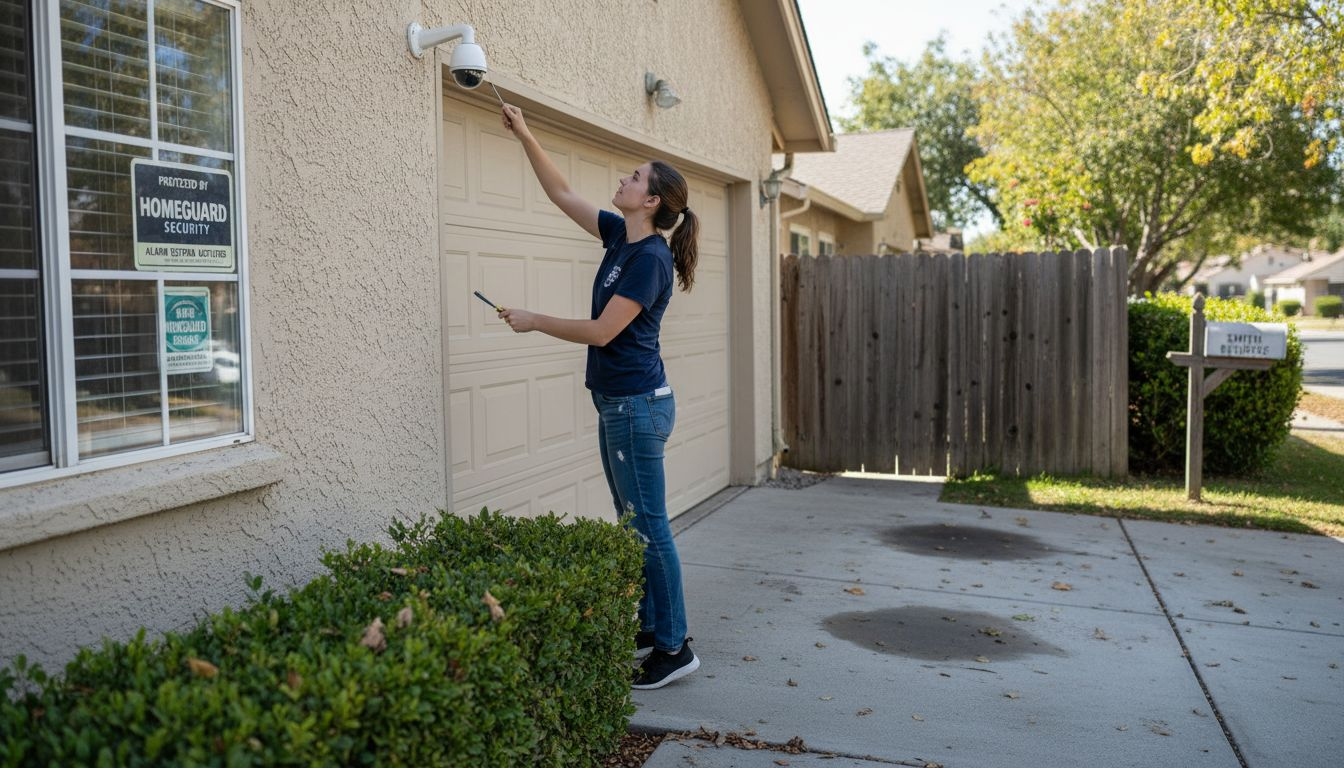
Digital interconnectivity has made home security more accessible and intelligent. Homeowners can now monitor their properties remotely, receive instant notifications, and even control security systems through smartphone applications, creating unprecedented levels of protection and peace of mind.
Here is a quick reference comparing popular smart security technologies:
| Technology | Primary Function | Added Value |
|---|---|---|
| Motion Detection System | Detect unusual movement | Alerts before entry occurs |
| AI Tracking Cameras | Identify intruders | Reduces false alarms |
| Remote Monitoring App | Control from anywhere | Peace of mind, flexibility |
| Environmental Sensors | Monitor fire, gas, flood | Protects beyond burglary |
Pro tip: Invest in a comprehensive security system that offers multi-layered protection, combining hardware, software, and intelligent monitoring technologies.
Choosing the Right System for Your Needs
Home security selection requires a strategic approach tailored to individual property characteristics and personal protection needs. Effective burglary prevention strategies emphasize combining multiple protective measures for comprehensive protection.
Key considerations when selecting a security system include:
-
Property Characteristics
- Home size and layout
- Neighborhood crime rates
- Number of entry points
- Existing infrastructure
-
Personal Security Requirements
- Budget constraints
- Technological comfort level
- Remote monitoring preferences
- Response time expectations
-
System Compatibility Factors
- Integration with smart home devices
- Scalability of security solutions
- Maintenance and upgrade potential
- Professional monitoring options
Contextual analysis plays a critical role in system selection. Targeted prevention strategies demonstrate that one-size-fits-all approaches rarely provide optimal protection. Homeowners must assess their unique risk profile and select systems that address specific vulnerabilities.
Modern security systems offer unprecedented customization. Advanced technologies now allow homeowners to create layered security strategies that combine physical deterrents, electronic monitoring, and intelligent threat detection mechanisms.
Pro tip: Conduct a comprehensive home security audit before purchasing a system, identifying specific vulnerabilities and matching them with targeted protection solutions.
Risks, Costs, and Common Pitfalls to Avoid
Security investment requires careful evaluation of potential risks and financial implications. Burglary prevention interventions demonstrate that not all security measures provide equal value or protection.
Common financial and operational risks include:
-
Direct Financial Costs
- Initial system installation expenses
- Monthly monitoring fees
- Equipment replacement and upgrades
- Potential insurance premium adjustments
-
Operational Vulnerabilities
- False alarm frequency
- System complexity and user error
- Technology compatibility challenges
- Maintenance and technical support requirements
-
Hidden Security Risks
- Incomplete property coverage
- Outdated security protocols
- Inadequate staff or resident training
- Overlooked entry point vulnerabilities
Business security assessments reveal that many security failures stem from overlooking critical organizational vulnerabilities. Simple mistakes like poor key management or inconsistent access control can dramatically undermine sophisticated security systems.
Homeowners must approach security as a holistic strategy, understanding that technology alone cannot guarantee complete protection. Comprehensive security requires continuous assessment, adaptation, and a multifaceted approach addressing physical, technological, and human factors.
Pro tip: Conduct an annual security audit, reassessing your property’s vulnerabilities and updating your protection strategy to address evolving risks and technological advancements.
Strengthen Your Home Security with Proven Solutions
The article highlights critical challenges in burglary protection such as vulnerabilities in physical barriers, the need for technological integration, and the importance of multi-layered defense strategies. If you want to address common pain points like unauthorized entry, false alarms, and incomplete property coverage, consider using advanced security products that combine durable physical safes, intelligent surveillance cameras, and comprehensive alarm systems. Protect your home with solutions designed to deter intruders and provide real-time monitoring to ensure peace of mind.

Explore a wide range of professional-grade security equipment at Safes and Security Direct. Don’t wait until a security breach happens. Act now to secure your property with trusted safes, cutting-edge surveillance, and integrated alarm systems. Visit Safes and Security Direct to find tailored burglary prevention products that match your unique needs and start safeguarding your home effectively today.
Frequently Asked Questions
What are the key components of burglary protection?
Burglary protection consists of physical barriers, technological solutions, and behavioral strategies that together create a multi-layered defense against unauthorized property entry.
How can homeowners enhance perceived security?
Homeowners can enhance perceived security by maintaining their property, using visible security measures like alarm systems and cameras, and engaging in community watch programs to create a sense of vigilance.
What is target hardening in burglary prevention?
Target hardening refers to the process of strengthening potential entry points, such as doors and windows, to make unauthorized access increasingly difficult for burglars.
What are the advantages of using smart home security technology?
Smart home security technology offers advanced monitoring, real-time threat detection, and remote control of security systems via smartphone apps, providing homeowners with enhanced protection and peace of mind.
Recommended
- Burglary-Resistant Safe: Protecting Urban Homes – Safes and Security Direct
- 7 Examples of Security Solutions for Urban Homeowners – Safes and Security Direct
- How Safes Prevent Theft: Real Protection Explained – Safes and Security Direct
- Cameras Deterring Burglary: Effective Security Insight – Safes and Security Direct