

Asset Protection Strategies 2026: Safeguard Your Business Assets
Every business owner knows how quickly a single unprotected asset can threaten both financial stability and reputation. Whether your company operates in Germany, Brazil, or Singapore, the risks and vulnerabilities facing your investments are constantly evolving. By focusing on a structured risk assessment, deploying advanced security products, and integrating robust monitoring strategies, you gain a clear path to safeguarding everything that matters most in 2026.
Table of Contents
- Step 1: Assess Current Asset Risks And Vulnerabilities
- Step 2: Select Advanced Security Products For Protection
- Step 3: Install And Configure Security Solutions
- Step 4: Integrate Monitoring And Response Systems
- Step 5: Verify Security Effectiveness Through Testing
Quick Summary
| Key Insight | Explanation |
|---|---|
| 1. Conduct Regular Risk Assessments | Assess asset vulnerabilities and potential threats annually to ensure protection strategies are up-to-date and effective. |
| 2. Prioritize Security Product Selection | Choose advanced security solutions that align with your unique vulnerabilities and future growth needs for effective asset protection. |
| 3. Implement Comprehensive Security Solutions | Follow structured installation processes to ensure that each security product integrates seamlessly into your existing infrastructure. |
| 4. Integrate Monitoring and Response | Create interconnected monitoring systems that facilitate quick detection and coordinated responses to potential threats. |
| 5. Test Security Effectiveness Regularly | Use diverse testing methodologies to identify vulnerabilities and enhance overall security, ensuring readiness against potential attacks. |
Step 1: Assess Current Asset Risks and Vulnerabilities
Understanding and identifying potential risks to your business assets is the critical first step in developing a robust protection strategy. This assessment involves systematically analyzing your organization’s vulnerabilities, potential threats, and the potential impact of those threats.
To conduct a comprehensive asset risk assessment, you’ll need to follow a structured approach that evaluates vulnerabilities and threats across multiple dimensions. Start by creating a detailed inventory of your business assets, which should include:
- Physical assets (equipment, inventory, property)
- Digital assets (data, software, intellectual property)
- Financial assets (cash reserves, investments, accounts)
- Human capital (employee expertise, proprietary knowledge)
- Technological infrastructure
Next, categorize each asset by its potential risk level and monetary value. This helps prioritize your protection efforts. For each asset, consider these key vulnerability factors:
- Accessibility: How easily could an unauthorized person access this asset?
- Current security measures: What protections are already in place?
- Potential exploit pathways: What weaknesses might exist?
- Recovery difficulty: How challenging would it be to replace or restore the asset?
The goal is not just identifying risks, but understanding their potential consequences and developing strategic mitigation strategies.
When evaluating risks, look beyond immediate financial implications. Consider reputational damage, operational disruptions, and long-term strategic impacts that could arise from a security breach.

Here’s a summary of business asset types and their primary risks:
| Asset Type | Primary Risk | Example Consequence |
|---|---|---|
| Physical assets | Theft or damage | Lost inventory, halted operations |
| Digital assets | Data breach or loss | Leaked intellectual property |
| Financial assets | Fraud or embezzlement | Financial losses, regulatory penalties |
| Human capital | Knowledge loss or poaching | Reduced expertise, competitor gains |
| Technological infrastructure | Cyberattacks or failures | System downtime, loss of service |
Pro tip: Conduct this risk assessment annually and after any significant organizational changes to ensure your asset protection strategy remains current and comprehensive.
Step 2: Select Advanced Security Products for Protection
Choosing the right security products is crucial for creating a comprehensive defense strategy that protects your business assets across multiple dimensions. Your selection process should go beyond simply purchasing equipment and focus on implementing cybersecurity best practices tailored to your specific organizational needs.
When evaluating security products, consider these critical selection criteria:
- Compatibility with existing infrastructure
- Scalability for future business growth
- Advanced technological features
- Comprehensive threat protection capabilities
- Cost-effectiveness and return on investment
- Ease of implementation and user training
Key security product categories to evaluate include:
- Physical security systems
- Digital access control solutions
- Network protection technologies
- Data encryption tools
- Multi-factor authentication platforms
Strategic product selection requires understanding your unique risk landscape and matching security solutions precisely to your organizational vulnerabilities.
Advanced security products should provide layered protection that addresses both digital and physical asset risks. Look for integrated solutions that offer real-time monitoring, rapid threat detection, and automated response mechanisms.
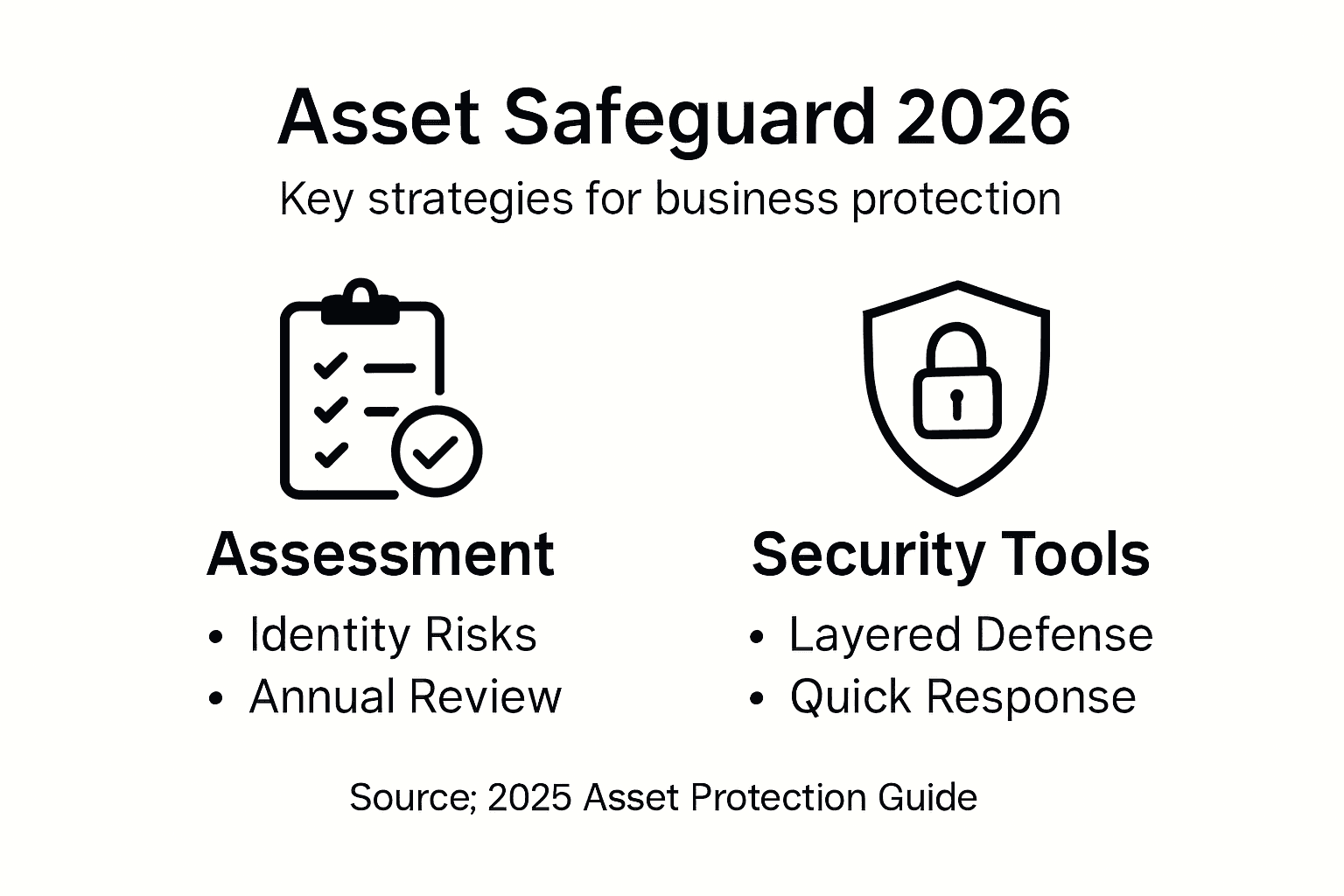
This table compares key security product categories by focus and implementation considerations:
| Product Category | Protection Focus | Implementation Challenge |
|---|---|---|
| Physical security systems | Premises and assets | Installation cost |
| Digital access controls | User authentication | User training requirements |
| Network protection technologies | Malware and intrusion | Integration with legacy systems |
| Data encryption tools | Confidentiality of information | Performance impact |
| Multi-factor authentication | Credential security | User adoption and support |
Pro tip: Prioritize security products with flexible configuration options and robust vendor support, ensuring your protection strategy can adapt quickly to emerging technological challenges.
Step 3: Install and Configure Security Solutions
Implementing your chosen security products requires a systematic and strategic approach that ensures comprehensive protection for your business assets. Cybersecurity best practices emphasize the importance of carefully configuring each security component to create a robust, integrated defense system.
Your installation process should follow these critical stages:
- Initial system assessment: Verify compatibility with existing infrastructure
- Detailed mapping: Identify all potential entry points and vulnerabilities
- Phased implementation: Deploy solutions in strategic, manageable stages
- Configuration optimization: Fine-tune settings for maximum protection
- Comprehensive testing: Validate system performance and response mechanisms
Key installation steps include:
- Establish secure network configurations
- Configure multi-factor authentication protocols
- Set up advanced encryption mechanisms
- Install real-time monitoring systems
- Create comprehensive access control frameworks
Security solution deployment is not a one-time event but an ongoing process of continuous assessment and improvement.
Advanced configuration requires careful attention to detail. Ensure each security product is not just installed but fully integrated with your existing technological ecosystem. This means establishing seamless communication between different security layers and creating a unified protective environment.
Pro tip: Document every configuration change and maintain a comprehensive security log to track system modifications and quickly identify potential vulnerabilities.
Step 4: Integrate Monitoring and Response Systems
Building a comprehensive security infrastructure requires seamlessly connecting your monitoring and incident response capabilities. Cybersecurity incident response frameworks provide critical guidance for developing a proactive and adaptive defense mechanism that can quickly detect, analyze, and mitigate potential threats.
Effective integration involves several key strategic components:
- Real-time threat detection: Implement continuous monitoring technologies
- Automated alert systems: Create rapid notification protocols
- Incident classification: Develop clear threat severity categorization
- Response coordination: Establish clear communication channels
- Forensic documentation: Maintain comprehensive incident logs
Key integration steps include:
- Connect monitoring tools across digital and physical security systems
- Configure centralized dashboard for holistic threat visibility
- Establish automated escalation procedures
- Create predefined response protocols for different threat levels
- Implement cross-department communication strategies
Successful monitoring integration transforms reactive security into a proactive, intelligent defense ecosystem.
Advanced response systems require sophisticated interconnectivity. This means ensuring that your various security technologies can communicate seamlessly, sharing critical information instantaneously and enabling rapid, coordinated responses to emerging threats.
Pro tip: Conduct quarterly simulation exercises to test and refine your integrated monitoring and response systems, identifying potential gaps before actual incidents occur.
Step 5: Verify Security Effectiveness Through Testing
Ensuring your security systems perform as expected requires comprehensive and strategic testing methodologies. Web security testing frameworks provide critical guidance for evaluating the robustness of your defense mechanisms and identifying potential vulnerabilities before they can be exploited.
Your security effectiveness testing should encompass multiple assessment strategies:
- Penetration testing: Simulate real-world attack scenarios
- Vulnerability scanning: Identify potential system weaknesses
- Performance validation: Confirm system response capabilities
- Compliance verification: Ensure adherence to industry standards
- Resilience assessment: Test system recovery and adaptation
Key testing processes include:
- Develop comprehensive testing scenarios
- Execute controlled security breach simulations
- Analyze system response and detection capabilities
- Document discovered vulnerabilities
- Create remediation strategies
Effective security testing transforms potential vulnerabilities into opportunities for continuous improvement.
Advanced testing techniques require a holistic approach that goes beyond surface-level evaluations. This means creating dynamic, evolving test scenarios that challenge your security infrastructure from multiple angles and uncover hidden potential weaknesses.
Pro tip: Rotate testing personnel and methodologies to prevent predictability and ensure a fresh, objective perspective during security effectiveness assessments.
Strengthen Your Business Asset Protection with Proven Security Solutions
The article “Asset Protection Strategies 2026: Safeguard Your Business Assets” highlights critical challenges such as vulnerabilities in physical and digital assets, the need for layered security products, and ongoing monitoring to prevent theft, data breaches, and operational disruptions. If you are concerned about unauthorized access, loss of proprietary knowledge, or cyber threats, taking decisive action now is essential to protect your business from costly consequences.
At Safes and Security Direct, you will find a wide selection of professional-grade security systems and safes engineered to address these exact risks. Whether you need advanced surveillance cameras, fire-resistant safes, or multi-factor authentication tools compatible with your existing infrastructure, our products are designed to integrate seamlessly and provide durable defense. Explore our range of security products to build a customized protection plan that evolves with your business needs.
Don’t leave your assets exposed. Protect your physical and digital investments with trusted solutions that offer real-time monitoring, theft prevention, and rapid response capabilities. Visit Safes and Security Direct today and start securing your business future with confidence.
Frequently Asked Questions
What are the first steps to assess risks to my business assets?
Start by creating a detailed inventory of all your business assets, including physical, digital, financial, human capital, and technological items. Then, categorize each asset by its risk level and potential impact, which will help you prioritize your protection efforts.
How can I choose the right security products for my organization?
Evaluate security products based on compatibility with your existing systems, scalability, technology features, and overall cost-effectiveness. Consider a phased approach to implementation to avoid disruption during the selection process.
What steps should I take to install and configure security solutions?
Follow a systematic approach by first assessing your current systems, mapping vulnerabilities, and implementing security measures in manageable stages. Ensure that each solution is optimized for maximum protection and integrate them across your technological environment.
How do I integrate monitoring and response systems effectively?
Connect your monitoring tools for both physical and digital security to create a centralized response system. Implement automated alert systems that simplify incident classification and streamline communication for any potential threats.
What testing methods should I use to verify the effectiveness of my security measures?
Conduct various testing strategies such as penetration tests, vulnerability scans, and performance validations to assess your security systems. Document all findings and develop remediation strategies within an ongoing improvement plan to strengthen your defenses.
How often should I conduct a risk assessment for my assets?
Conduct a risk assessment at least annually and after any significant organizational changes to ensure your asset protection strategy remains relevant and effective. This regular evaluation helps identify new vulnerabilities and updates your protection measures accordingly.
Recommended
- Why Secure Commercial Assets: Protecting Profit and Growth – Safes and Security Direct
- Business Security Needs: Protecting Assets in 2026 – Safes and Security Direct
- Top Asset Protection Methods 2026 for Secure Homes – Safes and Security Direct
- Asset Protection Workflow Guide for Maximum Security – Safes and Security Direct
- Asset Management Trends 2026: Transforming HVAC Operations
- Why Upgrade Shop Locks: Enhanced Security for 2026
- Burglary Prevention Methods for Businesses and Homes UK - 247 CCTV Security Ltd