

Why use security audits to protect your property
Professional security audits reveal vulnerabilities that most property owners overlook entirely. Research shows that audits lead to measurable reductions in crime risk, with costs far outweighed by prevented losses. Yet many homeowners and business owners skip this critical step, assuming their current measures are sufficient or that audits are too expensive. This guide explains why security audits are essential for protecting your property, what they involve, and how to implement their findings effectively. You’ll discover how audits compare to other security approaches and learn practical steps to strengthen your defenses.
Table of Contents
- Key takeaways
- Understanding security audits: what they are and why they matter
- Key components and process of a security audit
- Comparing security audits to alternative risk management approaches
- Implementing findings: practical steps after your security audit
- Enhance your property safety with expert security audits
- Why use security audits? Frequently asked questions
Key Takeaways
| Point | Details |
|---|---|
| Audits reduce crime risk | Professional security audits systematically identify weaknesses and provide actionable steps to lower the chances of theft, vandalism, and liability exposure. |
| Audit cost reality | A comprehensive audit typically costs between 200 and 800 dollars depending on property size and complexity. |
| Certified auditors preferred | Seek evaluators with CPP or PSP credentials and request sample reports to judge thoroughness and relevance to your property. |
| Structured risk based process | Audits use threat likelihood and potential impact to prioritize fixes and maximize return on investment. |
Understanding security audits: what they are and why they matter
A security audit is a systematic evaluation of your property’s vulnerabilities conducted by trained professionals who identify weaknesses criminals could exploit. Unlike casual inspections, audits follow structured methodologies to assess physical barriers, surveillance systems, access points, and environmental factors that affect your safety. The process combines technical expertise with risk assessment principles to deliver actionable recommendations tailored to your specific situation.
Homeowners and business owners both benefit from security audits, though their focus areas differ. Residential audits examine entry points, lighting, landscaping that provides cover, and neighborhood crime patterns. Commercial audits additionally evaluate employee access controls, cash handling procedures, inventory security, and liability exposure. Both types share the same goal of identifying gaps before criminals do.
The misconception that audits are costly luxuries ignores their documented return on investment. Studies confirm that audits lead to measurable reductions in crime risk, with costs far outweighed by prevented losses from theft, vandalism, or liability claims. A comprehensive audit typically costs between $200 and $800 depending on property size and complexity, while a single burglary averages $2,800 in losses plus emotional trauma and time spent recovering.
Risk assessment forms the foundation of effective security audits. Auditors evaluate threat likelihood based on local crime data, property characteristics, and target attractiveness. They then assess potential impact if those threats materialize, considering financial losses, safety risks, and operational disruptions. This systematic approach ensures recommendations address your highest-priority vulnerabilities first.
Pro Tip: Choose auditors with recognized certifications like Certified Protection Professional (CPP) or Physical Security Professional (PSP). These credentials indicate formal training in risk assessment methodologies and current security standards. Ask potential auditors about their experience with properties similar to yours and request sample reports to evaluate their thoroughness.
Security audits complement broader protection strategies by providing the intelligence needed for informed decisions. Rather than guessing which upgrades matter most, you receive evidence-based guidance on where to invest your security budget. This targeted approach prevents wasted spending on measures that don’t address your actual vulnerabilities. For comprehensive context on security fundamentals, explore our home security guide that covers essential protection principles.
Key components and process of a security audit
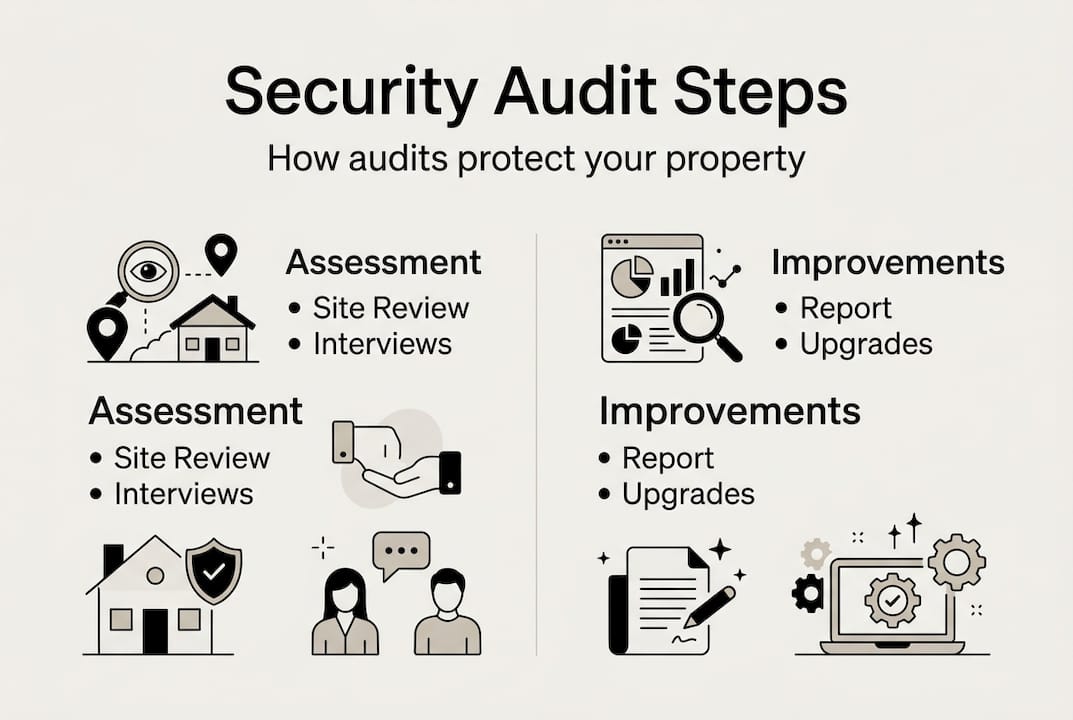
Comprehensive security audits follow a structured process that ensures no vulnerability goes unnoticed. Understanding these steps helps you prepare effectively and maximize the value you receive from professional assessment services.
- Initial consultation establishes audit scope, identifies specific concerns, and reviews any previous security incidents that inform the evaluation focus.
- Physical inspection examines all entry points, barriers, lighting, surveillance coverage, and environmental factors affecting visibility and access control.
- Risk evaluation analyzes findings against local crime patterns, property characteristics, and industry security standards to prioritize vulnerabilities.
- Documentation review assesses existing security policies, maintenance records, and incident logs to identify procedural gaps alongside physical weaknesses.
- Recommendation development creates a prioritized action plan with specific upgrades, estimated costs, and expected risk reduction for each measure.
- Final report delivery includes detailed findings, photographic evidence, implementation timelines, and resources for addressing identified vulnerabilities.
Auditors assess multiple security elements during their evaluation, each contributing to your overall protection level. Door and window security receives close attention, examining lock quality, frame strength, hinge placement, and glass vulnerability. Perimeter barriers like fences, gates, and landscaping are evaluated for their ability to deter and delay unauthorized access. Lighting analysis identifies dark areas that provide cover for criminals and recommends improvements to eliminate hiding spots.
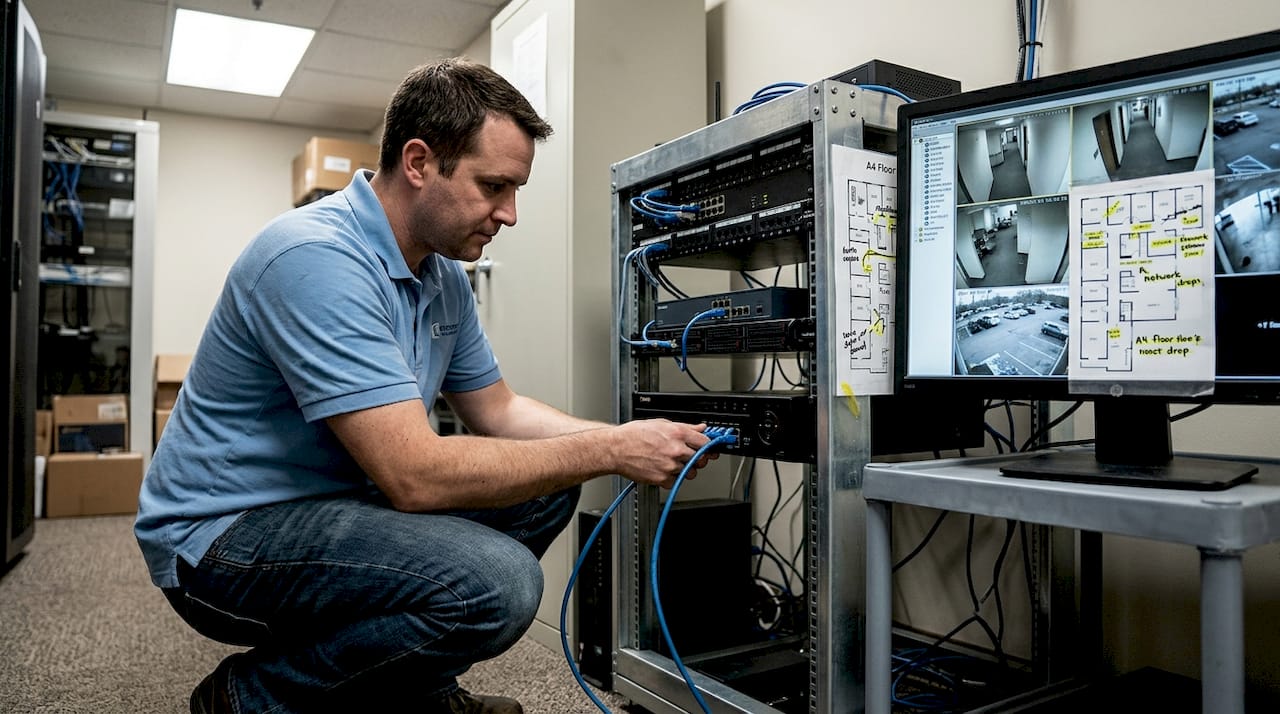
Surveillance system effectiveness depends on camera placement, recording quality, storage capacity, and monitoring capabilities. Auditors verify that cameras cover all critical areas without blind spots and that footage resolution supports identification if incidents occur. Access control systems are tested to ensure they properly restrict entry to authorized individuals and maintain audit trails of who entered when.
| Security Feature | Impact on Crime Risk | Typical Cost Range | Implementation Time |
|---|---|---|---|
| Deadbolt Locks | 40% reduction in forced entry | $50-$150 per door | 1-2 hours |
| Motion-Sensor Lighting | 35% reduction in approach attempts | $30-$200 per fixture | 2-4 hours |
| Security Cameras | 50% reduction in property crimes | $150-$600 per camera | 4-8 hours |
| Alarm Systems | 60% reduction in completed burglaries | $200-$1,500 installed | 4-6 hours |
| Reinforced Doors | 55% reduction in successful break-ins | $300-$1,200 per door | 3-5 hours |
Modern audits incorporate technology that previous generations of security assessments lacked. Thermal imaging cameras detect heat signatures that reveal hidden vulnerabilities in walls or windows. Digital lock testing equipment verifies that electronic access controls function properly and resist tampering. Crime mapping software overlays your property location with local incident data to quantify neighborhood-specific risks.
Empirical benchmarks confirm that audits reduce crime risk by identifying the specific weaknesses criminals target. Professional auditors recognize subtle vulnerabilities that property owners miss, like weak door frames that render strong locks ineffective or surveillance blind spots that savvy criminals exploit.
Pro Tip: Prepare for your audit by gathering documentation of previous security incidents, existing system warranties, and any concerns you’ve noticed about your property. Walk your perimeter beforehand and note areas that make you uncomfortable. This preparation helps auditors focus on your highest-priority concerns while conducting their comprehensive evaluation. Learn about top security features to understand what auditors will assess, and review our home security checklist to identify potential gaps before the audit.
Comparing security audits to alternative risk management approaches
Property owners have several options for managing security risks, but not all approaches deliver equal protection or value. Understanding how audits compare to alternatives clarifies why they consistently outperform other methods.
Self-assessment involves property owners conducting their own security evaluations using online checklists or guides. While this approach costs nothing financially, it suffers from knowledge gaps and blind spots. Most property owners lack training in criminal behavior patterns, security technology capabilities, or risk assessment methodologies. They often overlook vulnerabilities that professionals immediately recognize or overestimate the effectiveness of existing measures.
Reactive security upgrades happen after incidents occur, when property owners install new locks, cameras, or alarms in response to break-ins or vandalism. This approach addresses known weaknesses but ignores undiscovered vulnerabilities that criminals might exploit next. The emotional and financial costs of experiencing crime before taking action far exceed the investment in proactive prevention.
Insurance reliance treats security as a financial rather than physical problem, assuming coverage will compensate for losses. While insurance provides important financial protection, it doesn’t prevent the trauma of victimization, loss of irreplaceable items, or business disruptions. Many policies also require specific security measures before covering certain risks, making audits necessary for full coverage.
| Approach | Upfront Cost | Long-Term Cost | Risk Reduction | Proactive vs Reactive | Professional Expertise |
|---|---|---|---|---|---|
| Security Audit | $200-$800 | Low (targeted upgrades) | High (60-70%) | Proactive | Yes |
| Self-Assessment | $0 | Medium (trial and error) | Low (20-30%) | Somewhat proactive | No |
| Reactive Upgrades | Variable | High (repeated incidents) | Medium (40-50%) | Reactive | Sometimes |
| Insurance Only | $500-$2,000/year | High (premiums + deductibles) | None (financial only) | Neither | No |
| Technology Only | $500-$3,000 | Medium (maintenance) | Medium (45-55%) | Proactive | Rarely |
Security audits offer distinct advantages that justify their position as the foundation of effective protection strategies. They identify vulnerabilities before criminals discover them, allowing you to address weaknesses on your timeline rather than in crisis mode after an incident. Professional auditors bring specialized knowledge of criminal tactics, security technology capabilities, and risk assessment frameworks that self-assessment cannot match.
The cost-benefit analysis strongly favors audits over alternatives. Research demonstrates that costs are far outweighed by prevented losses from theft, property damage, and liability claims. A single burglary costs an average of $2,800 in direct losses, plus time off work, emotional distress, and potential insurance premium increases. Preventing just one incident through audit-guided improvements recovers the audit investment several times over.
Insurance companies recognize audit value through premium discounts for properties with documented security assessments. Many insurers reduce rates by 5-20% when property owners implement audit recommendations, creating ongoing savings that compound over years. Some policies require professional security evaluations for high-value properties or businesses with significant liability exposure.
- Audits provide customized recommendations based on your specific property characteristics and local crime patterns, unlike generic security advice
- Professional assessments identify interdependencies between security measures, ensuring upgrades work together effectively rather than creating new vulnerabilities
- Documented audit findings support insurance claims by demonstrating reasonable precautions if incidents occur despite your security measures
- Regular audits adapt your security to evolving criminal tactics and new technology capabilities that weren’t available during previous assessments
Explore smart home security benefits to understand how modern technology integrates with audit recommendations, and learn more about investing in high security to protect valuable assets.
Implementing findings: practical steps after your security audit
Receiving your audit report is just the beginning. The real value emerges when you systematically address identified vulnerabilities through strategic implementation of recommendations.
Prioritization determines which upgrades to tackle first based on risk severity and available budget. High-risk vulnerabilities that criminals commonly exploit demand immediate attention, even if they require significant investment. Examples include inadequate door locks on primary entries, complete lack of surveillance coverage, or lighting failures that create concealment opportunities. Medium-risk items can follow on a phased timeline, while low-risk recommendations might wait for routine maintenance opportunities.
Budget constraints affect most property owners, but creative approaches make critical upgrades achievable. Focus initial spending on measures that address multiple vulnerabilities simultaneously, like motion-sensor lighting that improves visibility while deterring approach attempts. Phased implementation spreads costs over several months while still making steady progress. Some improvements require minimal investment, like trimming landscaping that provides cover or establishing better access control procedures.
Common post-audit actions create a roadmap for systematic security enhancement. Start with these high-impact measures that audits frequently recommend:
- Install or upgrade deadbolt locks on all exterior doors, ensuring proper installation with reinforced strike plates and long mounting screws
- Add motion-sensor lighting to eliminate dark areas around entry points, driveways, and property perimeters where criminals could approach undetected
- Establish surveillance coverage of all entry points and high-value areas, with cameras positioned to capture faces rather than just detecting motion
- Reinforce door frames and upgrade to solid-core or metal doors that resist forced entry attempts far better than hollow-core alternatives
- Implement access control procedures for businesses, including key tracking, employee badge systems, and visitor management protocols
- Trim vegetation within three feet of windows and doors to eliminate hiding spots and maintain clear sightlines from inside the property
- Test and maintain existing security systems regularly, replacing batteries, updating software, and verifying that all components function properly
Pro Tip: Collaborate with certified security professionals for implementation rather than attempting complex installations yourself. Improper camera angles create blind spots that defeat their purpose, while incorrectly installed locks may provide false confidence without actual security. Professional installers ensure that audit recommendations achieve their intended protection levels. They also understand how different security measures integrate to create layered defense systems.
Audit benefits include lasting crime risk reduction when recommendations are implemented correctly and maintained over time. Security isn’t a one-time achievement but an ongoing process that adapts to changing circumstances.
Follow-up audits every two to three years verify that implemented measures remain effective and identify new vulnerabilities from property changes, technology advances, or evolving criminal tactics. Properties in high-crime areas or those that have experienced incidents may benefit from annual reassessments. Businesses with high employee turnover or frequent layout changes should audit more frequently to address new access control challenges.
System maintenance prevents security degradation that occurs when equipment fails or procedures lapse. Monthly testing of alarms, cameras, and sensors catches malfunctions before they create vulnerabilities. Quarterly reviews of access control lists remove former employees or tenants who shouldn’t retain entry privileges. Annual professional inspections verify that all components function properly and meet current security standards.
Discover security solutions examples for practical implementation ideas, and explore essential security products that audits commonly recommend.
Enhance your property safety with expert security audits
Protecting your home or business starts with understanding exactly where vulnerabilities exist and how to address them effectively. Professional security audits provide the intelligence you need to make informed decisions about protecting what matters most.
At Safes and Security Direct, we connect property owners with the expertise and equipment needed to implement comprehensive security strategies. Our platform offers professional-grade surveillance cameras, alarm systems, and safes that auditors frequently recommend for addressing common vulnerabilities. Whether you’re implementing audit findings or preparing for your first assessment, we provide the trusted solutions that deliver lasting protection.
Explore our home security guide for foundational security principles, or discover urban security solutions tailored to specific property challenges. Our team helps you select equipment that matches your audit recommendations and budget while ensuring compatibility with existing systems.
Why use security audits? Frequently asked questions
What differentiates a security audit from a simple inspection?
Security audits employ systematic risk assessment methodologies to evaluate vulnerabilities, while inspections typically verify that existing equipment functions properly. Audits analyze criminal behavior patterns, local crime data, and property-specific risks to prioritize recommendations. Inspections focus on maintenance and compliance rather than strategic security planning.
How often should security audits be conducted?
Most properties benefit from audits every two to three years to address technology advances and evolving criminal tactics. High-risk properties, businesses with frequent layout changes, or locations that have experienced incidents should audit annually. Significant property modifications like additions or landscaping changes warrant interim assessments.
Can security audits lower my insurance premiums?
Many insurers offer premium discounts of 5-20% for properties with documented professional security assessments and implemented recommendations. Some policies require audits for high-value properties or businesses with significant liability exposure. Contact your insurance provider to understand specific requirements and potential savings.
Are there DIY alternatives to professional audits?
Self-assessment using online checklists can identify obvious vulnerabilities but lacks the expertise to recognize subtle weaknesses or prioritize risks effectively. DIY approaches miss interdependencies between security measures and may recommend ineffective solutions. Professional audits provide specialized knowledge that self-assessment cannot replicate.
What common security weaknesses do audits typically reveal?
Audits frequently identify inadequate door locks, poor lighting around entry points, surveillance blind spots, weak door frames, overgrown landscaping providing cover, and outdated alarm systems. Many properties also have procedural gaps like poor key control, inconsistent lock usage, or lack of visitor management protocols. Learn about security system maintenance to keep implemented measures effective over time.
Recommended
- 7 Top Security Features Every Property Owner Should Know – Safes and Security Direct
- How to Secure Commercial Premises for Maximum Protection – Safes and Security Direct
- Top Asset Protection Methods 2026 for Secure Homes – Safes and Security Direct
- How to secure business premises effectively in 2026 – Safes and Security Direct
- How to Protect Against Property Damage: A South African Guide - Rental Income Insurance