

How to Secure Commercial Premises for Maximum Protection
Managing a retail business in the United States often means balancing customer service with the constant concern of keeping your premises safe. Security gaps like weak access controls or poor lighting can leave your property exposed to theft and other risks. This guide highlights actionable steps for identifying vulnerabilities, selecting proven surveillance systems, and implementing robust security measures—helping you protect your assets and maintain peace of mind.
Table of Contents
- Step 1: Assess Current Security Risks And Identify Vulnerabilities
- Step 2: Choose Appropriate Surveillance And Alarm Systems
- Step 3: Install Security Cameras And Access Controls Strategically
- Step 4: Enhance Entry Points With Strong Locks And Safes
- Step 5: Test And Monitor Your Security Setup Regularly
Quick Summary
| Key Point | Explanation |
|---|---|
| 1. Assess Security Vulnerabilities Thoroughly | Conduct detailed walkthroughs to identify risks in physical security, cyber threats, and procedural gaps to enhance safety. |
| 2. Choose the Right Surveillance Systems | Evaluate your facility’s needs and select appropriate alarm and surveillance systems for comprehensive monitoring and security. |
| 3. Strategically Install Cameras and Access Controls | Position security cameras in critical areas and implement various access control measures to maximize security effectiveness. |
| 4. Reinforce Entry Points with Strong Locks and Safes | Enhance physical security by using high-quality locks and safes, and develop strict access control protocols. |
| 5. Regularly Test and Monitor Security Systems | Establish a routine for testing and monitoring security setups to proactively address vulnerabilities and enhance protection. |
Step 1: Assess current security risks and identify vulnerabilities
Securing commercial premises starts with a comprehensive understanding of potential threats and weaknesses. Your goal in this critical first step is to systematically evaluate your facility’s current security landscape and pinpoint areas of vulnerability that could expose your business to potential risks.
To effectively assess security risks, begin with a detailed physical security walkthrough. Analyzing building security vulnerabilities requires examining multiple dimensions of your commercial space. Focus on key areas that typically present security challenges:
- Access points and entry/exit routes
- Lighting conditions around the premises
- Current surveillance and monitoring systems
- Employee and visitor screening procedures
- Physical barriers and perimeter protection
- Interior security infrastructure
Next, conduct a comprehensive risk assessment that goes beyond physical elements. Evaluate potential cyber and procedural vulnerabilities by examining:
- Technology infrastructure security
- Employee access protocols
- Data protection mechanisms
- Communication network vulnerabilities
- Emergency response capabilities
A systematic approach to identifying security risks helps prevent potential breaches before they occur.
Documenting these vulnerabilities is crucial. Create a detailed risk matrix that categorizes each identified weakness by potential impact and likelihood of occurrence. This will help you prioritize remediation efforts and allocate resources effectively.
Here’s a summary of common security vulnerabilities and their potential business impacts:
| Vulnerability Type | Example Scenario | Possible Business Impact |
|---|---|---|
| Inadequate surveillance | Blind spots near main entry | Unauthorized entry, theft |
| Lax access protocols | Shared employee access cards | Data breaches, internal threats |
| Weak physical barriers | Unsecured window or door | Vandalism, property loss |
| Cybersecurity gaps | Unprotected Wi-Fi network | Data leaks, system compromise |
| Poor incident response | No emergency plan or contact list | Delayed reaction, higher losses |
Pro tip: Conduct security assessments quarterly and maintain a living document that tracks changes in your facility’s risk profile.
Step 2: Choose appropriate surveillance and alarm systems
Selecting the right surveillance and alarm systems is crucial for comprehensive commercial security. Your objective is to implement a robust protection strategy that deters potential threats and provides real-time monitoring capabilities for your business premises.
Begin by evaluating your specific security requirements. Internationally recognized alarm system standards recommend analyzing your facility’s unique vulnerabilities. Consider these key factors when choosing surveillance and alarm systems:
- Total square footage of your premises
- Number of entry and exit points
- Building layout and architectural complexity
- Current security infrastructure
- Specific industry risk factors
- Budget constraints
Commercial premises typically have several alarm system options:
- Bells-only alarms
- Speech diallers
- GSM communication units
- Fully monitored professional systems
- Integrated smart security networks
Professional alarm systems provide layered security that adapts to your specific business needs.
Integrated surveillance involves combining multiple technologies for comprehensive protection. Look for systems that offer:
- High-resolution digital cameras
- Motion detection capabilities
- Remote monitoring options
- Cloud storage for footage
- Smartphone app integration
- Automatic alert notifications
Ensure your chosen system meets local regulatory requirements and insurance standards. Professional monitoring can significantly reduce response times and provide an additional layer of security.
Compare the main types of commercial alarm systems and their most relevant use cases:
| Alarm System Type | Best For | Distinct Advantage |
|---|---|---|
| Bells-only | Small businesses | Simple deterrence, easy to install |
| Speech dialler | Standalone properties | Alerts via phone notification |
| GSM communication | Areas with unreliable power | Operates independent of landlines |
| Fully monitored systems | High-value assets locations | 24/7 response, immediate action |
| Smart integrated networks | Large or growing businesses | Remote access, advanced analytics |
Pro tip: Request security system demonstrations and compare at least three different providers before making a final selection.
Step 3: Install security cameras and access controls strategically
Installing security cameras and access controls requires a thoughtful, systematic approach to maximize protection for your commercial premises. Your goal is to create a comprehensive security infrastructure that deters potential threats and provides robust monitoring capabilities.
Strategic security camera placement involves identifying and covering critical vulnerable areas. Focus on these key locations for camera installation:
- Main entrance and lobby areas
- Parking lots and exterior perimeters
- Loading dock and shipping/receiving zones
- Cash handling and register areas
- Warehouse and inventory storage spaces
- Hallways and internal circulation paths
- Employee break rooms and back-office spaces
Implement digital access control systems that provide multiple layers of security:
- Keycard entry mechanisms
- Biometric authentication
- PIN code entry systems
- Visitor management protocols
- Real-time access tracking
Effective security integration reduces unauthorized access and minimizes potential security breaches.
Consider these critical factors when designing your access control strategy:
- Number of employees requiring access
- Different security clearance levels
- Time-based access restrictions
- Remote management capabilities
- Integration with existing security infrastructure
- Scalability for future growth
Ensure comprehensive coverage by overlapping camera angles and maintaining clear lines of sight. Use high-resolution cameras with night vision capabilities and wide-angle lenses to maximize surveillance effectiveness.
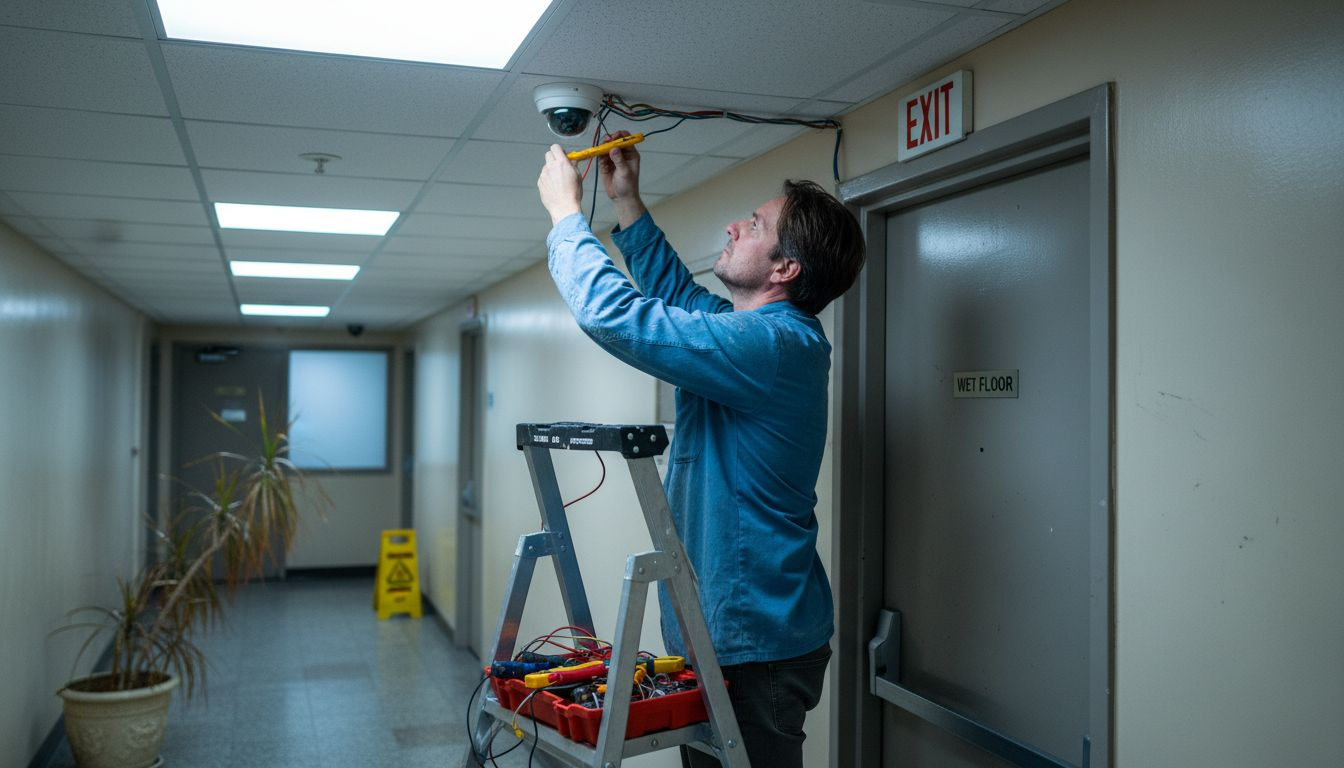
Pro tip: Conduct periodic security audits to identify and address potential camera or access control system blind spots.
Step 4: Enhance entry points with strong locks and safes
Securing your commercial premises begins with reinforcing entry points against potential intrusions. Your primary objective is to create multiple layers of physical protection that deter unauthorized access and safeguard your valuable assets.
Safety measures for external premises emphasize the importance of comprehensive security strategies. Focus on these critical entry point enhancement techniques:
- Install high-security commercial grade locks
- Implement multi-point locking systems
- Use deadbolts with hardened steel strikes
- Add reinforced door frames
- Install security strike plates
- Consider electronic smart locks
- Use tamper-resistant hinges
Select safes that provide robust protection for critical assets:
- Choose fire-resistant models
- Select appropriate size for your inventory
- Consider biometric access options
- Ensure professional installation
- Position safes in low-visibility areas
Strategic lock and safe placement creates formidable barriers against potential security threats.
Access control strategies should include:
- Restricted key management systems
- Regular lock maintenance
- Professional security assessments
- Employee access tracking
- Periodic lock replacement
- Comprehensive key control protocols
Implement additional exterior security measures like sensor lighting, security cameras, and perimeter fencing to create comprehensive protection around entry points.
Pro tip: Conduct annual professional security audits to identify and address potential vulnerabilities in your lock and safe systems.
Step 5: Test and monitor your security setup regularly
Effective security management requires consistent testing and monitoring to ensure your commercial premises remain protected against evolving threats. Your goal is to create a proactive approach that identifies potential vulnerabilities before they can be exploited.
Cybersecurity best practices emphasize the critical importance of ongoing security assessments. Develop a comprehensive monitoring strategy that includes:
- Regular system performance checks
- Monthly security configuration reviews
- Quarterly vulnerability assessments
- Annual comprehensive security audits
- Consistent log and access record analysis
- Real-time threat monitoring
- Periodic penetration testing
Implement a structured approach to security monitoring:
- Establish baseline security performance metrics
- Create detailed documentation of security protocols
- Set up automated alert systems
- Conduct regular employee security training
- Develop incident response procedures
Continuous monitoring transforms your security from reactive to proactive protection.
Critical monitoring elements should track:
- Access control system performance
- Camera and surveillance system functionality
- Network and digital infrastructure integrity
- Physical security equipment status
- Potential system vulnerabilities
- Unauthorized access attempts
Maintain a dynamic security approach by regularly updating your systems, addressing identified weaknesses, and staying informed about emerging security technologies and potential threats.
Pro tip: Create a dedicated security review calendar to ensure no monitoring or testing activities slip through the cracks.
Maximize Your Commercial Security with Trusted Solutions
Securing commercial premises involves addressing vulnerabilities like weak locks, outdated surveillance, and insufficient access controls as highlighted in the article. Your goal is to build a resilient security system that protects assets and prevents unauthorized access. Safes and Security Direct understands these challenges and offers a wide selection of professional-grade security cameras, advanced alarm systems, and durable fire and burglary-resistant safes tailored for business environments.
Take control of your commercial security today by exploring reliable products designed to fortify every entry point and monitor critical areas in real time. Visit Safes and Security Direct now to find expert solutions that match your risk assessment needs and help you stay a step ahead of threats. Don’t wait until vulnerabilities turn into costly problems. Start securing your business premises with confidence by browsing our comprehensive range at Safes and Security Direct, your trusted partner for maximum protection.
Frequently Asked Questions
How can I assess security risks in my commercial premises?
Begin by conducting a detailed physical security walkthrough. Analyze entry points, lighting conditions, existing surveillance systems, and employee screening processes to identify vulnerabilities that could expose your business to risks.
What are effective surveillance and alarm system options for commercial security?
Consider integrating high-resolution cameras with motion detection and fully monitored professional systems. Evaluate your specific requirements, such as square footage and number of entry points, to choose the best alarm system type for your needs.
How should I strategically place security cameras in my facility?
Focus on critical locations like main entrances, parking lots, and internal circulation paths for camera placement. Overlap camera angles and ensure clear lines of sight to maximize coverage and monitor potential threats effectively.
What types of locks enhance entry point security for commercial properties?
Install high-security commercial grade locks and consider multi-point locking systems for doors. Use deadbolts and reinforced frames to create formidable barriers against unauthorized entry.
How often should I test and monitor my security systems?
Conduct regular system performance checks and quarterly vulnerability assessments to ensure your security setup remains effective. Create a dedicated security review calendar to systematically track these activities over the year.
What should I include in a comprehensive risk assessment for my business?
Document physical security, technology infrastructure, and employee access protocols in your risk assessment. Create a risk matrix to categorize vulnerabilities by potential impact and likelihood of occurrence, allowing for prioritized remediation.
Recommended
- Why Secure Commercial Assets: Protecting Profit and Growth – Safes and Security Direct
- 7 Key Commercial Security Tips for Better Asset Protection – Safes and Security Direct
- Why Choose Commercial-Grade Security Systems – Safes and Security Direct
- Why Use Commercial Safes: Protecting Business Assets – Safes and Security Direct