

Why Choose Commercial-Grade Security Systems
Every theft incident forces Security Managers at retail businesses to ask whether their current systems provide enough protection. The stakes are high when inventory, revenue, and brand reputation are at risk. As threats grow more sophisticated, understanding the difference between basic and commercial-grade security becomes essential for choosing effective technologies that safeguard assets and create safer environments across stores in both European and American markets.
Table of Contents
- Commercial-Grade Security Defined and Debunked
- Key Types of Commercial Security Solutions
- Critical Features That Set Systems Apart
- Real-World Retail Use Cases and Impact
- Costs, Risks, and Common Pitfalls
- Comparing Commercial Vs. Consumer Security
Key Takeaways
| Point | Details |
|---|---|
| Comprehensive Security Systems | Commercial-grade security systems offer advanced protection that integrates physical and digital technologies, tailored to organizational needs. |
| Proactive Risk Management | These systems are designed not only to deter unauthorized access but also to anticipate and neutralize potential threats. |
| Investment vs. Cost | Security should be viewed as a critical investment in organizational resilience rather than just an operational expense. |
| Scalable Solutions | Commercial security solutions must provide scalable architectures to effectively protect multi-site operations and adapt to evolving risks. |
Commercial-Grade Security Defined and Debunked
Commercial-grade security systems represent sophisticated protective infrastructure designed to safeguard business assets beyond traditional consumer-level solutions. These advanced systems go far beyond simple alarm mechanisms, integrating complex technological frameworks that provide comprehensive protection for organizations.
At their core, commercial-grade security systems differ from residential systems through several critical characteristics:
- Scalable architecture capable of protecting large physical spaces
- Advanced integration capabilities with existing business technologies
- Sophisticated monitoring and real-time threat detection mechanisms
- Customizable security protocols tailored to specific industry requirements
The government security classification framework provides excellent insights into how systematic protection strategies work. By applying proportional security controls based on potential compromise risks, businesses can develop nuanced defense mechanisms that adapt to evolving threat landscapes.
Professional security systems typically encompass multiple technological layers, including:
- Perimeter surveillance cameras
- Access control systems
- Biometric identification technologies
- Network intrusion detection platforms
- Centralized monitoring dashboards
Understanding these systems requires recognizing that commercial security is not merely about preventing unauthorized entry but creating a comprehensive risk management strategy. Modern solutions integrate physical and digital protection mechanisms, transforming security from a reactive measure to a proactive business intelligence tool.
Pro tip: Conduct a comprehensive security audit annually to ensure your commercial-grade system remains aligned with your organization’s evolving risk profile and technological capabilities.
Key Types of Commercial Security Solutions
Commercial security solutions represent a critical infrastructure designed to protect businesses from multifaceted threats. Unlike residential security systems, these professional-grade solutions offer comprehensive protection strategies that adapt to complex organizational environments.
Modern commercial security systems encompass several key technological components, as identified in government security infrastructure research. These sophisticated solutions include:
- Intrusion Detection Systems: Advanced sensors and monitoring platforms that identify unauthorized access attempts
- Access Control Technologies: Electronic badge readers and biometric authentication mechanisms
- Surveillance Networks: High-definition camera systems with real-time monitoring capabilities
- Centralized Security Management: Integrated dashboards for comprehensive threat assessment
These security solutions are strategically designed to address multiple threat vectors simultaneously. By integrating physical and digital protection mechanisms, businesses can create robust defense frameworks that protect critical assets, personnel, and intellectual property.
Professional security solutions typically follow a layered approach, incorporating multiple defensive strategies:
- Perimeter protection technologies
- Interior monitoring systems
- Digital network security protocols
- Personnel authentication mechanisms
- Emergency response coordination platforms
Physical security and digital protection are no longer separate domains but interconnected systems requiring holistic management. Modern commercial security solutions transform traditional defensive approaches into intelligent, adaptive risk management strategies that provide comprehensive organizational protection.
Pro tip: Implement a comprehensive security assessment annually to ensure your commercial security infrastructure remains aligned with emerging technological capabilities and evolving threat landscapes.
Critical Features That Set Systems Apart
Commercial security systems are distinguished by advanced technological capabilities that transform traditional protection strategies into intelligent, adaptive defense mechanisms. The most sophisticated solutions go beyond basic monitoring, offering comprehensive risk management approaches that anticipate and neutralize potential threats.
Advanced commercial security systems differentiate themselves through several critical features:
- Real-time Threat Analysis: Intelligent systems that continuously evaluate potential security risks
- Predictive Risk Modeling: Machine learning algorithms that forecast potential vulnerabilities
- Multi-layered Authentication: Complex verification processes that prevent unauthorized access
- Integrated Communication Protocols: Seamless information sharing across multiple security platforms
The complexity of modern security infrastructure demands systems that can dynamically adapt to changing threat landscapes. Comprehensive security solutions must integrate multiple technological layers to create robust protective ecosystems.
Key differentiating technologies in commercial security solutions include:
- Artificial intelligence-powered threat detection
- Biometric identification systems
- Advanced encryption technologies
- Cross-platform integration capabilities
- Automated incident response mechanisms
Technological resilience represents the true hallmark of superior commercial security systems. These solutions transform traditional defensive approaches into proactive, intelligent risk management strategies that anticipate and neutralize potential threats before they materialize.
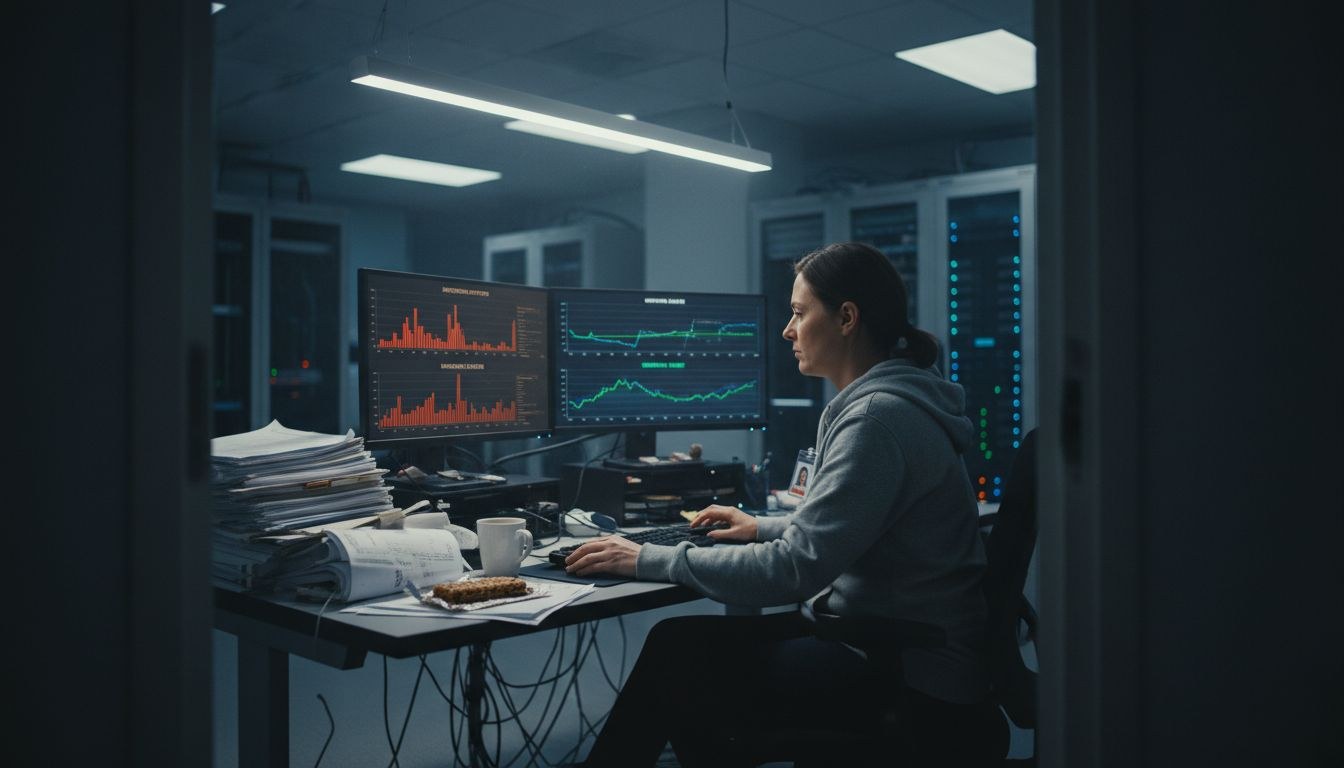
The following table summarizes the business benefits of key commercial security system features:
| Feature | Main Function | Business Benefit |
|---|---|---|
| Real-time Threat Analysis | Constant risk evaluation | Faster decision-making |
| Predictive Risk Modeling | Forecasting vulnerabilities | Prevents potential losses |
| Multi-layered Authentication | Verifies identities with multiple factors | Reduces unauthorized access |
| Integrated Communication Protocols | Coordinates alerts across platforms | Enhances team response speed |
| Automated Incident Response | Handles threats automatically | Minimizes damage and downtime |
Pro tip: Prioritize security systems with modular design and scalable architecture to ensure your protective infrastructure can evolve alongside emerging technological capabilities.
Real-World Retail Use Cases and Impact
Retail environments represent complex security landscapes where technological solutions directly translate into tangible business outcomes. Modern commercial security systems have evolved from passive monitoring tools to sophisticated risk management platforms that protect not just physical assets, but overall organizational performance.
Retail security technologies demonstrate their value through multiple strategic applications:
- Loss prevention and inventory protection
- Customer safety and crowd management
- Operational efficiency enhancement
- Brand reputation preservation
- Fraud detection and prevention
Commercial security case studies reveal critical insights into practical security implementation across diverse retail environments.
Specific retail use cases showcase the transformative potential of advanced security technologies:
- Real-time inventory tracking systems
- Predictive theft prevention algorithms
- Automated entry/exit management platforms
- Customer behavior analytics
- Dynamic risk assessment tools
Technological integration represents the critical differentiator in modern retail security strategies. By transforming raw data into actionable intelligence, these systems enable businesses to proactively manage risks, optimize operations, and create safer shopping environments.
Pro tip: Conduct periodic security technology audits to ensure your retail security infrastructure remains adaptive and aligned with emerging technological capabilities and evolving threat landscapes.
Costs, Risks, and Common Pitfalls
Navigating the complex landscape of commercial security requires a strategic approach that balances technological investment with comprehensive risk management. Business leaders must recognize that security is not merely an expense, but a critical infrastructure investment protecting organizational assets and operational continuity.
Commercial security investments involve multiple financial and strategic considerations:
- Initial technology acquisition costs
- Ongoing maintenance and upgrade expenses
- Training and implementation investments
- Potential operational disruption during system integration
- Long-term risk mitigation value
Security investment strategies emphasize the importance of aligning security spending with precise risk management objectives.
Common pitfalls that organizations encounter when implementing security solutions include:
- Underestimating total implementation costs
- Selecting inflexible technological platforms
- Inadequate staff training and change management
- Failing to conduct comprehensive risk assessments
- Overlooking system scalability requirements
Financial risk management demands a holistic perspective that considers both immediate technological expenses and long-term organizational protection strategies. Successful security implementations transform potential vulnerabilities into strategic advantages by creating robust, adaptive protective ecosystems.
Pro tip: Develop a comprehensive security investment roadmap that includes detailed cost-benefit analysis, phased implementation strategies, and ongoing performance evaluation metrics.
Comparing Commercial vs. Consumer Security
Business security requirements fundamentally differ from residential protection needs, demanding sophisticated technological solutions that transcend basic consumer-grade equipment. The critical distinctions between commercial and consumer security systems represent more than just performance variations - they reflect entirely different philosophical approaches to risk management.
Security system capabilities reveal stark differences across multiple dimensions:
- Scalability and enterprise-level deployment
- Advanced analytical capabilities
- Comprehensive integration potential
- Enhanced durability and environmental resilience
- Sophisticated data management protocols
Commercial security camera technologies demonstrate profound performance differences that extend far beyond simple visual monitoring.
Key comparative elements between commercial and consumer security systems include:
- Performance complexity
- Reliability under diverse conditions
- Network and data management capabilities
- Long-term operational sustainability
- Comprehensive risk mitigation strategies
Technological infrastructure represents the fundamental differentiator between consumer and commercial security solutions. While consumer systems offer basic protection, commercial-grade technologies transform security from a reactive expense into a strategic organizational asset.
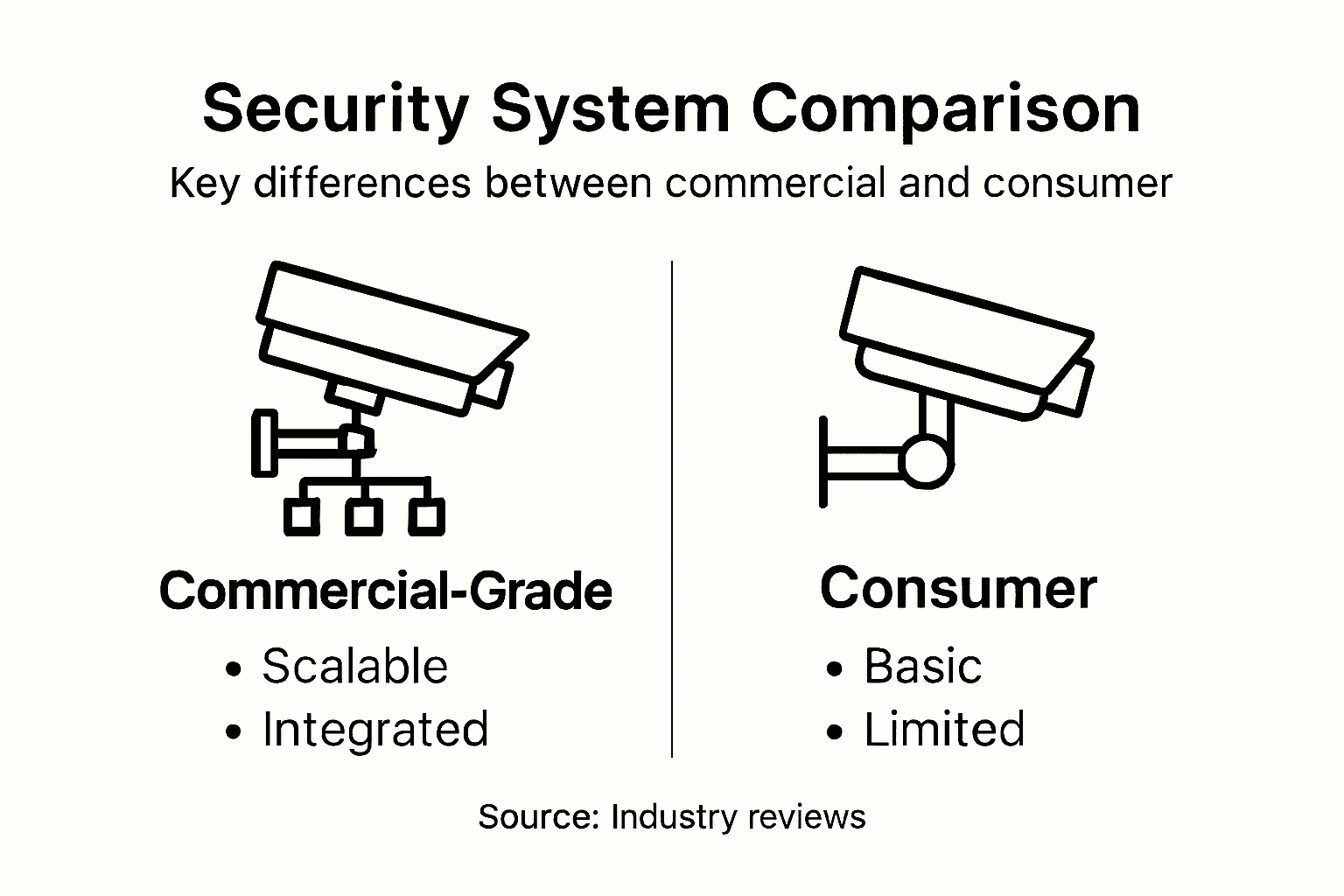
Here’s a comparison of commercial-grade and consumer security systems across essential factors:
| Attribute | Commercial-Grade Security | Consumer Security |
|---|---|---|
| Scalability | Supports multi-site operations | Best for single homes |
| Durability | Built for high-traffic environments | Designed for low-traffic use |
| Integration | Seamless with business platforms | Limited smart home pairing |
| Data Management | Robust, compliant storage | Basic or cloud-based only |
| Maintenance Needs | Requires specialized support | Simple, DIY upkeep |
| Customization | Tailored to industry requirements | Limited settings per user |
Pro tip: Conduct a comprehensive security needs assessment that evaluates your specific operational requirements before selecting between consumer and commercial security platforms.
Secure Your Business with Proven Commercial-Grade Security Solutions
The article highlights the challenge of protecting your business assets with advanced, scalable, and integrated commercial-grade security systems. If you are concerned about real-time threat analysis, multi-layered authentication, or the need for customizable, durable protection to prevent unauthorized access and reduce risks, you are not alone. Many organizations face the complexity of balancing physical and digital security while striving for proactive risk management.
At Safes and Security Direct, we understand these critical pain points and offer a broad range of professional security products designed to meet the rigorous demands of commercial environments. From high-definition surveillance cameras to state-of-the-art security systems and safes, our solutions provide the technology and resilience your business needs to stay secure and compliant.

Experience the difference that commercial security expertise makes. Visit our secure website now to explore top-tier security systems tailored to your business size and industry requirements. Learn how our products can enable faster decision-making, enhance incident response, and safeguard your organization against evolving threats. Don’t wait for vulnerabilities to expose your assets gain control of your security infrastructure today with Safes and Security Direct.
Frequently Asked Questions
What are the main differences between commercial-grade and consumer security systems?
Commercial-grade security systems offer scalability, advanced analytics, comprehensive integration, and enhanced durability compared to consumer systems, which are typically simpler and designed for individual home use.
Why is real-time threat analysis important in commercial security systems?
Real-time threat analysis enables organizations to continuously evaluate potential security risks, allowing for quicker decision-making and more effective responses to emerging threats.
How can businesses ensure their commercial security systems remain effective over time?
Conducting annual security audits and assessments helps align security systems with evolving risk profiles and technological advancements, ensuring ongoing effectiveness.
What are common pitfalls organizations should avoid when implementing commercial security solutions?
Some common pitfalls include underestimating implementation costs, selecting inflexible systems, inadequate staff training, failing to conduct thorough risk assessments, and overlooking scalability requirements.
Recommended
- Why Choose Security Systems: Protecting Homes and Businesses – Safes and Security Direct
- Why Choose Security Systems: Protecting Homes and Businesses – Safes and Security Direct
- Why Invest in High Security Solutions – Safes and Security Direct
- 7 Key Commercial Security Tips for Better Asset Protection – Safes and Security Direct
- 7 Types of Commercial Roofing for Texas Property Owners
- The 10 Best Commercial Pest Control Companies in London - BioWise Pest Control London
- Gutter Vacuum Solutions – Preventing Urban Water Damage