

Business security checklist 2026: protect your SME assets
Physical security breaches cost midsize businesses thousands in downtime and lost assets every year. Over 60% of companies experienced a physical security breach in the past year, making proactive protection essential for SMEs in 2026. This comprehensive checklist guides you through preparation, execution, and verification steps to safeguard your premises and assets. You’ll learn which security measures deliver the highest impact, how to implement them efficiently, and how to maintain protection over time. Whether you’re starting from scratch or upgrading existing systems, this guide empowers you to take control of your business security.
Table of Contents
- Understanding The Risks: Why A Business Security Checklist Is Vital In 2026
- Preparation: Essential Tools And Protocols For Your 2026 Security Checklist
- Execution: Step-By-Step Security Measures To Implement In 2026
- Verification And Maintenance: Keeping Your Security Checklist Effective In 2026
- Explore Tailored Security Solutions For Your Business
- Frequently Asked Questions
Key takeaways
| Point | Details |
|---|---|
| Effective security reduces breaches | Perimeter fencing and biometric access control systems cut unauthorized entries by over 75%. |
| Regular audits maintain protection | Annual security audits and semiannual protocol reviews keep your defenses current against evolving threats. |
| Physical breaches cause major losses | Downtime, theft, and reputation damage from security incidents significantly impact SME operations and revenue. |
| Layered approaches work best | Combining physical barriers, access control, surveillance, and staff training creates comprehensive protection. |
Understanding the risks: why a business security checklist is vital in 2026
Physical security breaches remain a persistent threat to small and medium enterprises. Over 60% of companies experienced a physical security breach in the past year, causing significant downtime and financial losses for midsize businesses. These incidents disrupt operations, damage customer trust, and drain resources that could fuel growth.
The costs extend beyond immediate theft or vandalism. When unauthorized individuals access your premises, you face potential data breaches, employee safety risks, and regulatory compliance issues. Lost productivity during investigations and repairs compounds the financial impact. Your reputation takes a hit when clients learn about security failures, potentially costing you future business.
Several vulnerability categories threaten SMEs in 2026. Unauthorized entry through poorly secured doors and windows tops the list. Theft of equipment, inventory, and sensitive documents follows closely. Vandalism damages property and creates unsafe conditions. Workplace violence incidents, though less common, pose severe risks to employee wellbeing and business continuity.
A structured security checklist addresses these threats systematically. Rather than reacting to incidents after they occur, you establish preventive measures that deter criminals and detect threats early. This proactive approach protects your business security needs asset protection while demonstrating to employees and clients that you prioritize safety.
The financial argument for comprehensive security is compelling. Prevention costs significantly less than recovery from a major breach. Installing proper barriers, access controls, and surveillance systems requires upfront investment, but these measures pay for themselves by preventing costly incidents. Insurance premiums often decrease when you demonstrate robust security protocols.
Pro Tip: Document every security incident, no matter how minor. These records reveal patterns that help you identify vulnerabilities before they escalate into major breaches.
Preparation: essential tools and protocols for your 2026 security checklist
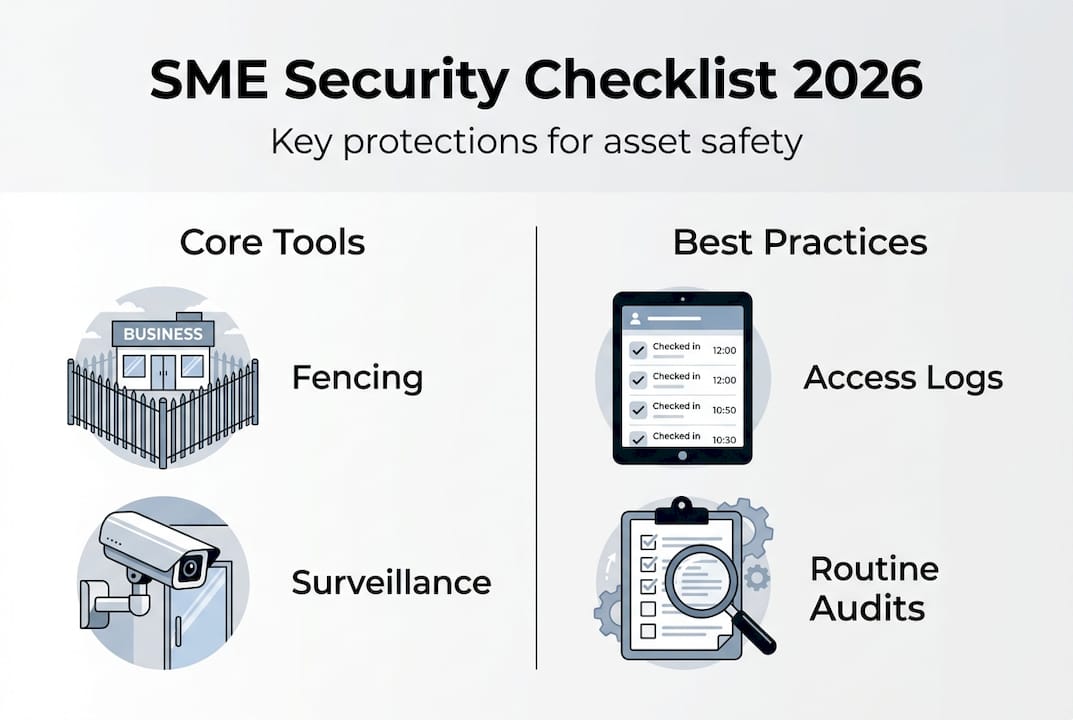
Building effective security starts with the right equipment and clear protocols. Physical barriers form your first line of defense. Perimeter fencing reduced unauthorized entries by 78% in recent studies, making it one of the most cost-effective investments. Barbed wire additions deterred 92% of climb attempts, though you should verify local regulations before installation.
Access control systems prevent unauthorized individuals from entering sensitive areas. Traditional lock and key systems offer basic protection but lack accountability. Electronic keypads provide better tracking of entry times and user codes. Biometric access systems reduced unauthorized entries by 92% in office environments, representing the gold standard for high-security zones. These systems use fingerprints, facial recognition, or iris scans to verify identity with near-perfect accuracy.
Surveillance technology has advanced significantly in 2026. Modern security cameras offer high-definition recording, night vision, motion detection, and remote monitoring through smartphone apps. Position cameras at all entry points, parking areas, and high-value asset locations. Visible cameras deter opportunistic criminals, while strategically hidden units catch sophisticated intruders.
| Security Tool | Primary Function | Effectiveness Rating |
|---|---|---|
| Perimeter Fencing | Physical barrier to entry | 78% reduction in unauthorized access |
| Biometric Scanners | Identity verification | 92% reduction in unauthorized access |
| Security Cameras | Monitoring and recording | High deterrent value plus evidence |
| Alarm Systems | Intrusion detection | Immediate threat notification |
| Lighting Systems | Visibility and deterrence | Reduces nighttime incidents by 60% |
Alarm systems complement surveillance by providing immediate notification of breaches. Modern systems integrate with cameras, access controls, and monitoring services. When triggered, they alert you, your security team, and potentially local authorities. Choose systems with battery backup to maintain protection during power outages.
Lighting deserves special attention in your security plan. Well-lit perimeters eliminate hiding spots and make surveillance footage clearer. Motion-activated lights startle intruders and draw attention to suspicious activity. Focus on entry points, parking areas, loading docks, and dark corners where criminals might attempt entry.
Your security system must haves effective protection 2026 include regular equipment maintenance. Cameras accumulate dirt that degrades image quality. Sensors drift out of calibration. Batteries weaken over time. Schedule monthly inspections of all security equipment to catch problems before they compromise protection.
Document your security protocols in writing. Create clear procedures for opening and closing the business, responding to alarms, granting visitor access, and handling security incidents. Train every employee on these protocols and update them as your business evolves. Written procedures ensure consistency even when key personnel are unavailable.
Pro Tip: Test your alarm system monthly by triggering it deliberately during business hours. This verifies proper function and keeps your monitoring service contact information current.
Consider how different security layers work together. A comprehensive approach to how to secure commercial premises combines physical barriers, electronic monitoring, and human vigilance. No single measure provides complete protection, but layered defenses force criminals to overcome multiple obstacles.
Execution: step-by-step security measures to implement in 2026
Implementing your security checklist requires systematic execution. Start with a thorough risk assessment of your premises. Walk the perimeter during both day and night to identify vulnerable entry points. Note areas with poor visibility, inadequate lighting, or weak physical barriers. Document high-value assets and sensitive areas requiring extra protection.
Prioritize security improvements based on risk level and budget. Address the most critical vulnerabilities first. An unlocked back door poses greater immediate risk than upgrading from standard to high-definition cameras. Focus resources where they deliver maximum protection.
Follow this implementation sequence for optimal results:
- Install or upgrade perimeter barriers like fencing, gates, and reinforced doors to establish your outer security layer.
- Implement access control systems at all entry points, starting with main entrances and expanding to sensitive internal areas.
- Position security cameras to cover entry points, parking areas, cash handling zones, and inventory storage with overlapping fields of view.
- Connect alarm systems to doors, windows, and motion sensors throughout the facility, ensuring backup power and professional monitoring.
- Upgrade lighting around the perimeter, entry points, and parking areas with motion-activated and continuous illumination as appropriate.
- Train all employees on security protocols, emergency procedures, and their role in maintaining a secure environment.
- Schedule regular maintenance checks and establish a system for reporting and addressing security concerns.
Employee training makes or breaks security effectiveness. Your staff members are your eyes and ears when you’re not present. Teach them to recognize suspicious behavior, properly secure the premises, and respond appropriately to alarms or incidents. Role-playing exercises help employees internalize procedures under stress.
Annual security audits are recommended, with semiannual reviews of security measures, and risk assessments every 2-3 years or after significant changes to your business. These scheduled evaluations catch emerging vulnerabilities before they lead to breaches. Document findings and track remediation to demonstrate continuous improvement.
Create accountability through documentation. Maintain logs of who accessed the building and when. Record all security incidents, equipment malfunctions, and maintenance activities. These records prove invaluable during investigations and insurance claims. They also reveal patterns that inform future security decisions.
Pro Tip: Assign a security champion within your organization who takes ownership of the checklist and coordinates implementation. This person ensures nothing falls through the cracks and serves as the point of contact for security vendors and consultants.
Integrate security measures with daily operations smoothly. Overly complex systems frustrate employees and lead to workarounds that compromise protection. Balance security with convenience by choosing user-friendly technologies and streamlining necessary procedures. Your create security protocols protect business 2026 approach should enhance rather than hinder productivity.
Test your security system comprehensively before relying on it. Attempt unauthorized entry during controlled conditions to verify barriers, alarms, and cameras function as intended. Simulate various scenarios like power failures, after-hours intrusions, and emergency evacuations. Address any weaknesses discovered during testing immediately.
Budget for ongoing costs beyond initial installation. Monitoring services, equipment maintenance, software updates, and periodic upgrades require sustained investment. Factor these expenses into your financial planning to avoid letting protection lapse due to budget constraints. Following commercial security best practices protect business 2026 standards ensures long-term effectiveness.
Verification and maintenance: keeping your security checklist effective in 2026
Security measures degrade without ongoing verification and maintenance. Regular audits detect gaps before criminals exploit them. Security audits should be annual, with semiannual reviews of protocols, and comprehensive risk assessments every 2-3 years or following significant changes to your business operations or facility.
Annual audits examine every component of your security system. Test cameras to ensure clear recording and proper coverage. Verify alarm sensors trigger reliably. Confirm access control systems recognize authorized users and reject unauthorized attempts. Inspect physical barriers for damage or deterioration. This systematic review identifies maintenance needs and technology upgrades.
Semiannual protocol reviews keep procedures current with evolving threats and business changes. As you add employees, expand facilities, or modify operations, security protocols must adapt. Review and update emergency contact lists, evacuation procedures, and incident response plans. Ensure new staff members receive proper security training.
Comprehensive risk assessments every few years account for major shifts in your threat landscape. New competitors, changing neighborhood demographics, or emerging crime trends require strategic security adjustments. These assessments often reveal opportunities to improve efficiency while enhancing protection.
| Verification Activity | Frequency | Primary Purpose |
|---|---|---|
| Equipment Testing | Monthly | Confirm all systems function properly |
| Protocol Reviews | Semiannual | Update procedures for current operations |
| Security Audits | Annual | Comprehensive system evaluation |
| Risk Assessments | Every 2-3 years | Strategic security planning |
| Staff Training Refreshers | Annual | Maintain employee preparedness |
Maintenance extends equipment lifespan and ensures reliable performance. Clean camera lenses quarterly to maintain image quality. Replace backup batteries annually in alarm systems. Lubricate locks and hinges to prevent mechanical failures. Update software and firmware to patch security vulnerabilities and access new features.
Document all verification and maintenance activities meticulously. Create a log that records inspection dates, findings, repairs performed, and personnel involved. This documentation demonstrates due diligence to insurers and regulators. It also helps you identify recurring issues that might indicate systemic problems requiring more substantial solutions.
Pro Tip: Schedule verification activities on your calendar as recurring appointments. Treating security maintenance like any other critical business function ensures it receives proper attention rather than being deferred indefinitely.
Involve employees in ongoing security awareness. Encourage them to report suspicious activity, equipment malfunctions, and potential vulnerabilities. Create a culture where security is everyone’s responsibility, not just management’s concern. Regular communication about security updates and incidents keeps protection top of mind.
“The best security system is worthless if it’s not properly maintained. Regular testing and updates transform security from a one-time installation into an adaptive defense that evolves with your business and emerging threats.”
Stay informed about new security technologies and evolving threats. Subscribe to industry publications, attend security conferences, and network with other business owners. Criminal tactics change over time, and security technology advances rapidly. What constituted best practice five years ago may be inadequate today.
Consider engaging professional security consultants for periodic assessments. Fresh eyes often spot vulnerabilities you’ve overlooked through familiarity. Consultants bring expertise from working with many businesses and can recommend solutions you might not have considered. Their objectivity provides valuable perspective on your security posture.
Your commitment to physical security for smes must extend beyond initial implementation. Verification and maintenance represent ongoing investments that preserve the value of your security infrastructure. Businesses that treat security as a continuous process rather than a one-time project achieve far better protection outcomes.
Explore tailored security solutions for your business
Implementing a comprehensive security checklist protects your SME from costly breaches and operational disruptions. The right equipment and protocols create layered defenses that deter criminals and detect threats early. Safes and Security Direct specializes in professional-grade security solutions designed specifically for business protection needs.
Our extensive product range includes advanced surveillance cameras, biometric access control systems, commercial-grade safes, and integrated alarm systems. Each solution undergoes rigorous testing to ensure reliability under real-world conditions. Whether you’re securing a small office or a multi-location enterprise, we provide the tools and expertise to implement your security checklist effectively.
Explore our guides on how to secure business premises effectively 2026 and physical security for SMEs for deeper insights into protecting your assets. Our team stands ready to help you select the right security solutions for your unique business requirements.
Frequently asked questions
What is the most effective physical security measure for small businesses in 2026?
No single measure provides complete protection, but layered approaches combining physical barriers with technology deliver the best results. Perimeter fencing reduces unauthorized entries by 78%, while biometric access systems achieve 92% effectiveness. Combining these with surveillance cameras and alarm systems creates comprehensive protection that addresses multiple threat vectors. The most effective strategy matches security measures to your specific vulnerabilities identified through risk assessment.
How often should I conduct security audits and risk assessments?
Annual security audits, semiannual reviews, and risk assessments every 2-3 years or after significant changes represent best practice for SMEs. Annual audits verify all equipment functions properly and protocols remain current. Semiannual reviews update procedures for operational changes. Comprehensive risk assessments every few years account for evolving threats and major business shifts. Increase frequency if you experience security incidents or operate in high-risk environments.
What common mistakes should businesses avoid when implementing security checklists?
Neglecting regular reviews and updates tops the list of security mistakes. Systems installed years ago may no longer address current threats or function reliably. Inadequate staff training undermines even the best equipment, as employees who don’t understand protocols can’t execute them effectively. Relying on single-layer security creates vulnerabilities when that one measure fails. Failing to document security activities makes it difficult to demonstrate compliance or identify patterns in incidents. Finally, choosing the cheapest option rather than the most appropriate solution often leads to inadequate protection.
Can biometric access control systems benefit small and medium enterprises?
Biometric access systems reduced unauthorized entries by 92% in offices, making them highly effective for protecting sensitive areas. While initial costs exceed traditional locks, biometric systems eliminate problems with lost keys, shared codes, and unauthorized duplication. They provide detailed access logs showing exactly who entered secured areas and when. For SMEs with valuable inventory, sensitive data, or regulatory compliance requirements, biometric systems deliver excellent return on investment through superior security and accountability.
Recommended
- Business Security Needs: Protecting Assets in 2026 – Safes and Security Direct
- How to secure business premises effectively in 2026 – Safes and Security Direct
- Asset Protection Strategies 2026: Safeguard Your Business Assets – Safes and Security Direct
- Physical Security for SMEs: Protecting Assets and Growth – Safes and Security Direct
- Role of Appliance Repair for Businesses: Protecting Productivity - Expert Appliance