

How to create security protocols that protect your business in 2026
Security breaches and compliance failures cost businesses thousands of dollars each year while damaging their reputation and customer trust. Without clear security protocols, your business and property face unnecessary risks from both physical threats and cyberattacks. This guide walks you through creating effective security protocols in 2026, covering preparation, execution, and ongoing verification to protect your assets and meet industry standards.
Table of Contents
- Understanding The Problem: Why Effective Security Protocols Matter
- Preparation: Assessing Risks And Defining Your Security Framework
- Execution: Building And Implementing The Security Protocols Step-By-Step
- Verification And Continuous Improvement: Monitoring And Updating Security Protocols
- Discover Effective Security Solutions For Your Business And Property
Key takeaways
| Point | Details |
|---|---|
| Integrated approach | Security protocols combine governance, risk management, and daily operational practices for comprehensive protection. |
| Thorough preparation | Assess risks systematically and define clear roles before building protocols to ensure effectiveness. |
| Structured execution | Implement protocols step by step with proper tools, training, and documentation for accountability. |
| Continuous verification | Monitor performance regularly and update protocols to address evolving threats and maintain compliance. |
| Industry alignment | Leverage established guidelines to simplify adoption and meet regulatory requirements efficiently. |
Understanding the problem: Why effective security protocols matter
Security breaches drain business resources and erode customer confidence faster than most owners realize. Financial losses from theft, data breaches, and vandalism add up quickly, while recovery costs and legal liabilities compound the damage. Your reputation takes years to build but only moments to destroy when security fails.
Non-compliance with industry standards exposes your business to penalties, lawsuits, and insurance complications. Regulatory bodies increasingly demand documented security measures, and failure to meet these requirements can shut down operations or trigger costly fines. You cannot afford to treat security as an afterthought when your business viability depends on it.
Effective governance integrates accountability and risk management into your daily operations, creating a resilient security posture. Cybersecurity and physical security risks interconnect in ways many business owners overlook. A weak access control system can enable both physical break-ins and digital intrusions, while poor data security practices leave customer information vulnerable even when your building stays locked.
Common security risks impact businesses across all industries:
- Unauthorized access to premises and sensitive areas
- Theft of equipment, inventory, and confidential data
- Vandalism and property damage during off-hours
- Insider threats from employees or contractors
- Cyberattacks targeting business systems and customer records
Appropriate protocols address these interconnected threats systematically rather than reacting to incidents after they occur. When you prioritize security solutions strategically, you create layers of protection that deter threats and minimize damage when breaches happen.
“Effective governance is the cornerstone of a resilient cyber posture, emphasizing accountability, risk management, and strategic integration of cybersecurity into day-to-day operations.”
The stakes keep rising as criminals adopt more sophisticated methods and regulations become stricter. Your security protocols must evolve beyond basic locks and cameras to address modern threats comprehensively. Clear documentation and consistent enforcement separate businesses that survive security challenges from those that fold under pressure.
Preparation: Assessing risks and defining your security framework
Thorough risk assessment forms the foundation of every effective security protocol. Start by identifying all potential threats to your business, including physical break-ins, employee theft, cyberattacks, fire hazards, and natural disasters. Walk through your premises with fresh eyes, noting vulnerable entry points, blind spots in surveillance coverage, and areas where valuable assets lack adequate protection.

Document your findings systematically using a risk matrix that rates each threat by likelihood and potential impact. This analysis helps you allocate resources efficiently, focusing on high-priority risks first while planning for less immediate concerns. Consider both obvious threats and subtle vulnerabilities that criminals might exploit, such as weak password policies or inadequate visitor management procedures.
Define clear roles and responsibilities for security governance across your organization. Assign specific individuals to oversee access control, monitor surveillance systems, respond to incidents, and maintain compliance documentation. When everyone understands their security duties, accountability improves and gaps in coverage shrink dramatically.
Adopt standards and best practices suited to your industry and asset profile. The CPG guidelines provide practical approaches for addressing common security risks with clarity and simplicity. Research regulations specific to your sector, whether you operate in retail, healthcare, finance, or property management, and incorporate mandatory requirements into your framework from the start.
| Essential Component | Purpose | Key Actions |
|---|---|---|
| Risk Assessment | Identify vulnerabilities | Survey premises, analyze threats, prioritize risks |
| Governance Structure | Define accountability | Assign roles, establish reporting chains, set authority levels |
| Policy Framework | Document standards | Create written policies, define procedures, specify consequences |
| Technology Infrastructure | Enable monitoring | Install cameras, access controls, alarms, cybersecurity tools |
| Personnel Training | Build capability | Develop training programs, schedule sessions, verify competency |
Prepare your essentials checklist before building specific protocols. You need written policies covering access control, data protection, incident response, and emergency procedures. Technology requirements include surveillance cameras, alarm systems, access control hardware, and cybersecurity software appropriate for your risk profile. Personnel needs encompass security staff, trained employees, and relationships with law enforcement or security consultants.
Training materials and schedules ensure everyone learns their responsibilities before protocols go live. Budget allocation covers equipment purchases, software subscriptions, professional services, and ongoing maintenance costs. When you understand home security standards and adapt them to commercial contexts, you build protocols that work in real-world conditions.
Pro Tip: Create a security committee with representatives from different departments to ensure protocols address diverse operational needs and gain buy-in across your organization.
Preparation reduces implementation complexity and improves success rates dramatically. Businesses that rush into protocol creation without adequate groundwork often discover critical gaps during emergencies when fixes cost far more than proper planning. Take time now to secure business premises comprehensively rather than patching vulnerabilities reactively after incidents occur.
Execution: Building and implementing the security protocols step-by-step
Building effective security protocols requires systematic execution following your preparation work. Start with your highest-priority risks and expand coverage progressively rather than trying to address everything simultaneously. This focused approach delivers tangible security improvements quickly while maintaining quality and thoroughness.
-
Develop access control protocols defining who can enter which areas and when. Specify authorization levels for employees, contractors, visitors, and delivery personnel. Document procedures for issuing credentials, managing keys or access cards, and revoking access when employment ends or contracts expire.
-
Create surveillance and monitoring protocols covering camera placement, recording retention, review schedules, and privacy considerations. Define who monitors feeds, how alerts get escalated, and what constitutes suspicious activity requiring investigation. Ensure your surveillance system complies with local privacy laws and employee notification requirements.
-
Establish incident response protocols outlining immediate actions when security breaches occur. Specify notification chains, evidence preservation procedures, law enforcement coordination, and communication with affected parties. Practice these protocols through regular drills so everyone responds effectively under pressure.
-
Implement cybersecurity protocols protecting digital assets and customer data. Cover password requirements, software update schedules, backup procedures, and acceptable use policies for company devices and networks. Governance and accountability strengthen your cyber resilience when integrated into daily operations.
-
Document compliance protocols addressing industry-specific regulations and standards. Create checklists for regular compliance audits, assign responsibility for maintaining required records, and schedule periodic reviews to ensure ongoing adherence as regulations evolve.
-
Deploy training programs teaching personnel their security responsibilities and protocol requirements. Use multiple formats including written materials, video demonstrations, hands-on practice, and competency testing. Schedule refresher training quarterly to reinforce critical procedures and introduce protocol updates.
| Implementation Phase | Timeline | Key Deliverables |
|---|---|---|
| Protocol Documentation | Weeks 1-2 | Written policies, procedure manuals, role assignments |
| Technology Deployment | Weeks 3-6 | Installed equipment, configured systems, tested functionality |
| Personnel Training | Weeks 5-8 | Completed training sessions, verified competency, distributed materials |
| Trial Period | Weeks 9-12 | Monitored performance, gathered feedback, identified adjustments |
| Full Implementation | Week 13+ | Activated all protocols, established review schedule, ongoing monitoring |
Communicate protocols clearly through multiple channels to ensure understanding across your organization. Post summaries in common areas, distribute detailed manuals to supervisors, and make protocols easily accessible through your company intranet or shared drives. Regular reminders and updates keep security top of mind rather than letting protocols fade into background noise.
Implement monitoring tools that provide real-time visibility into security system performance and potential threats. Modern platforms integrate cameras, access controls, and alarms into unified dashboards that simplify oversight and speed response times. When you maintain security systems proactively, you catch problems before they escalate into emergencies.
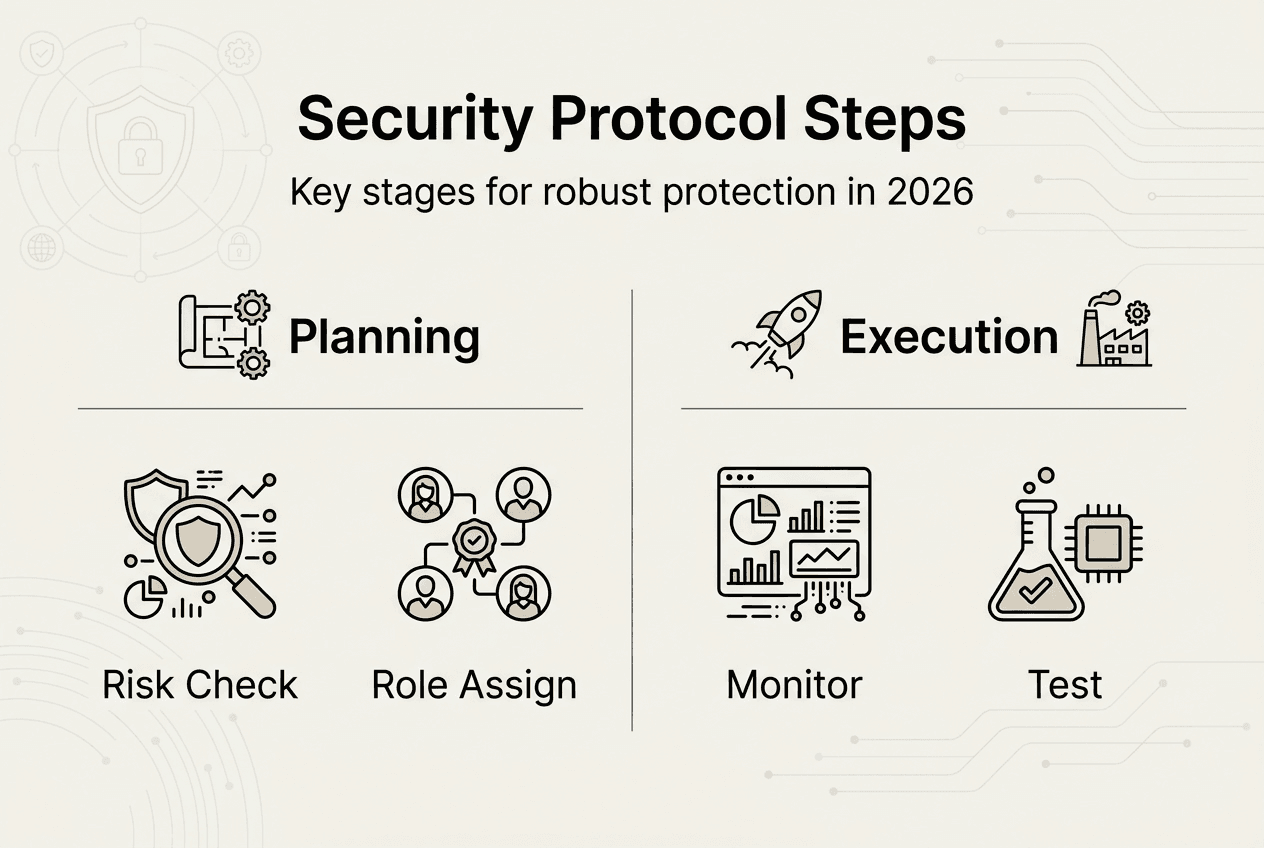
Test protocols regularly through announced and unannounced drills that reveal gaps in execution. Simulate various scenarios including break-ins, fire alarms, cyberattacks, and medical emergencies to verify your team responds appropriately. Document drill results and use them to refine protocols and retrain personnel as needed.
Pro Tip: Start with a pilot program in one location or department to refine protocols before rolling them out organization-wide, reducing implementation risks and building confidence.
Avoid common execution mistakes that undermine protocol effectiveness. Unclear roles create confusion during incidents when decisive action matters most. Insufficient training leaves personnel unprepared to follow protocols under stress. Overly complex procedures discourage compliance and increase errors. Poor documentation makes protocols difficult to reference and impossible to enforce consistently. When you study security solutions examples and adapt proven approaches, you sidestep these pitfalls.
Verification and continuous improvement: Monitoring and updating security protocols
Ongoing verification ensures your security protocols remain effective as threats evolve and your business changes. Set up regular review schedules examining protocol performance, compliance status, and emerging vulnerabilities. Monthly reviews catch minor issues before they become major problems, while quarterly assessments evaluate broader trends and strategic adjustments.
Conduct formal security audits at least annually using internal teams or external consultants who bring fresh perspectives. Audits should test physical security measures, cybersecurity controls, personnel compliance, and documentation completeness. Compare your protocols against current industry standards and regulatory requirements to identify gaps requiring attention.
Incorporate feedback from employees, customers, and security incidents into your improvement process. Staff members often notice security weaknesses during daily operations that management overlooks from their removed perspective. Customer concerns about privacy or safety highlight areas where protocols may need refinement or better communication.
Best practices for continuous improvement:
- Track security metrics including incident frequency, response times, and compliance rates
- Analyze incident reports to identify patterns and root causes requiring protocol changes
- Monitor industry news for emerging threats and updated regulations affecting your business
- Benchmark your security posture against competitors and industry leaders
- Invest in new technologies that enhance protection while reducing operational burden
- Update training materials immediately when protocols change to prevent confusion
Use monitoring tools that detect anomalies and trigger alerts before minor issues escalate. Modern security platforms apply artificial intelligence to identify unusual access patterns, suspicious network activity, and equipment malfunctions requiring attention. Real-time visibility enables prompt responses that minimize damage and demonstrate your commitment to security.
“Effective governance is the cornerstone of a resilient cyber posture, emphasizing accountability, risk management, and strategic integration of cybersecurity into day-to-day operations.”
Continuously train staff to stay current with protocol changes and security best practices. Brief refresher sessions work better than lengthy annual training that employees forget quickly. Use real incidents and near-misses as teaching opportunities that make security tangible rather than abstract. When personnel understand why protocols matter and see leadership commitment, compliance improves naturally.
Respond to verification findings promptly with concrete action plans and assigned accountability. Discovered vulnerabilities demand immediate attention, not bureaucratic delays that leave your business exposed. Document all changes to maintain clear audit trails and ensure everyone works from current protocol versions.
Troubleshoot common verification challenges systematically. Low compliance rates often indicate protocols that conflict with operational efficiency, requiring redesign rather than stricter enforcement. Frequent false alarms from security systems waste resources and breed complacency, demanding better calibration or technology upgrades. When you secure commercial premises with adaptive protocols, you build resilience that withstands both routine operations and crisis situations.
Ongoing improvement strengthens your security posture while demonstrating compliance to regulators, insurers, and customers. Businesses that treat security as a dynamic process rather than a one-time project achieve better protection at lower total cost over time. Your protocols should evolve alongside your business, incorporating lessons learned and technological advances that enhance effectiveness.
Discover effective security solutions for your business and property
Protecting your business and property requires more than just protocols. You need reliable equipment and expert support to implement security measures effectively. Safes and Security Direct offers professional-grade security products designed specifically for commercial applications and property management needs.

Our extensive catalog includes advanced surveillance systems, access control hardware, fire-resistant safes, and integrated security platforms that simplify management while enhancing protection. Whether you need to secure a single office or multiple properties, our solutions scale to meet your requirements. Expert guidance helps you select the right combination of products to complement your security protocols and maximize asset protection. Take the next step toward comprehensive security by exploring our security solutions tailored for businesses and properties in 2026.
FAQ
How often should I update my security protocols?
Update your security protocols at least annually to address evolving threats and regulatory changes. Conduct additional reviews immediately after security incidents, organizational changes, or technology upgrades that affect your security posture. Regular updates keep protocols aligned with current risks and ensure compliance with new requirements.
What are the key components of effective security protocols?
Effective security protocols include clear roles and responsibilities, robust access controls, comprehensive monitoring systems, and detailed incident response plans. Integration of compliance requirements and continuous improvement processes ensures protocols remain relevant and effective. Documentation, training, and accountability mechanisms transform written policies into practiced behaviors that protect your assets.
How can I ensure staff comply with security protocols?
Regular training, clear communication, and visible leadership commitment encourage staff compliance with security protocols. Make protocols easy to understand and follow, removing unnecessary complexity that breeds shortcuts. Monitoring and feedback loops identify compliance gaps early, while recognition programs reward consistent adherence and create positive reinforcement.
What common mistakes should I avoid when creating security protocols?
Avoid creating protocols that lack clarity, provide insufficient training, ignore compliance requirements, or fail to include regular review schedules. Overly complex procedures discourage compliance, while inadequate documentation makes enforcement impossible. Balance thoroughness with practicality to build protocols your team can follow consistently. Neglecting stakeholder input during development often produces protocols that conflict with operational realities and get ignored.
Recommended
- Business Security Needs: Protecting Assets in 2026 – Safes and Security Direct
- How to secure business premises effectively in 2026 – Safes and Security Direct
- Asset Protection Strategies 2026: Safeguard Your Business Assets – Safes and Security Direct
- Security system must-haves: 5 core components in 2026 – Safes and Security Direct
- How to Keep Data Secure: Essential Steps for 2025 - IT Start
- 9 Tips to Secure Your Business in 2023 - Voipcom