

Defining Home Security Standards for Real Protection
Securing your property in busy urban centers often feels overwhelming as threats keep changing and technology advances. Reliable measurable protection protocols do more than just add a lock or a camera—they provide confidence for homeowners and small business owners by uniting physical, electronic, and cybersecurity solutions. Understanding what these trusted standards mean helps you make smart choices, ensuring every layer of your security system delivers lasting peace of mind.
Table of Contents
- What Home Security Standards Really Mean
- Key Types of Home Security Standards
- Requirements for Certified Home Security Systems
- Risks of Ignoring Security Compliance
- How to Choose the Right Standard
Key Takeaways
| Point | Details |
|---|---|
| Holistic Security Approach | Implementing home security standards involves integrating technology with strategic planning for ongoing protection. |
| Certified Systems | Choosing certified home security systems ensures compliance with rigorous performance criteria for maximum reliability. |
| Risks of Non-Compliance | Ignoring security standards can lead to financial losses, safety compromises, and legal liabilities. |
| Personalized Assessment | A tailored security assessment is essential to address unique vulnerabilities and adaptability to changing threats. |
What Home Security Standards Really Mean
Home security standards represent comprehensive guidelines that transform how we protect residential spaces from potential threats. These standards, developed by expert security professionals, establish a systematic approach to safeguarding homes by creating reliable, measurable protection protocols that go beyond simple locks and alarms.
At their core, security standards establish consistent best practices across residential environments. This means creating a structured framework that addresses multiple layers of protection:
- Physical barrier mechanisms
- Electronic surveillance systems
- Access control protocols
- Risk assessment methodologies
- Threat detection strategies
The International Organization for Standards (ISO) recognizes that effective home security isn’t just about equipment, but about creating integrated systems that respond dynamically to potential risks. Comprehensive security standards consider factors like geographical location, neighborhood crime rates, property layout, and potential vulnerability points.
Implementing these standards requires a holistic approach that combines technological solutions with strategic planning. Homeowners must understand that security isn’t a one-time installation, but an ongoing process of assessment, adaptation, and continuous improvement.
Pro tip: Conduct a professional security audit every two years to ensure your home’s protection strategies remain current with evolving security technologies and threat landscapes.
Key Types of Home Security Standards
Home security standards encompass multiple critical domains that work together to create comprehensive protection for residential environments. Multiple interrelated security standards ensure a robust defense against potential threats through systematic and integrated approaches.
The key types of home security standards can be categorized into several essential areas:
-
Physical Security Standards
- Door and window lock specifications
- Barrier and reinforcement requirements
- Perimeter protection guidelines
-
Electronic Security Systems
- Alarm monitoring protocols
- Surveillance camera standards
- Motion sensor deployment guidelines
-
Cybersecurity Standards
- Smart device protection
- Network security protocols
- Data encryption requirements
-
Operational Management Standards
- Risk assessment procedures
- Emergency response planning
- Maintenance and system verification protocols
Each category of security standard plays a crucial role in creating a comprehensive protection strategy. Physical security standards focus on tangible barriers and entry point protections, while electronic systems provide active monitoring and detection capabilities. Cybersecurity standards have become increasingly important with the rise of interconnected smart home technologies.
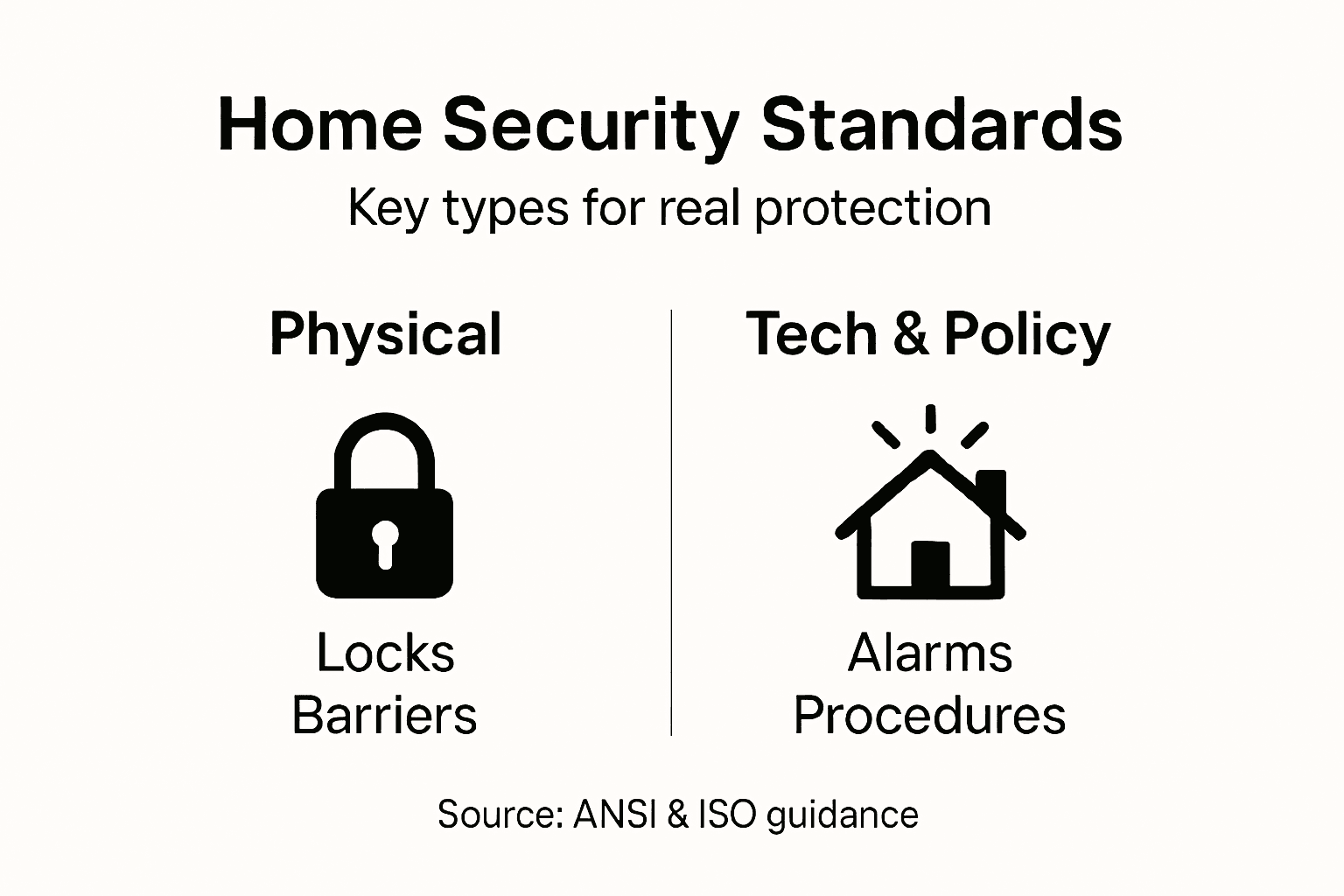
Here is a summary table highlighting the distinct roles of each home security standard category:
| Security Standard Category | Main Focus | Typical Impact on Protection |
|---|---|---|
| Physical Security | Entry barriers and locks | Delays or deters intruders |
| Electronic Systems | Detection and alerting | Enables rapid response |
| Cybersecurity | Data and network safety | Protects digital access |
| Operational Management | Processes and planning | Coordinates overall defense |
Technological integration is key to modern home security standards. Professional organizations like ANSI and ASIS continuously develop and refine these standards to address emerging threats and technological advancements.
Pro tip: Consult with a professional security consultant to perform a comprehensive assessment of your home’s security standards and identify potential vulnerabilities.
Requirements for Certified Home Security Systems
Certified home security systems represent the gold standard of residential protection, offering homeowners a comprehensive and professionally validated approach to safeguarding their property. Rigorous certification criteria ensure that security systems meet exacting performance and reliability standards designed to provide maximum protection.
The key requirements for certification encompass several critical domains:
-
Technical Performance Standards
- Minimal false alarm rates
- Rapid signal transmission
- Consistent sensor reliability
- Advanced signal encryption
-
Monitoring Capabilities
- 24/7 professional monitoring
- Quick emergency response protocols
- Multiple communication channels
- Redundant notification systems
-
Equipment Quality
- Durability testing
- Weather resistance
- Long-term operational stability
- Compliance with industry manufacturing standards
-
Data Privacy Protections
- Secure data transmission
- Encrypted communication channels
- Strict user privacy guidelines
- Compliance with national data protection regulations
Professional certification goes beyond simple equipment assessment. It involves comprehensive evaluation of system performance, technological integration, and potential vulnerabilities. Each certified system must demonstrate consistent, reliable performance under various simulated threat scenarios.
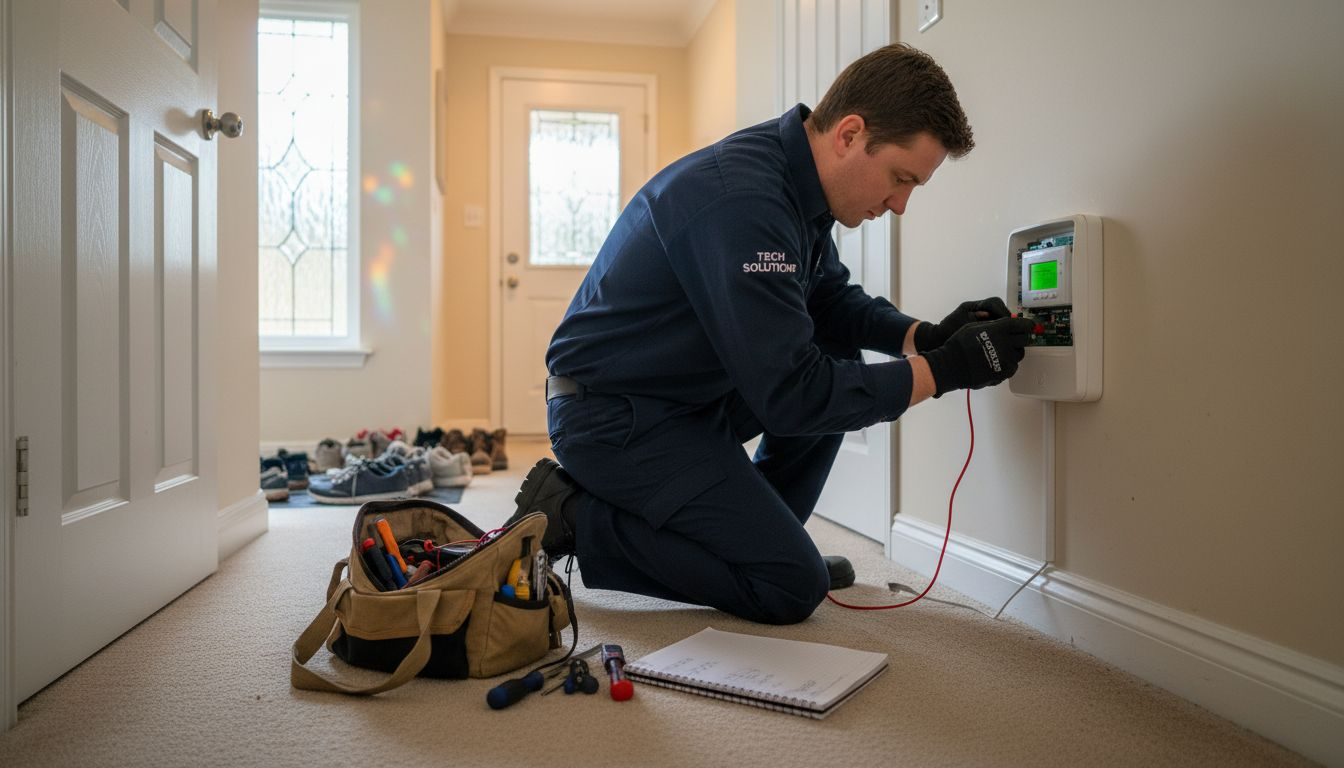
Technological innovation continues to drive security system certification, with emerging standards addressing smart home integration, artificial intelligence-powered threat detection, and adaptive security protocols.
Pro tip: Request detailed certification documentation from security system providers and verify their compliance with recognized industry standards before making a final purchase decision.
Risks of Ignoring Security Compliance
Home security is far more complex than simply installing a few devices. Security compliance risks extend beyond immediate vulnerabilities, creating potential catastrophic consequences for homeowners who overlook established safety standards.
The most significant risks of ignoring security compliance include:
-
Financial Vulnerabilities
- Invalidated insurance claims
- Potential legal liability
- Increased repair and replacement costs
- Financial losses from security breaches
-
Safety Compromises
- Reduced protection against break-ins
- Ineffective emergency response
- Increased personal safety risks
- Compromised home protection capabilities
-
Technological Weaknesses
- Unprotected smart home networks
- Potential data breaches
- Vulnerable communication channels
- Outdated security protocols
-
Legal and Regulatory Risks
- Potential non-compliance penalties
- Voided security system warranties
- Reduced property value
- Potential regulatory sanctions
Non-compliance transforms security systems from protective mechanisms into potential liability generators. Homeowners who ignore established standards essentially create open invitations for potential security threats, undermining the fundamental purpose of their security investments.
Compare the potential consequences of compliance versus non-compliance with home security standards:
| Aspect | With Compliance | Without Compliance |
|---|---|---|
| Insurance Coverage | Claims likely approved | Claims may be denied |
| System Reliability | Consistent performance | Increased risk of failures |
| Legal Protection | Fewer liability issues | Heightened legal and financial risk |
| Personal Safety | Enhanced safety | Greater vulnerability to threats |
Comprehensive protection requires more than equipment installation. It demands ongoing commitment to maintaining and updating security protocols that meet or exceed recognized industry standards.
Pro tip: Schedule an annual professional security assessment to identify and address potential compliance gaps before they become critical vulnerabilities.
How to Choose the Right Standard
Selecting the appropriate home security standard requires a strategic approach that goes beyond simple product selection. Comprehensive security system evaluation demands careful consideration of multiple critical factors that directly impact your home’s protection strategy.
The most important considerations when choosing a home security standard include:
-
Personal Security Needs
- Property size and layout
- Neighborhood crime statistics
- Specific vulnerability points
- Lifestyle and daily routines
-
Monitoring Options
- Professional monitoring services
- Self-monitoring capabilities
- Response time requirements
- Communication method preferences
-
Technological Compatibility
- Smart home device integration
- Wireless network requirements
- Smartphone app functionality
- Future upgrade potential
-
Financial Considerations
- Initial installation costs
- Monthly monitoring fees
- Equipment replacement expenses
- Long-term maintenance budgets
Navigating these considerations requires a holistic approach. Comprehensive security standards aren’t just about purchasing equipment, but creating an integrated system that adapts to your unique residential environment and evolving security challenges.
Technology and personal needs change rapidly, so flexibility remains crucial. A truly effective security standard should provide robust protection while maintaining the ability to integrate new technologies and address emerging threats.
Pro tip: Conduct a thorough home security assessment with a professional who can provide personalized recommendations tailored to your specific residential environment and security requirements.
Elevate Your Home Protection with Certified Security Solutions
Understanding home security standards reveals how vital it is to build a reliable, integrated defense system that addresses physical security, electronic monitoring, and cybersecurity. The article highlights the risks of ignoring compliance, such as financial loss and safety compromises. If you want real protection that meets professional standards and adapts to evolving threats, you need solutions designed with these exact principles in mind.
Explore our broad selection of secure, professional-grade security systems and surveillance cameras at Safes and Security Direct that align with rigorous certification requirements and operational management standards. Our products focus on durability, rapid response, and advanced technology, ensuring your home stays protected on all fronts.

Take control of your home’s safety today by choosing fully compliant security equipment tailored to your unique needs. Visit Safes and Security Direct now for expert guidance and browse our trusted range of advanced surveillance systems designed to keep your property and loved ones secure. Protect your home with confidence and never compromise on safety again.
Frequently Asked Questions
What are home security standards?
Home security standards are comprehensive guidelines that establish best practices for protecting residential spaces from potential threats. They cover various aspects such as physical barriers, electronic surveillance, access control, risk assessment, and threat detection.
Why is it important to comply with home security standards?
Complying with home security standards ensures that your protection measures are effective and reliable. It helps minimize risks such as financial losses, safety compromises, and legal liabilities by adhering to proven safety protocols.
How do I choose the right home security standard for my needs?
To choose the right home security standard, consider factors such as your property size, neighborhood crime rates, specific vulnerabilities, monitoring options, and technological compatibility. Ensure the standards adapt to your unique security challenges and future technological advancements.
What are the risks of ignoring home security compliance?
Ignoring home security compliance can lead to significant risks, including invalidated insurance claims, increased personal safety risks, technological vulnerabilities, and potential legal repercussions. It may leave your home open to threats, undermining the purpose of your security investments.
Recommended
- Role of Security Standards in Asset Protection – Safes and Security Direct
- Burglary Protection – How It Safeguards Your Home – Safes and Security Direct
- Why Invest in High Security Solutions – Safes and Security Direct
- Top Home Security Products: Essential Devices – Safes and Security Direct
- Understanding Quality Standards in Home Care Services