

Top commercial security best practices to protect your business in 2026
Business owners face an overwhelming array of security options, from access control systems to surveillance networks, each promising to protect assets and personnel. With workplace violence incidents rising and commercial properties facing diverse threats, choosing the right security measures has never been more critical. This guide explores proven best practices for evaluating, selecting, and implementing commercial security solutions tailored to your business needs, helping you build a comprehensive defense strategy that adapts to evolving risks in 2026.
Table of Contents
- How To Evaluate Commercial Security Criteria For Your Business
- Top Commercial Security Technologies And Their Features
- Applying A Layered Physical Security Approach For Maximum Protection
- Addressing Workplace Violence And Evolving Commercial Security Risks
- Explore Tailored Commercial Security Solutions For Your Business
- Frequently Asked Questions
Key takeaways
| Point | Details |
|---|---|
| Layered security approach | Combining physical barriers, electronic systems, and procedural controls creates the most effective defense against diverse threats. |
| Scalable access control | Systems should accommodate multiple user roles, tenant variations, and high traffic volumes while maintaining security integrity. |
| Integrated technology | Unified surveillance, access control, and cybersecurity platforms enhance threat detection and response speed. |
| Proactive risk mitigation | Addressing workplace violence and emerging threats requires clear policies, employee training, and advanced monitoring technologies. |
How to evaluate commercial security criteria for your business
Every commercial property faces unique security challenges based on its industry, location, assets, and daily operations. A retail store requires different protection than a corporate office or multi-tenant building. Security needs vary widely by business type, making scalable, role-based systems essential for offices, small businesses, multi-tenant properties, and mixed-use buildings.
Start by conducting a thorough risk assessment that identifies your most valuable assets, potential vulnerabilities, and typical threat scenarios. Consider these evaluation factors:
- Physical assets requiring protection: inventory, equipment, sensitive documents, cash
- Personnel safety concerns: employee count, shift patterns, visitor frequency
- Regulatory compliance requirements specific to your industry
- Budget constraints and total cost of ownership over time
Scalability matters more than most business owners initially recognize. Your security system should grow with your organization, accommodating new employees, additional locations, or changing access requirements without requiring complete replacement. Look for solutions that support role-based permissions, allowing you to grant different access levels to employees, contractors, visitors, and management.
High-traffic environments demand robust systems that manage multiple simultaneous access requests without creating bottlenecks or security gaps. Shared spaces in multi-tenant buildings present additional complexity, requiring coordination between different organizations while maintaining separate security zones.
Pro Tip: Document your current security incidents and near-misses over the past year to identify patterns that should inform your security priorities and technology choices.
Integration potential with existing infrastructure saves money and improves effectiveness. Evaluate whether prospective security systems can communicate with your current building management, IT networks, and emergency response protocols. Exploring improving commercial security solutions reveals how modern systems work together to create comprehensive protection.
Top commercial security technologies and their features
Modern commercial security relies on sophisticated technologies that work together to prevent, detect, and respond to threats. Understanding each technology’s capabilities helps you build an effective security ecosystem.
Access control systems restrict entry and monitor patterns throughout your facility. Card-based systems offer basic control, allowing you to issue credentials to authorized personnel and revoke access instantly when needed. Biometric systems provide stronger authentication through fingerprint, facial recognition, or iris scanning, eliminating concerns about lost or stolen access cards. Multi-factor authentication combines something you have (a card), something you know (a PIN), and something you are (biometric data) for maximum security.
Key access control features to prioritize:
- Real-time monitoring dashboards showing who accessed which areas and when
- Automated lockdown capabilities for emergency situations
- Temporary access provisioning for contractors or visitors
- Integration with HR systems to automatically update permissions
Video surveillance creates visual records for deterrence and investigation. High-resolution cameras capture clear images even in low light conditions, while intelligent video analysis detects unusual behavior patterns, loitering, or unauthorized access attempts. Strategic camera placement balances visible deterrence with discreet monitoring of sensitive areas.
| Technology Type | Primary Function | Key Benefit |
|---|---|---|
| Card Access Systems | Basic entry control | Cost-effective scalability |
| Biometric Scanners | Strong authentication | Eliminates credential sharing |
| IP Surveillance Cameras | Visual monitoring and recording | Remote access and analytics |
| Video Analytics Software | Automated threat detection | Reduces monitoring workload |
| Integrated Alarm Systems | Immediate threat alerts | Faster response times |
Pro Tip: Position cameras at entry points, cash handling areas, and blind spots where physical barriers create vulnerabilities, ensuring complete coverage without excessive equipment costs.
Integrating access control with video surveillance creates powerful security synergies. When someone uses a credential, the system can automatically pull up corresponding video footage, linking identity to activity. This integration proves invaluable during investigations and helps verify that authorized personnel aren’t allowing unauthorized individuals to piggyback through secure doors.
Understanding office building video surveillance implementation reveals how camera networks enhance both security and operational efficiency. The broader security integration benefits extend beyond physical security into cybersecurity and business intelligence.
Applying a layered physical security approach for maximum protection
The layered physical security approach combines perimeter defenses, access controls, surveillance, barriers, alarms, and response protocols into an integrated security ecosystem. This strategy recognizes that no single security measure provides complete protection. Instead, multiple overlapping layers create redundancy, ensuring that if one defense fails, others compensate.
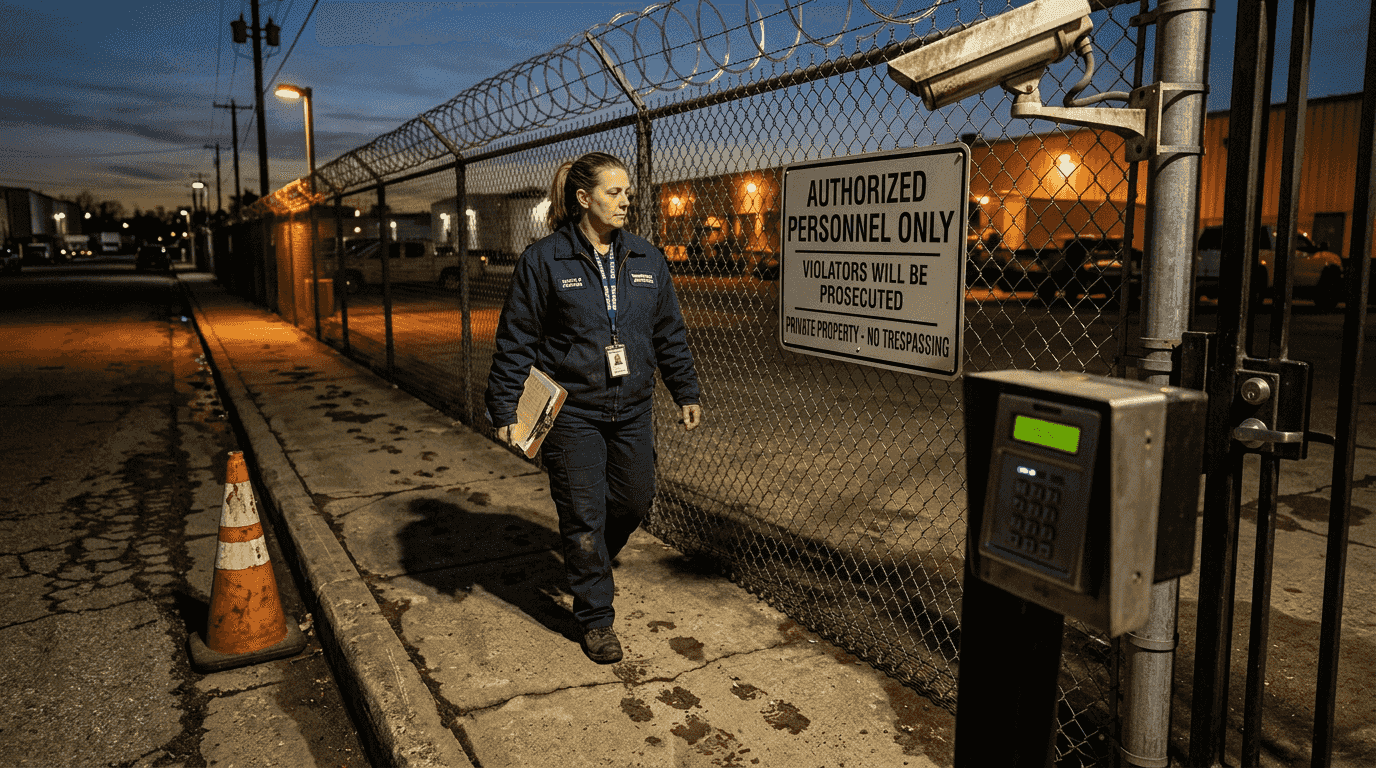
Each layer is designed to deter, detect, delay, or deny unauthorized access as threats penetrate deeper into a facility. This progressive approach gives security personnel time to respond before critical assets or personnel face danger.
Implement these security layers systematically:
- Perimeter security establishes your first line of defense with fencing, lighting, and exterior surveillance that discourages casual intruders.
- Building access points use controlled entry systems, visitor management, and reception areas to screen everyone entering your facility.
- Interior zones segment your space into security levels, restricting access to sensitive areas like data centers, executive offices, or inventory storage.
- Asset protection adds final safeguards around your most valuable items through safes, locked cabinets, and dedicated monitoring.
The deterrence function makes potential intruders think twice before attempting unauthorized access. Visible cameras, security signage, and uniformed personnel signal that your business takes security seriously. Detection systems identify threats in real time through motion sensors, door contacts, and video analytics. Delay mechanisms like reinforced doors, security gates, and access control vestibules slow intruders, buying time for response. Denial measures ultimately prevent access through physical barriers and immediate lockdown capabilities.
| Security Layer | Primary Function | Example Technologies |
|---|---|---|
| Perimeter | Deter and detect | Fencing, exterior cameras, motion lighting |
| Access Points | Control and verify | Card readers, visitor management, security desk |
| Interior Zones | Restrict and monitor | Biometric scanners, interior cameras, door sensors |
| Asset Protection | Secure and safeguard | Safes, locked storage, dedicated alarms |
Alarms integrate throughout your security ecosystem, triggering immediate notifications when sensors detect unauthorized access, forced entry, or environmental threats like fire or water damage. Modern alarm systems connect to central monitoring stations, local law enforcement, and your security team’s mobile devices for rapid response.
Learning about securing commercial premises provides additional strategies for implementing layered security effectively across different business types and facility sizes.
Addressing workplace violence and evolving commercial security risks
Workplace violence has become a top security threat for many businesses, with active shooter incidents a major concern. Traditional security measures designed to prevent theft or unauthorized access must now also address threats from current or former employees, domestic disputes spilling into work environments, and targeted attacks.
Commercial spaces are vulnerable due to valuable assets, public access, and multiple tenants, increasing security challenges. This accessibility that welcomes customers and clients simultaneously creates opportunities for those with malicious intent.
Proactive security policies form your first defense against workplace violence:
- Implement thorough background checks for all employees and contractors
- Establish clear reporting procedures for concerning behavior or threats
- Create lockdown protocols that employees understand and practice regularly
- Designate safe rooms or evacuation routes for different threat scenarios
Access control becomes even more critical when addressing workplace violence. Role-based permissions ensure that terminated employees immediately lose building access, preventing return visits that could escalate into dangerous situations. Visitor management systems track everyone entering your facility, creating accountability and enabling rapid lockdowns if threats emerge.
Emerging technologies like AI-powered threat detection analyze video feeds for weapons, aggressive behavior, or individuals on watchlists. These systems alert security personnel to potential threats before violence occurs, enabling intervention at earlier stages. Some advanced platforms integrate with social media monitoring and threat assessment tools, identifying concerning patterns that warrant attention.
“The most effective workplace violence prevention combines technology with human awareness. Employees trained to recognize warning signs and empowered to report concerns create a security culture that technology alone cannot achieve.”
Employee training enhances your security investment by ensuring staff understand how to respond during emergencies. Regular drills familiarize everyone with lockdown procedures, evacuation routes, and communication protocols. Training also reduces false alarms by teaching proper system use and helping employees distinguish genuine threats from routine situations.
Property crime continues evolving as criminals adopt new tactics and target different assets. Copper theft, catalytic converter theft, and cargo theft represent growing concerns for businesses with exterior storage or vehicle fleets. Addressing these risks requires extending your security perimeter and adding specialized monitoring for vulnerable assets.
The role of commercial security in crime reduction extends beyond individual businesses to entire commercial districts, as comprehensive security measures deter criminal activity throughout surrounding areas.
Explore tailored commercial security solutions for your business
Implementing best practices requires reliable technology partners who understand commercial security challenges. Safes and Security Direct offers comprehensive commercial security solutions designed specifically for business environments facing diverse threats in 2026. Our product range includes scalable access control systems, professional-grade surveillance cameras, and integrated alarm platforms that work together seamlessly.

Whether you manage a small retail location, a multi-tenant office building, or an industrial facility, our security experts help you select and configure systems matching your unique requirements. We prioritize solutions that grow with your business, integrating with existing infrastructure while providing room for future expansion. Explore our guidance on improving commercial security to discover how modern technology creates safer, more efficient business environments.
Frequently asked questions
What is the most effective commercial security best practice?
Layered security combining physical barriers, electronic monitoring, and clear procedural controls provides the strongest protection against diverse threats. This approach ensures that multiple defenses compensate if any single measure fails. Tailoring security measures to your specific business size, industry risks, and asset vulnerabilities maximizes effectiveness while controlling costs.
How can businesses prevent workplace violence effectively?
Implement role-based access control that immediately revokes credentials for terminated employees and restricts entry based on job requirements. Combine surveillance systems with threat detection technologies that identify weapons or aggressive behavior before violence occurs. Employee training programs that teach warning sign recognition and reporting procedures create a security-aware culture supporting technological defenses.
What role does integration play in commercial security systems?
Integration creates unified monitoring platforms that correlate data from access control, video surveillance, and alarm systems for faster, more accurate threat detection. When systems communicate, security personnel receive comprehensive context during incidents rather than fragmented alerts from separate platforms. Combining physical security with IT systems and building management creates stronger overall defense while reducing monitoring complexity and response times.
How do I choose the right security technologies for my business?
Start by evaluating your unique security challenges through risk assessment that identifies vulnerable assets, typical threats, and regulatory requirements. Prioritize scalable systems supporting multiple authentication methods and user roles that accommodate business growth without requiring replacement. Focus on technologies offering integration capabilities with existing infrastructure and strong vendor support for installation, training, and ongoing maintenance.
Recommended
- How to secure business premises effectively in 2026 – Safes and Security Direct
- Business Security Needs: Protecting Assets in 2026 – Safes and Security Direct
- How to create security protocols that protect your business in 2026 – Safes and Security Direct
- 7 Smart Ways to Improve Commercial Security Solutions – Safes and Security Direct
- Commercial Pest Protocols: Ensuring Safe, Compliant Spaces
- Why commercial awnings matter: 30% more usable space in 2026