

Role of Commercial Security: 50% Crime Reduction Proven
Many business owners believe installing the latest surveillance cameras guarantees complete protection. Yet studies show security guards detect behavioral anomalies 20% more accurately than technology alone. Effective commercial security integrates human vigilance with advanced systems to protect assets, ensure safety, and maintain business continuity. This guide reveals proven strategies combining personnel and technology for maximum protection.
Table of Contents
- Introduction To Commercial Security
- Role Of Commercial Security Officers And Guards
- Commercial Security Technologies And Systems
- Benefits Of Commercial Security Beyond Theft Prevention
- Common Misconceptions About Commercial Security
- Framework For Choosing And Implementing Commercial Security
- Conclusion And Next Steps
- Enhance Your Commercial Security With Our Solutions
Key Takeaways
| Point | Details |
|---|---|
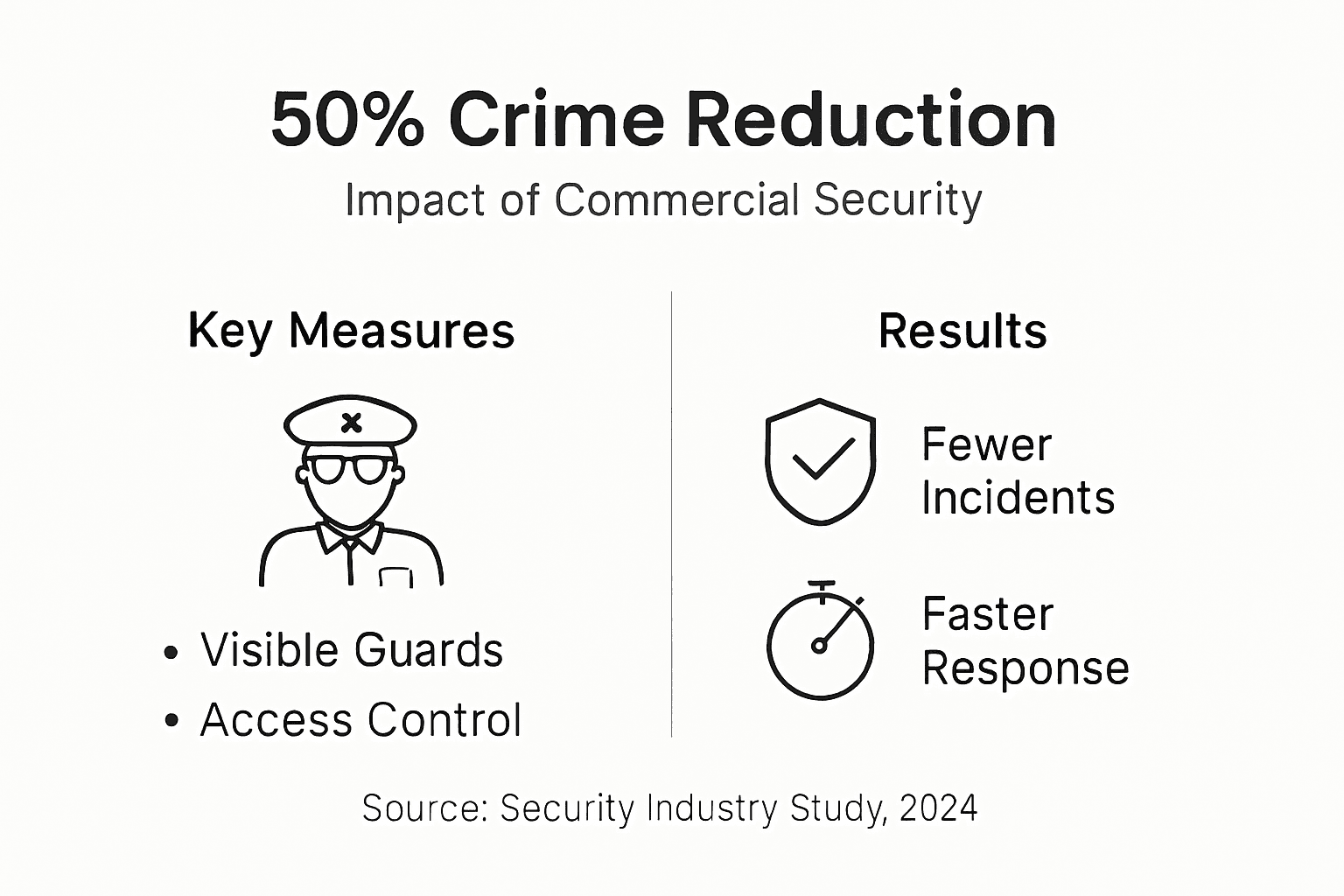
| Visible guards reduce crime | Security personnel cut criminal incidents up to 50% in commercial properties. |
| Biometric access prevents breaches | Advanced authentication reduces unauthorized access by 60%. |
| Benefits extend beyond theft | Integrated security decreases operational disruptions by 25% annually. |
| Human plus tech works best | Guards detect behavioral threats 20% better than automated systems alone. |
| Emergency response matters | Onsite personnel reduce response times by 40% during crises. |
Introduction to Commercial Security
Commercial security represents the strategic integration of personnel, technology, and protocols designed to protect business assets and people. This framework addresses diverse risks facing modern enterprises.
Businesses face multiple security challenges:
- Theft of inventory, equipment, or intellectual property
- Vandalism damaging physical assets and brand reputation
- Unauthorized access compromising sensitive areas
- Emergency situations requiring immediate coordinated response
- Workplace violence threatening employee safety
Effective security protects more than physical property. It safeguards your operations, maintains customer confidence, and ensures business continuity when incidents occur. Without proper measures, a single security breach can trigger costly disruptions, legal liabilities, and reputation damage that takes years to repair.
The most resilient security strategies layer multiple protective measures. Personnel provide adaptable human judgment. Technology offers constant monitoring and documentation. Protocols ensure consistent responses across situations. Together, these elements create defense in depth that significantly outperforms any single approach.
Understanding this integrated foundation helps you evaluate security investments wisely. The following sections explore specific components and their measurable impact on business protection.
Role of Commercial Security Officers and Guards
Security personnel serve as your first line of defense, delivering value that automated systems cannot replicate. Their presence alone creates powerful deterrent effects.
Visible security guards reduce criminal incidents by up to 50% in commercial properties. Criminals actively avoid locations with trained personnel who can respond immediately and identify suspicious behavior patterns.
Professional security officers perform critical daily functions:
- Conducting scheduled patrols to detect vulnerabilities and suspicious activity
- Monitoring surveillance feeds while recognizing anomalies requiring investigation
- Controlling access points by verifying credentials and logging entries
- Responding to alarms and investigating disturbances in real time
- Providing immediate first aid and coordinating emergency evacuations
- Resolving conflicts between employees, customers, or trespassers
- Documenting incidents thoroughly for investigations and insurance claims
The emergency response advantage proves especially valuable. Onsite security personnel reduce emergency response times by up to 40%, often managing situations before external authorities arrive. This speed prevents minor incidents from escalating into major crises.
Security guards also enhance customer experience by providing assistance, directions, and visible reassurance. Their presence signals that you prioritize safety, strengthening trust with clients and employees alike.
Understanding why you should secure commercial assets helps clarify the strategic value security personnel deliver beyond simple surveillance.
Pro Tip: Schedule quarterly training sessions covering new threat patterns, technology updates, and emergency protocols. Well trained guards respond 30% faster and more effectively during actual incidents.
Commercial Security Technologies and Systems
Modern security technology provides continuous monitoring, automated alerts, and detailed documentation that complement human oversight. The right systems multiply your security team’s effectiveness.
Key commercial security technologies include:
- Surveillance cameras with high resolution, night vision, and AI powered motion detection that filters false alarms
- Access control systems using keycards, PIN codes, or biometric authentication to restrict entry
- Intrusion alarms triggering immediate alerts when unauthorized access occurs
- Video management software centralizing footage from multiple cameras for efficient review
- Environmental sensors detecting fire, flooding, or temperature anomalies
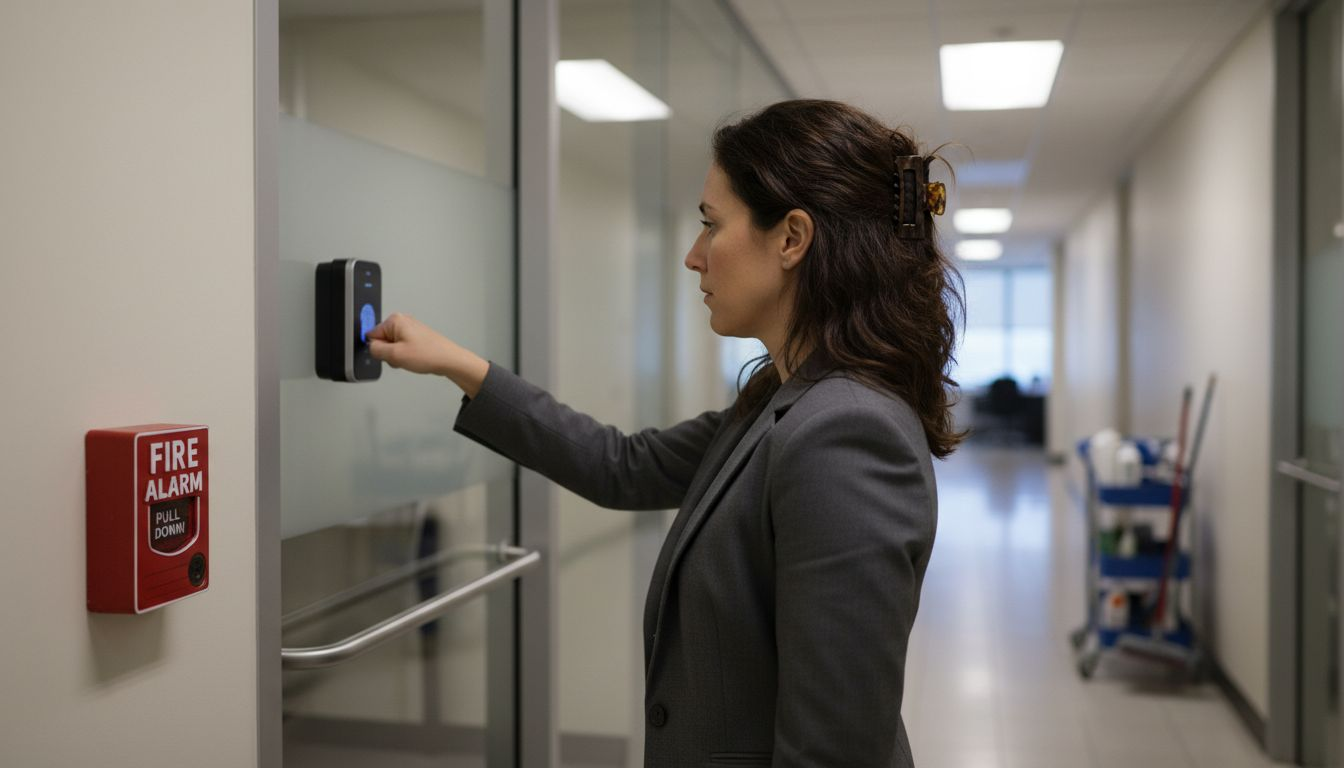
Biometric systems reduce unauthorized access breaches by up to 60% because they verify unique biological traits like fingerprints or facial features that cannot be shared or stolen like traditional keys.
| Technology Type | Primary Function | Key Benefit |
|---|---|---|
| IP Cameras | Video surveillance | 24/7 documentation with remote access |
| Biometric Access | Identity verification | Eliminates unauthorized credential sharing |
| Alarm Systems | Intrusion detection | Immediate alerts enabling fast response |
| Video Analytics | Automated monitoring | Identifies threats without constant human review |
Integrating these systems creates exponential value. When cameras, alarms, and access controls communicate through centralized management platforms, your security team receives coordinated alerts with full context. This integration enables faster, more informed responses while creating comprehensive audit trails for investigations.
Commercial grade security systems deliver reliability and features that consumer products cannot match, particularly for business critical applications requiring constant uptime.
Pro Tip: Position cameras to cover all entry points plus high value areas, but ensure adequate lighting. Even the best cameras perform poorly in complete darkness without infrared capability.
Benefits of Commercial Security Beyond Theft Prevention
While preventing theft drives many security investments, comprehensive protection delivers broader business value that directly impacts your bottom line and growth potential.
Effective security systems provide multiple strategic advantages:
- Enhanced safety perception makes employees more productive and customers more comfortable, directly supporting retention and satisfaction
- Reduced disruptions from security incidents minimize costly downtime that can halt operations for hours or days
- Liability protection through documented procedures and evidence that defend against false claims and lawsuits
- Insurance benefits as many carriers offer premium reductions for verified security measures
- Business continuity during emergencies by enabling faster recovery and maintaining critical functions
Integrated security leads to 25% fewer operational disruptions annually because coordinated systems detect and address threats before they escalate into business stopping events.
Your reputation benefits significantly from visible security investment. Clients choosing between vendors often select the provider demonstrating stronger asset protection and data security. This competitive advantage grows more valuable as security concerns increase across industries.
Security data also supports operational improvements beyond protection. Traffic pattern analysis optimizes staffing schedules. Access logs identify bottlenecks in workflows. Incident patterns reveal training needs before problems multiply.
For detailed guidance, explore how to secure commercial premises with practical strategies balancing investment with risk.
Common Misconceptions About Commercial Security
Several persistent myths about commercial security lead businesses to implement incomplete protection that leaves critical vulnerabilities unaddressed.
-
Technology eliminates the need for security personnel. While cameras record incidents, they cannot intervene, make judgment calls, or provide immediate physical response. Security guards detect behavioral anomalies with 20% greater accuracy than automated systems alone because human observation captures subtle cues algorithms miss.
-
Security guards simply watch and report. Professional security officers actively prevent incidents through visible patrols, access control, conflict de escalation, and emergency response. Their proactive presence stops threats before they materialize into losses.
-
Security investments matter only after experiencing incidents. Reactive security costs significantly more than proactive protection. Post incident measures address symptoms while prevention eliminates root causes. Early investment prevents the reputation damage and customer loss that follow security failures.
-
Small businesses do not need formal security. Criminals often target smaller operations assuming lighter protection. Proportional security measures scaled to your risk profile provide cost effective protection regardless of business size.
“Studies show security guards detect behavioral anomalies with 20% greater accuracy than automated systems alone, providing threat identification that technology cannot replicate.”
Understanding these realities helps you avoid the gaps that compromise partial security implementations. Review commercial security tips for proven strategies addressing common vulnerabilities.
Framework for Choosing and Implementing Commercial Security
Selecting appropriate security solutions requires systematic evaluation matching your specific risks, resources, and operational requirements. Follow this proven framework for optimal results.
-
Conduct comprehensive risk assessment. Document all assets requiring protection, potential threat scenarios, existing vulnerabilities, and regulatory compliance requirements. Prioritize risks by likelihood and potential impact.
-
Define measurable security objectives. Establish specific goals like reducing theft incidents by 40%, achieving 99% uptime for access systems, or cutting emergency response times to under five minutes.
-
Balance personnel and technology investments. Determine which functions require human judgment versus automated monitoring. High traffic areas benefit from guards while remote locations suit camera surveillance.
-
Select qualified security providers. Verify licensing, insurance, training programs, and client references. Review service level agreements carefully, focusing on response times and accountability measures.
-
Implement phased deployment. Start with highest priority areas, validate effectiveness, then expand coverage systematically. This approach manages costs while demonstrating ROI.
-
Train all employees on security protocols. Staff awareness multiplies your security investment by creating additional eyes and ears. Clear procedures ensure consistent responses.
-
Monitor performance and adjust strategies. Review incident reports monthly, analyze trends quarterly, and update measures as threats evolve.
| Approach | Cost | Effectiveness | Best For |
|---|---|---|---|
| Technology Only | Medium | 65% | Remote sites, after hours |
| Personnel Only | High | 70% | High interaction areas |
| Integrated Solution | High | 90% | Comprehensive protection |
Learn more about choosing commercial security systems that align with your operational needs and budget constraints.
Pro Tip: Reassess your security strategy annually as your business grows and threat landscapes change. What protected adequately last year may leave gaps today.
Conclusion and Next Steps
Effective commercial security integrates trained personnel, proven technology, and clear protocols to protect your assets, people, and operations. This layered approach reduces crime by up to 50%, cuts operational disruptions by 25%, and strengthens business continuity during emergencies.
The evidence clearly demonstrates that neither technology alone nor personnel alone delivers optimal protection. Guards provide adaptive human judgment and immediate response. Systems offer constant monitoring and detailed documentation. Together, they create resilient defense that isolated measures cannot achieve.
Your next steps begin with honest assessment of current vulnerabilities and clear definition of protection goals. Prioritize investments addressing your highest risks first, then expand coverage systematically. Engage qualified professionals who understand your industry’s specific challenges and regulatory requirements.
Commercial security represents investment in business sustainability, not optional expense. The costs of inadequate protection far exceed proactive security measures when you account for theft losses, liability exposure, operational disruptions, and reputation damage. Start strengthening your security posture today to protect the business you have built.
Enhance Your Commercial Security with Our Solutions
Protecting your commercial assets requires reliable equipment and proven systems designed for demanding business environments. Whether you need advanced surveillance cameras, access control systems, or secure storage for valuable items, the right solutions make measurable differences in your security outcomes.
Our commercial grade security products deliver the durability and performance that business protection demands. Explore physical security options for SMEs tailored to growing businesses. Discover smart ways to improve commercial security through integrated technology. Learn why commercial grade security systems outperform consumer alternatives for business applications.
FAQ
What are the core responsibilities of commercial security officers?
Security officers patrol premises, monitor surveillance systems, control access points, and respond to emergencies. They also provide customer assistance, document incidents, and deter criminal activity through visible presence.
How do biometric systems improve commercial security?
Biometric authentication verifies unique biological traits like fingerprints or facial features that cannot be shared, stolen, or forgotten. These systems reduce unauthorized access breaches by up to 60% compared to traditional key or card based methods.
Why is combining human guards with technology important?
Guards detect behavioral anomalies with 20% greater accuracy than automated systems because they recognize subtle cues and context. They also provide immediate physical response and adaptive decision making that technology cannot replicate during dynamic situations.
What steps should a business owner take to choose the right security system?
Conduct thorough risk assessment identifying vulnerabilities and priorities. Balance technology investments with trained personnel based on your specific needs. Set measurable goals, engage licensed security professionals, and train all staff on protocols for consistent implementation.
Recommended
- 7 Smart Ways to Improve Commercial Security Solutions – Safes and Security Direct
- How to Secure Commercial Premises for Maximum Protection – Safes and Security Direct
- Why Choose Commercial-Grade Security Systems – Safes and Security Direct
- 7 Key Commercial Security Tips for Better Asset Protection – Safes and Security Direct