

Why layered security matters: protect your property in 2026
TL;DR:
- Most intruders abandon breaches within 60 to 90 seconds, highlighting the need for layered security.
- Combining physical barriers, alarms, cameras, lighting, and access controls deters criminals effectively.
- Properly planned layers reduce theft risk, justifying higher upfront costs with potential loss prevention.
Most intruders spend fewer than 60 to 90 seconds trying to breach a property before walking away. That one fact changes everything about how you should think about home and business security. A single deadbolt or one alarm system feels like enough, but evidence consistently shows that a single point of defense is also a single point of failure. When that one layer gets bypassed, nothing stands between a criminal and your valuables, your family, or your business assets. This article breaks down why layered security works, what it costs, and exactly how to build a plan that keeps real threats out.
Table of Contents
- Understanding layered security: What it really means
- How layered security stops real-world threats
- Is it worth the cost and complexity?
- Expert-backed frameworks: Applying layered security to your property
- Our perspective: What most guides miss about security layers
- How Safes & Security Direct can help you build true layered protection
- Frequently asked questions
Key Takeaways
| Point | Details |
|---|---|
| Layers defeat intruders | Multiple security defenses buy time and encourage most criminals to give up. |
| Single measures aren’t enough | Relying on just one lock or alarm leaves you exposed to smarter threats. |
| Higher initial cost, greater safety | Layered security costs more up front but saves much more by preventing major losses. |
| Custom plans work best | Tailored security layers based on property and risks deliver the most reliable protection. |
| Act with expert guidance | Following best practices and seeking expert support maximizes your security investment. |
Understanding layered security: What it really means
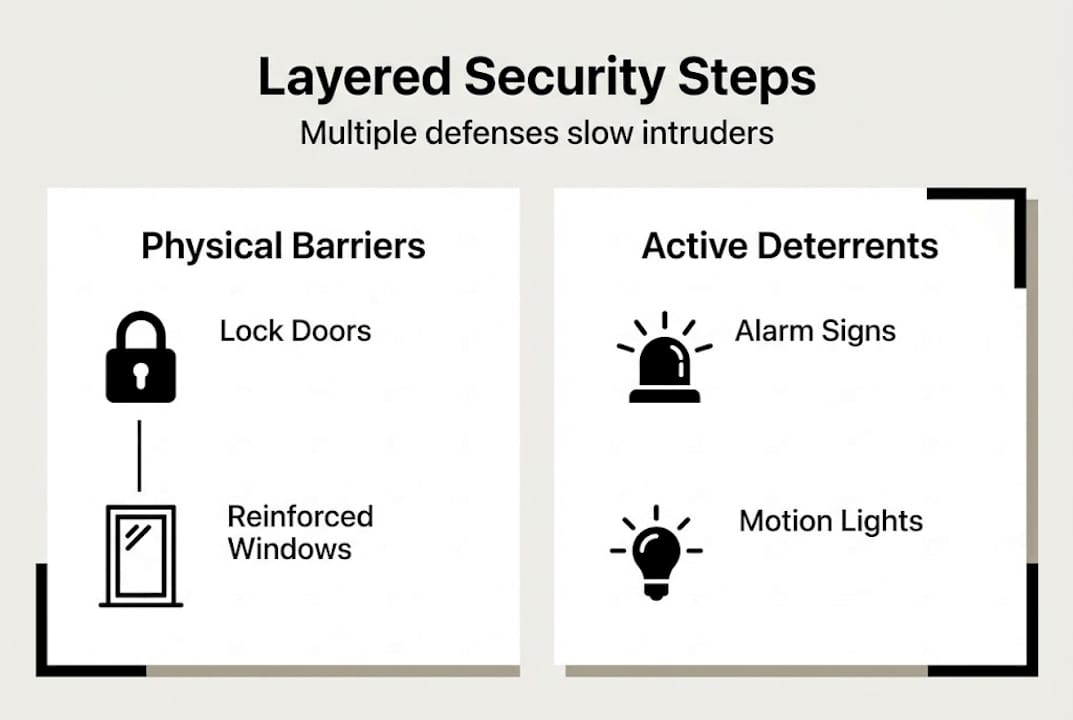
Layered security means stacking multiple, independent defenses so that if one fails, another is already in place. Think of it like a series of fences, each one harder to cross than the last. Physical barriers, digital alarms, surveillance cameras, motion-activated lighting, and even neighborhood awareness all count as separate layers.
The core assumption behind this approach is simple: no single control is perfect. As security experts note, layered controls add time, friction, and noise for intruders, making every breach attempt harder and louder. That added difficulty is exactly what causes most criminals to abandon an attempt.
Here’s what a typical layered setup looks like in practice:
- Perimeter layer: Fencing, gates, hedges, and motion lights at the property boundary
- Entry layer: Reinforced doors, deadbolt locks, and door and window sensors
- Detection layer: Burglar alarms and glass-break sensors that trigger immediately
- Surveillance layer: Cameras covering entry points and high-value areas
- Response layer: Monitored alarm service or smart alerts sent directly to your phone
- Interior layer: Safes, lockable cabinets, and access-controlled rooms for your most valuable assets
Each layer alone has a weakness. Locks can be picked. Cameras can be avoided if positioned poorly. Alarms can malfunction. But together, they create a sequence that most criminals simply won’t bother finishing.
“No single control is perfect; layered controls add time, friction, and noise for intruders, making every breach attempt significantly harder to complete.”
If you want a broader foundation, reviewing security terminology before you start planning helps you make smarter decisions. And if you’re ready to compare proven setups, our breakdown of layered security solutions covers what’s working in 2026.
How layered security stops real-world threats
Understanding the concept is one thing. Seeing how it plays out against actual criminal tactics is another.
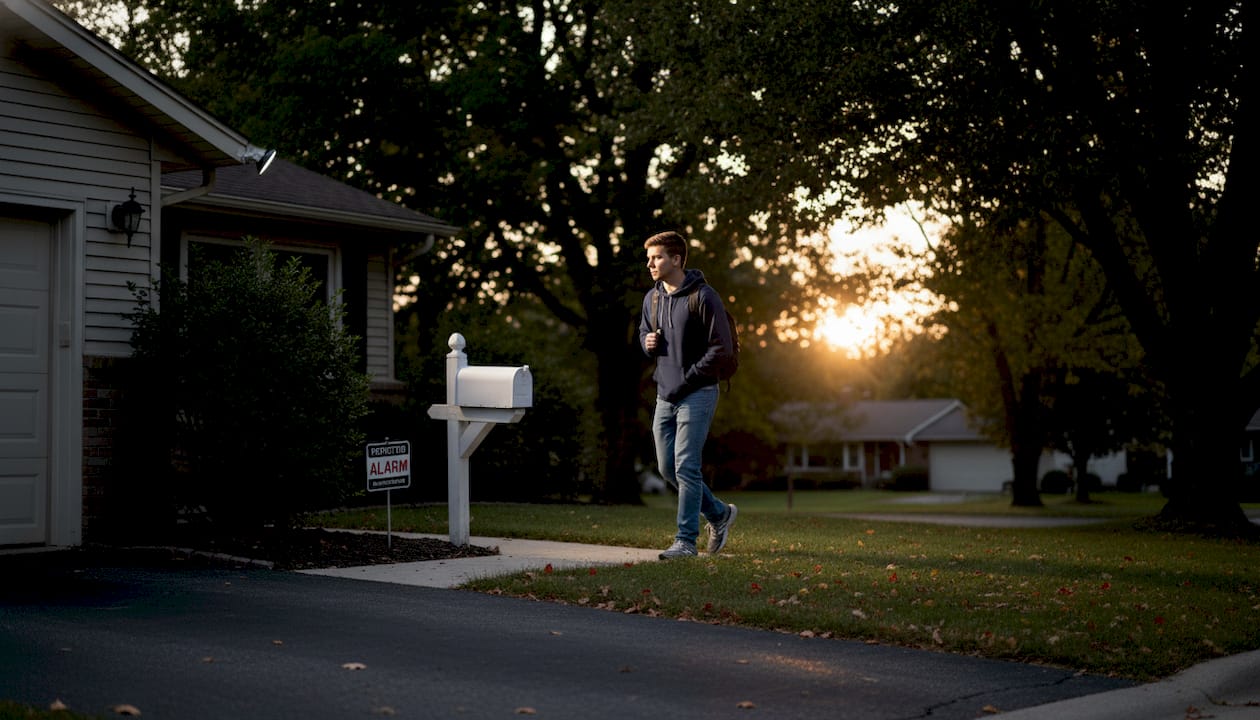
Picture a scenario: a burglar targets a home with one visible door lock and no alarm. Entry takes under a minute. Now picture the same home with a motion light that flicks on at the driveway, a camera visible at the front door, a door alarm that triggers within three seconds of forced entry, and a safe inside for jewelry and documents. The criminal sees cost and risk at every step. Most will move on before they even reach the door.
Here’s a comparison of how common security measures reduce property crime:
| Security layer | Deterrence effect |
|---|---|
| Visible alarm signage | High: signals monitored system present |
| Monitored burglar alarm | Very high: deters 83% of intruders |
| Video surveillance cameras | Reduces property crime 13 to 21% |
| Motion-activated lighting | High: eliminates cover of darkness |
| Reinforced entry points | Moderate to high: slows forced entry significantly |
When these layers work together, here’s the sequence a criminal typically faces:
- Motion lights activate, removing darkness as cover
- Visible camera signals that footage is being recorded
- Alarm signage warns that entry triggers an immediate response
- Physical barriers slow forced entry by critical seconds
- Alarm triggers loud sound and sends alert to monitoring center
- Emergency response is dispatched within minutes
Each step costs the intruder time. Combined, they cost more time than most criminals are willing to spend.
Pro Tip: Don’t skip low-cost layers. A $15 set of alarm signs and a $30 motion light can deter a break-in attempt before it even starts. High-tech systems matter, but visible deterrents work fast.
For a deeper look at how alarms fit into your overall plan, see these alarm system strategies. And if you want to start at the outside edge of your property, perimeter protection is where most security experts recommend beginning.
Is it worth the cost and complexity?
Now, let’s tackle an important question many ask: do the added steps and investment actually pay off?
The honest answer is yes, but only if you understand what you’re comparing. Layered security does cost more upfront than a single alarm or a single lock. But the average burglary loss exceeds $2,661, and that number doesn’t include emotional stress, business downtime, or the cost of replacing irreplaceable items.
Here’s a side-by-side look at typical costs versus potential losses:
| Setup type | Estimated upfront cost | Average loss if breached |
|---|---|---|
| Single lock only | $50 to $150 | $2,661+ |
| Basic alarm system | $200 to $500 | $2,661+ |
| Layered system (alarm, cameras, lighting) | $800 to $2,500 | Significantly reduced |
| Full layered system with safe and monitoring | $2,000 to $5,000 | Near zero for protected assets |
Common concerns we hear from homeowners and business owners include:
- “It’s too complicated.” Modern systems are app-controlled and user-friendly. Most take an afternoon to set up.
- “Maintenance is a hassle.” Battery checks and firmware updates once or twice a year aren’t a major burden.
- “I can’t afford a full setup.” You don’t have to buy everything at once. Add layers over time, starting with the highest-impact items.
Pro Tip: Focus your spending on layers with proven deterrence first. A monitored alarm, visible camera, and exterior lighting give you the biggest return before you invest in anything else.
For guidance on how specific products and their cost and effectiveness explained, reviewing security basics makes your budget decisions much clearer.
Expert-backed frameworks: Applying layered security to your property
With objections addressed, here’s how you can put these principles to work.
Government agencies take layered security seriously. CISA and NIST recommend layered defenses including physical segmentation, access controls, and monitoring for any critical environment, whether it’s a data center or a small business with a back office full of inventory.
Here’s a practical, four-step process you can start this week:
- Assess your vulnerabilities. Walk your property and identify every entry point, blind spot, and high-value area. Note which spots are most exposed.
- Prioritize your layers. Start with the most likely threats for your location and property type. A suburban home has different risks than a downtown retail shop.
- Implement in phases. Begin with exterior lighting, alarm signage, and a basic monitored alarm. Add cameras, reinforced entry points, and wireless door and window sensors as your budget allows.
- Maintain and review. Set a reminder every six months to test your alarm, check camera angles, and update any access codes or passwords.
One area many homeowners overlook is segmentation. Separate your highest-value zones from general access areas. A locked safe in a back office does far more work than a safe stored in an open garage. Interior locks and access controls between rooms add a final barrier even after an intruder gets inside.
“CISA and NIST-aligned security frameworks consistently emphasize that no single measure is sufficient; layered physical and digital defenses are the standard for protecting critical assets.”
For a full walkthrough of building your plan from scratch, home security best practices gives you a solid foundation. If you want a workflow that handles the order of operations, the security setup workflow walks you through every step.
Our perspective: What most guides miss about security layers
We’ve reviewed hundreds of security setups and read plenty of advice columns. Most of them hand you a checklist: buy a camera, get an alarm, add a light. Check, check, check. Problem solved.
Except it rarely is that simple.
Effective layered security isn’t about ticking boxes. It’s about understanding what’s worth protecting, where your actual exposure is, and which layers matter most for your specific property. A rural farmhouse faces completely different threats than a city apartment. A retailer with high inventory turnover has different needs than a law firm with sensitive client files.
The guides that oversimplify miss something important: layers need to be adapted, not just added. Adding a camera to a location with poor sightlines gives you footage of a wall. Installing an alarm without testing it gives you false confidence.
What actually works is regular review. Threats change. Your property changes. Your assets change. We’ve seen business owners who built solid systems five years ago and haven’t touched them since, only to discover blind spots during a routine check that would have been obvious with fresh eyes.
The psychological impact of layers matters too. Criminals make split-second decisions based on visible risk. A property that looks defended at every level is already winning the deterrence game before anyone tries a door handle. For guidance on adapting security practices to your situation, we’ve put together resources that go beyond the standard checklist.
How Safes & Security Direct can help you build true layered protection
If you’re ready to put all this into action, here’s how we can help.
At Safes & Security Direct, we stock everything you need to build a complete layered security system, from heavy-duty safes and fire-resistant storage to professional-grade surveillance cameras and alarm-compatible sensors. Whether you’re starting from scratch or adding critical layers to an existing setup, our product range covers every stage of the framework we’ve outlined. You don’t have to figure it out alone. Browse our full catalog to find the right combination for your home or business, or reach out to our team for guidance on matching products to your specific risk profile.
Frequently asked questions
What are the main layers of security for homes and businesses?
The main layers include physical barriers such as locks and reinforced doors, burglar alarms, surveillance cameras, motion-activated lighting, and access controls for high-value interior areas. Each layer adds independent defense, so a failure in one doesn’t compromise the whole system.
Does layered security really deter criminals?
Yes. Studies confirm that alarm activation deters 83% of intruders, and visible layers like cameras and warning signage further reduce the likelihood of an attempt before it even begins.
Is layered security worth the extra cost?
Absolutely. Layered security costs more upfront but protects against losses that average over $2,661 per burglary, making even a mid-range layered setup a financially sound decision for most homeowners and businesses.
How do I start building a layered security plan?
Begin with a vulnerability assessment of your property, then prioritize layers based on your highest risks. Industry best practices recommend starting with exterior deterrents like lighting and alarms, then adding cameras, reinforced entry points, and interior safes over time.
Recommended
- Home security best practices: protect property in 2026 – Safes and Security Direct
- How to Improve Home Security: Proven Steps for 2026 – Safes and Security Direct
- Top security best practices for property managers 2026 – Safes and Security Direct
- Why invest in asset protection: cut risks by 40% in 2026 – Safes and Security Direct
- Fire Safety Regulations 2025: Essential Changes for Houston Properties