

Why layer security solutions for effective protection 2026
Most people believe a strong lock or a single alarm system keeps their property safe. That assumption creates dangerous gaps criminals exploit daily. Layered security combines multiple defense measures at various levels, ensuring comprehensive protection if one layer fails. This guide explains how overlapping security controls reduce risk, why single solutions fall short, and practical steps to build robust defenses for your home or business in 2026.
Table of Contents
- Understanding Layered Security And Its Benefits
- Common Layers And How They Work Together
- Applying Layered Security Strategies At Home And Business
- Common Challenges And Expert Solutions In Layering Security
- Protect Your Home And Business With Tailored Layered Security
- Frequently Asked Questions
Key takeaways
| Point | Details |
|---|---|
| Layered security uses overlapping protections | Multiple defensive barriers reduce the likelihood of successful intrusion by addressing different attack vectors simultaneously. |
| Creates redundancy and limits intrusion success | If one control fails, additional layers contain the threat and prevent complete system compromise. |
| Combines physical, technical, and procedural controls | Integrates locks, cameras, firewalls, training, and policies tailored to specific security needs and environments. |
| Enables faster detection and recovery | Multiple monitoring points identify threats earlier, allowing quicker response and minimizing damage from security incidents. |
Understanding layered security and its benefits
Layered security, often called defense in depth, means deploying multiple protective measures across different levels of your environment. Think of it like a castle with walls, moats, guards, and locked doors working together. Each barrier slows attackers and increases the chance they’ll give up or get caught.
Layered security combines multiple defense measures at various levels, ensuring comprehensive protection if one layer fails. This approach recognizes that no single control is perfect. Locks can be picked, cameras can be disabled, and firewalls can be bypassed. By stacking defenses, you force intruders to defeat several obstacles, dramatically reducing their success rate.
Typical layers include:
- Physical barriers like fences, reinforced doors, and security lighting
- Network controls such as firewalls, intrusion detection systems, and encrypted communications
- Endpoint protection including antivirus software, device encryption, and access controls
- Application security with input validation, authentication mechanisms, and regular updates
- Data safeguards like backups, encryption at rest, and access logging
The benefits extend beyond just blocking threats. Layered security improves your overall posture by creating redundancy. If a burglar cuts power to disable your alarm, backup batteries and cellular connectivity keep cameras recording. If malware bypasses your firewall, endpoint protection catches it before data theft occurs. This redundancy also helps meet compliance requirements in regulated industries, where multiple controls demonstrate due diligence.
Another advantage is risk reduction through diversity. Different security types address different attack methods. A strong safe protects valuables from physical theft, while network segmentation prevents digital breaches from spreading. When you invest in high security across multiple layers, you cover more scenarios than any single solution could handle.
“Each security control has strengths and weaknesses; a multi-layer approach covers the gaps.” This principle guides effective protection strategies for homes and businesses alike.
Layered security also speeds up threat detection. Multiple monitoring points mean suspicious activity triggers alerts faster. You might miss a single failed login attempt, but repeated failures across different systems signal an active attack. Early detection allows you to respond before significant damage occurs, whether that means calling police or isolating compromised network segments.
Common layers and how they work together
Understanding individual security components helps you build an effective layered system. Physical security forms your first line of defense. Sturdy locks, reinforced door frames, window bars, perimeter fencing, and motion-activated lighting all deter casual criminals and slow down determined ones. Visible cameras add psychological deterrence while providing evidence if breaches occur.
Technical controls handle digital threats and enhance physical measures. Firewalls filter network traffic, blocking unauthorized access attempts. Antivirus and anti-malware software scan for malicious code. Multi-factor authentication (MFA) requires multiple proofs of identity, making stolen passwords useless alone. Network segmentation isolates sensitive systems, so compromising one device doesn’t grant access to everything.

Each security control has strengths and gaps; a multi-layer approach covers the weaknesses. For example, firewalls excel at blocking external attacks but can’t stop threats already inside your network. Endpoint protection catches those internal threats. MFA stops credential theft, while network monitoring detects unusual behavior even from authenticated users.
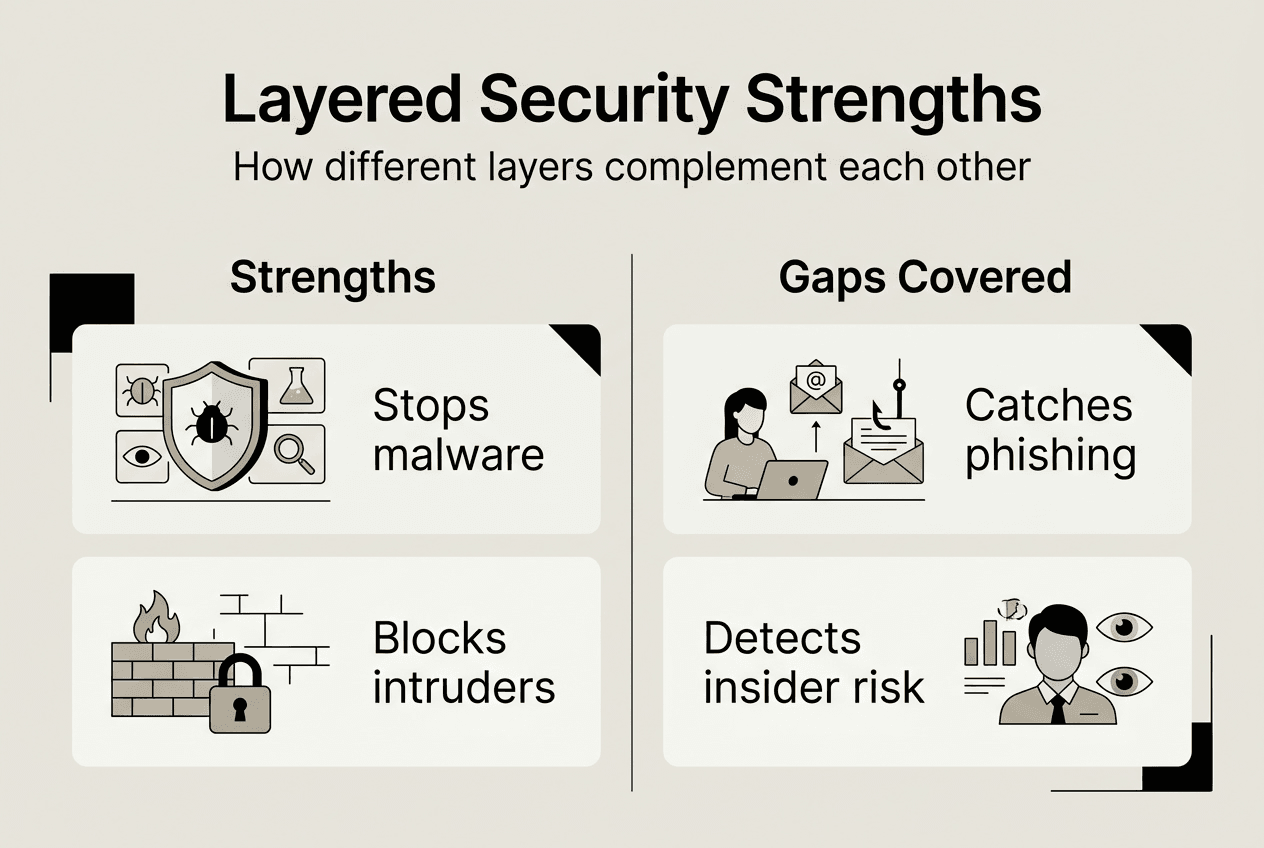
Procedural layers involve people and policies. Employee training teaches staff to recognize phishing emails, verify caller identities, and follow security protocols. Incident response plans outline steps to take when breaches occur, minimizing confusion and damage. Regular security audits identify weaknesses before attackers exploit them. Access control policies ensure only authorized personnel reach sensitive areas or data.
These layers complement each other in practical scenarios. Consider a phishing attack aimed at your business:
| Security Layer | How It Responds | Result |
|---|---|---|
| Email filtering | Flags suspicious sender and malicious links | Reduces delivery to inbox |
| Employee training | Trained staff recognize phishing tactics | User reports or deletes email |
| MFA | Even if credentials stolen, second factor required | Prevents unauthorized access |
| Network monitoring | Detects unusual login location or time | Triggers alert for investigation |
| Endpoint protection | Blocks malware if attachment opened | Stops payload execution |
No single layer stops every attack, but together they create formidable protection. The role of security systems becomes clear when you see how physical and digital controls reinforce each other.
Pro Tip: Combine different technology types rather than duplicating the same control. Two firewalls from the same vendor offer less protection than one firewall plus intrusion detection, because diverse tools catch different threats.
Applying layered security strategies at home and business
Implementing layered security requires a methodical approach tailored to your specific risks and resources. Follow these steps to build effective protection:
-
Assess your risks and valuable assets. Identify what you’re protecting (jewelry, data, inventory, intellectual property) and likely threats (burglary, fire, cyberattack, employee theft). Walk your property looking for vulnerabilities like hidden entry points, outdated locks, or unsecured network devices. For businesses, consider regulatory requirements and industry-specific risks.
-
Build layered defenses starting with basics. Secure physical perimeters first with quality locks, lighting, and barriers. Add cameras covering entry points and valuable areas. For digital security, install firewalls, enable automatic updates, and implement strong password policies. Don’t skip fundamentals chasing advanced tools.
-
Train people on security awareness. Implementing layered security involves policies, tools, and training tailored to unique requirements. Employees and family members are often the weakest link. Teach them to lock doors, verify identities, recognize scams, and report suspicious activity. Run periodic drills so everyone knows emergency procedures.
-
Monitor systems and update regularly. Security isn’t set-and-forget. Review camera footage, check system logs, and test alarms monthly. Apply software patches as soon as vendors release them, since delays leave known vulnerabilities exposed. Replace aging equipment before it fails. Schedule annual professional assessments to catch issues you might miss.
Customize your layers based on your environment. Homeowners might prioritize smart locks, video doorbells, and safes for valuables. Retailers need point-of-sale security, inventory controls, and employee access management. Offices require visitor logs, badge systems, and data backup procedures. Securing commercial premises demands more complex layers than residential protection.
Maintenance tasks form an essential procedural layer. Regular backups ensure you can recover from ransomware or hardware failure. Patch management closes security holes before exploitation. Access reviews remove permissions from former employees or unnecessary accounts. Document these processes so they continue even when responsible individuals leave.
Pro Tip: Start with three core layers (physical barriers, technical monitoring, and procedural training) then expand based on observed weaknesses. Trying to implement everything simultaneously often leads to gaps and frustration.
Incident response planning prepares you for when, not if, breaches occur. Define who contacts authorities, how to preserve evidence, steps to contain damage, and communication protocols for customers or stakeholders. Practice these plans so responses become automatic under stress.
Common challenges and expert solutions in layering security
Deploying layered security presents obstacles that can undermine effectiveness if not addressed properly. Understanding these challenges helps you avoid common pitfalls.
Complexity often overwhelms organizations new to layered approaches. Managing multiple systems, each with different interfaces and update schedules, creates administrative burden. Challenges include complexity, resource constraints, and managing overlapping controls effectively. The solution is consolidation where possible. Choose integrated platforms that manage cameras, alarms, and access controls through one dashboard. Automate routine tasks like patch deployment and log analysis. Simplify without sacrificing coverage.
Resource limitations force difficult prioritization decisions. Small businesses and homeowners can’t afford enterprise-grade solutions for every layer. Focus spending on highest-risk areas first. A quality safe protects irreplaceable items better than cheap cameras covering every angle. Free or low-cost tools like software firewalls and password managers provide solid protection without budget strain. Build layers incrementally as resources allow rather than waiting for perfect implementation.
Neglecting basics while pursuing advanced controls wastes money and leaves gaps. Installing biometric readers means nothing if doors have weak frames criminals can kick in. Deploying AI-powered threat detection doesn’t help if you skip regular backups. Ensure foundational layers work properly before adding sophisticated technologies.
| Challenge | Expert-Recommended Solution |
|---|---|
| System complexity | Consolidate controls into integrated platforms with unified management interfaces |
| Limited budget | Prioritize high-risk areas, use cost-effective tools, build layers incrementally over time |
| Overlooking fundamentals | Audit basic controls first, ensure physical and procedural foundations before advanced tech |
| Alert fatigue | Tune detection thresholds, automate responses to routine events, focus human attention on genuine threats |
| Keeping systems current | Schedule regular maintenance windows, enable automatic updates where safe, conduct quarterly reviews |
Alert fatigue occurs when systems generate too many false alarms, causing staff to ignore warnings. Tune sensitivity settings to reduce noise. Automate responses to routine events so humans only handle genuine threats. Regularly review and adjust detection rules based on actual incident patterns.
Maintaining effectiveness over time requires discipline. Schedule quarterly security reviews examining recent incidents, new vulnerabilities, and changing business needs. Conduct annual penetration testing or professional assessments to identify weaknesses. Document lessons learned from security events and update procedures accordingly.
Key expert tips for long-term success:
- Assign clear ownership for each security layer to prevent gaps in responsibility
- Create redundancy for critical controls so single points of failure don’t compromise entire systems
- Test recovery procedures regularly rather than discovering problems during actual emergencies
- Stay informed about emerging threats relevant to your industry or location
- Budget for security as ongoing operational expense, not one-time capital investment
When you choose security systems wisely and maintain them properly, layered protection becomes sustainable rather than overwhelming.
Protect your home and business with tailored layered security
Building effective layered security requires the right tools and expert guidance. Safes and Security Direct offers comprehensive security solutions and products designed to create robust protection for homes and businesses. From fire-resistant safes that protect irreplaceable documents to advanced surveillance systems that monitor multiple entry points, you’ll find professional-grade equipment suited to your specific needs.
Our specialists help you assess vulnerabilities and recommend layered approaches that fit your budget and risk profile. Whether you need physical barriers, monitoring technology, or secure storage for valuables, we provide reliable solutions backed by industry expertise. When you invest in high security through proven products and proper implementation, you gain peace of mind knowing multiple defenses protect what matters most. Contact us today to discuss your security requirements and build a customized layered strategy.
Frequently asked questions
What are the essential layers in a security solution?
Essential layers include physical barriers (locks, fencing, lighting), technical controls (firewalls, cameras, encryption), and procedural measures (training, policies, incident response). Physical security stops unauthorized entry, technical controls protect digital assets and enhance monitoring, while procedural layers ensure people follow best practices. The specific combination depends on what you’re protecting and likely threats, but effective systems always include elements from all three categories working together.
How often should I update and review my layered security system?
Review your security posture quarterly to identify new vulnerabilities and assess whether controls still match current threats. Apply software updates and patches immediately when vendors release them, as delays leave known weaknesses exposed. Conduct comprehensive professional assessments annually to catch issues routine reviews might miss. After any security incident, review and update affected layers to prevent recurrence. Regular maintenance prevents gaps from developing as technology ages and threat landscapes evolve.
Can layered security prevent social engineering attacks?
Layered security significantly reduces social engineering success but can’t eliminate it entirely. Training teaches staff to recognize manipulation tactics, verify identities, and follow verification procedures before granting access or sharing information. Technical controls like MFA prevent credential theft from succeeding even when phishing works. Credential abuse and social engineering are common in real breaches, highlighting the need for layered defenses. Combining awareness training, verification protocols, and technical safeguards creates the strongest protection against these human-focused attacks.
What is the role of network segmentation in layered security?
Network segmentation limits lateral movement of threats within a network, helping contain breaches. By isolating IoT devices, guest networks, and sensitive systems into separate zones, you prevent attackers who compromise one device from accessing everything. If malware infects a smart camera on a segmented network, it can’t reach your financial data or customer records. Segmentation also improves performance by reducing broadcast traffic and simplifies compliance by isolating regulated data. This layer works with firewalls and access controls to create defense in depth.
Recommended
- How to create security protocols that protect your business in 2026 – Safes and Security Direct
- Business Security Needs: Protecting Assets in 2026 – Safes and Security Direct
- Top commercial security best practices to protect your business in 202 – Safes and Security Direct
- How to secure business premises effectively in 2026 – Safes and Security Direct