

Home security best practices: protect property in 2026
TL;DR:
- Proper security requires regular audits, layered defenses, and ongoing maintenance.
- Integrating smart technology enhances visibility, control, and can lower insurance costs.
- Simplicity and consistent routines are more effective than complex systems with neglected features.
Choosing the right security setup for your home or business feels overwhelming when threats keep evolving and the product market keeps expanding. Burglary, vandalism, and unauthorized access remain real risks that demand more than a deadbolt and a prayer. The gap between homeowners and small business owners is wider than most realize. Business owners require visitor management and regular audits that go well beyond what a typical home needs. This guide cuts through the noise with actionable, evidence-backed practices so you can build a security plan that actually works for your specific situation, your budget, and your peace of mind.
Table of Contents
- Evaluate your security needs: Setting the groundwork
- Layered security: Core components for homes and businesses
- Integrate smart technology for enhanced protection
- Adopt ongoing best practices for sustained security
- Our take: Why simplicity and consistency matter most
- Connect with reliable solutions for your security needs
- Frequently asked questions
Key Takeaways
| Point | Details |
|---|---|
| Layered protection | Combining physical barriers, alarms, cameras, and access control keeps property safe. |
| Routine audits | Security audits twice a year ensure vulnerabilities are found and fixed quickly. |
| Smart tech benefits | Modern smart systems bring insurance savings and remote monitoring for added peace of mind. |
| Consistent routines | Regular checkups and access management are essential for sustained security. |
| Simple practices win | Simplicity and consistency outpace complex gadgets in delivering real-world protection. |
Evaluate your security needs: Setting the groundwork
Before you buy a single camera or sensor, you need an honest look at what you’re actually protecting. This means walking your property and identifying every possible entry point: doors, windows, garage access, side gates, and any low-traffic areas that rarely get attention. Most people are surprised by what a fresh set of eyes reveals.
Homeowners and small business owners face different risk profiles. At home, your priority is protecting family and personal valuables. For a business, you’re managing employee safety, inventory, cash handling, and regulatory accountability. Both need a structured review process, but the scope and frequency differ significantly.
A solid audit covers these core areas:
- Entry points: Doors, windows, skylights, and any access that bypasses your main entrance
- Lighting: Dark corners, blind spots around the perimeter, and poorly lit parking areas
- Existing protocols: Are alarm codes changed regularly? Does everyone who needs access actually have it, and no one who shouldn’t?
- Digital access: Wi-Fi networks, smart device passwords, and app permissions for any connected security tools
- Neighboring environment: Overgrown shrubs, unsecured dumpsters, and neighboring structures that could give a bad actor cover
Once you’ve mapped these areas, rank them by risk level. Fix the obvious weak spots first. Security audits often reveal that the most exploited vulnerabilities are the ones that looked fine on the surface, like a door with a functioning lock but a weak frame.
Pro Tip: Schedule your audit twice a year, ideally once before winter and once before summer. Seasonal changes affect lighting conditions, foot traffic patterns, and landscaping coverage. Semiannual security audits are a proven foundation for property protection, not just a box to check.
Don’t skip the documentation step. Write down what you find, what you fixed, and what still needs attention. A paper trail helps you track improvement over time and spot patterns before they become expensive problems.
Layered security: Core components for homes and businesses
Thinking about security as a single solution is one of the most common mistakes property owners make. Real protection works in layers. Each layer adds friction for an intruder and increases the chance of detection or deterrence before any damage is done.
Here are the five core layers every property should have:
- Physical barriers: Reinforced doors, deadbolt locks, window locks, and security screens
- Alarm systems: Intrusion alarms, glass-break sensors, and motion detectors
- Surveillance cameras: Visible cameras at entry points plus discreet coverage of key interior and exterior areas
- Lighting: Motion-activated exterior lights and well-lit perimeter zones
- Access control: Keypad entry, smart locks, key fobs, or card readers for businesses
The combination matters more than the individual components. Essential security components include alarms, cameras, access logs, and physical barriers working together, not independently.
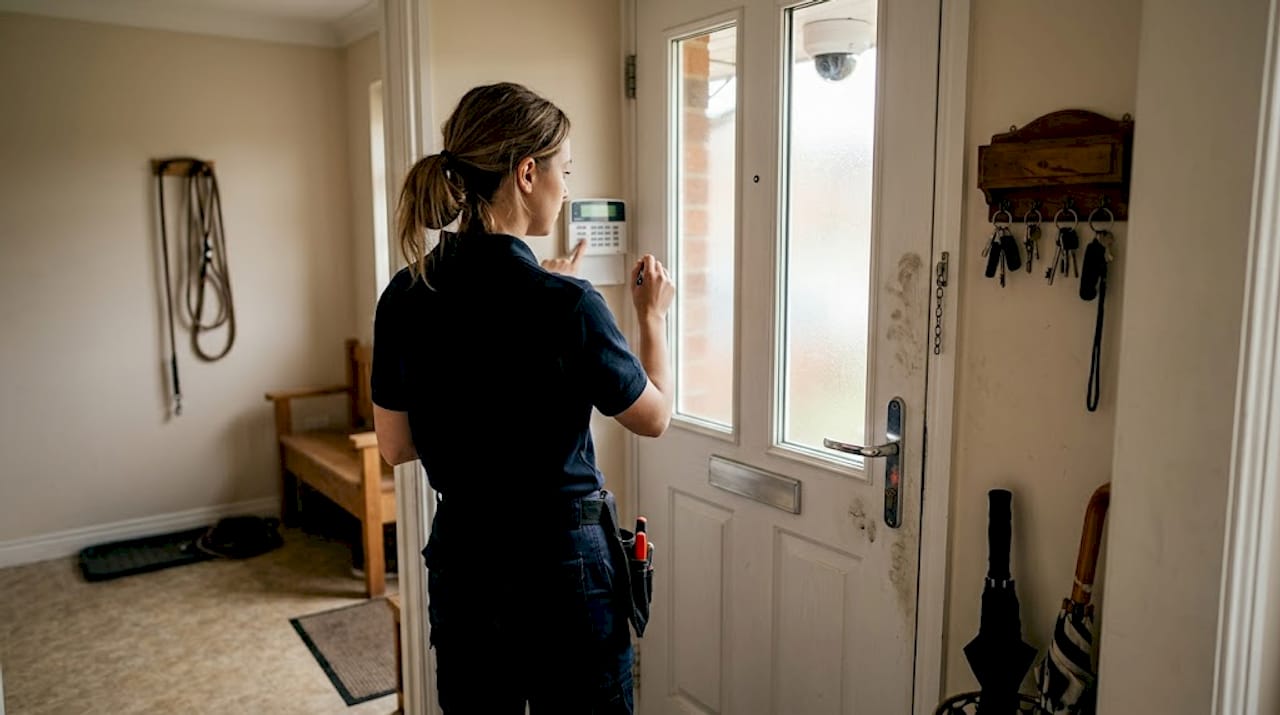
Here’s a quick comparison of physical versus digital security options:
| Feature | Physical solutions | Digital/smart solutions |
|---|---|---|
| Cost to install | Low to moderate | Moderate to high |
| Maintenance required | Minimal | Regular updates needed |
| Remote access | No | Yes |
| Deterrence visibility | High | Medium |
| Integration capability | Low | High |
| Scalability | Limited | Flexible |
For small businesses, logging visitor access is non-negotiable. Every person who enters your property during and after hours should be recorded. This protects you legally and helps identify patterns if something goes wrong. Understanding security system features for your specific property type is the starting point for making smart purchase decisions.
Pro Tip: Wireless sensors are one of the fastest ways to upgrade an older system without major installation costs. They can be added to existing setups and repositioned as your needs change, which makes them ideal for rental properties and growing businesses. Review security must-haves before committing to a full system overhaul.
Integrate smart technology for enhanced protection
Smart security has moved well beyond novelty. Today’s connected devices give homeowners and business owners capabilities that were reserved for enterprise-level security budgets just a decade ago. The real benefit is not the gadget itself but what it enables: visibility, speed, and control from anywhere.
Key smart security devices worth knowing:
- Smart cameras: HD resolution, night vision, two-way audio, and cloud or local storage options
- Motion sensors: Indoor and outdoor units that trigger alerts and activate cameras or lights
- Smart locks: Keypad, fingerprint, or app-controlled access with automatic locking and access logs
- Video doorbells: Real-time visitor visibility with motion alerts and recorded history
- Security apps: Centralized control of all connected devices, alert management, and remote arming or disarming
The business case for smart systems is measurable. Smart security systems often result in insurance discounts and faster emergency response, which means the upfront investment pays back over time.
| Benefit | Impact |
|---|---|
| Insurance premium reduction | Up to 15% savings annually |
| Emergency response improvement | Faster dispatch with verified alerts |
| Remote monitoring | 24/7 visibility from any location |
| Deterrence effect | Visible tech reduces break-in attempts |
| Energy integration | Smart lights reduce utility costs too |
Automation is particularly valuable for small businesses that can’t afford round-the-clock staffing. Scheduled camera checks, automated lighting triggers, and instant alerts to your phone mean you’re effectively on-site even when you’re not. Exploring top security products helps you match the right smart tools to your specific layout and risk profile.
For homeowners, the appeal is simplicity. You can arm your system from bed, check the front door camera while traveling, and get a notification if someone lingers near your garage. That kind of real-time awareness changes how you experience security from reactive to proactive.
Adopt ongoing best practices for sustained security
Installing a great system is step one. Keeping it effective over months and years requires consistent habits. Technology degrades, routines slip, and new vulnerabilities emerge. The properties that stay secure are the ones where people treat security as an ongoing practice, not a one-time project.
Here’s a practical maintenance checklist to run through regularly:
- Test alarm sensors and detectors monthly
- Replace camera batteries or check power connections every quarter
- Update firmware and app software on all smart devices as soon as updates are available
- Change access codes or passwords every six months or after any personnel change
- Inspect physical barriers, door frames, and window locks for wear or damage
- Review camera footage storage and confirm recordings are saving correctly
For businesses, employee training is a critical piece that gets overlooked. Every staff member should know the alarm code, understand what to do if the system triggers, and recognize social engineering tactics like someone tailgating through a secure door. A single untrained employee can undo thousands of dollars in security investment.
Managing access for cleaning crews, contractors, and delivery personnel is another common weak point. Best practice is to issue temporary codes that expire after the visit and to review access logs afterward. For properties with multiple entry points, consider scheduling deliveries to a single monitored location. Solutions tailored for urban homeowners often address exactly this kind of layered access challenge in dense environments.
“Visitor management and semiannual audits help sustain a secure property.” This principle applies whether you’re running a retail shop or managing a family home with regular service visitors.
For property managers overseeing multiple units, the stakes are even higher. Standardized best practices for property managers ensure that every unit in a portfolio maintains a consistent baseline of protection.
Our take: Why simplicity and consistency matter most
Here’s something the security industry doesn’t always admit: more complex systems often create more gaps, not fewer. We’ve seen it repeatedly. A business installs a multi-zone camera network with advanced analytics, but nobody reviews the footage. A homeowner sets up a smart hub with fifteen integrations, but the app crashes and the system sits disarmed for a week.
The properties with the fewest incidents aren’t always the ones with the most advanced tech. They’re the ones where the basics are done consistently. Locks checked every night. Codes updated regularly. Audits scheduled and actually completed. Clear roles so everyone knows what they’re responsible for.
Technology is a multiplier, not a replacement for discipline. A simple home security setup that gets used every day beats a sophisticated system that’s poorly maintained and inconsistently managed. Start with the fundamentals, build in routine, and then layer technology on top of a strong foundation.
Connect with reliable solutions for your security needs
You now have a clear roadmap: audit your risks, build in layers, integrate smart tools where they add real value, and commit to consistent habits. The next step is finding products and support that match your plan.
At Safes and Security Direct, we stock professional-grade surveillance cameras, alarm systems, access control tools, and a wide range of safes for homes and businesses of every size. Our team understands that security isn’t one-size-fits-all, which is why our catalog includes detailed specs, expert guidance, and responsive customer support to help you make confident decisions. Whether you’re starting your first audit or upgrading an existing system, we’re here to help you get it right.
Frequently asked questions
How often should I conduct a security audit?
A security audit should be performed at least twice a year for both homes and small businesses. Semiannual audits ensure vulnerabilities are caught before they’re exploited.
What is layered security?
Layered security uses multiple barriers like doors, alarms, cameras, and access controls to protect property at different levels. Core layers work together so that if one fails, others still provide protection.
Do smart security products lower insurance costs?
Yes, many modern smart systems can reduce homeowner’s insurance by up to 15% annually while also improving emergency response times through verified alerts.
How can I control access for cleaning and delivery personnel?
Best practices include issuing temporary codes or smart locks that expire after each visit. Visitor management logs let you track who accessed your property and when.
What’s the biggest mistake people make with home security?
Relying on technology alone without maintaining consistent routines is the most common error. Consistent routines like regular audits and code updates prevent far more losses than any single device.
Recommended
- How to Improve Home Security: Proven Steps for 2026 – Safes and Security Direct
- Top security best practices for property managers 2026 – Safes and Security Direct
- Industry Security Best Practices: Protect Property and Reduce Risk – Safes and Security Direct
- Top Asset Protection Methods 2026 for Secure Homes – Safes and Security Direct
- Come progettare chiusure garage sicure nel 2026