

Alarm systems: Essential roles, real impact, strategies
TL;DR:
- Professionally monitored alarms are highly effective in deterring intruders and ensuring rapid response.
- Layering security measures like cameras, signage, and reinforced doors enhances overall protection.
- Regular maintenance and proper system management are crucial to maintaining alarm effectiveness.
Alarm systems are widely considered a must-have for any serious property security plan, but the reality is more nuanced than most people realize. Not every alarm delivers the same level of protection, and the gap between a well-chosen, monitored system and a neglected, unmonitored one is enormous. Research confirms that over 80% of intruders flee when a triggered alarm sounds, but that statistic only holds when the right system is in place and properly maintained. This article breaks down the types of alarm systems, what the evidence says about deterrence, the pitfalls to avoid, and how to build a layered security approach that actually works.
Table of Contents
- Understanding alarm systems: Types and core functions
- Do alarm systems actually deter crime? Evidence and approaches
- Common pitfalls: False alarms, unmonitored systems, and maintenance simplicity
- Integrated security: Layered approaches for maximum protection
- Why conventional alarm advice leaves most properties vulnerable
- Next steps: Find your ideal alarm system and build safer spaces
- Frequently asked questions
Key Takeaways
| Point | Details |
|---|---|
| Visible alarms deter most intruders | Studies show over 80% of opportunists flee when alarms are triggered. |
| Monitoring and maintenance matter most | Professionally monitored and well-maintained systems drastically improve security outcomes. |
| Layered security beats standalone alarms | Combining alarms with other defenses maximizes deterrence and response. |
| Unmonitored systems may offer less protection | Some evidence suggests poorly maintained and unmonitored alarms can be less effective than having no system at all. |
Understanding alarm systems: Types and core functions
Before choosing a system, it helps to understand what alarm systems actually do. At their core, they detect unauthorized entry or movement and then alert someone: you, a monitoring center, or people nearby. That sounds simple, but the way an alarm delivers that alert makes a massive difference in how effective it is.
Here are the main types you’ll encounter:
- Monitored alarms: Connected to a 24/7 professional monitoring center. When triggered, trained operators verify the alert and dispatch police or emergency services.
- Unmonitored alarms: Produce a loud local siren or send a notification to your phone, but no one automatically calls for help.
- Smart alarms: App-connected systems that let you arm, disarm, and receive alerts remotely. Many integrate with cameras and smart locks.
- Battery-powered alarms: Wireless and easy to install, with no dependency on your home’s electrical wiring. Learn more about battery-powered alarm benefits if you’re renting or want flexibility.
- Integrated systems: Part of a broader security ecosystem that includes cameras, access control, and lighting.
Research shows that alarms work best as part of layered security rather than as standalone devices. Understanding this distinction from the start saves you money and gives you real protection. If you’re new to the terminology, a security terminology guide can help you navigate product descriptions and specifications with confidence.
| Alarm type | Monitoring | Response speed | Best for |
|---|---|---|---|
| Monitored | Professional center | Fast (minutes) | Homes, businesses |
| Unmonitored | Self or none | Slow (depends on you) | Low-risk areas |
| Smart alarm | App-based | Moderate | Tech-savvy owners |
| Battery-powered | Optional add-on | Varies | Rentals, flexibility |
| Integrated system | Professional | Fastest | High-value properties |
Pro Tip: If you want the strongest deterrence and fastest emergency response, choose a professionally monitored alarm. The monthly cost is typically far less than the cost of a single break-in.
The core functions of any alarm are to deter opportunists, prompt an immediate response, and document incidents. Each type fulfills these functions to different degrees, which is why the choice you make matters so much.
Do alarm systems actually deter crime? Evidence and approaches
With an understanding of types and functions, let’s examine whether alarms actually deter crime and what makes them most effective.
The evidence is clear: visible, professionally monitored alarms are highly effective against opportunist intruders. Studies show that 80%+ of intruders flee when an alarm is triggered, and most burglars actively avoid properties that display alarm signage. Opportunists, who make up the majority of intruders, look for easy targets. An alarm system signals that your property is not one.
However, determined, experienced criminals are less deterred by alarms alone. They may know how to disable simple systems, work quickly before police arrive, or target properties where response times are slow. This is where monitoring quality and layered security become critical.
“Effective alarm systems deter crime most reliably when they are visible, monitored, and integrated with other security measures.” Crime prevention advice
Monitored vs. unmonitored: A direct comparison
| Feature | Monitored alarm | Unmonitored alarm |
|---|---|---|
| Police dispatch | Automatic | Manual (you call) |
| Response time | Minutes | Unpredictable |
| Deterrence level | High | Moderate |
| False alarm handling | Operator verifies | No verification |
| Cost | Monthly fee | One-time cost |
Here are the steps that maximize deterrence for both homeowners and business owners:
- Make your alarm visible. Place signage at entry points and install outdoor sirens or strobe lights where intruders will see them immediately.
- Choose professional monitoring. Self-monitored systems put the burden on you, and you may not always respond in time.
- Combine with cameras. Cameras add a layer of documentation and visual deterrence. Review burglary protection basics to understand how these tools work together.
- Test your system regularly. A system that fails silently offers zero deterrence.
- Keep monitoring contracts current. Lapsed monitoring means your alarm is effectively unmonitored, even if you paid for it.
The bottom line is that alarms work best when intruders know they are there and believe a response is coming fast.
Common pitfalls: False alarms, unmonitored systems, and maintenance simplicity
Even the best-designed alarms can fall short if managed poorly. Let’s explore the most common pitfalls and how to avoid them.
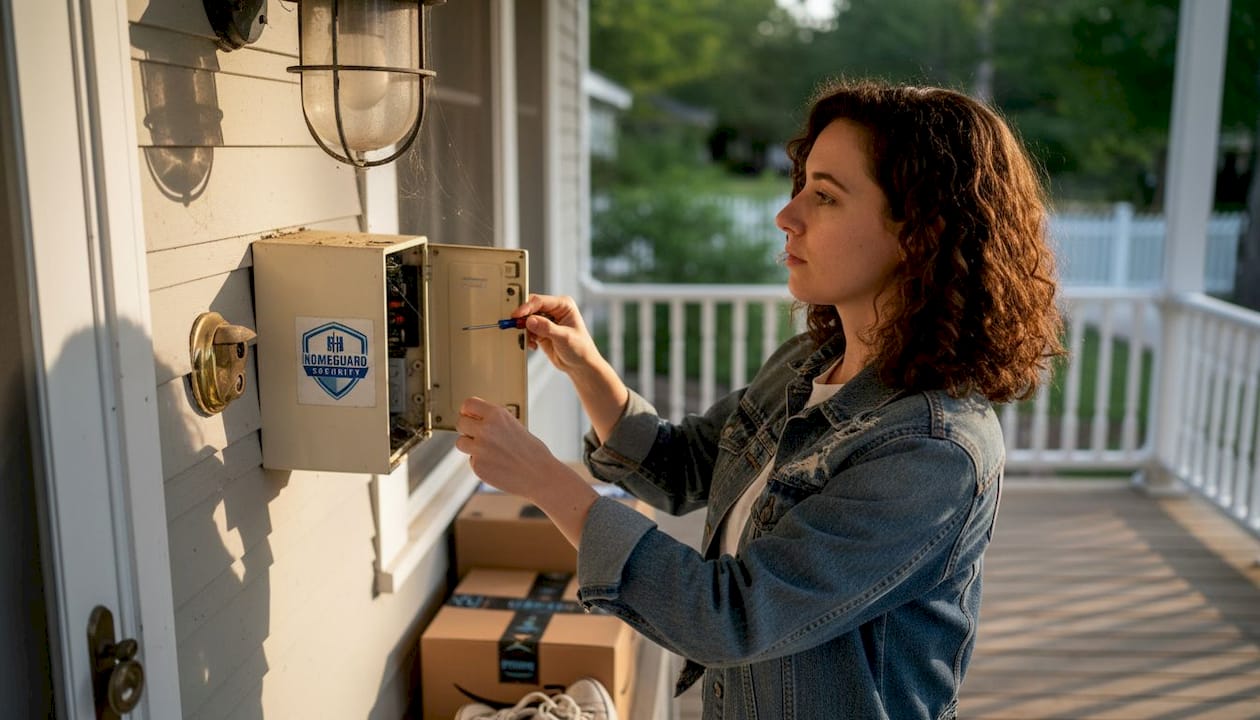
False alarms are one of the biggest problems in residential and commercial security. Pets, poor sensor placement, low batteries, and user error all trigger unnecessary alerts. Police departments in many cities now charge fines for repeated false alarms, and some will deprioritize future calls from properties with a history of them. That’s a serious consequence that undermines the very protection you’re paying for.
Unmonitored systems present a different but equally serious problem. Research confirms that alarms provide less protection when unmonitored or poorly maintained. A loud siren in an empty neighborhood at 2 a.m. may go completely ignored. Without someone to verify and respond, the alarm is essentially just noise.
Here are the most common pitfalls to watch for:
- Skipping regular testing: Sensors degrade, batteries die, and connections fail. Monthly tests catch problems before they matter.
- Ignoring software updates: Smart alarms with outdated firmware can have security vulnerabilities.
- Poor sensor placement: Sensors placed near air vents, windows with direct sunlight, or high-traffic pet areas will trigger false alarms constantly.
- Letting monitoring lapse: A gap in your monitoring contract leaves your property exposed without you even realizing it.
- Relying on a single device: One sensor at the front door is not a security system. It’s a starting point.
For guidance on keeping your system reliable, check out these maintenance tips and learn how false alarm reduction through remote monitoring can cut incidents by up to 97%.
Pro Tip: Schedule a monthly 5-minute system check: test each sensor, check battery levels, and confirm your monitoring service is active. It takes almost no time and keeps your protection intact.
Integrated security: Layered approaches for maximum protection
To truly maximize safety, alarm systems must work alongside other security tactics. Here’s how layering different measures increases real-world protection.
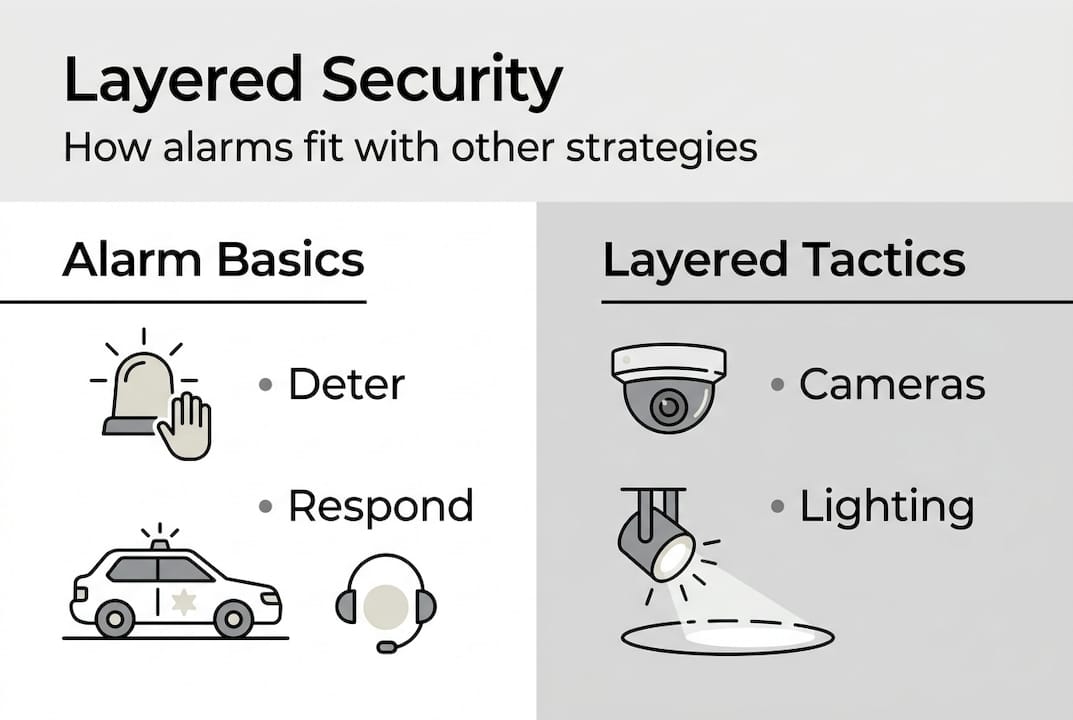
Think of your property’s security like a series of filters. Each layer catches threats that slip past the previous one. An alarm alone stops some intruders. An alarm combined with cameras, reinforced doors, motion-activated lighting, and visible signage stops far more. Research consistently shows that layered security delivers best results compared to any single measure used in isolation.
For homeowners and business owners, the practical goal is to make your property look and feel difficult to breach at every stage. An intruder casing a neighborhood will move on if they see cameras, alarm signage, solid door hardware, and motion lights. Each element adds friction.
Here’s how to build a practical layered security setup:
- Install visible cameras at entry points, driveways, and parking areas. Cameras both deter and document.
- Use alarm signage and window stickers even if your system is newer. Visibility is half the battle.
- Reinforce entry points with quality deadbolts, door frame reinforcements, and window locks.
- Add motion-activated lighting around the perimeter. Darkness is an intruder’s best friend.
- Integrate your alarm with your camera system so that a triggered sensor automatically starts recording.
- Consider access control for businesses, including keycard entry or coded locks on sensitive areas.
For a deeper look at how these elements work together, explore layering security strategies and see real-world examples in this guide to urban security solutions. The investment in layering pays off because it removes the single point of failure that a standalone alarm creates.
Why conventional alarm advice leaves most properties vulnerable
Here’s an uncomfortable truth most security guides won’t tell you: buying an alarm system is the easy part. The hard part is everything that comes after. We’ve seen it repeatedly. A homeowner installs a solid monitored system, feels secure, and then stops thinking about it. Batteries die. Sensors drift out of alignment. The monitoring subscription lapses during a billing dispute. Months later, they’re exposed and don’t know it.
Conventional advice focuses on what to buy. Real protection comes from what you do with it. The properties that stay secure are the ones where owners treat their alarm as a living system, not a one-time purchase. They test it, update it, and layer it with other measures over time.
The other overlooked mistake is over-relying on technology while ignoring fundamentals. A $500 smart alarm won’t compensate for a weak door frame or a camera with a dead battery. Explore top asset protection strategies to see how the most secure properties combine vigilance, maintenance, and smart technology rather than betting everything on a single device.
Next steps: Find your ideal alarm system and build safer spaces
You now understand what separates an effective alarm system from a false sense of security. The next step is putting that knowledge into action.
At Safes and Security Direct, we stock a curated range of alarm systems, surveillance cameras, and integrated security solutions designed for real homes and real businesses. Whether you’re starting from scratch or upgrading an existing setup, our product range covers every layer of protection you need. Pair your alarm with cameras, safes, and access control for a complete security ecosystem. Start with our layered protection guide to map out the right combination for your property and budget.
Frequently asked questions
How do alarm systems deter intruders?
Alarm systems trigger audible warnings and alert monitoring centers, prompting 80%+ of opportunists to flee before completing a break-in. Visible signage and outdoor sirens amplify this deterrence effect before anyone even tries to enter.
Are unmonitored alarm systems effective?
Unmonitored systems offer limited protection because no one automatically responds when they trigger. Research shows unmonitored alarms provide less protection, especially in areas where neighbors are unlikely to notice or act on a siren.
How can I reduce false alarms?
Regular maintenance, proper sensor placement, and remote monitoring can dramatically cut false alarm rates. Remote monitoring reduces false alarms by allowing operators to verify alerts before dispatching emergency services.
What is layered security?
Layered security means combining alarm systems with cameras, reinforced entry points, motion lighting, and signage so that multiple barriers must be overcome. Layered security provides best results because no single measure can stop every type of threat on its own.
Recommended
- Role of Security Systems: Protecting Homes and Businesses – Safes and Security Direct
- Home security terminology explained: a clear guide – Safes and Security Direct
- Top Home Security Products: Essential Devices – Safes and Security Direct
- Security system features list: Essential options for homes & businesse – Safes and Security Direct