

Why remote security monitoring cuts false alarms by 97%
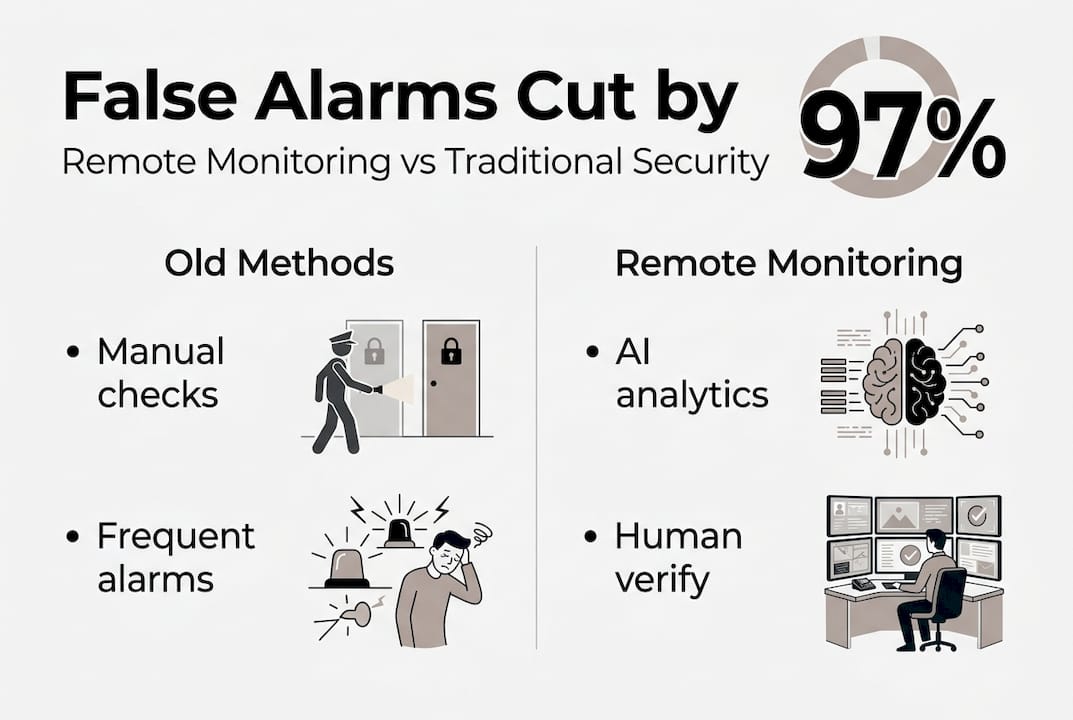
Many business owners assume remote security monitoring is just another term for video cameras recording footage. In reality, it represents a sophisticated integration of artificial intelligence, high-definition surveillance, and human verification working together to detect and respond to threats in real time. This comprehensive approach transforms passive recording into active protection, dramatically reducing false alarms while enabling immediate intervention. Understanding how these systems work and their tangible benefits helps property managers make informed decisions about protecting their assets and minimizing operational risks.
Table of Contents
- Key takeaways
- How remote security monitoring works: technology and process
- Cost efficiency and continuous coverage advantages
- Reducing false alarms and proactive threat deterrence
- Challenges and expert approaches to optimizing remote monitoring
- Practical advice for adopting remote security monitoring
- Discover reliable remote security monitoring solutions today
- Frequently asked questions
Key Takeaways
| Point | Details |
|---|---|
| False alarm reduction | AI based threat detection analytics coupled with human verification helps distinguish real threats from benign activity. |
| Real time intervention | When a threat is detected, operators verify it within 20 to 30 seconds and can intervene using two way audio to deter intruders. |
| Cost effective coverage | A single trained monitoring agent can oversee dozens of cameras across multiple locations, delivering 24/7 surveillance without hiring numerous on site guards. |
| Optimized camera setup | Proper camera placement and adequate lighting around your property improve AI detection accuracy and operator visibility. |
How remote security monitoring works: technology and process
Remote security monitoring combines multiple technology layers to create a responsive security ecosystem. The foundation consists of high-definition security cameras strategically positioned to capture clear footage across your property. These cameras connect to a network video recorder that stores footage for later review and evidence collection. The real intelligence comes from AI-based threat detection analytics that continuously analyze video feeds, identifying suspicious movements, unauthorized access attempts, and potential security breaches.
When the AI detects something unusual, it immediately alerts a central monitoring center staffed by trained security operators. These professionals review the alert within 20 to 30 seconds, using live camera feeds to verify whether the threat is genuine. This human verification step separates legitimate incidents from false alarms caused by animals, weather, or harmless activity. If operators confirm a real threat, they can communicate directly with intruders through two-way audio systems, often deterring criminal activity before it escalates.
The coordination between technology and human oversight creates a security response far more effective than either component alone. Operators can simultaneously contact property managers and local authorities, providing real-time information about the incident as it unfolds. This immediate response capability transforms security from reactive investigation to proactive prevention. The AI supports human decision making by filtering thousands of video frames and highlighting genuine concerns, but it does not replace the nuanced judgment that experienced operators bring to threat assessment.
Pro Tip: Invest time in optimal camera placement and adequate lighting around your property. Well-positioned cameras with proper illumination dramatically improve both AI detection accuracy and human operator visibility, cutting false alarms while ensuring genuine threats are never missed.
For businesses seeking to maximize their security infrastructure, understanding strategic security camera setup principles ensures your monitoring system performs at peak effectiveness from day one.
Cost efficiency and continuous coverage advantages
The economics of remote security monitoring reveal substantial advantages over traditional on-site guard services. A single trained monitoring agent can simultaneously oversee dozens of cameras distributed across multiple business locations. This multi-site capability delivers continuous 24/7 surveillance that would require hiring numerous full-time security personnel to replicate. The financial implications are significant, particularly for businesses operating multiple facilities or large properties requiring comprehensive coverage.
Traditional security approaches demand substantial ongoing expenses. On-site guards require competitive salaries, benefits, training programs, and shift coverage to maintain round-the-clock presence. Equipment maintenance, uniform costs, and liability insurance add further financial burden. Remote monitoring eliminates most of these recurring costs while actually expanding surveillance capabilities. Your security budget stretches further, covering more ground with fewer resources while maintaining professional oversight.
The main cost benefits include:
- Reduced personnel expenses compared to multiple on-site guards
- Minimal training costs handled by the monitoring service provider
- Fewer on-site equipment maintenance visits due to centralized system management
- Scalable coverage that grows with your business without proportional cost increases
- Lower insurance premiums due to enhanced security measures
Remote monitoring enables substantial coverage expansion for less than traditional security personnel costs.
This financial flexibility becomes especially valuable as business needs evolve. Expanding to new locations or increasing coverage during high-risk periods requires minimal additional investment. You avoid the lengthy hiring processes and training periods necessary when scaling traditional security teams. The system adapts to seasonal fluctuations, special events, or changing threat levels without the logistical challenges of adjusting physical staffing. This operational agility gives businesses precise budget control while maintaining robust security standards.
The deterrent effect of visible security cameras also plays a crucial role in preventing incidents before they occur. Research consistently shows that properties with obvious surveillance systems experience fewer attempted break-ins. Understanding how cameras deterring burglary works helps businesses maximize both the preventive and responsive aspects of their security investment.
Reducing false alarms and proactive threat deterrence
False alarms have historically plagued security operations centers, overwhelming monitoring staff and degrading response quality. Traditional motion-triggered systems generate alerts for every passing vehicle, wandering animal, or wind-blown debris. This flood of non-threatening notifications forces operators to review hundreds of false positives daily, creating fatigue and increasing the risk that genuine threats get overlooked. The problem becomes so severe that some monitoring centers develop alert blindness, treating all notifications with skepticism.
Integrating AI detection with human verification transforms this dynamic completely. The AI performs initial filtering, distinguishing between routine activity and genuinely suspicious behavior. When the system flags potential threats, trained operators immediately review the footage to confirm whether intervention is necessary. This two-stage process drops false alarm rates dramatically, ensuring that when alerts reach decision makers, they represent real security concerns requiring immediate attention.
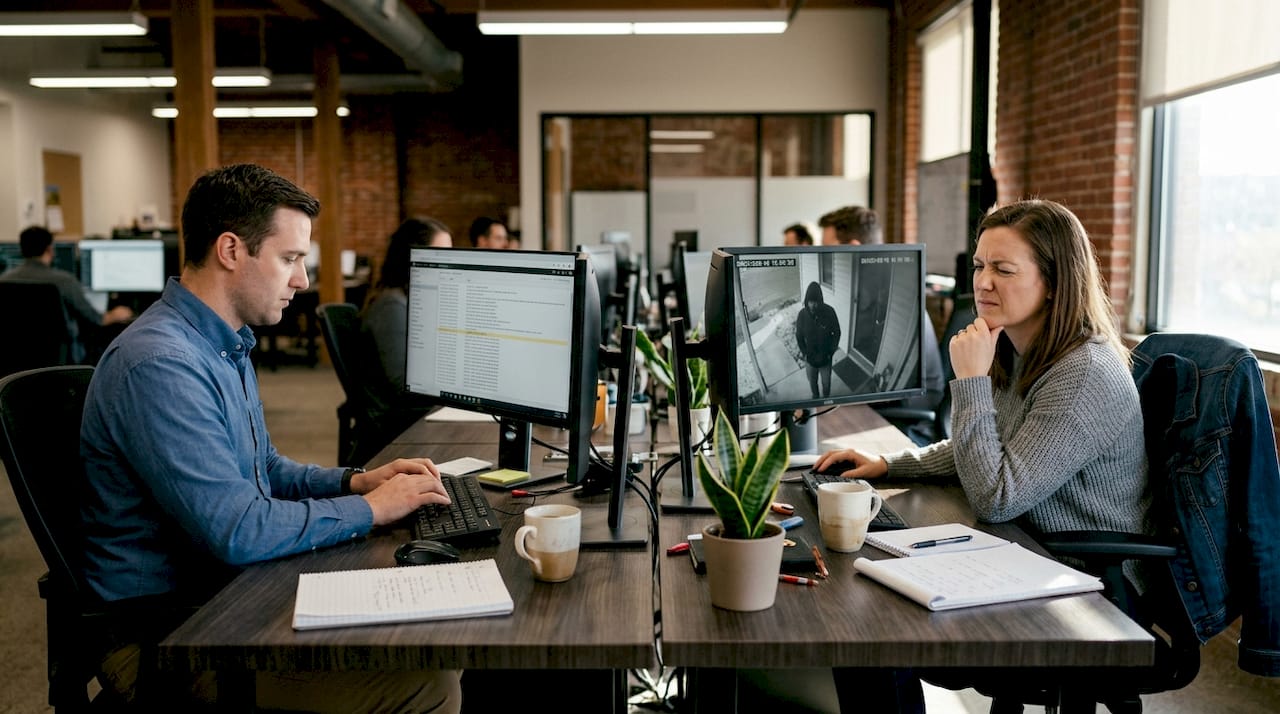
The live intervention capability adds another powerful layer to threat deterrence. When operators verify suspicious activity, they can activate two-way audio to address intruders directly. A clear warning that they are being watched and authorities have been contacted often convinces criminals to abandon their plans immediately. This proactive approach prevents property damage, theft, and the trauma associated with security breaches. The psychological impact of real-time human interaction creates a deterrent far more effective than passive recording.
| System Type | False Alarm Rate | Human Verification | Live Intervention | Response Quality |
|---|---|---|---|---|
| Traditional CCTV | 90-98% | No | No | Reactive only |
| AI-only monitoring | 60-75% | No | No | Automated but imprecise |
| Hybrid verified monitoring | 2-10% | Yes | Yes | Proactive and precise |
The difference in response quality becomes evident when examining real-world outcomes. Verified monitoring systems enable security teams to distinguish between genuine emergencies and harmless triggers with confidence. This precision means authorities receive accurate information when dispatched, improving their response effectiveness and reducing wasted resources on false calls. Property managers gain peace of mind knowing that alerts represent actual threats requiring attention, not system glitches or environmental factors.
Pro Tip: When evaluating monitoring providers, request demonstrations of their verification protocols and ask for documented response time statistics. Providers confident in their capabilities will readily share performance data and walk you through their alert handling procedures, giving you assurance about the protection you are purchasing.
Businesses exploring comprehensive security solutions should also consider how smart home security benefits translate to commercial applications, particularly regarding insurance cost reductions and enhanced protection protocols.
Challenges and expert approaches to optimizing remote monitoring
Despite significant advantages, remote security monitoring faces legitimate challenges that businesses must understand and address. The security industry continues struggling with excessive false alarms that cause operator fatigue and compromise threat detection effectiveness. Even with AI assistance, monitoring centers receive overwhelming volumes of alerts that strain staff resources and attention capacity. This operational stress can lead to delayed responses or overlooked genuine threats during peak alert periods.
Artificial intelligence effectiveness varies considerably based on environmental conditions. Outdoor AI detection typically achieves 75-85% accuracy under optimal conditions, but performance degrades significantly in low light, heavy weather, or when objects partially obstruct camera views. Shadows, reflections, and rapid lighting changes confuse algorithms, generating false positives or missing actual threats. These technological limitations mean businesses cannot rely solely on automated systems without human oversight to maintain reliable security.
To optimize your remote monitoring system effectiveness:
- Conduct thorough site assessments identifying optimal camera positions with clear sightlines
- Install supplemental lighting in areas with poor natural illumination or heavy shadows
- Schedule regular system maintenance including camera cleaning and software updates
- Select experienced providers with proven track records managing diverse property types
- Establish clear escalation protocols defining when and how to involve authorities
- Review system performance quarterly, adjusting camera angles or adding coverage as needed
Key mitigation strategies include:
- Integrate AI detection with mandatory human verification before triggering responses
- Avoid overreliance on technology alone by maintaining operator training and engagement
- Conduct ongoing staff development ensuring operators stay sharp on threat recognition
- Implement tiered alert systems prioritizing high-risk zones for immediate attention
- Use analytics to identify patterns in false alarms and adjust detection parameters accordingly
Expert research reveals that while crime reduction benefits from surveillance systems are statistically significant, effectiveness can decay over time or simply displace criminal activity to less protected areas. Proper system design with adequate lighting and strategic camera placement proves crucial for maintaining long-term protective value. Businesses must view remote monitoring as part of a comprehensive security strategy rather than a standalone solution.
Understanding common implementation pitfalls helps businesses avoid costly mistakes. Many organizations rush deployment without adequate planning, leading to coverage gaps or poorly positioned equipment. Learning from others’ experiences with security camera installation tips prevents these avoidable errors and ensures your system delivers maximum protection from the start.
Practical advice for adopting remote security monitoring
Successful implementation begins with honest assessment of your property’s unique vulnerabilities and security priorities. Walk your facility identifying entry points, high-value asset locations, and areas with limited natural visibility. Consider your operational hours, traffic patterns, and any previous security incidents that revealed weaknesses. This groundwork ensures you design a monitoring system addressing your actual risks rather than generic security concerns.
Choosing the right monitoring provider requires careful evaluation beyond price comparisons. Prioritize companies demonstrating proven verified response protocols and effective human-AI integration. Request references from businesses similar to yours in size and industry. Ask detailed questions about operator training, average response times, and how they handle high-alert volume periods. The provider’s communication style and willingness to customize solutions to your needs often predicts the quality of your ongoing partnership.
Steps to successful implementation:
- Complete comprehensive site assessment documenting all security considerations
- Develop camera positioning plan maximizing coverage while minimizing blind spots
- Upgrade lighting in poorly illuminated areas before installing cameras
- Train your staff on system capabilities and proper response procedures
- Conduct periodic system audits reviewing footage quality and detection accuracy
- Adjust camera angles and detection sensitivity based on real-world performance
- Maintain open communication with your monitoring provider about concerns or changes
When evaluating potential providers, consider:
- Documented response time averages and verification protocols
- Geographic coverage scope and ability to monitor multiple locations
- Technology upgrade policies ensuring your system stays current
- Customer review patterns highlighting service strengths and weaknesses
- Contract flexibility allowing adjustments as your needs evolve
- Technical support availability and responsiveness to issues
Leverage available resources to avoid common mistakes that compromise system effectiveness. Understanding principles of strategic camera setup ensures optimal positioning from day one. Similarly, learning about typical security camera installation mistakes helps you recognize and prevent problems before they impact your security posture.
The broader context of how remote monitoring fits into modern security strategies provides valuable perspective. Industry resources exploring the role of remote monitoring help businesses understand emerging trends and best practices that may influence your long-term security planning.
Discover reliable remote security monitoring solutions today
Protecting your business assets requires partnering with security providers who understand the complexities of modern threat landscapes. Safes and Security Direct specializes in professional-grade remote security monitoring products designed specifically for businesses and property managers seeking reliable protection. Our team brings deep expertise in matching security solutions to unique operational requirements, ensuring you get coverage that addresses your actual vulnerabilities rather than generic packages.
Exploring our comprehensive range of surveillance cameras, monitoring systems, and integrated security solutions gives you access to technology proven in demanding commercial environments. We provide consultations helping you understand which products and configurations deliver optimal protection for your specific situation. Whether you manage a single facility or multiple locations, our tailored packages scale to meet your needs while respecting your budget constraints. Visit Safes and Security Direct today to discover how professional remote security monitoring strengthens your asset protection strategy and provides the peace of mind that comes from knowing experienced professionals are watching over your property around the clock.
Frequently asked questions
What is remote security monitoring and how is it different from CCTV?
Remote security monitoring involves continuous AI-supported video surveillance with human operator verification and real-time response capabilities, unlike passive CCTV which only records footage for later review. It enables immediate intervention through two-way audio and verified alerts that reduce false alarms while improving security outcomes. The active monitoring approach transforms security from reactive investigation to proactive threat prevention.
How does remote monitoring reduce false alarms compared to traditional systems?
AI detects suspicious activity but trained human operators verify alerts before triggering responses, reducing false positives by up to 97%. This two-stage verification process filters out harmless triggers like animals or weather while ensuring genuine threats receive immediate attention. Live operator intervention offers proactive deterrence unavailable in traditional automated systems that lack human judgment.
Can remote security monitoring replace on-site security guards completely?
Remote monitoring enhances security effectiveness but typically complements rather than fully replaces on-site guards for most businesses. It dramatically improves surveillance scope and response speed while reducing costs, but lacks the physical intervention capabilities that on-site personnel provide. Combining both remote monitoring and strategic on-site presence often yields the most comprehensive security strategy, allowing businesses to optimize protection while managing expenses.
What should businesses consider when choosing a remote security monitoring provider?
Select providers with documented verified human operator response protocols to ensure reliable threat handling and rapid intervention. Evaluate their technology integration quality, false alarm management track record, and client support reputation through references and reviews. Consider provider scalability, customization capabilities, and contract flexibility to ensure the solution adapts as your business needs evolve over time.
Recommended
- Smart Home Security: Cut Insurance 15% & Boost Safety – Safes and Security Direct
- Home security terminology explained: a clear guide – Safes and Security Direct
- Top Benefits of Battery Powered Alarm Systems – Safes and Security Direct
- Top Benefits of Room Surveillance Cameras – Safes and Security Direct
- What Is Remote Monitoring and Its Role in Security Jobs