

What is secure storage: homeowner and business guide 2026
Many homeowners and business owners believe all safes provide equal protection, yet 50% fewer break-ins occur with layered security approaches. Understanding the critical differences between fire resistance, burglary protection, and access control determines whether your valuables stay protected or become vulnerable. This guide clarifies secure storage essentials, helping you make informed decisions that match your specific risks and assets.
Table of Contents
- What Is Secure Storage: Core Components And Importance
- Physical Security Features That Prevent Theft
- Fire Resistance And Certification Standards
- Access Control Technology Integration
- Common Misconceptions About Secure Storage
- Risk Assessment For Selecting Secure Storage
- Comparison Of Safe Types With Pros And Cons
- Bridging Understanding To Practical Application
- Explore Secure Storage Solutions At Safes And Security Direct
- Frequently Asked Questions
Key takeaways
| Point | Details |
|---|---|
| Secure storage combines physical security, fire protection, and access control for comprehensive asset protection. | |
| UL 687 and UL 72 certifications validate burglary and fire resistance levels respectively. | |
| Access control technology enhances convenience but requires mechanical backup systems to prevent lockouts. | |
| Proper risk assessment matches safe features to your environment, asset types, and threat levels. | |
| Professional installation and regular maintenance maximize secure storage effectiveness and longevity. |
What is secure storage: core components and importance
Secure storage protects valuables through three integrated pillars: physical security, fire resistance, and access control. Each component addresses distinct threats your assets face daily.
Physical security stops unauthorized entry through reinforced construction and advanced locking mechanisms. Fire resistance preserves contents when temperatures soar during building fires. Access control manages who can open your safe and tracks entry attempts.
UL 687 certifications test burglary resistance through drilling, prying, and other attack methods. UL 72 ratings measure how long safes maintain internal temperatures below critical thresholds during fire exposure. Understanding these standards prevents costly mistakes when selecting storage solutions.
Many buyers focus solely on one aspect while ignoring others. A fireproof safe without burglary resistance protects documents from flames but won’t stop theft. Conversely, a burglary-resistant safe lacking fire certification leaves contents vulnerable to heat damage.
The importance of secure storage extends beyond protecting physical items. Lost documents create legal complications. Destroyed digital media erases irreplaceable memories. Stolen jewelry carries emotional value beyond replacement cost.
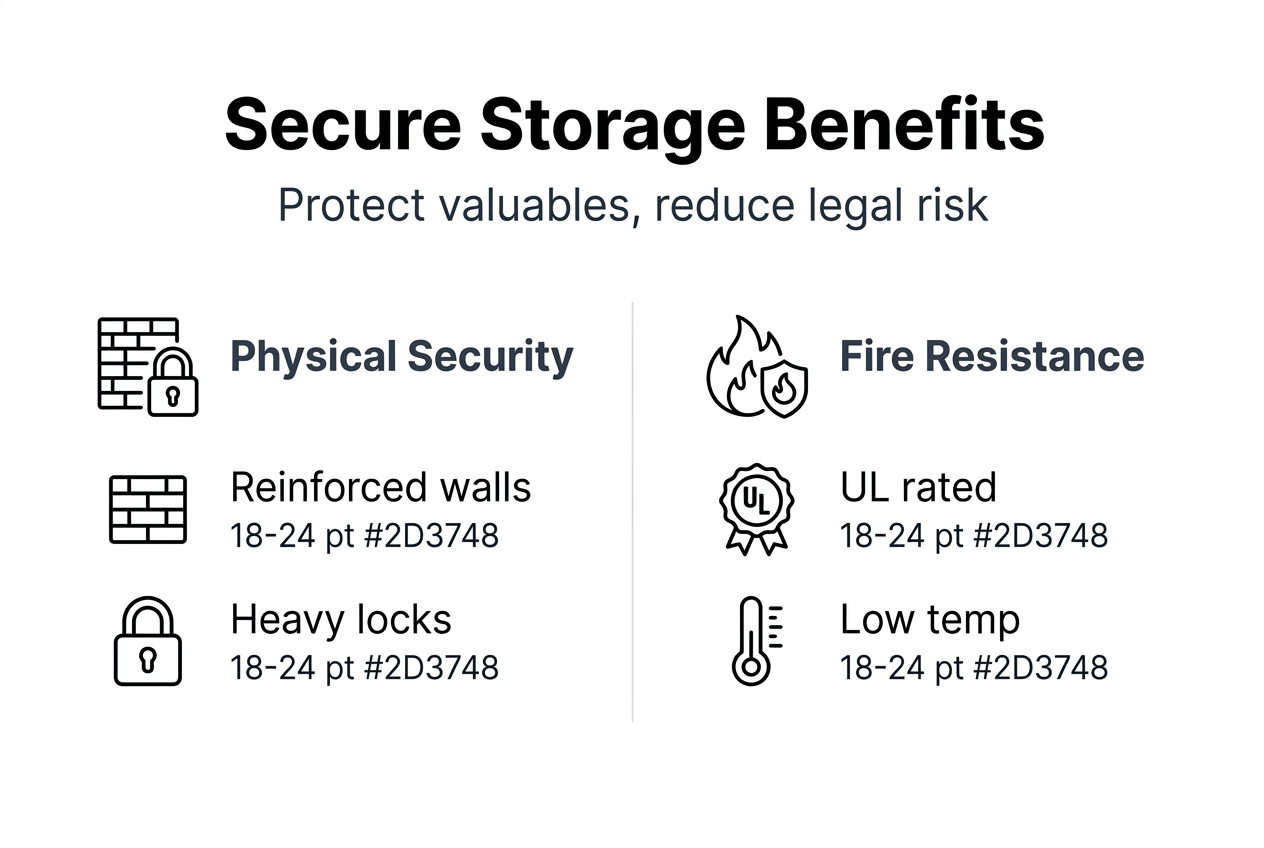
Comprehensive secure storage requires evaluating all three pillars based on your specific circumstances. Home safes in fire-prone areas prioritize heat resistance. Business safes storing cash emphasize burglary protection. Residential collectors need both to protect valuable items from multiple threats.
Physical security features that prevent theft
Robust construction forms the foundation of effective theft prevention. Quality safes use solid steel walls measuring at least 1/4 inch thick. Multiple relockers automatically engage if someone attacks the primary locking mechanism. Heavy weight makes removal difficult without equipment.
UL 687 testing validates burglary resistance by simulating real-world attack scenarios. Safes must withstand drilling, prying, cutting, and other forced entry methods for specified durations. Higher ratings indicate greater resistance to sophisticated attacks.
Lock mechanisms represent critical security points requiring specialized protection:
- Hardened steel plates shield against drilling attacks targeting the lock assembly
- Anti-pry construction prevents crowbar insertion between door and frame
- Glass relockers activate when someone breaks the lock, permanently securing contents
- Combination locks resist manipulation better than many electronic alternatives
Pro Tip: Choose safes with mechanical key overrides to avoid lockouts from digital or biometric failures that require expensive emergency access services.
How safes prevent theft involves multiple defensive layers working together. A single weak point compromises the entire system. Thin walls collapse under prying pressure. Inadequate bolt work allows door removal despite intact locks. Poor mounting permits thieves to carry safes away for leisurely attacks.
Weight serves as a passive but powerful deterrent. Safes exceeding 500 pounds require multiple people or equipment to move. Proper anchoring to floors or walls multiplies this protection. Even small wall safes become extremely difficult to remove when correctly installed behind drywall and secured to studs.
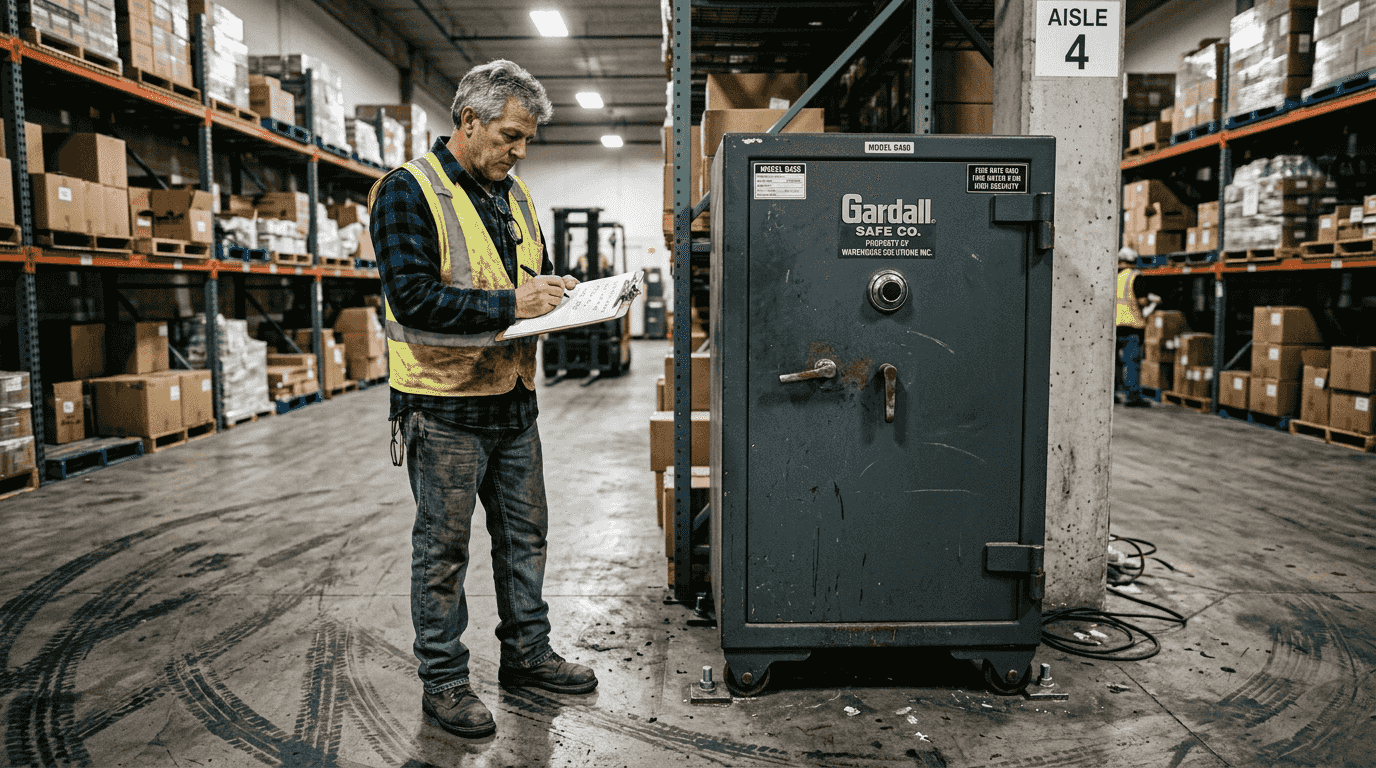
Burglary-resistant safe examples demonstrate how construction quality directly impacts security. Premium models feature continuous welds, reinforced hinges, and multiple layers of steel composite materials. Budget alternatives use thinner materials and simpler locks that experienced thieves bypass quickly.
Fire resistance and certification standards
Fireproof safes protect contents by maintaining internal temperatures below critical damage thresholds during fires. UL 72 testing exposes safes to extreme heat while monitoring internal conditions. Paper documents char at 350°F, requiring safes to stay cooler despite external temperatures exceeding 1700°F.
Fire ratings indicate protection duration under standard fire conditions:
| Rating | Protection Duration | Internal Temp Limit | Best For |
|---|---|---|---|
| 30 minute | 30 minutes | 350°F | Basic document protection |
| 1 hour | 60 minutes | 350°F | Standard home and office use |
| 2 hour | 120 minutes | 350°F | High-value document storage |
| 3 hour | 180 minutes | 350°F | Maximum paper protection |
Digital media requires even lower internal temperatures for survival. Hard drives, USB devices, and memory cards fail at temperatures well below 350°F. Specialized media safes maintain internal conditions under 125°F to preserve electronic storage devices.
Fire protection relies on insulation materials absorbing and dissipating heat. Common materials include:
- Concrete and gypsum composites that release moisture as they heat, cooling contents
- Ceramic fiber insulation providing superior heat resistance in compact spaces
- Expanded perlite offering lightweight but effective thermal barriers
Pro Tip: Fire safes without burglary resistance still protect contents from heat but won’t stop theft, requiring dual-rated safes for complete protection.
Fireproof safe selection depends on what you’re protecting and how long fires typically burn in your area. Urban areas with quick fire department response may require only 30-minute ratings. Rural locations with delayed emergency services benefit from extended protection periods.
Fire resistant safe buying guides help match ratings to specific needs. Document storage for legal papers, titles, and certificates needs 1-hour minimum protection. Irreplaceable photographs and family records justify 2-hour ratings. Businesses with extensive paper records often choose 3-hour protection.
Fireproof filing cabinets offer fire protection for larger document volumes while maintaining organized access. These units provide similar UL 72 ratings but with drawer configurations rather than vault-style doors.
Access control technology integration
Modern locking technologies enhance convenience and security when properly implemented. Biometric locks grant access through fingerprint or retinal scans, eliminating combination memorization. Digital keypads allow quick entry with programmable codes that change easily when needed.
Biometric systems offer unique advantages for frequent access situations:
- Fingerprint recognition provides instant entry without keys or combinations
- Multiple user enrollment lets family members or employees access contents
- Audit trails track who opened the safe and when
- Failed attempt alerts notify owners of unauthorized access tries
Digital keypad locks balance convenience with reliability. Users change codes instantly without locksmith assistance. Some models offer time-delay features preventing forced entry during robberies. Battery-powered operation means no external wiring required.
Pro Tip: Regularly test backup access methods to ensure emergency entry remains possible when primary systems fail.
Mechanical key overrides provide critical redundancy. Electronic systems fail when batteries die unexpectedly. Biometric readers malfunction from dust, moisture, or component degradation. Backup keys enable access when technology fails, avoiding expensive emergency locksmith services.
Technology layers add security when complementing strong physical safe construction. Electronic locks on thin-walled safes provide false security. Advanced access controls on UL-rated safes create formidable protection combining physical and digital barriers.
Integration considerations include power requirements, environmental conditions, and user technical comfort. Battery-powered systems need regular replacement schedules. Humid environments damage electronic components over time. Users uncomfortable with technology may prefer traditional combination locks.
Common misconceptions about secure storage
Many buyers confuse fireproof and theft-proof capabilities, assuming one safe handles both threats. Fire safes focus exclusively on heat resistance, often using lightweight construction vulnerable to theft. Burglary safes emphasize physical security but provide no fire protection.
Frequent misconceptions that lead to poor purchasing decisions:
- All safes protect equally against theft and fire damage
- Electronic locks provide better security than mechanical combinations
- Heavier safes always offer superior protection regardless of construction
- Expensive safes automatically include all necessary certifications
- Home safes never require professional installation services
Buyers often expect universal protection from single solutions. This assumption leaves specific vulnerabilities unaddressed. Jewelry collectors need theft protection more than fire resistance. Document storage prioritizes fire safety over burglary features.
Technology reliance creates vulnerabilities when users skip mechanical backups. Dead batteries, electronic failures, and forgotten codes cause lockouts. Emergency access becomes expensive without alternative entry methods.
Price alone doesn’t guarantee quality or appropriate protection. Expensive decorator safes look impressive but lack security certifications. Budget models with proper ratings sometimes outperform costly alternatives missing essential features.
Installation quality matters as much as safe construction. Unanchored safes become portable theft targets. Improper mounting techniques compromise fire and burglary resistance. DIY installations often miss critical anchoring points or use inadequate hardware.
Clear understanding of these misconceptions helps buyers avoid costly mistakes. Proper knowledge leads to better secure storage decisions matching actual needs rather than assumed capabilities.
Risk assessment for selecting secure storage
Effective secure storage begins with systematic risk evaluation. Understanding your specific threats guides appropriate safe selection and placement.
Follow this assessment framework:
- Evaluate your environment for crime rates, fire risks, and natural disaster potential using local statistics and historical data
- Identify valuables requiring protection including jewelry, documents, digital media, cash, and firearms with their replacement costs
- Prioritize threats based on likelihood and potential impact to focus protection efforts where most needed
- Match UL certifications to identified risks, choosing burglary ratings for high-crime areas and fire ratings for fire-prone regions
- Consider access control suitable for all authorized users, balancing security with usability for family members or employees
Location significantly impacts risk profiles. Urban areas face higher burglary rates requiring stronger physical security. Wildfire zones demand extended fire protection periods. Flood-prone regions need waterproof safes protecting against moisture damage.
Asset types determine necessary protection features. Paper documents need 350°F internal temperature limits. Digital media requires 125°F maximums. Jewelry and precious metals withstand higher temperatures but need burglary resistance.
Choosing safes for home security involves balancing multiple factors including budget constraints, available space, and usage frequency. Daily access situations favor electronic locks. Infrequent opening allows mechanical combinations.
Types of safes for business differ from residential needs through higher capacity requirements, multiple user access, and regulatory compliance considerations. Commercial settings often need depository features for cash handling or drop slots for after-hours deposits.
Professional installation planning ensures proper anchoring and concealment. Floor safes require concrete work. Wall safes need stud location and adequate depth. Freestanding models demand appropriate anchoring to prevent removal.
Comparison of safe types with pros and cons
Different safe designs address specific security needs through varied construction and features. Understanding these differences helps match solutions to requirements.
| Safe Type | Fire Resistance | Burglary Protection | Installation Complexity | Typical Applications |
|---|---|---|---|---|
| Wall Safe | Low to None | Moderate | Moderate | Small valuables, jewelry, documents |
| Floor Safe | High | Very High | High | Cash, documents, precious metals |
| Burglary Safe | Low to Moderate | Very High | Low to Moderate | Jewelry, cash, firearms |
| Fire Safe | Very High | Low | Low | Documents, digital media, photos |
Wall safes maximize space efficiency while maintaining concealment. Installation between wall studs hides safes behind pictures or mirrors. Limited interior space restricts large item storage. Fire protection suffers from minimal insulation thickness. Theft resistance depends entirely on proper installation depth and anchoring.
Floor safes provide superior protection through concrete encasement. Installation requires cutting floors and pouring concrete surrounds. Retrieval becomes nearly impossible without owner cooperation. High capacity accommodates larger items and document volumes. Both fire and burglary resistance excel when properly installed.
Burglary safes prioritize theft prevention through heavy construction and advanced locking systems. Weight exceeding 500 pounds deters removal attempts. Thick steel walls and reinforced doors resist cutting and prying. Fire protection varies widely, requiring separate ratings for heat resistance.
Fire safes focus exclusively on temperature control through thick insulation. Lightweight construction makes theft relatively easy without anchoring. Lower cost than dual-rated alternatives attracts budget-conscious buyers. Document protection remains excellent despite minimal burglary resistance.
Key considerations when comparing options:
- Dual-rated safes combining fire and burglary protection cost more but address multiple threats
- Installation complexity affects total ownership cost beyond purchase price
- Space constraints limit certain safe types regardless of protection needs
- Usage frequency favors accessible locations over maximum concealment
Bridging understanding to practical application
Translating secure storage knowledge into effective protection requires proper installation, maintenance, and integration with broader security measures.
Installation quality determines whether safes perform as designed. Professional installers ensure adequate anchoring preventing removal. Proper placement balances accessibility with concealment. Structural assessments verify floors and walls support safe weight without damage.
Regular maintenance extends reliability and prevents failures:
- Lubricate locking mechanisms annually using manufacturer-recommended products
- Test backup access methods quarterly to confirm emergency entry capability
- Replace electronic lock batteries on schedule before they fail
- Inspect door seals and gaskets for damage compromising fire protection
Layered security multiplies protection effectiveness. Combining safes with alarm systems creates redundant barriers. Surveillance cameras document attempted break-ins for law enforcement. Motion sensors alert owners to unauthorized access attempts.
Homes with layered security report 50% fewer break-ins compared to single-method approaches, demonstrating how multiple barriers deter criminals more effectively than standalone solutions.
Integration amplifies individual component effectiveness. Safes protect valuables when perimeter security fails. Alarms summon help when someone bypasses physical barriers. Cameras provide evidence for insurance claims and criminal prosecution.
Professional security consultations optimize system design. Experts identify vulnerabilities overlooked by homeowners. Custom recommendations match protection levels to actual risks. Installation supervision ensures proper implementation of security plans.
Understanding secure storage importance extends beyond product selection to comprehensive security strategies. Isolated safes provide limited protection. Integrated systems addressing multiple threats create robust defense.
Ongoing education keeps security current with evolving threats. New attack methods require updated protections. Technology advances offer improved features. Regular reviews ensure systems remain effective as circumstances change.
Explore secure storage solutions at Safes and Security Direct
Applying this knowledge becomes simple with expert guidance at Safes and Security Direct. Browse extensive safe collections matching every protection need from basic document storage to maximum security vaults.
Detailed safe selection guides walk you through choosing appropriate certifications and features for your specific situation. Compare fire resistance ratings, burglary protection levels, and access control options side by side.
Fireproof safe guides help match temperature ratings to your valuable documents and digital media. Professional support staff answer questions about installation, maintenance, and optimal placement for maximum protection. Whether securing home valuables or business assets, you’ll find solutions backed by trusted certifications and expert recommendations.
Frequently asked questions
What is the difference between a fireproof safe and a burglary safe?
Fireproof safes protect contents from heat damage through thick insulation maintaining internal temperatures below 350°F during fires. Burglary safes emphasize theft resistance using heavy steel construction and advanced locks tested under UL 687 standards. Neither provides complete protection alone, requiring dual-rated safes for comprehensive security.
How important is professional installation for secure storage?
Professional installation ensures proper anchoring preventing thieves from removing safes entirely. Experts identify optimal placement balancing accessibility with concealment. Improper DIY installation compromises even the best safe’s protection by creating removal opportunities or structural damage.
Can biometric locks completely replace traditional keys?
Biometric locks offer excellent convenience through instant fingerprint access but require mechanical key overrides for reliability. Electronic components fail from battery depletion, moisture damage, or malfunction. Backup keys prevent expensive emergency locksmith services when technology fails.
How do I determine what fire rating I need?
Assess fire department response times in your area and what you’re protecting. Urban locations with quick response need 30 to 60-minute ratings. Rural areas with delayed emergency services require 2 to 3-hour protection. Digital media needs lower internal temperatures than paper documents.
Recommended
- Importance of Secure Storage – Protecting What Matters – Safes and Security Direct
- How to secure business premises effectively in 2026 – Safes and Security Direct
- Top Asset Protection Methods 2026 for Secure Homes – Safes and Security Direct
- Why Invest in High Security Solutions – Safes and Security Direct