

Importance of Secure Storage – Protecting What Matters
Securing valuables often means more than just hiding them out of sight. For homeowners and small business owners, relying on a basic lock leaves irreplaceable documents, electronics, and cash at risk when disaster strikes. Choosing secure storage solutions that combine strong physical barriers with fire resistance, smart access controls, and encryption for digital assets can mean the difference between swift recovery and total loss. Here you’ll discover key factors to truly safeguard what matters most.
Table of Contents
- What Secure Storage Means For Your Assets
- Types Of Secure Storage Solutions Explained
- Key Security Features And Technologies Used
- Real-World Risks And Consequences Of Poor Storage
- Best Practices For Choosing And Using Secure Storage
Key Takeaways
| Point | Details |
|---|---|
| Importance of Secure Storage | Secure storage protects valuables from theft, fire, and environmental hazards while enhancing recovery capability after a disaster. |
| Understanding Storage Types | Choose storage solutions that fit your specific assets—physical safes for cash and jewelry, fire-rated safes for documents, and encrypted cloud storage for digital files. |
| Assessing Risk and Need | Identify what you need to store, the associated risks, and select storage that matches your risk tolerance and asset importance. |
| Ongoing Maintenance | Regularly test and maintain storage systems and document their contents for effective recovery and security. |
What Secure Storage Means for Your Assets
Secure storage goes far beyond locking something in a drawer. It means creating a physical and operational system that protects your valuables from theft, fire, natural disasters, and degradation over time.
For homeowners and business owners, secure storage directly impacts your ability to recover from loss. Without it, your irreplaceable documents, cash, jewelry, or equipment become vulnerable to complete loss.
Understanding the Core Purpose
Secure storage serves two fundamental roles:
- Protects against theft and unauthorized access through barriers, locking mechanisms, and reinforced construction
- Defends against fire and environmental damage using fire-resistant materials and climate control
When you invest in proper storage, you’re investing in asset recovery capability—the ability to rebuild after a disaster.
What Makes Storage Truly Secure
Security isn’t about a single feature. It’s a combination of factors working together.
Physical construction matters. A quality safe uses reinforced steel, tamper-resistant locks, and heavy-gauge materials designed to withstand forced entry attempts. The weight alone—often 400 to 1,000 pounds or more—deters casual theft and makes moving the unit nearly impossible.
Fire rating is equally critical for homeowners and small business owners. Storage rated for specific heat exposure (like 1-hour or 2-hour fire ratings) maintains safe internal temperatures even when surrounding temperatures reach extreme levels. This protects documents, electronics, and valuables from heat damage.
True secure storage combines physical security against theft with protection from fire and environmental threats.
Location and installation method also determine effectiveness. A bolted-down safe in a closet provides better security than one sitting on a shelf. Proper asset protection strategies incorporate placement in less obvious locations and secure anchoring to prevent removal.
Digital Assets Require Different Security
If you store digital valuables, security means something slightly different. Understanding how to secure your wallet involves protecting access credentials and private keys from theft or loss.
Why This Matters to You
You likely have items you cannot replace—family documents, business records, irreplaceable photographs, or valuable collectibles. Standard storage (a dresser, filing cabinet, or closet shelf) offers almost no protection.
Secure storage means:
- Recovery of documents and records after a fire
- Protection of cash and valuables from theft
- Preservation of important contracts and deeds
- Peace of mind knowing your most valuable items are protected
For business owners, this extends to inventory, customer data, financial records, and confidential information that drives your operation.
Pro tip: Calculate the true replacement cost of what you store—including irreplaceable items with sentimental value—then select storage with a fire and security rating that matches your risk level.
Types of Secure Storage Solutions Explained
Secure storage comes in many forms, each designed for different assets and risk levels. Understanding your options helps you choose the right solution for what you need to protect.
The most common solutions fall into physical, digital, and hybrid categories. Each has distinct advantages depending on whether you’re protecting documents, cash, jewelry, electronics, or digital assets.
Physical Storage Solutions
Physical safes remain the gold standard for homeowners and small business owners protecting tangible valuables.
Home safes are compact units designed for residential use. They typically range from 15 to 100 pounds and fit in closets, under beds, or mounted to walls. These work well for documents, cash, and jewelry but offer limited capacity.
Floor safes are larger, bolted-down units providing superior security. Weighing 400 to 1,000 pounds or more, they’re difficult to move and resist forced entry. They offer better fire protection and capacity for business records or larger collections.
Wall safes mount directly into walls, offering hidden storage with minimal floor space impact. They’re ideal for documents and smaller valuables but provide less fire protection than floor models.
Understanding what makes burglary-resistant safes effective helps you select the right security rating for your needs.
Fire-Resistant Storage
Fire-rated safes maintain safe internal temperatures during intense heat exposure. A 1-hour fire rating means the contents stay below critical temperatures for at least one hour at exterior temperatures of 1,200 degrees Fahrenheit.
These solutions protect:
- Important documents and deeds
- Irreplaceable photographs
- Electronics and hard drives
- Backup storage media
Digital and Cloud Storage
For digital assets and data, security means encryption and access control. Cloud storage solutions store your data across multiple secure data centers with redundancy and encryption built in.
These offer flexibility and remote access but require strong passwords and two-factor authentication.
The right storage solution matches your specific assets and risk tolerance—not every solution works for every situation.
Hybrid Approaches
Many owners use combination strategies. A physical safe holds critical documents and irreplaceable items, while cloud storage backs up digital files and provides redundancy.
This approach provides maximum protection across different asset types and scenarios.
To help clarify which storage solution fits different needs, here’s a concise comparison:
| Storage Type | Best For | Typical Capacity | Security Considerations |
|---|---|---|---|
| Home Safe | Personal documents, cash | Small to medium | Easy placement, moderate fire resistance |
| Floor Safe | Business assets, valuables | Large | High security, heavy, top fire protection |
| Wall Safe | Jewelry, hidden papers | Small | Concealed, limited fire protection |
| Digital/Cloud Storage | Electronic records, backups | Variable (scalable) | Encryption, access control, strong passwords |
| Hybrid Solution | Multiple asset types | Combined | Combines physical and digital defense |
Pro tip: Match your storage solution to your specific assets—use fire-rated safes for documents and electronics, physical safes for cash and jewelry, and encrypted cloud storage for digital files and backups.
Key Security Features and Technologies Used
Modern secure storage relies on multiple layers of protection working together. Understanding these technologies helps you evaluate products and make informed decisions about what will truly protect your valuables.
Security features fall into three main categories: physical barriers, access control systems, and data protection technologies. Each plays a distinct role in keeping your assets safe from theft, fire, and unauthorized access.
Physical Security Features
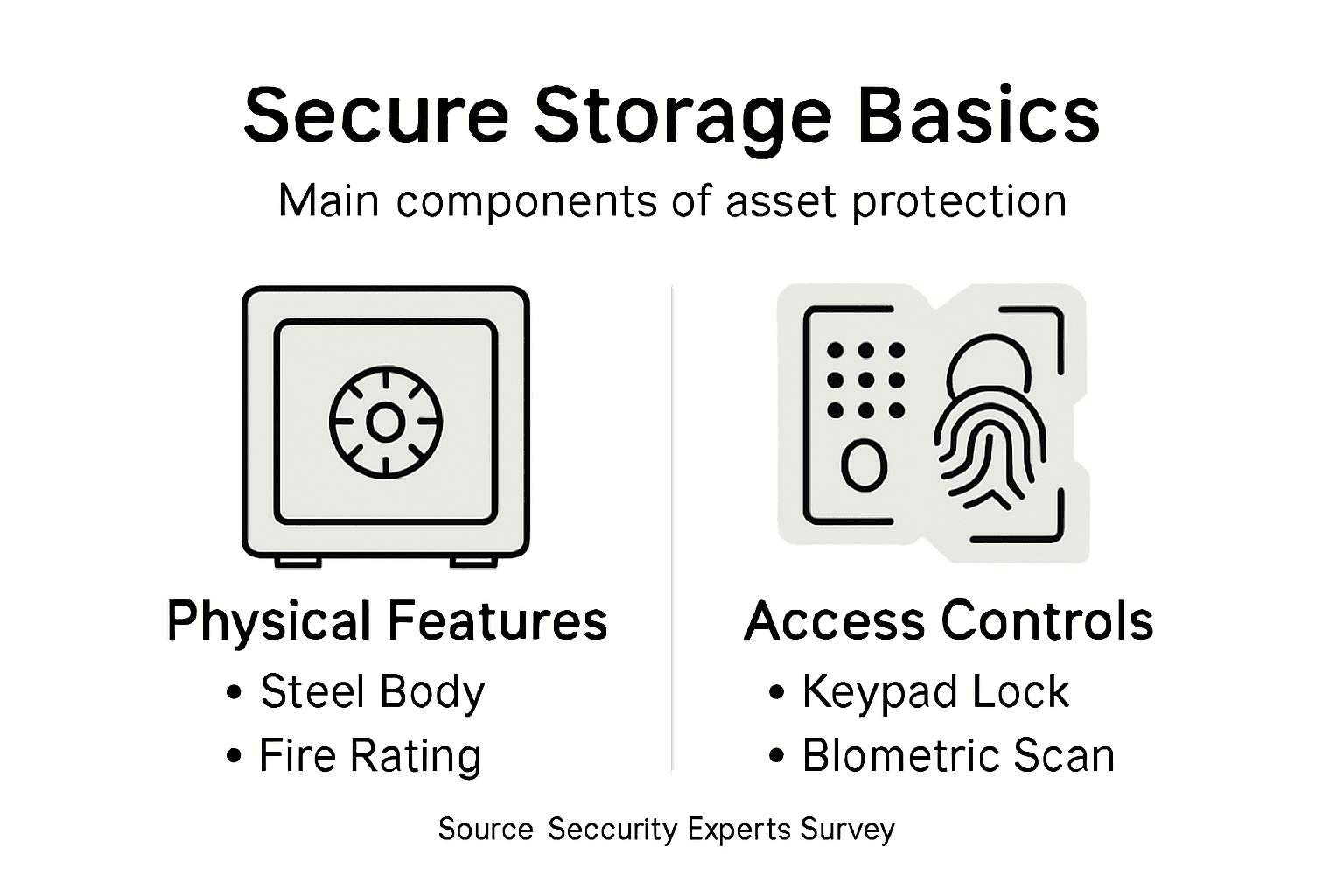
Reinforced steel construction forms the foundation of secure storage. Quality safes use heavy-gauge steel (typically 3 to 5 millimeters thick) that resists prying, drilling, and cutting attempts.
Locking mechanisms range from traditional key locks to electronic keypads and biometric systems. Electronic locks offer convenience and audit trails showing who accessed the safe and when.
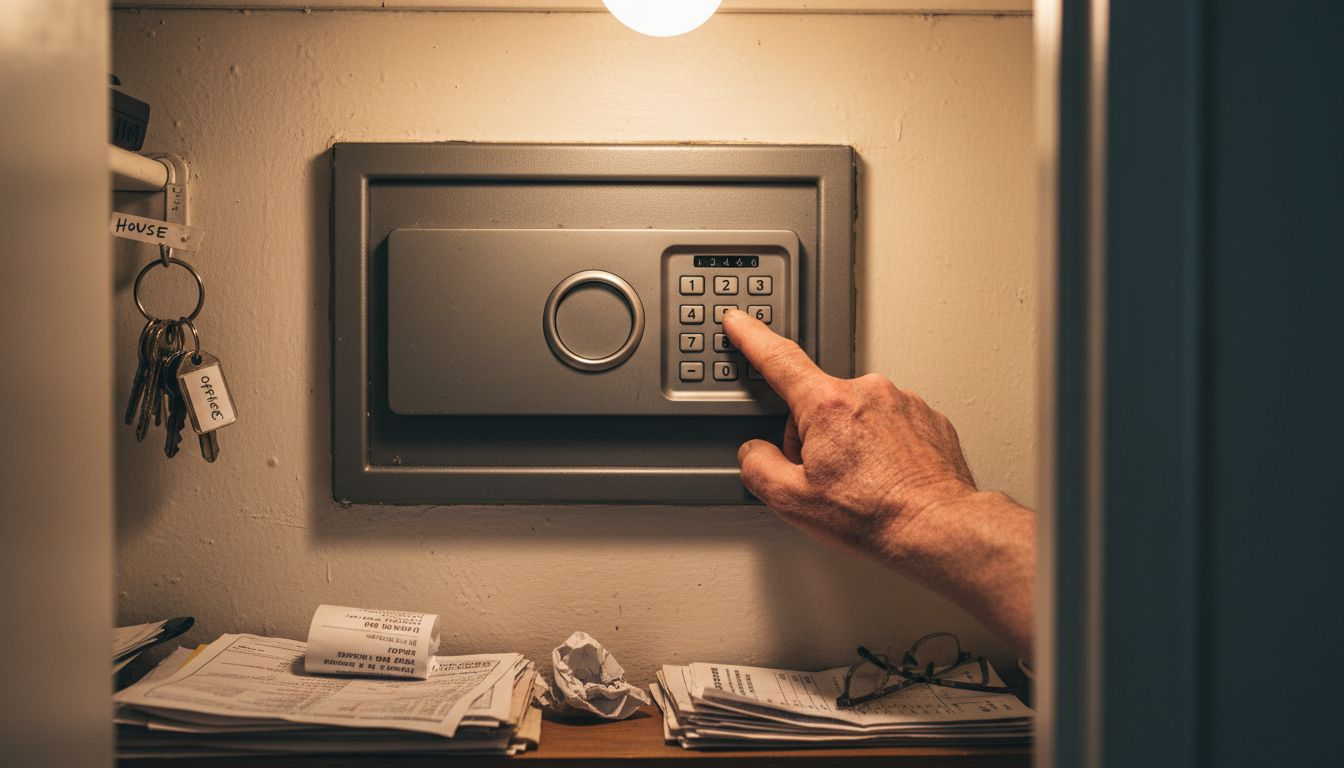
Bolts and hinges matter too. Anti-pry bolts prevent forced entry, while hidden hinges eliminate weakpoints attackers exploit.
Fire Protection Technology
Fire-resistant safes use layered insulation materials that maintain safe internal temperatures even during extreme heat. These typically include:
- Gypsum or mineral-based insulation layers
- Air gaps that slow heat transfer
- Specially designed seals that expand when heated
This combination keeps internal temperatures below 170 degrees Fahrenheit even when exterior temperatures exceed 1,200 degrees Fahrenheit.
Access Control and Smart Technology
Modern safes incorporate smart features for improved security and convenience. Smart safe technology includes electronic locking, audit logging, and remote monitoring capabilities.
These systems track access attempts, lock automatically after failed entries, and can alert you to unauthorized tampering.
Data Encryption for Digital Assets
For digital storage, encryption is critical. Strong encryption algorithms like Argon2id and bcrypt protect sensitive information from theft and unauthorized access.
Layered security—combining physical protection, smart access control, and encryption—provides comprehensive defense against multiple threat types.
Key Management and System Integrity
Secure storage systems require proper key management practices to maintain encryption effectiveness. This includes secure key generation, storage in hardware security modules, and lifecycle management procedures.
Without strong key management, even the best encryption becomes vulnerable.
Effective secure storage uses:
- Multiple independent locking mechanisms
- Fire-resistant insulation with proven ratings
- Electronic access control with audit trails
- Encrypted data storage with secure key management
- Bolting systems that prevent unit removal
Pro tip: Verify fire ratings and security certifications before purchasing—look for UL or equivalent third-party testing that confirms the safe’s performance claims.
Here’s a summary of critical security technologies and how they improve asset protection:
| Security Feature | Defensive Role | Business Impact |
|---|---|---|
| Reinforced Steel Safe | Resists forced entry | Deterrent against burglary |
| Fire-Resistant Insulation | Protects from heat/fire | Minimizes asset loss in disasters |
| Smart Electronic Locks | Tracks and audits access | Easier compliance, accountability |
| Data Encryption | Secures digital information | Guards customer and financial records |
| Key Management | Maintains access integrity | Reduces risk of unauthorized intrusion |
Real-World Risks and Consequences of Poor Storage
Poor storage decisions create cascading problems that extend far beyond the immediate loss of items. The consequences ripple through your finances, your business operations, and sometimes your legal standing.
Homeowners and business owners often underestimate how quickly problems develop when storage security fails. A single incident can trigger months of recovery efforts and long-term damage that’s difficult to reverse.
Financial Impact of Theft
Theft from inadequate storage hits your wallet twice. First comes the direct loss of the stolen items themselves.
Then comes the hidden cost: replacing irreplaceable documents, recovering from identity theft if personal information was stolen, and covering increased insurance premiums after filing a claim.
For business owners, theft means lost inventory, damaged customer trust, and operational disruption while investigating the breach.
Fire Damage Without Protection
Fire destroys what theft cannot claim. Documents, photographs, and irreplaceable records turn to ash in minutes without fire-resistant storage.
Recovery becomes incredibly expensive:
- Rebuilding business records from backups
- Reissuing important documents through government agencies
- Reconstructing financial history for tax purposes
- Replacing electronics and equipment
Some losses cannot be replaced at any price—family photographs, handwritten letters, and irreplaceable collections are gone forever.
Data Breaches and Digital Losses
Inadequate storage security creates pathways for cyberattacks including ransomware, unauthorized access, and data theft. Poor cloud configurations and weak access controls expose sensitive information.
The consequences extend beyond financial loss. Regulatory penalties apply when customer data or protected information is compromised. Your business reputation suffers as customers lose trust.
Operational and Compliance Risks
Lost or damaged documents create operational chaos. Business decisions stall without access to contracts, agreements, or historical records.
Neglecting storage security leads to insider threats, malware infections, and compliance violations that can trigger legal consequences and fines.
Industries with regulated data—healthcare, finance, legal—face particularly severe penalties for inadequate storage practices.
Poor storage creates compounding losses: the initial incident, recovery costs, legal liability, and long-term reputation damage combine to create devastating financial and operational impact.
Recovery Complexity
Recovery from storage failure is expensive and time-consuming. You’ll spend months locating backups, reconstructing information, and restoring operations.
Some damage cannot be recovered regardless of effort or expense.
The real cost of poor storage includes:
- Direct replacement costs
- Insurance deductibles and claim denials
- Legal and compliance penalties
- Lost business revenue during recovery
- Damaged customer relationships
- Increased security costs to prevent future incidents
Pro tip: Document what you store and estimate its replacement cost—this often reveals the true value of investing in secure storage and the real cost of losing it.
Best Practices for Choosing and Using Secure Storage
Choosing the right secure storage solution requires careful evaluation of your specific needs, risks, and how you’ll actually use the system. Rushing this decision often leads to purchasing storage that doesn’t fit your situation or that you won’t use consistently.
The best storage system is one you’ll maintain and use properly. A sophisticated safe sitting unused in a corner provides zero protection.
Assessing Your Actual Needs
Start by identifying what you need to store and why. Different items require different protection levels.
Documents and records need fire protection and security from theft. Cash and jewelry need burglary resistance primarily. Electronics need climate control to prevent degradation. Each asset category drives different storage requirements.
Write down:
- What items you store
- Why they matter (irreplaceable, valuable, legally required)
- What threatens them (theft, fire, water damage, degradation)
- How often you access them
- Who needs access besides you
This inventory reveals your true storage needs instead of guessing.
Matching Storage to Risk Level
Choosing storage methods should align with your specific risk tolerance and what you’re protecting. A homeowner in a fire-prone area needs different storage than one in an urban theft hotspot.
Evaluate the threats you actually face. Research crime rates in your area, check flood maps for your property, and consider fire risk from surrounding structures.
Then select storage with appropriate ratings for those specific threats.
Implementation and Access Control
Location matters significantly. Bolting storage in an inconvenient location makes it less likely you’ll use it regularly. But placing it in an obvious location defeats security purposes.
Find the middle ground: accessible enough that you’ll actually use it, but not immediately visible to casual visitors or burglars.
Strong password management and multi-factor authentication protect digital storage. For physical safes, limit who knows the combination and change it if someone leaves your household.
Maintenance and Regular Use
Secure storage systems require ongoing attention. Test locks regularly, maintain climate control, and verify backup systems still function.
For digital storage, applying cryptographic protections and conducting periodic security assessments ensures data remains protected as threats evolve.
Effective storage isn’t a one-time purchase—it’s an ongoing practice of consistent security habits and regular maintenance.
Documentation and Recovery Planning
Record what you store and where. Create an inventory with photographs of valuable items for insurance purposes.
Store backups of critical documents separately from originals. Keep encryption passwords in a secure location different from encrypted data.
Develop a recovery plan before disaster strikes. Know how you’d rebuild if primary storage failed.
When selecting storage, prioritize:
- Appropriate security and fire ratings for your specific threats
- Convenient access so you’ll maintain consistent habits
- Proper installation and bolting in secure locations
- Backup and redundancy for critical items
- Regular testing and maintenance schedules
Pro tip: Choose storage that fits your actual usage patterns—the best safe specifications mean nothing if you avoid using it because it’s inconvenient or poorly located.
Protect Your Most Valuable Assets with Trusted Secure Storage Solutions
The article highlights the critical need for secure storage that guards your irreplaceable items from theft, fire, and environmental damage. If you value protection for your documents, jewelry, digital files, and business records, acting today can prevent devastating losses tomorrow. Understanding terms like fire rating, burglary resistance, and access control is vital, but only the right products deliver peace of mind.
Explore our extensive range of safes and security products tailored to those exact concerns at Safes and Security Direct. Whether you need fire-resistant floor safes, compact wall safes, or the latest smart access locking systems, our selection helps you build a comprehensive defense strategy. Don’t wait until risk becomes reality. Secure what matters most now by visiting our site and find the perfect solution for your home or business.
Learn more about how to choose the right safe and enhance your asset protection with expert guidance available at Safes and Security Direct.
Frequently Asked Questions
What is secure storage?
Secure storage refers to creating a physical and operational environment designed to protect valuables from theft, fire, natural disasters, and degradation over time.
Why is secure storage important for homeowners and businesses?
Secure storage directly impacts your ability to recover from loss. It protects irreplaceable documents, cash, jewelry, and equipment from theft and damage, ensuring peace of mind and asset recovery capability after disasters.
What are the key features to look for in a secure storage solution?
Key features include reinforced steel construction, tamper-resistant locks, fire-resistant materials, and effective climate control. The location and installation method are also crucial for enhancing security.
How do I know which type of secure storage is best for my needs?
Assess your specific storage needs by identifying the items you want to protect and understanding the risks they face. Choose a storage solution that matches the protection level required for your most valuable assets.
Recommended
- 7 Key Benefits of Smart Safes for Secure Asset Protection – Safes and Security Direct
- Why Invest In a Safe for Valuables: Real Protection – Safes and Security Direct
- How Safes Prevent Theft: Real Protection Explained – Safes and Security Direct
- What Is a Security Safe and Why It Matters – Safes and Security Direct