

What Is a Security Safe and Why It Matters
Finding reliable ways to safeguard your valuables often feels overwhelming, whether you own a cozy home or run a small business. The worry of theft, fire, or unexpected disasters is real and can disrupt your sense of control. Understanding the differences in safe types and what truly sets a security safe apart gives you the power to protect important documents, cash, and cherished items with confidence and peace of mind.
Table of Contents
- Defining A Security Safe And Its Core Purpose
- Types Of Security Safes For Homes And Businesses
- Essential Features And How Safes Function
- Certifications, Ratings, And Global Standards
- Selecting The Right Safe For Your Needs
- Common Mistakes And Security Risks To Avoid
Key Takeaways
| Point | Details |
|---|---|
| Security Safes Protect Valuables | Security safes serve as robust barriers against theft, fire, and environmental damage, ensuring the safety of irreplaceable items. |
| Types of Safes Address Unique Needs | Safes vary in type—such as wall, floor, and fireproof safes—tailored to specific storage and protection requirements for homes and businesses. |
| Understanding Ratings is Essential | Familiarize yourself with safe ratings and certifications, as they provide assurance regarding a safe’s ability to withstand burglary and fire threats. |
| Regular Maintenance and Installation Matter | Proper installation and periodic maintenance of safes are critical to ensure they function effectively and provide the intended security. |
Defining a Security Safe and Its Core Purpose
A security safe is fundamentally a locked, secure container designed to protect your most valuable possessions from theft, fire, and environmental damage. Think of it as a fortress for your important items. Whether you’re storing cash, jewelry, important documents, or sensitive business records, a safe creates a physical barrier that makes theft significantly more difficult and protects irreplaceable items from fire damage when disaster strikes. A secure lockable enclosure uses resistant materials and specialized locking mechanisms to safeguard whatever you place inside, giving you control over access to your most critical possessions.
The core purpose of a security safe goes beyond just hiding things away. It addresses three fundamental security concerns that matter to homeowners and small business owners alike. First, safes deter opportunistic thieves by presenting a time-consuming and noisy obstacle. Most burglars move quickly, and a heavy safe bolted to your floor or wall means they’ll likely move on to easier targets. Second, safes protect against fire by insulating contents with heat-resistant materials. Your documents, photos, and heirlooms can survive temperatures that would destroy them in open air. Third, safes provide psychological peace of mind. When you know your irreplaceable items are secured behind multiple layers of protection, you can focus on running your business or enjoying your home without constant worry about loss. Physical security fundamentals recognize safes as essential components of any comprehensive protection strategy.
What makes a safe different from a locked drawer or cabinet is its construction and resistance design. A quality safe combines heavy gauge steel walls, reinforced locking bolts, anti-pry features, and sometimes fire-resistant insulation. The thickness of the steel, the type of locking mechanism (whether mechanical combination, electronic keypad, or biometric), and the anchoring method all determine how effective the safe is at protecting your contents. For homeowners, understanding why safes provide real protection for valuables helps you make informed decisions about which type suits your situation. Small business owners might prioritize fire resistance for important documents and records, while others focus on burglary resistance for cash or inventory control.
In practice, security safes exist across a spectrum of sizes and purposes. A small home safe might hold jewelry and important documents in a bedroom closet. A floor safe can be concealed under carpet or flooring. A wall safe fits between studs for hidden storage. Commercial-grade safes protect larger quantities of cash, inventory, or sensitive business information. The common thread across all safes is that they provide controlled, predictable security through deliberate design rather than relying on obscurity or hoping nobody finds your valuables.
Pro tip: Place your safe in an inconspicuous location away from obvious spots like bedside tables or office desks, and bolt it securely to the floor or wall so thieves cannot simply carry it away during a break-in.
Types of Security Safes for Homes and Businesses
Security safes come in multiple styles and configurations because different situations demand different solutions. A homeowner protecting family documents and jewelry has completely different needs than a business owner securing cash deposits or inventory. Understanding the main categories helps you identify what actually works for your specific situation. Safes can be categorized by purpose and design, including wall safes, floor safes, fireproof safes, gun safes, and data safes, each engineered for particular protection requirements and space constraints.
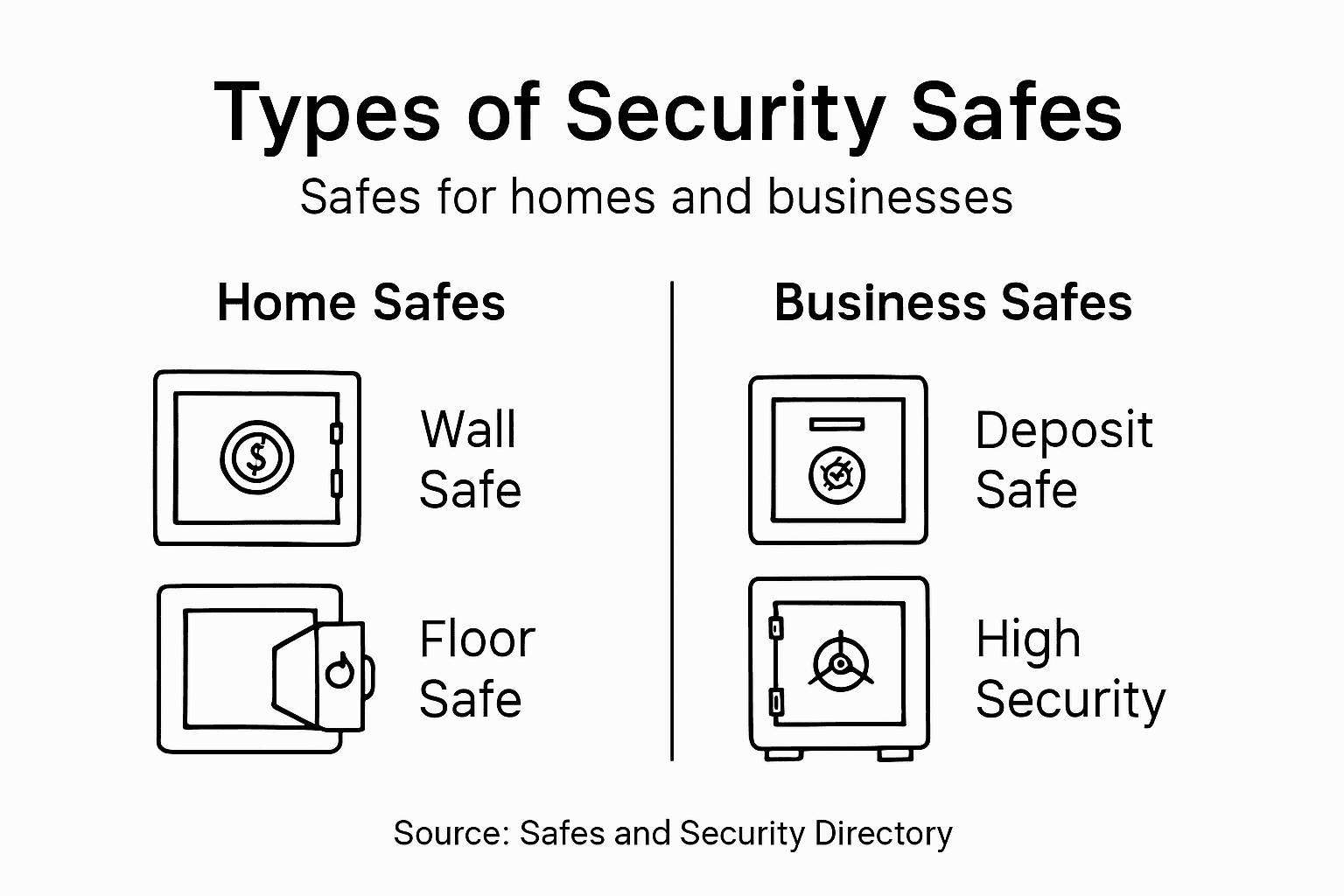
For homes, the most common options include wall safes, floor safes, and freestanding safes. Wall safes hide between studs in your walls, offering concealment and space efficiency for smaller valuables like jewelry, cash, and important documents. Floor safes sit beneath your flooring, harder to detect but requiring professional installation. Freestanding home safes range from small bedside units to larger models that sit in closets or home offices, offering flexibility without permanent installation. Fire-resistant safes represent another critical category for homeowners who want to protect irreplaceable documents and family heirlooms from destruction during a house fire. These use insulating materials like gypsum, concrete, or ceramic to maintain safe interior temperatures even when exterior walls reach extreme heat. When evaluating home safes, you’ll encounter options with different locking mechanisms including combination locks, electronic keypads, or biometric systems that balance security with accessibility based on your preferences.
Businesses typically require larger capacity and more robust protection than homes, which means choosing from deposit safes, time-delay safes, and commercial-grade vault systems. Deposit safes feature small openings that allow customers or employees to insert cash or documents without accessing the entire contents, perfect for retail locations or service businesses. Time-delay safes include a mechanical timer that prevents opening for a set period even if someone has the correct combination or key, effectively stopping thieves from grabbing cash quickly during a robbery. Commercial gun safes protect firearms and ammunition in retail environments or security firms. Data safes specifically protect digital media, backup drives, and electronic storage from both theft and fire damage. Larger businesses often install floor or wall safes similar to home models but with significantly thicker steel and more sophisticated locking systems. The choice between these options depends on the volume of valuables, the type of assets, and how frequently access is needed.
Material construction differs significantly between safe types. Home safes typically use formed steel with thicknesses ranging from 3 to 5 millimeters, providing adequate burglary and fire resistance for most situations. Commercial safes use heavier gauge steel, sometimes 6 to 10 millimeters or thicker, combined with reinforced locking mechanisms and concrete-backed doors. Understanding how to choose the right safe for home security helps you match specific features to your protection needs rather than over-investing in features you don’t need or under-protecting your most important items. Some advanced models now include alarm systems that trigger when someone attempts forced entry, digital locks that track access history, and even integration with smart home security systems for remote monitoring.
Here’s a summary comparison of common safe types for homes and businesses:
| Safe Type | Key Protection Focus | Typical Location | Main Users |
|---|---|---|---|
| Wall Safe | Concealment, theft | Between wall studs | Homeowners |
| Floor Safe | Concealment, theft | Under flooring | Homeowners |
| Freestanding Safe | Theft, fire | Closets, offices | Homeowners |
| Deposit Safe | Cash drop, theft | Front counter | Businesses |
| Time-delay Safe | Armed robbery, theft | Cash room | Retail stores |
| Fireproof Safe | Fire, water | Home/office corner | Both |
| Data Safe | Fire, digital theft | IT/server room | Businesses |
Pro tip: Assess your actual needs before shopping by listing the specific items you plan to store, their total value, and whether fire or burglary protection matters more, then prioritize safes that excel at protecting those particular items rather than choosing based on impressive features you’ll never use.
Essential Features and How Safes Function
A security safe’s effectiveness comes down to its construction and the mechanisms that control access. Think of it as having multiple layers of defense working together. The outer shell typically uses heavy gauge steel that resists cutting tools and prying attempts. Inside, the mechanism includes multiple live-locking bolts that extend into the frame when the door closes, making it nearly impossible to force open even with significant force applied at the hinges or edges. These bolts are called “live-locking” because they actively lock every time you secure the door, rather than relying on a single point of failure. Strong materials like steel and advanced locking mechanisms work together to prevent unauthorized access by creating physical barriers that take time, noise, and specialized tools to breach. For most residential and small business applications, this combination of thick steel walls and reinforced locking bolts stops opportunistic thieves who need quick access and want to avoid drawing attention.
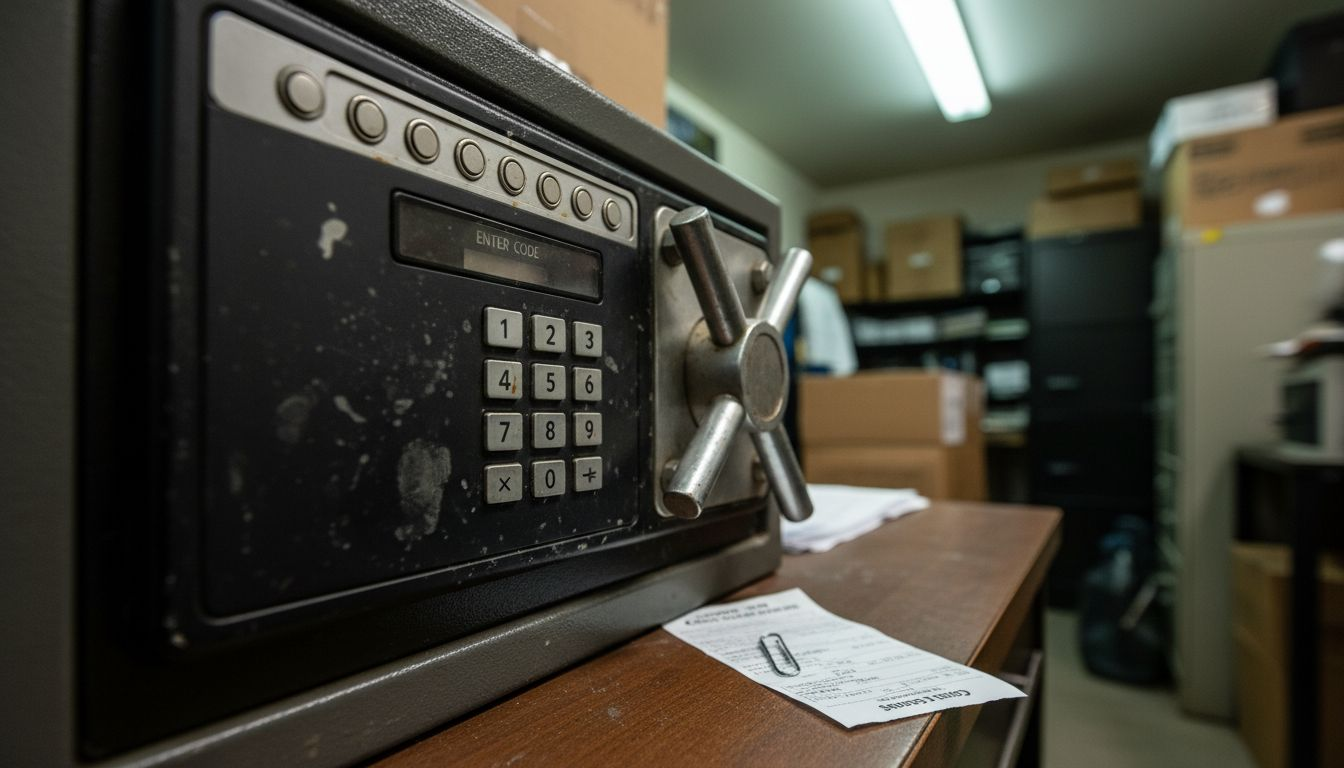
The locking mechanism is where you get to choose between different security approaches based on your priorities. Mechanical combination locks require you to dial in a specific sequence, offering security without electricity or batteries. Electronic keypad locks let you change access codes without rekeying, making them practical when multiple employees need access or when you want to change codes periodically. Biometric locks use fingerprint or facial recognition, eliminating the need to remember combinations or worry about written passwords being discovered. Each type has tradeoffs. Mechanical locks never fail due to dead batteries but require you to remember the combination. Electronic locks offer convenience and audit trails showing who accessed the safe and when, but they need power. Biometric systems provide the fastest access for authorized users but typically cost more upfront. Beyond the primary lock, quality safes often include secondary locking mechanisms as backup in case someone compromises the main lock.
Fire resistance is a critical feature that many homeowners overlook until they think about what truly cannot be replaced. Fireproof safes use thick insulation around the interior, typically made from materials like gypsum board, concrete, or ceramic fibers. When exposed to extreme heat during a fire, this insulation absorbs energy and releases water vapor, keeping the interior significantly cooler than the outside temperature. This allows documents, photographs, and other heat-sensitive items to survive fires that would destroy them if stored in a regular cabinet. The effectiveness depends on the insulation thickness and quality, which is why more expensive fireproof safes generally offer better protection. Water damage during firefighting is another concern, so fireproof safes play an important role in asset protection by protecting irreplaceable documents from both fire and water exposure. Some safes add moisture-resistant seals and drainage systems to address this concern directly.
Additional protective features vary by safe type and price point. Anchor bolts allow you to secure the safe to your floor or wall, preventing thieves from simply picking it up and carrying it away during a break-in. Relocatable designs let you move the safe if needed, though these are less theft-resistant because they cannot be bolted down as securely. Advanced models include alarm systems that trigger if someone attempts forced entry or prying. Smart integration in higher-end safes lets you receive notifications on your phone if someone tries to open the safe, and some allow remote access verification through connected cameras. Anti-tampering features like trap doors that lock permanently if someone attempts to drill through the safe prevent thieves from bypassing the lock mechanism entirely.
The real function of a safe comes down to creating friction and time. A burglar breaking into a home has minutes, not hours. A safe that takes 15 minutes of loud drilling and prying to breach often means the thief moves to an easier target. Fire creates urgency measured in seconds, so insulation that maintains survivable temperatures for documents serves a completely different protective purpose. Understanding which threats matter most to you helps you prioritize features that deliver real protection rather than features that look impressive.
Pro tip: Test any electronic lock thoroughly before fully committing valuables to the safe, and keep a written backup of your combination stored separately from the safe itself in case you forget it or the electronic system fails.
Certifications, Ratings, and Global Standards
When you’re shopping for a security safe, you’ll encounter ratings and certifications that might look like alphabet soup at first glance. These designations actually tell you something concrete about how well a safe performs against specific threats. A safe labeled as having a certain burglary rating has been tested under controlled conditions to verify it can resist break-in attempts for a set amount of time. Fire ratings indicate how long the interior temperature stays below a critical threshold when the safe is exposed to extreme heat. These aren’t marketing claims. They’re verifiable test results conducted by independent laboratories following specific protocols. International standards such as ISO provide frameworks for information security management that apply to safes protecting sensitive data, ensuring products meet minimum requirements for both physical protection and performance testing.
Understanding the rating system helps you match safes to actual threats. Burglary ratings typically range from TL (Tool Resistant) to TRTL (Tool and Torch Resistant) and higher classifications that indicate how many minutes a safe can withstand forced entry attempts using specific tools. A TL-15 rating means the safe resisted attack tools for at least 15 minutes during testing. A TL-30 rating indicates 30 minutes of resistance. These timeframes matter because most residential burglars work quickly, often in under 10 minutes. A TL-15 safe far exceeds the protection needs of most homeowners, while smaller TL safes provide adequate deterrence without the higher cost. Fire ratings work differently. A safe rated for 350 degrees Fahrenheit for one hour means the interior stayed below that temperature for 60 minutes when the exterior was exposed to 1200 degrees Fahrenheit (a standard test condition). Documents and photographs survive if interior temperature stays below 350 degrees, so this rating directly correlates to real protection. Higher fire ratings offer longer protection or maintain lower interior temperatures.
Various certifying bodies develop and enforce these standards. ASIS International develops security standards and guidelines impacting physical security including safe construction and performance metrics. Underwriters Laboratories (UL) conducts extensive testing and assigns ratings recognized across the United States and many other countries. The GSA (General Services Administration) certifies safes for federal use, which means meeting particularly rigorous standards. European safes often carry EN certifications based on different testing protocols than American standards. When comparing safes across regions or manufacturers, understanding which certification body issued the rating helps you make accurate comparisons. A European EN-rated safe and a United States UL-rated safe use different testing methods, so you cannot directly compare a UL TL-15 to an EN equivalent without understanding the methodology differences.
Not all safes carry certifications, and that’s worth considering. A safe without any certification might still provide reasonable protection, but you have no independent verification of its claims. Budget safes often skip certification testing because the cost of testing doesn’t justify the selling price. Mid-range and premium safes typically include certifications because buyers expect them and are willing to pay for verified performance. For homeowners, looking for at least a TL or fire rating provides peace of mind that the safe has been independently tested. For businesses storing significant cash or sensitive documents, higher ratings become more important because the value of protected assets justifies the safe’s higher cost.
Regional variations matter too. United States standards differ from European, Australian, and Asian standards. If you’re purchasing internationally or comparing products across regions, verify which certifications apply in your specific location. Some safes carry multiple certifications to appeal to different markets. When shopping, the certification information should be clearly displayed on product documentation. If a seller cannot provide certification details or test results, that raises red flags about the safe’s actual performance versus marketing claims. Certification provides concrete evidence that a manufacturer invested in quality control and independent verification rather than relying solely on internal testing or promotional language.
The following table explains major safe certification ratings and what they mean for buyers:
| Certification or Rating | What It Measures | Typical Relevance |
|---|---|---|
| UL TL-15 | Resists tool attacks for 15 min. | High-value assets, jewelry stores |
| UL TL-30 | Resists tools for 30 min. | Banks, high-risk businesses |
| Fire 1 Hr/350°F | Interior stays below 350°F, 1 hr | Home documents, photos |
| EN 1143-1 | European burglary resistance | International insurance compliance |
| GSA Approved | U.S. government security specs | Federal/facility use, top-secret |
Pro tip: Request documentation of specific certifications and test results before purchasing, and verify the certifying body’s reputation by checking that UL, ASIS International, or GSA actually issued the rating rather than accepting a manufacturer’s unsupported claims.
Selecting the Right Safe for Your Needs
Choosing the right safe starts with honest assessment of what you actually need to protect. Many people buy safes based on impressive features they’ll never use, then end up frustrated because the safe doesn’t fit their space or seems like overkill for their actual valuables. Start by listing three things: what items you plan to store, how much that collection is worth, and what threats concern you most. Are you protecting against opportunistic theft during a break-in, or safeguarding irreplaceable documents and family photos from fire damage? Different answers lead to completely different safe choices. Risk assessment and hazard identification form the foundation of effective safety planning, and the same principle applies to choosing a safe. Identify your actual risks before letting marketing materials or a salesperson’s recommendations drive your decision.
Matching Safe Type to Your Situation
Homeowners typically need smaller safes than businesses because they store fewer valuables and have different access patterns. If you’re protecting jewelry, cash, and important documents, a wall safe or small floor safe offers concealment and adequate protection without consuming much space. A wall safe fits between studs in your bedroom or office, completely hidden behind a picture or mirror. This works well when you want the safe out of sight and have solid walls available. Floor safes work better if you have concrete or hardwood flooring and want maximum concealment. Both types require some installation commitment, but that installation is actually an advantage because thieves cannot simply pick up and carry away your safe. If you rent or want a portable solution, a freestanding safe gives you flexibility to move it if needed, though it’s less theft-resistant because it cannot be bolted down as securely. For protecting documents specifically, consider whether a fireproof safe matters more than burglary resistance. A safe rated for 350 degrees Fahrenheit for one hour costs less than a dual-rated safe that protects against both fire and burglary, so choosing the right priority saves money.
Businesses face different decisions based on their specific operations. A retail location handling daily cash deposits needs different protection than an office storing confidential records. Deposit safes with limited access ports work well for retail because employees can insert daily revenue without accessing the entire safe’s contents. Time-delay safes add another layer of security for high-value cash storage by preventing anyone from opening the safe for a predetermined period, even with the correct combination. This defeats the threat of forced robbery because a thief cannot access money immediately. For businesses storing sensitive digital data or backups, data safes provide specialized protection with lower operating temperatures and humidity control that prevents equipment damage. A startup might need a single safe protecting multiple asset types, while a larger organization might distribute safes across multiple locations for different purposes. Understanding how your business actually accesses the safe determines whether electronic locks with audit trails make sense, or whether a traditional mechanical combination meets your needs adequately.
Space, Budget, and Installation Realities
Size matters more than people expect. A large safe that barely fits through your bedroom doorway becomes permanently stuck wherever installation workers place it. Measure doorways, hallways, and the final location before ordering. Consider whether you’ll need professional installation or can handle it yourself. Wall safes need carpentry work to cut into studs, floor safes require cutting and reinforcing flooring, and both demand proper anchoring. Some freestanding safes are heavy enough that two people can barely move them, while others weigh under 100 pounds and move relatively easily. Budget considerations extend beyond the safe’s purchase price. Professional installation might cost $300 to $1,000 depending on complexity. A fireproof safe costs significantly more than a basic burglary-resistant model. A biometric lock adds $400 to $800 compared to a mechanical combination. Decide which features justify additional cost for your situation. A homeowner storing $2,000 in valuables probably doesn’t need a $3,000 dual-rated safe, but someone with inherited jewelry or important documents might justify that investment. For businesses, the value of protected assets typically justifies higher-quality safes because recovering from theft or fire damage costs far more than the safe itself.
Another practical consideration is access frequency. If you need to access your safe multiple times weekly, a combination you must dial takes longer than an electronic keypad or biometric lock. If access is rare, mechanical simplicity and reliability might matter more than speed. Think through your actual daily or weekly routine before choosing a locking system. Test the locking mechanism at a showroom if possible, because what works smoothly in theory might frustrate you in practice.
Pro tip: Write down the exact dimensions of your doorways, hallways, and intended installation location, then verify the safe’s dimensions fit with several inches of clearance before purchasing, and confirm whether you need professional installation help or can handle it yourself.
Common Mistakes and Security Risks to Avoid
People make predictable mistakes with safes that undermine the protection they’re trying to achieve. The most common mistake is buying a safe and then never securing it properly. A 500 pound safe sitting on your floor can still be carried away by two determined thieves if it’s not bolted down to the floor or wall. You spent money on a safe, so spend another 30 minutes actually anchoring it. Another widespread error involves choosing the wrong safe for your actual needs. Someone buys a massive fireproof safe when they only need to protect a few documents and some jewelry, then discovers it’s too heavy to fit in their planned location or costs far more than necessary. The opposite problem happens when people buy a cheap safe thinking any protection beats none, only to find it can be pried open with basic tools. Matching the safe’s capabilities to your actual threat profile matters far more than impressive specifications. Using weak or easily guessed passwords and neglecting physical security creates vulnerabilities that defeat the safe’s purpose entirely. A safe with an electronic lock and a four digit PIN that anyone can guess provides false confidence rather than real protection.
Installation and Access Mistakes
Incorrect installation creates security gaps that thieves exploit. A wall safe installed in thin drywall between two studs without proper reinforcement can be pried out in minutes. Floor safes installed without anchor bolts can be lifted away by thieves with leverage tools. If you’re mounting a safe yourself, follow manufacturer instructions precisely. Better yet, hire a professional installer who understands how to properly secure different safe types. Some homeowners hide their safe combination or password on sticky notes near the safe, which completely defeats the security. Writing down your combination is reasonable for memory backup, but store that backup somewhere truly separate from the safe, like in a safe deposit box at a bank or with a trusted family member in another location. Never tell friends, repair workers, or casual acquaintances your safe’s combination. The more people who know, the higher the chance someone compromises your safe through carelessness or malice.
Access frequency problems also emerge when people choose locks poorly. An elderly homeowner struggling to see a combination dial clearly might give up on using their safe, defeating its purpose entirely. If you have arthritis or vision challenges, a biometric or electronic keypad lock might serve you better even though it costs more. The safe sitting unused provides zero protection. For electronic locks, keep fresh batteries on hand and test them periodically to avoid being locked out when you need access. Some electronic safes include battery backup systems that let you access the safe with a mechanical override key if the battery dies, so understanding your specific model’s failsafe matters.
Social engineering presents another often overlooked risk. Someone might call pretending to be a service technician and convince you to reveal your combination by claiming they need to service your safe. No legitimate service technician ever needs your combination. If your safe needs service, contact the manufacturer directly using the number on your safe or paperwork, not a number provided by a caller. Thieves sometimes pose as workers doing home renovations or security assessments, using that cover to observe your safe’s location or get you to reveal security information. Be cautious about who you allow inside your home and what you discuss about your valuables.
Maintenance and Monitoring Gaps
Safes require periodic maintenance that many owners neglect. Electronic locks need battery changes before they drain completely. Mechanical locks can develop wear over years of use that makes them less secure. Regular maintenance and proper security practices prevent breaches and compromises by catching problems before they become serious. Have your safe professionally serviced every few years, especially if it’s older or used frequently. Keep records of service dates and any repairs made.
Business owners often fail to monitor who accesses their safes. If multiple employees have combinations, you have no way to know who opened the safe or when. Electronic safes with audit trails solve this problem by recording every access attempt, successful or failed. Businesses storing significant valuables should use electronic locks with audit capabilities and review access logs monthly. Someone accessing the safe at 3 AM on a Sunday raises red flags worth investigating immediately.
Complacency represents perhaps the most dangerous mistake of all. After months or years of owning a safe without incident, people stop thinking about security. They leave the safe slightly ajar for convenience, tape the combination where it’s visible, or mention to someone casually where valuables are kept. Security requires ongoing attention and awareness, not just buying equipment and forgetting about it.
Pro tip: Schedule quarterly reminders to check that your safe is still properly anchored, test electronic locks or battery backup systems, and review whether your stored items still match your protection needs as circumstances change over time.
Protect What Matters Most With the Right Security Safe
If you are concerned about securing your valuables from theft and fire or want a dependable way to safeguard important documents and assets, understanding the true purpose of a security safe is just the beginning. The article highlights the importance of choosing the right safe with appropriate fire resistance, burglary protection, and reliable locking mechanisms to match your unique needs. Avoid common risks like improper installation or insufficient protection by selecting a safe engineered to meet tested certification standards and designed for your specific situation.
Take control of your security today by exploring the extensive collection of top-quality safes at Safes and Security Direct. Our range includes burglary-resistant, fireproof, wall, and floor safes tailored for both homes and businesses, combining durable materials with advanced locking technology. Don’t compromise on your peace of mind. Visit our website now to find the best safe that fits your space, budget, and protection goals. Act now to safeguard your valuables before it’s too late. For complete security solutions including surveillance and alarm systems, browse our full selection at Safes and Security Direct and secure your property with confidence.
Frequently Asked Questions
What is the primary purpose of a security safe?
A security safe is designed to protect valuable possessions from theft, fire, and environmental damage by creating a secure, locked enclosure that is difficult to breach.
How does a security safe protect against fire?
Fire-resistant safes use insulating materials that help maintain a safe internal temperature, allowing documents and valuables to survive extreme heat during a fire.
What are the different types of security safes available for homes and businesses?
Security safes can be categorized into various types, including wall safes, floor safes, fireproof safes, gun safes, and data safes, each suited for different purposes and protection needs.
What factors should I consider when choosing a security safe?
When selecting a security safe, consider the value and type of items you need to protect, your specific security concerns (such as theft or fire), the level of access required, and the safe’s locking mechanism.
Recommended
- Why Invest In a Safe for Valuables: Real Protection – Safes and Security Direct
- Step-by-Step Guide to Choosing Safes for Home Security – Safes and Security Direct
- Install a Wall Safe Properly: Your Guide to Secure Storage – Safes and Security Direct
- Why Use Commercial Safes: Protecting Business Assets – Safes and Security Direct