

Advanced security systems: 300% less burglary risk
TL;DR:
- Advanced security systems greatly deter crime, reducing burglary risk by over 300 percent.
- They offer financial savings through insurance discounts and theft loss reduction.
- Key features include AI cameras, professional monitoring, smart locks, and cybersecurity protections.
Property crime costs American homeowners and businesses billions every year, and basic deadbolts and simple alarms are no longer enough to keep determined thieves at bay. Advanced security systems have changed the equation, combining AI-powered cameras, professional monitoring, smart access controls, and real-time alerts into solutions that actively prevent crime rather than just react to it. The data backs this up. Whether you own a single-family home or run a retail location with multiple entry points, understanding how these systems work and what they deliver is one of the smartest investments you can make in 2026.
Table of Contents
- Why advanced security matters: deterrence and prevention
- Financial advantages: saving money and boosting value
- What makes a security system advanced? Key features explained
- comparing advanced security: system types and choosing what fits
- A smarter security approach: beyond the basics
- Take the next step with advanced security
- frequently asked questions
Key Takeaways
| Point | Details |
|---|---|
| Major drop in crime risk | Advanced systems cut burglary risk by 50-300% for homes and businesses alike. |
| Real financial savings | Systems can reduce insurance costs by up to 25% and shrinkage losses by half. |
| Tech provides peace of mind | AI cameras, smart locks, and monitoring offer real-time protection and faster response. |
| Choose verified solutions | Professional installation and monitoring reliably outperform self-monitored DIY systems. |
Why advanced security matters: deterrence and prevention
The most powerful thing an advanced security system does is stop a crime before it starts. This is called deterrence, and the numbers behind it are striking. Properties with advanced security systems are 300% less likely to be burglarized and 50% less targeted by opportunistic thieves. That is not a marginal improvement. That is a fundamental shift in your risk profile.
Visible deterrence is the engine behind this. Signs, cameras mounted at entry points, and alarm panels in plain sight send a clear message to would-be intruders. In fact, 83% of burglars report they would avoid a property if they noticed an active alarm or monitoring system. Most break-ins are not planned operations. They are quick decisions made by people looking for easy targets. Remove the “easy” and you remove most of the risk.
For businesses, the stakes are equally serious. Commercial burglaries account for 35 to 40% of all break-ins nationwide, and businesses without integrated security suffer significantly more incidents than those with layered systems in place.
Here is what a well-protected property typically includes:
- Motion-activated cameras at all entrances and blind spots
- 24/7 professional monitoring with immediate response capability
- Smart alarm panels with tamper detection and backup power
- Security signage placed at eye level near entry points
- Remote access tools so you can monitor activity from anywhere
“The best security system is one a criminal notices before they ever step onto your property. Once they do, they usually walk away.”
Consider a monitored retail shop that added cameras and professional monitoring after a break-in. Within six months, two attempted entries were caught by motion alerts, and the would-be intruders left without entering. The monitoring center contacted police within seconds. No second break-in occurred. This is a typical outcome when systems include both visible deterrents and verified response. For a deeper look at how this works at home, the burglary protection overview covers additional strategies worth reading. You can also explore how cameras deterring burglary contributes to measurable crime reduction.
Financial advantages: saving money and boosting value
Beyond safety, advanced security delivers direct financial value. The savings often surprise people who assume these systems are a pure expense.
For homeowners, the most immediate financial benefit is an insurance discount. Premium discounts average 15 to 20% for homes with monitored alarm systems, which translates to roughly $150 per year for the average household. Full security suites with cameras, monitoring, and smart sensors can push that figure to 25%. Over a five-year period, you could recover a significant portion of your system investment through insurance savings alone.
The business case is even stronger. Large operations save $300,000 or more across multiple locations by bundling integrated security with their commercial insurance policies. For smaller businesses, the ROI is just as compelling relative to scale.
Here is a quick comparison of typical financial outcomes:
| Setting | Average insurance saving | Additional benefit | ROI timeline estimate |
|---|---|---|---|
| Single-family home | 15 to 20% annually | Lower theft losses | 2 to 4 years |
| Small retail business | 10 to 20% annually | Up to 50% shrinkage reduction | 6 to 24 months |
| Multi-location business | Up to $300,000+ total | Major liability reduction | Under 12 months |
Beyond insurance, the reduction in actual theft losses matters. A monitored camera system alone can deter internal and external theft, reducing inventory shrinkage significantly over time.
Pro tip: When you install a new system, ask your provider for a certificate of installation and a monitoring service confirmation letter. These two documents are what most insurers require to apply your discount. Many homeowners skip this step and never collect the savings they are entitled to.
For a full breakdown of how to cut insurance costs using your security setup, that resource walks through the exact steps to contact your insurer and what to request.
What makes a security system advanced? Key features explained
The technology behind these systems is what enables advanced results. Not every system marketed as “smart” qualifies as truly advanced. Here is what separates a capable system from a basic one.
AI cameras, smart locks, integrated platforms, and professional monitoring form the core of what a modern system should include. Each plays a specific role.
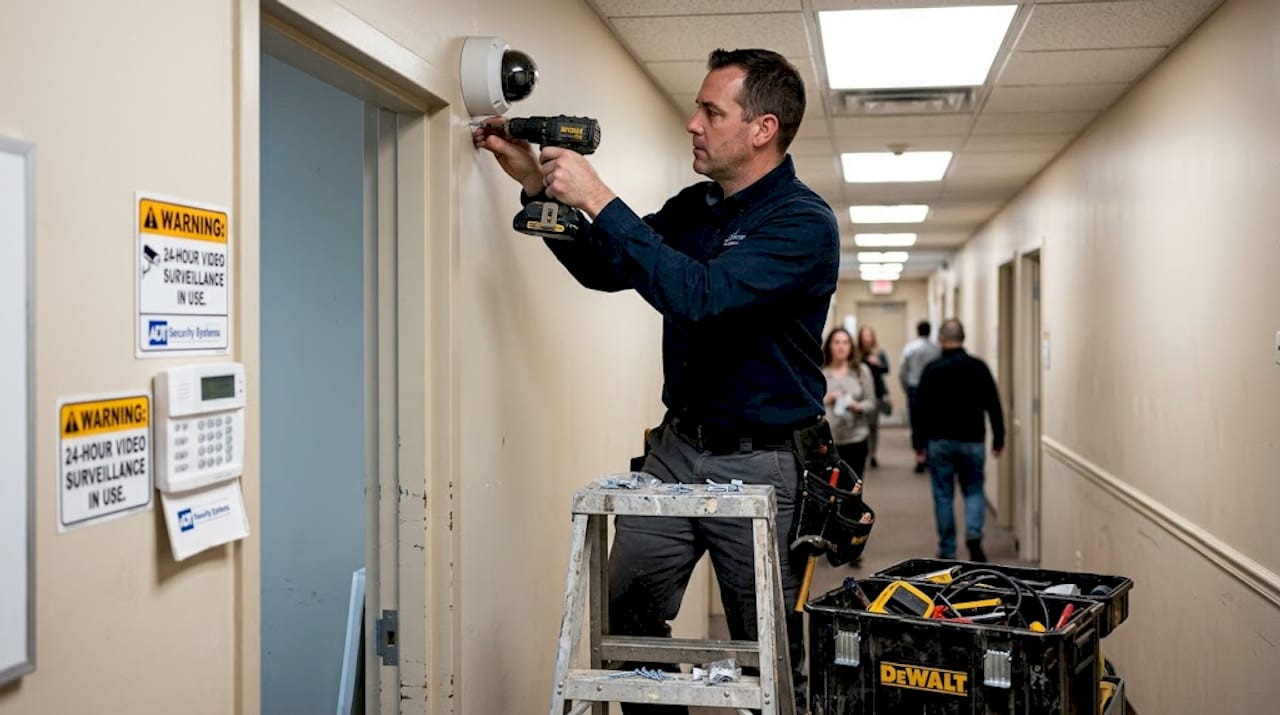
AI-powered cameras analyze movement and distinguish between a car pulling in, a dog walking by, and a person approaching a door. This cuts false alerts dramatically and helps you respond only when it counts. Real-time alerts push notifications to your phone the moment something unusual is detected. Remote access lets you check live footage, lock a door, or disarm a zone from anywhere in the world.
Smart locks add keyless entry with audit trails. You can see who unlocked the door and when, which is invaluable for businesses tracking employee access. A detailed look at how smart locks overview explains the options is worth your time before purchasing.
When comparing monitoring types, keep these distinctions in mind:
- Self-monitored: You receive alerts directly. You decide when to call police. Lower cost, but slower response.
- Professional monitoring: A staffed center receives alerts, verifies the situation, and contacts emergency services for you. Much faster response, especially when you are asleep or unavailable.
- AI-verified monitoring: The system uses video analysis to confirm a real threat before escalating, reducing false alarm calls significantly.
Potential vulnerabilities to be aware of:
- Wi-Fi dependent devices can be jammed or disrupted
- Default passwords on cameras and locks are a common attack point
- False alarms erode trust with neighbors and can result in fines in some jurisdictions
Pro tip: Change all default passwords the day you install any connected device, and enable two-factor authentication on your monitoring app. This single step closes the most common cybersecurity gap in home and business security setups. For a broader look at what belongs in a complete setup, essential home security products is a solid starting point.
comparing advanced security: system types and choosing what fits
Understanding the tech and features is one thing. Making the right choice for your specific situation is another.
Professional monitoring outperforms self-monitored or unmonitored systems in both deterrence and emergency response across nearly every study. And AI reduces false alarms by up to 80%, while professional monitoring cuts unnecessary police calls by 90%. These are not minor improvements. They represent real operational savings for businesses and real peace of mind for homeowners.
Use this comparison to match system types to common scenarios:
| System type | Best for | Key strength | Key limitation |
|---|---|---|---|
| DIY self-monitored | Budget-focused homeowners | Low cost, flexible | No backup if you miss an alert |
| Professional monitored | Most homes and businesses | Fast verified response | Monthly fee required |
| AI-verified + monitored | High-value or high-risk properties | Near-zero false alarms | Higher upfront cost |
| Enterprise integrated | Multi-location businesses | Full visibility, analytics | Complex installation |
To choose the right system, work through this checklist:
- Define your biggest risk: burglary, internal theft, vandalism, or fire
- Map every entry point: doors, windows, garages, and loading areas
- Set your response priority: do you need 24/7 backup monitoring or can you self-manage?
- Check local regulations on cameras and alarm permits before buying
- Review home security best practices to fill gaps you might not have considered
For those in dense urban environments, the unique challenges of shared walls, street access, and communal entry points make system selection especially important. The guide on urban security solutions covers those specific scenarios in detail.
A smarter security approach: beyond the basics
After breaking down the options, here is what actually works when it matters. Many property owners make the mistake of judging a security system by how sophisticated it looks on paper. In practice, a system is only as effective as its weakest link, and that link is almost always either poor visibility or absent monitoring.
Prioritize visible deterrence and professional verification above everything else. A camera that no one can see and an alert that no one responds to are essentially decorative. The data is clear: verified, monitored systems outperform everything else.
Here is the part most security guides skip. Connected smart devices, from cameras to locks to sensors, introduce cybersecurity risk into what was once a purely physical problem. IoT devices introduce hacking risk, and pairing your physical system with cybersecurity protections is now a baseline requirement, not optional. A breach of your camera feed or smart lock app is just as serious as a broken window.
One small business we spoke with cut both theft incidents and false alarm costs within 90 days by switching from a basic DIY camera setup to an AI-verified, professionally monitored system. The false alarms alone were costing them in police response fees. That disappeared almost immediately. For a complete framework that covers these combined risks, the 2026 home security guide is the most current resource available.
Take the next step with advanced security
You have seen the data and the real-world outcomes. Now the question is where to start.
At safesandsecuritydirect.com, you will find a curated range of professional-grade cameras, monitoring-ready alarm systems, smart locks, and fire-resistant safes selected for homes and businesses that take security seriously. Every product listing includes detailed specs, compatibility notes, and pricing so you can build a system that fits your property and your budget. If you are unsure where to begin, the guide on improving home security gives you a structured starting point with proven steps you can act on today.
frequently asked questions
How much can I really save on insurance with an advanced home security system?
Homeowners typically save 15 to 20% on premiums, around $150 per year, with a monitored alarm, and up to 25% with a full security suite including cameras and sensors.
Are smart locks safe from hacking?
Smart lock hacking affects roughly 5% of devices, but using strong unique passwords and enabling two-factor authentication reduces that risk to near zero for most users.
Do advanced security systems really lower burglaries for small businesses?
Yes. Security systems can reduce shrinkage by 50% in retail settings and typically deliver full ROI within 6 to 24 months depending on system type.
What is professional monitoring and why does it matter?
Professional monitoring means a staffed response center handles your alerts around the clock, achieving up to 90% burglary avoidance and dramatically faster emergency response compared to self-monitored setups.
Recommended
- Smart Home Security: Cut Insurance 15% & Boost Safety – Safes and Security Direct
- Home security best practices: protect property in 2026 – Safes and Security Direct
- Cameras Deterring Burglary: Effective Security Insight – Safes and Security Direct
- Why Invest in High Security Solutions – Safes and Security Direct
- How Modern Smart Locks Protect Your Home More Effectively