

What Is Safe Rating? A Buyer's Guide to Security Standards
TL;DR:
- Safe ratings provide an independent standard for assessing a safe’s resistance to burglary and fire threats. They help buyers choose appropriate protection levels based on asset value and risk, but ratings must be verified through recognized third-party certifications like UL or EN standards. Proper installation and understanding of testing limitations are essential to ensure that the safe’s rating delivers real security in practice.
A safe rating is an independent evaluation that measures a safe’s resistance to burglary attempts and fire damage, giving buyers a standardized benchmark for comparing security products. Organizations like Underwriters Laboratories (UL) and European standards bodies assign these ratings after controlled lab testing that simulates real break-in scenarios and fire exposure. For anyone protecting cash, documents, firearms, or business assets, understanding safe ratings is the difference between genuine security and a false sense of protection.
What is safe rating and why does it matter?
A safe rating is a certified score that tells you exactly how much punishment a safe can withstand before its contents are compromised. Without this rating, you are relying entirely on a manufacturer’s marketing copy. That distinction matters enormously when the assets inside are irreplaceable.
The importance of safe ratings becomes clear when you consider what the testing actually involves. Independent testing includes heating safes to 1,550°F for fire resistance and subjecting them to sustained physical burglary attempts using professional tools. These are not casual checks. They replicate the conditions a determined thief or a serious house fire would create.
Safe ratings also give insurance companies a language for coverage. Many commercial insurers require a minimum UL rating before they will cover the contents of a business safe. That alone makes understanding safe ratings a financial consideration, not just a security one.
What are the main types of safe ratings and their criteria?
Safe ratings split into two distinct categories: burglary ratings and fire ratings. Each measures a completely different threat, and a high score in one category tells you nothing about performance in the other.
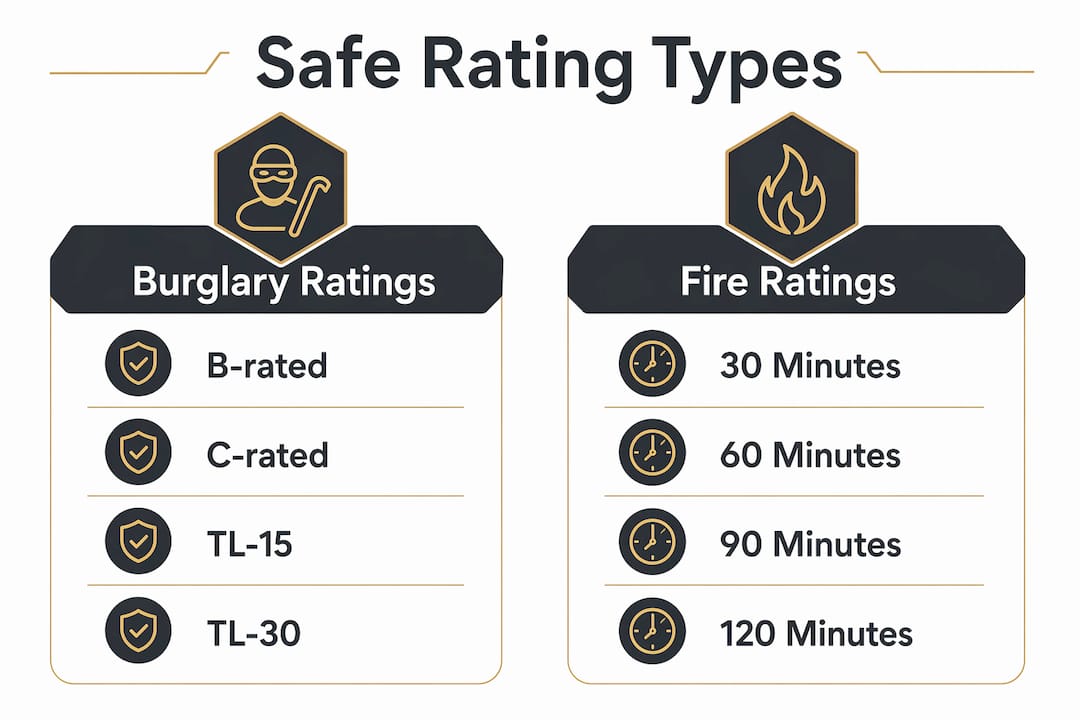
Burglary rating levels explained
Burglary ratings range from unrated through B-rated, C-rated, RSC I and II, TL-15, TL-30, and TLX6, with each level representing a significant jump in construction and testing rigor. B and C rated safes face no independent testing at all. They meet minimum steel thickness requirements but carry no certified resistance proof. RSC (Residential Security Container) ratings, assigned by UL, require safes to withstand a five-minute attack by a trained technician using common tools. TL-15 and TL-30 ratings mean the safe resisted a 15-minute or 30-minute attack using high-powered tools including drills, grinders, and pry bars.
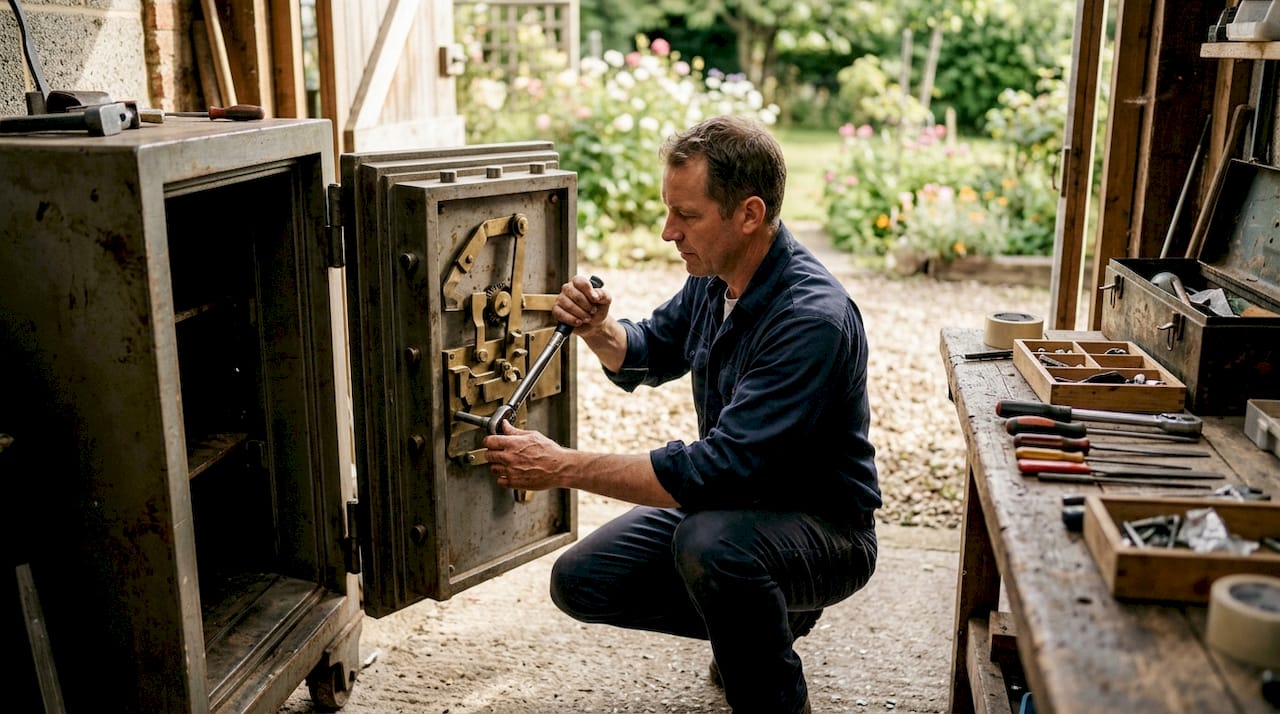
Higher rating levels correlate directly with thicker steel plates, more complex locking mechanisms, and greater overall weight. A TL-30 safe typically uses composite steel walls several inches thick and a multi-bolt locking system that a TL-15 model simply does not require. This construction difference is why the price gap between rating levels is so steep.
Pro Tip: Never assume a B-rated or C-rated safe offers certified burglary protection. These labels describe construction minimums, not tested resistance. If independent certification matters to you, start your search at RSC I or above.
Fire rating levels explained
Fire ratings express how long a safe can maintain an interior temperature below the ignition point of paper (approximately 350°F) while exposed to extreme external heat. A common standard is one hour at 1,700°F. Paper ignites at 451°F and most digital media fails at temperatures far lower, so the interior temperature threshold matters as much as the duration.
| Rating Type | Test Standard | What It Means in Practice |
|---|---|---|
| B-rated (burglary) | No independent test | Minimum steel thickness only; no certified resistance |
| RSC I (burglary) | UL 5-minute attack test | Suitable for residential use against opportunistic theft |
| TL-15 (burglary) | UL 15-minute tool attack | Protects against skilled burglars with professional tools |
| TL-30 (burglary) | UL 30-minute tool attack | Commercial-grade protection for high-value assets |
| 1-hour fire rating | 1 hour at 1,700°F | Interior stays below 350°F through a standard house fire |
| 2-hour fire rating | 2 hours at 1,850°F | Extended protection for larger fires or delayed response |
Fire tests also include direct flame exposure and cooling cycles to check whether insulation holds after the fire subsides. A safe that survives the heat but floods its interior with steam during cooling fails the standard. That detail is rarely mentioned in product listings.
How are safe ratings calculated and assigned?
Independent labs like UL and European certification agencies assign safe ratings after running standardized attack and fire simulations on physical safe samples. The process is methodical and repeatable, which is what gives the ratings their credibility.
The testing protocol for a burglary rating typically includes:
- A trained technician attacking the safe for the specified time period using a defined tool set
- Evaluation of whether the safe door or body was penetrated or manipulated open
- Verification that the locking mechanism was not bypassed through any method
- Confirmation that the safe meets minimum construction specs for its rating class
For fire ratings, the protocol adds:
- Preheating the furnace to the target temperature before placing the safe inside
- Monitoring interior temperature throughout the exposure period
- A drop test to simulate a floor collapse during a fire
- A cooling period followed by inspection of interior contents
The critical limitation here is that labs test samples under controlled conditions, not installed safes in real environments. A safe bolted to a concrete floor in a commercial vault performs differently than the same model sitting unanchored on carpet in a home office. The rating reflects the product’s potential, not your specific installation.
Pro Tip: Always check whether a safe’s certification is current and issued by a recognized third-party lab. Some manufacturers print rating-style labels that reference internal testing only. Look for the UL Listed mark or an EN 1143-1 certificate number you can verify independently.
Third-party certification also matters because manufacturer claims carry no independent accountability. A company can describe its product as “bank-grade” or “military-strength” without any external verification. A UL listing or EN 1143-1 certification means a neutral organization tested the physical product and confirmed it met the published standard.
What do common safe rating levels mean in practice?
Matching a rating level to your actual security needs prevents both overspending and underprotecting. The right rating depends on what you are storing, where the safe is located, and what threats are realistic for your situation.
-
No rating or B-rated: Appropriate only for storing low-value items where the goal is basic concealment rather than serious resistance. A B-rated safe deters casual snooping but will not stop a determined thief with basic tools.
-
RSC I or RSC II: The right starting point for most homeowners protecting documents, moderate amounts of cash, or a handgun. RSC II requires a ten-minute resistance test and offers meaningfully stronger protection than RSC I.
-
TL-15: The minimum standard for small business owners storing daily cash receipts, sensitive client records, or valuable inventory. A TL-15 safe resists a professional attack long enough that most burglars will abandon the attempt.
-
TL-30: Suited for jewelry stores, pharmacies, or any business holding high-value assets overnight. The additional 15 minutes of resistance time is not trivial. Most commercial burglaries are completed in under 10 minutes, so a TL-30 rating effectively eliminates the threat from all but the most sophisticated attacks.
-
1-hour fire rating: The baseline for protecting paper documents, passports, and financial records in a residential setting. Most house fires are controlled within 30 to 60 minutes, making a one-hour rating adequate for the majority of homeowners.
-
2-hour fire rating: Recommended for businesses in commercial buildings where fire response times may be longer, or for anyone storing digital media that requires lower interior temperature thresholds.
Matching your rating to asset value and risk level is the practical core of safe selection. A TL-30 safe protecting $500 in cash is overkill. An RSC I safe protecting $50,000 in jewelry is a liability.
What are the common misconceptions about safe ratings?
Safe ratings are frequently misunderstood, and those misunderstandings lead to real security failures. The most common mistake is treating a rating as a guarantee rather than a benchmark.
Safe rating labels simplify complex safety data to build consumer trust, but that simplification cuts both ways. A rating tells you how a specific sample performed under specific conditions. It does not tell you how your safe will perform if it is not anchored, if it is attacked from an angle the test did not cover, or if it is exposed to a fire that burns longer than the rated duration.
A second major misconception involves confusing safe ratings with unrelated safety ratings. FMCSA safety fitness ratings like Satisfactory, Conditional, and Unsatisfactory assess trucking carrier compliance with federal regulations. They have no connection to the burglary or fire resistance of a physical safe. Searching for “safe rating” without context can surface both types of results, which creates genuine confusion for buyers.
Regional differences add another layer of complexity. Consumers often overlook that certifications vary by jurisdiction, meaning a European EN 1143-1 Grade III safe and a UL TL-30 safe are not directly equivalent even though both represent high-security products. Verifying that a certification applies to your region and intended use is a step most buyers skip entirely.
A safe rating is only as reliable as the installation, environment, and usage habits surrounding it. The rating tells you what the product can do. What you do with it determines what it actually delivers.
Marketing language also distorts safe rating literacy. Terms like “fire-resistant,” “burglar-proof,” and “high-security” appear on products with no independent certification. Treat any security claim that lacks a specific UL listing number or EN certification reference as unverified.
How to choose a safe based on ratings
Selecting the right safe starts with an honest assessment of your threat environment and asset value. Follow this process before you compare any product specifications.
- Identify what you are protecting. Paper documents, digital media, firearms, cash, and jewelry each have different vulnerability profiles. Digital media requires lower interior temperature thresholds than paper, which changes your fire rating requirement.
- Assess your burglary risk. A retail business in a high-crime area needs a higher burglary rating than a home safe in a low-risk suburb. Consider your location, access controls, and whether the safe will be visible to visitors.
- Require both ratings. A safe with a strong burglary rating and no fire rating leaves your documents exposed to the most statistically common property threat. Select safes that carry both certifications for complete protection.
- Verify the certification. Look for the UL Listed mark or an EN 1143-1 grade designation with a certificate number. Contact the certifying body directly if you have any doubt about authenticity.
- Plan your installation. A safe that is not anchored to the floor or wall can be carried out of your property entirely, bypassing its rating completely. Anchoring is not optional for any safe above RSC I.
For high-value residential applications, military-grade security solutions that integrate physical safes with AI-powered surveillance and access control offer a layered approach that no single safe rating can replicate on its own.
Key takeaways
A safe’s rating is only as useful as your ability to interpret it correctly and apply it to your specific security context.
| Point | Details |
|---|---|
| Ratings measure specific threats | Burglary and fire ratings are separate; a high score in one does not imply protection in the other. |
| B and C ratings lack independent testing | Only RSC and above involve certified third-party testing by organizations like UL. |
| Labs test samples, not installations | Real-world performance depends on anchoring, environment, and usage habits beyond the lab result. |
| Verify certifications independently | Look for a UL Listed mark or EN 1143-1 certificate number; marketing language is not a substitute. |
| Match rating to asset value and risk | Overspending on rating levels you do not need is wasteful; underrating your protection is dangerous. |
Why I think most buyers read safe ratings backwards
Most people shopping for a safe start with a budget and then look for the highest rating they can afford at that price. That logic sounds reasonable, but it produces the wrong outcome more often than not.
The right approach starts with the asset, not the budget. What is the replacement cost or irreplaceability of what you are protecting? What is the realistic threat in your specific environment? Those two answers define the minimum rating you need. The budget question comes after that floor is established, not before.
I have seen businesses invest in TL-30 rated safes and then leave them unbolted because the floor was concrete and drilling felt like too much work. The rating became meaningless the moment that decision was made. Conversely, I have seen homeowners dismiss RSC-rated safes as overkill, only to store passports and irreplaceable family documents in a B-rated box that a teenager could open with a screwdriver.
The other thing most articles will not tell you is that rating systems evolve. UL updates its standards periodically, and a safe certified under an older standard may not meet current requirements even if the label still reads “UL Listed.” If you are buying a used safe or inheriting one from a previous business owner, check the certification date and confirm it aligns with current standards.
Safe rating literacy is not about memorizing every UL category. It is about asking the right questions before you hand over money for something you expect to protect what matters most.
— Chetna
Find certified safes that match your security needs
Safesandsecuritydirect carries a curated range of UL-listed and EN-certified safes for both residential and commercial use, from RSC-rated home safes to TL-30 commercial models built for high-value asset protection. Every product listing includes certification details so you can verify the rating before you buy. The Safesandsecuritydirect blog also covers choosing the right certified safe with step-by-step guidance matched to specific security scenarios. Whether you are protecting business cash, personal documents, or irreplaceable valuables, Safesandsecuritydirect gives you the product range and the information to make a confident, informed decision. Visit Safesandsecuritydirect to explore the full catalog.
FAQ
What does a safe rating mean?
A safe rating is an independent certification that confirms a safe has passed standardized tests for burglary resistance, fire resistance, or both. Ratings are assigned by third-party labs like UL after controlled simulations of real attack and fire scenarios.
How is a safe rating calculated?
Safe ratings are assigned after a physical safe sample undergoes timed burglary attacks using specified tools and fire exposure tests at defined temperatures and durations. The safe passes or fails based on whether its contents remain protected throughout the test period.
What is the difference between a TL-15 and TL-30 rating?
A TL-15 rating means the safe resisted a 15-minute professional tool attack, while a TL-30 rating means it withstood a 30-minute attack. TL-30 safes use thicker steel and more complex locking systems, making them the standard for commercial high-security applications.
Are B-rated safes worth buying?
B-rated safes meet minimum steel thickness requirements but have not undergone independent burglary resistance testing. They are suitable only for storing low-value items where basic concealment is the goal, not certified security.
Do fire ratings and burglary ratings come together?
Not automatically. Many safes carry only one type of rating, so buyers must confirm that a safe holds both a burglary certification and a fire rating if they need protection against both threats. Always check both specifications before purchasing.
Recommended
- Explaining Safe Ratings: What Every Buyer Must Know – Safes and Security Direct
- The homeowner’s guide to safe certifications explained – Safes and Security Direct
- What Is a Security Safe and Why It Matters – Safes and Security Direct
- How to choose the right certified safe for your needs – Safes and Security Direct