

How to choose the right certified safe for your needs
TL;DR:
- Safe certification involves rigorous independent testing to verify a model’s resistance to attack and fire, providing credible protection benchmarks. Different standards, such as UL 1037 for burglary resistance and UL 72 for fire protection, address separate threats with specific levels and durations; matching these to your risks is essential. Understanding and verifying these certifications ensure you select safes that genuinely meet your security and fire protection needs, rather than relying on marketing claims.
Not all safes are created equal, and the difference between a certified safe and an uncertified one could mean the difference between protecting your valuables and losing everything. Most buyers walk into a purchase focused on price, size, and appearance, while completely overlooking the one thing that actually tells you how secure a safe is: its certification. Safe certification is a formal, standardized process that involves rigorous physical testing by independent laboratories, and understanding it puts you firmly in control of your purchasing decision.
Table of Contents
- What is safe certification?
- Security certification: Understanding UL 1037 for burglary resistance
- Fire certification: What UL 72 means for protecting valuables
- Choosing the right certification for your needs
- The uncomfortable truth about safe certification: Matching threat to standard
- Find certified safes that match your needs
- Frequently asked questions
Key Takeaways
| Point | Details |
|---|---|
| Third-party testing matters | Certified safes are independently tested against real-world standards for burglary or fire resistance. |
| UL standards guide choices | UL 1037 and UL 72 are key certification frameworks for security and fire protection, respectively. |
| Choose certification by risk | Selecting the right certification depends on whether burglary, fire, or both are your primary concerns. |
| Read labels carefully | Certification labels specify scope, duration, and resistance level, not blanket protection. |
What is safe certification?
Safe certification is not a marketing claim. It is a formal process where an independent testing laboratory physically tests a specific safe model against a defined, recognized standard. When a safe passes, the lab issues a certification listing and the manufacturer earns the right to display a certification label on that product.
According to UL anti-theft device testing, “safe certification” for security or fire safes means a third-party laboratory has tested a specific safe model against a defined standard and issued a listing or label for the results. That label is not decorative. It carries legal and technical weight.
Here is what the certification process typically covers:
- Physical attack testing: A real technician, using real tools, attempts to defeat the safe under controlled conditions
- Fire exposure testing: The safe is subjected to measured heat for a set duration
- Drop and impact testing: For fire safes, the unit may be dropped from height to simulate building collapse
- Documentation review: The lab checks materials, construction methods, and consistency across production units
“A label that says ‘fire resistant’ without a recognized certification behind it is just a label. A UL or ETL certification label means an independent lab physically tested that exact model and it passed defined criteria.”
This distinction matters because the market is full of safes with vague, manufacturer-assigned claims like “heavy duty” or “high security” that carry no third-party verification. Knowing the difference between home security standards for certified products versus marketing language protects you from wasting money on products that only look secure.
If you are new to thinking about physical security for your home or business, reviewing home security basics alongside certification details gives you a well-rounded foundation for evaluating your overall risk picture.
Security certification: Understanding UL 1037 for burglary resistance
When people talk about a “certified burglar-resistant safe,” they are usually referring to testing under the UL 1037 standard. UL (Underwriters Laboratories) is a globally recognized safety science organization, and UL anti-theft certification covers residential security containers (RSC), commonly including gun safes and document safes, through tiered attack resistance testing.
The UL 1037 standard sets clear, measurable benchmarks. The attack levels break down as follows:
| Attack Level | Time Allowed | Number of Technicians | Tools Used | Maximum Opening Allowed |
|---|---|---|---|---|
| Level 1 | 5 minutes | 1 | Common hand tools | Any opening |
| Level 2 | 10 minutes | 2 | Aggressive hand and power tools | 6 square inches |
| Level 3 | 10 minutes | 2 | Aggressive hand and power tools | 2 square inches |
These numbers are more revealing than they first appear. A Level 1 RSC certified safe resists a determined, single attacker using everyday tools for five minutes. Most residential burglaries last under ten minutes total, so even Level 1 certification offers meaningful protection in the home setting.
Level 2 and Level 3 certifications raise the bar significantly. Two trained technicians with more aggressive tools, including drills and grinding equipment, have a harder and harder time breaching the safe as the certification level rises. The opening size restriction at higher levels is particularly important: even if attackers partially defeat the door, they cannot reach valuables stored inside because the opening they can create is too small.
A critical thing to remember: certification guarantees minimum resistance, not absolute security. No safe in any certification category will resist a sufficiently motivated, sufficiently equipped attacker with unlimited time. What certification does is give you a credible, tested baseline.
📊 Stat to know: The average residential burglary lasts between 8 and 12 minutes. A UL 1037 Level 1 certified safe, which must resist a 5-minute attack, is specifically designed with that real-world window in mind.
Pro Tip: When shopping for a residential safe, always ask to see the certification listing number, not just the label. You can verify the listing directly with UL to confirm the specific model was tested, not just a similar-looking variant from the same manufacturer.
If you want a complete overview of how these certifications affect your buying decisions, the safe certifications guide for homeowners breaks it down in accessible detail. For practical advice on selecting the right model, the guide to choosing safes for home covers everything from sizing to bolt configurations. Business owners evaluating higher-end options should also review what commercial safes look like at the certified level, since commercial environments typically require higher attack ratings.
Fire certification: What UL 72 means for protecting valuables
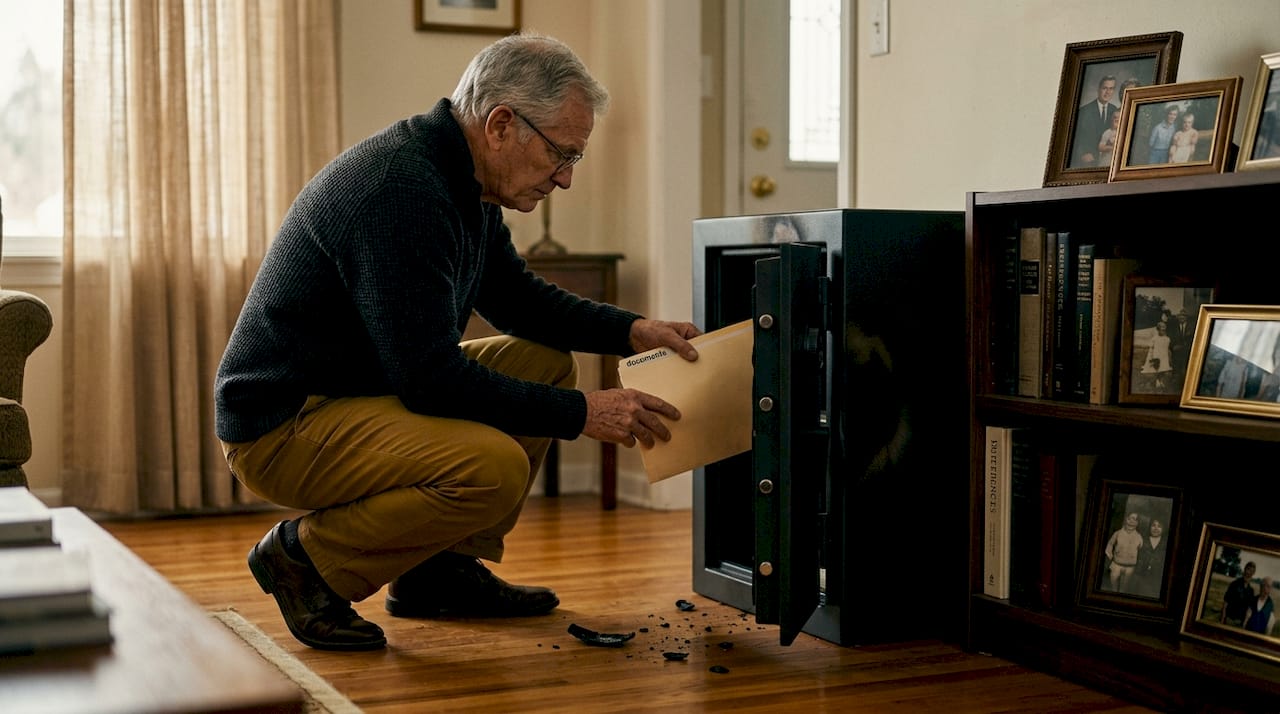
Security certification protects against human threat. Fire certification protects against a completely different kind of disaster, and the two rating systems are entirely separate. Confusing them is one of the most common and costly mistakes buyers make.
The primary fire protection standard for safes in the United States is UL 72, a fire-resistance test standard that measures how long a safe protects its contents under controlled fire exposure. UL 72 testing evaluates fire endurance and additional procedures depending on the type of equipment being tested.
Here is how fire certification classes typically break down:
- Class 350: Protects paper documents. Interior temperature must stay below 350°F (177°C). Paper chars at around 405°F (207°C), so this class keeps documents readable.
- Class 150: Protects magnetic media, USB drives, and film. Interior stays below 150°F (65°C) because digital media degrades at lower temperatures than paper.
- Class 125: Protects the most sensitive digital media. Interior must stay below 125°F (52°C), which is the threshold for hard drives and similar storage.
Each class also specifies a time rating, typically 30 minutes, 1 hour, 2 hours, or 4 hours. A “Class 350 1-Hour” rated safe must keep its interior below 350°F for a full hour of exposure to the test fire.
Beyond basic fire endurance, UL 72 also includes additional tests for specific scenarios:
- Explosion hazard test: Checks whether the safe explodes or opens when exposed to rapid temperature changes
- Fire endurance and humidity test: Measures internal humidity to ensure contents are not damaged by steam
- Impact test: The safe is heated, then dropped 30 feet onto rubble, and then heated again. This simulates a floor collapse during a fire.
Comparing fire and security certification side by side makes the difference clear:
| Feature | UL 1037 (Security) | UL 72 (Fire) |
|---|---|---|
| What it tests | Resistance to physical attack | Resistance to fire and heat |
| Key variable | Attack time and tools | Temperature class and exposure duration |
| Levels or classes | Attack Level 1, 2, 3 | Class 125, 150, 350 |
| Additional tests | Pry, drill, punch tools | Explosion, impact, humidity |
| Relevant threat | Burglary | Fire or building collapse |
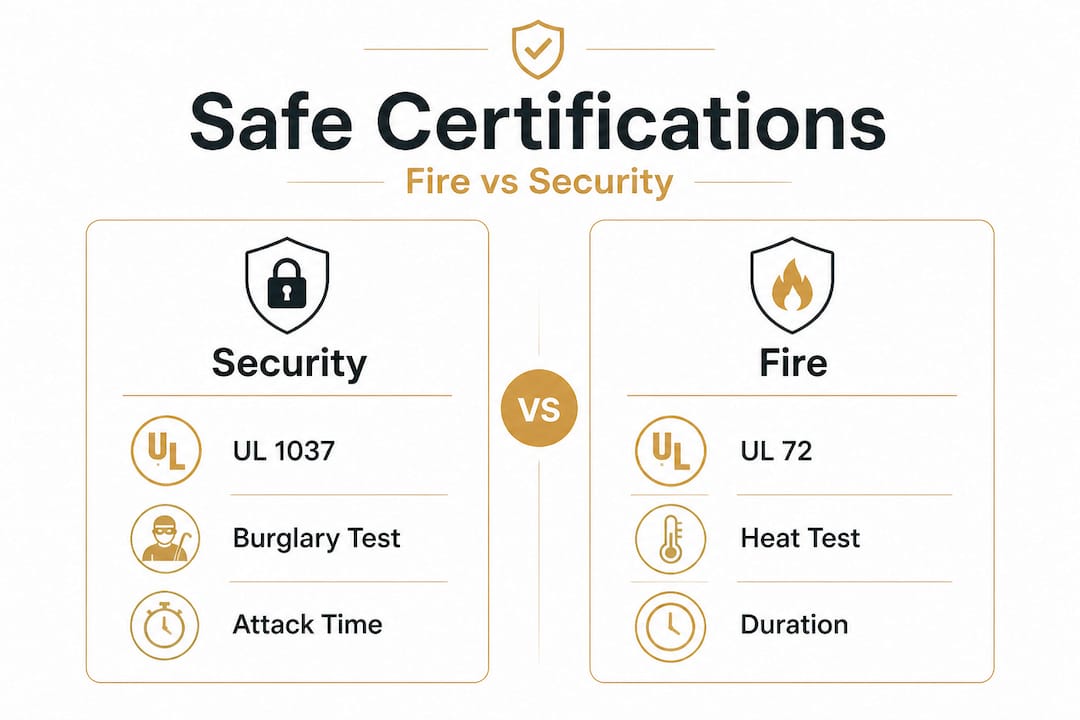
A fire-rated safe is not automatically burglar resistant, and a burglar-resistant safe offers no guaranteed fire protection. This is why you will find products specifically advertised as both fire and burglary rated. Those products have passed both sets of tests independently.
For a detailed breakdown of how to shop for fire-rated products, the fireproof safe selection guide walks through what to look for. If you are protecting business records specifically, fireproof filing cabinets offer a filing-friendly alternative to traditional safe designs, and you can also compare options with fire-resistant filing cabinets for offices with larger document storage needs.
Choosing the right certification for your needs
Now that you understand both security and fire certification, the practical question is: which certification do you actually need?
The answer starts with an honest assessment of your specific threat. Standards differ by safe purpose, whether that is residential security containers, record fire protection, or vault applications, so “safe certification” is not one single thing. You have to match the certification standard to the threat you actually face.
Here is a straightforward way to work through this:
- Your primary concern is theft: Look for a UL 1037 certified safe with an attack level appropriate to your risk. A residential home with moderate risk typically needs Level 1 or Level 2. A small business holding cash or jewelry should consider Level 2 or higher.
- Your primary concern is fire: Identify what you are storing. Paper documents need Class 350. Digital media needs Class 150 or Class 125, depending on sensitivity. Then choose the time rating based on how long a fire might burn before firefighters arrive in your area.
- You need protection from both: Look for safes that carry both a UL 1037 security certification and a UL 72 fire certification. Both labels should be visible, and you should be able to verify both independently.
A few practical steps to take before you buy:
- Ask the retailer for the full certification listing, not just a photograph of the label
- Search the certifying organization’s online directory to verify the listing is active and covers the specific model number you are purchasing
- Check whether the certification covers the entire unit or only specific components
- Ask whether the certification was issued on the current production version or an older model
Pro Tip: Some manufacturers change materials or construction methods between product runs without updating certification listings. Verifying the model number and production year against the listing protects you from buying a technically “certified” product that no longer matches the tested unit.
When you are ready to browse options matched to your situation, the guide to choosing a home safe helps you identify your starting point, and the buying guide for fire resistant safes goes deep on fire protection specifically.
The uncomfortable truth about safe certification: Matching threat to standard
Here is something most safe retailers will not tell you outright: chasing the highest certification level is not always the right move. Many buyers see a UL listing and feel protected, without stopping to ask whether that certification actually addresses their real risk.
We have seen homeowners buy heavily attack-rated security safes for storing digital photo backups and hard drives, only to discover those safes offer minimal heat protection. The burglary certificate gave them confidence, but a house fire would have destroyed everything inside. The opposite happens too: someone stores valuable jewelry in a fire safe, pleased with its certification, while the safe’s thin walls and lightweight construction offer almost no resistance to a basic prying attack.
As UL’s own standards note, standards differ by safe purpose, and you must match the certification standard to the threat you care about. That sounds simple, but it requires you to honestly assess what you are most afraid of losing and what kind of event is most likely to threaten it.
The most practical framework we recommend is risk-first, then certification. Write down what you are storing and what the three most realistic threats are. Fire, theft, flooding, and access by unauthorized household members are the most common answers. Only after you have named those threats should you start comparing certification labels, because only then do the labels mean something useful.
Proper home security standards are not a substitute for clear thinking about your own situation. Certification gives you a credible baseline to compare products. Your personal threat assessment tells you which baseline actually matters.
Find certified safes that match your needs
Understanding certification transforms how you shop, and the right retailer should make it easy to filter and compare products by their actual certifications rather than vague marketing claims.
At Safes and Security Direct, you will find a curated selection of safes organized to help you match certification to your actual needs. Whether you are protecting paper records, digital media, firearms, or business cash, each product listing includes certification details so you know exactly what you are buying. Our team understands the difference between fire ratings and burglary ratings, and we are here to help you navigate the options without confusion. Browse by certification type, protection class, and capacity to find a safe that genuinely matches your risk profile.
Frequently asked questions
How can I verify a safe’s certification label?
Look for recognized marks from independent labs like UL, and then verify the listing directly on the certifying organization’s online database using the model number. A verified certification listing confirms a third-party lab tested that specific model against a defined standard.
Does a certified safe guarantee absolute protection?
No. Certification guarantees minimum resistance performance against specific threats, not invincibility. The UL 1037 standard defines attack levels and time limits as a measurable baseline, not an assurance that no attacker could ever succeed.
What’s the difference between fire and security certification?
Fire certification, such as UL 72, measures how long a safe protects contents under controlled heat exposure, while security certification like UL 1037 measures resistance to physical burglary attacks using tools. The two certifications are separate and address completely different threats.
Are commercial safes certified differently than home safes?
Yes. Commercial safes often face stricter and different certification standards designed for higher-risk environments, higher cash values, and extended business hours. As UL standards clarify, you must match the certification standard to the specific threat and context, which differs significantly between residential and commercial applications.
Recommended
- The homeowner’s guide to safe certifications explained – Safes and Security Direct
- Step-by-Step Guide to Choosing Safes for Home Security – Safes and Security Direct
- Fireproof Safe Selection Guide for Secure Home Protection – Safes and Security Direct
- 8 clear signs you need a home safe and how to choose – Safes and Security Direct
- Storage: How to choose your #1 firearm storage solution