

Examples of Physical Asset Protection for Homes and Businesses
TL;DR:
- Effective physical asset protection combines layered security measures with legal structures suited to property type and risk. Implementing deterrence, detection, delay tactics, and legal safeguards helps prevent theft, damage, and creditor claims. Regular audits and proper setup ensure comprehensive defense against evolving threats.
Physical asset protection refers to measures designed to secure tangible property through barriers, surveillance, and controlled access systems that collectively prevent loss or damage. The industry term for this discipline is physical security, and it covers everything from biometric locks on server rooms to GPS trackers on construction equipment. Whether you own a home, a retail store, or a warehouse full of machinery, the right examples of physical asset protection give you a clear blueprint for defending what you have built. This article breaks down the most effective methods, compares them by property type, and shows you how to layer them for maximum coverage.
1. Examples of physical asset protection: the core methods
Physical security works best when you treat it as a system, not a single product. The strongest programs combine access control, surveillance, tracking, and secure storage into one coordinated defense.
-
Biometric access control. 68% of Fortune 500 companies now use biometric authentication in place of traditional badge systems. Fingerprint readers, iris scanners, and facial recognition verify identity at the door before anyone enters a sensitive area. For homeowners, biometric smart locks from brands like Schlage Encode Plus bring the same technology to the front door without a complex installation.
-
Anti-tailgating technology. 61% of organizations name tailgating as their top physical access threat. Mantrap vestibules, turnstiles, and AI-powered door sensors stop unauthorized people from slipping in behind a legitimate employee. This is one of the most overlooked physical asset security measures in small businesses.
-
GPS asset tracking and geofencing. Attaching a GPS tracker to high-value movable equipment lets you monitor its location in real time. Geofencing triggers an automatic alert the moment a piece of equipment leaves a defined boundary. Construction equipment worth $50,000–$500,000 requires GPS tracking, geofencing, and active drone patrol for effective protection.
-
High-security safes and locked storage. A fire-resistant, burglary-rated safe is one of the most reliable examples of asset security for both homes and offices. Safes rated to UL TL-15 or TL-30 standards resist power tools for 15 or 30 minutes respectively, which is long enough to deter most opportunistic thieves.
-
Video surveillance with real-time alerts. Modern IP cameras from manufacturers like Axis Communications and Hanwha Vision integrate directly with access control platforms. When a door alarm triggers, the system automatically pulls the nearest camera feed and sends a push notification to your phone.
-
Multi-factor authentication (MFA) for high-security zones. The MFA market is projected to reach $49.7 billion by 2032, reflecting how critical layered identity verification has become. Combining a PIN, a badge, and a biometric scan at a server room door makes unauthorized entry exponentially harder.
Pro Tip: Pair your surveillance cameras with motion-activated lighting. Cameras capture evidence, but bright lights deter criminals before they act. Together, they cover both prevention and documentation.
2. How layered security boosts physical asset protection effectiveness
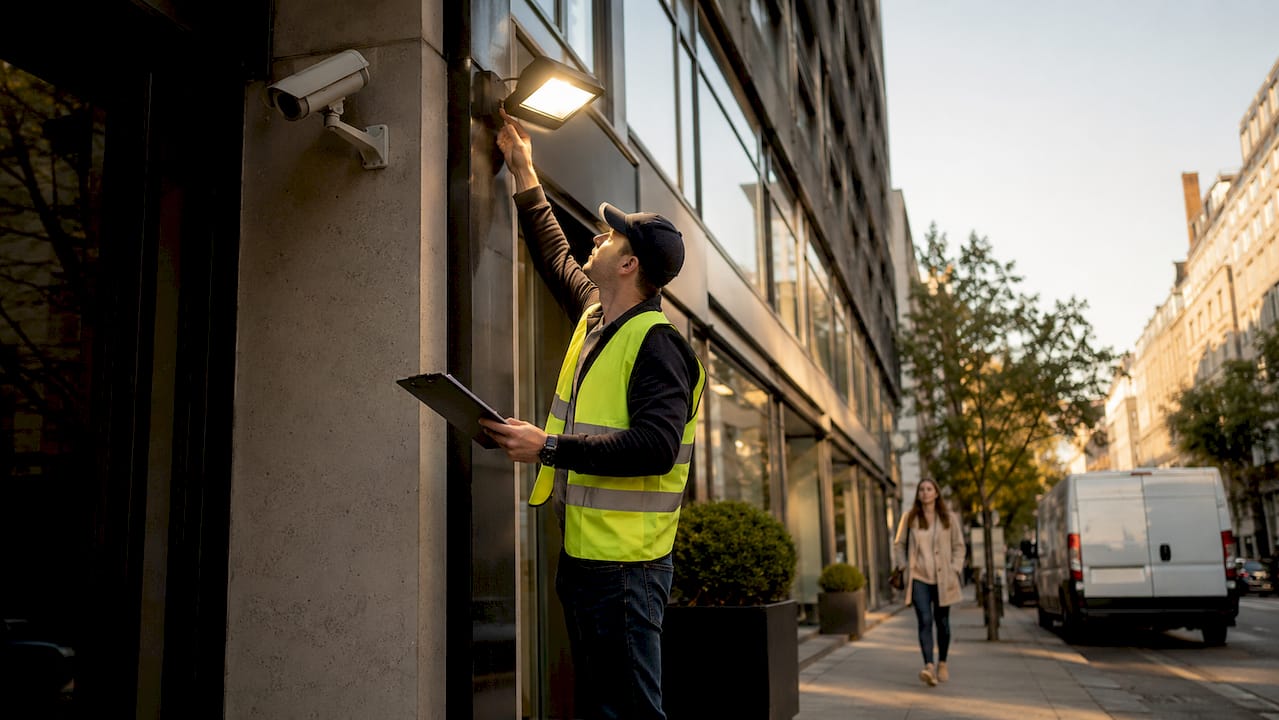
A layered physical security approach follows four stages: Deter, Detect, Delay, and Inform. Each layer adds cost and time to any intrusion attempt, which is exactly what you want. Most criminals abandon a target the moment resistance exceeds their expected reward.
Here is how each layer works in a real home or business setting:
-
Deter. Visible cameras, perimeter fencing, security signage, and bright exterior lighting signal that your property is protected. Deterrence is the most cost-effective layer in physical security because it filters out opportunistic criminals before they even attempt entry. A $30 camera warning sign can stop the same threat that a $3,000 camera would only record.
-
Detect. Motion sensors, glass-break detectors, door and window contacts, and thermal imaging cameras identify a threat the moment it appears. Detection systems from brands like Bosch Security and Honeywell Commercial Security feed alerts directly to a central monitoring station or your smartphone.
-
Delay. Reinforced doors, deadbolt locks, security film on windows, and interior compartmentalization slow an intruder down after they breach the perimeter. Interior compartmentalization restricts access zones within a facility and is one of the cheapest, most effective delay tactics most businesses skip entirely. A locked interior door between a reception area and a back office can add critical minutes.
-
Inform. Alarms, automated calls to law enforcement, and real-time notifications to security personnel close the loop. The faster your response team knows about a breach, the less damage occurs. Integrated platforms like Genetec Security Center unify all four layers into a single dashboard.
Pro Tip: Run an adversarial audit once a year. Hire a physical penetration tester to attempt unauthorized entry using the same methods a real criminal would. Adversarial auditing is the only reliable way to find gaps that technology alone misses.
3. Comparing physical asset protection solutions by property type
Not every security measure fits every property. A homeowner protecting jewelry needs a different approach than a logistics company protecting a fleet of forklifts. The table below compares the most common physical asset safeguarding solutions across three property types.
| Property type | Best-fit protection methods | Approximate cost range | Key consideration |
|---|---|---|---|
| Residential home | Smart locks, home safe, IP cameras, motion lighting | $500–$5,000 | Ease of use and remote monitoring matter most |
| Small business | Access control, NVR camera system, alarm monitoring | $2,000–$20,000 | Integration with POS and HR systems adds value |
| Industrial or construction site | GPS tracking, geofencing, drone patrol, perimeter fencing | $10,000–$100,000+ | General security fails high-value assets without calibration to specific theft methods |
For residential properties, protecting valuables at home starts with a layered approach that combines a quality safe with smart cameras and door sensors. For businesses, the priority shifts to access control and audit trails that prove who was where and when.
Outdoor structures like garden cabins and workshops are frequently overlooked. Specialized garden cabin security tips show that reinforced doors, motion sensors, and anchor points for power tools can protect these assets without a large budget.
4. Legal and structural examples of protecting physical assets
Physical barriers alone do not fully protect your assets. Legal structures add a second line of defense that physical security cannot provide, specifically against lawsuits and creditor claims.
-
Limited Liability Companies (LLCs). Forming an LLC separates your personal assets from your business liabilities. If your business faces a lawsuit, your personal home, savings, and vehicles sit outside the reach of a business creditor. This is one of the most widely used types of asset protection for small business owners.
-
Domestic Asset Protection Trusts (DAPTs). Over 19 U.S. states have laws enabling DAPTs, including Nevada, Delaware, Alaska, and South Dakota. A DAPT lets you transfer assets into a trust while retaining a beneficial interest, shielding those assets from future creditors.
-
Proactive timing. Legal protections established after a threat emerges can be challenged and voided under fraudulent transfer laws. You must set up LLCs and trusts before a lawsuit or creditor claim appears, not after. Waiting until you are already in legal trouble eliminates most of the protection these structures offer.
-
Insurance as a supplement. Property insurance, umbrella liability policies, and inland marine insurance (which covers movable equipment) fill gaps that physical security and legal structures leave open. Insurance does not prevent loss, but it limits the financial damage when prevention fails.
Combining domestic LLCs with properly structured trusts creates both privacy and asset segregation, which is the foundation of a complete protection strategy for high-net-worth homeowners and business owners alike.
Key takeaways
The most effective physical asset protection combines layered security technology with legal structures tailored to your specific property type and risk profile.
| Point | Details |
|---|---|
| Layer your defenses | Use Deter, Detect, Delay, and Inform stages together for maximum coverage. |
| Match tools to property type | Residential, commercial, and industrial assets each require different security calibrations. |
| Biometrics replace badges | 68% of Fortune 500 companies now use biometric authentication as a stronger access control method. |
| Legal structures matter | LLCs and DAPTs must be established before threats arise to remain legally valid. |
| Audit regularly | Annual adversarial audits find gaps that cameras and sensors alone cannot detect. |
Why most property owners underestimate physical security until it’s too late
I have spent years reviewing security setups for homeowners and businesses, and the pattern I see most often is the same: people invest in one strong layer and assume the job is done. They buy a great camera system but leave the server room unlocked. They install a biometric front door but never test whether the side entrance can be forced in under 30 seconds.
The concept of layered security is not new, but most people treat it as optional. It is not. Each layer you skip is a gap a criminal can exploit. What surprises most of my clients is how cheap some of the best delay tactics are. Interior compartmentalization costs almost nothing. A reinforced door frame costs under $200. Yet these measures add minutes to any intrusion attempt, and minutes are what law enforcement needs to respond.
I also push back hard on the idea that legal protection is only for wealthy people or large corporations. An LLC costs a few hundred dollars to form in most states. A DAPT requires more planning, but the protection it offers against creditor claims is substantial. Physical security keeps criminals out of your building. Legal structures keep creditors away from your assets. You need both.
The one thing I wish more people would do is run a real adversarial audit. Not a checklist review. An actual simulation where someone tries to break in, tailgate through a door, or walk out with a laptop. The results are always humbling, and they always reveal something the technology missed.
— Chetna
Protect your assets with solutions from Safesandsecuritydirect
Safesandsecuritydirect carries the full range of products you need to build a layered physical security program for your home or business. From fire-resistant and burglary-rated safes for secure storage to professional-grade IP surveillance cameras and biometric access systems, every product on the site is selected for durability and real-world performance. You can browse detailed specifications, compare models side by side, and order with secure payment processing. If you are ready to move from planning to action, Safesandsecuritydirect gives you the tools to do it right the first time. Visit Safesandsecuritydirect to explore the full catalog and find the right fit for your property.
FAQ
What are the most common examples of physical asset protection?
The most common examples include biometric access control, GPS asset tracking, high-security safes, video surveillance systems, and perimeter fencing. Each method targets a different stage of the Deter, Detect, Delay, and Inform security framework.
How does biometric access control improve physical security?
Biometric systems verify identity using fingerprints, facial recognition, or iris scans, which are far harder to duplicate than a badge or PIN. 68% of Fortune 500 companies have adopted biometric authentication to replace traditional access cards.
What is the difference between physical and legal asset protection?
Physical asset protection uses barriers, surveillance, and access control to prevent theft or damage. Legal asset protection uses structures like LLCs and Domestic Asset Protection Trusts to shield assets from lawsuits and creditor claims. Both are necessary for complete coverage.
Do small businesses need the same security as large corporations?
Small businesses need the same security layers but scaled to their budget and risk level. Access control, camera systems, and alarm monitoring are practical for most small businesses, while industrial GPS tracking and drone patrols apply to higher-value asset environments.
When should I set up legal asset protection structures?
Legal protections must be established before any lawsuit or creditor threat appears. Structures created after a claim arises can be challenged as fraudulent transfers and voided by a court.
Recommended
- Asset protection checklist 2026: secure home and business – Safes and Security Direct
- Role of Security Standards in Asset Protection – Safes and Security Direct
- Top asset protection strategies for homeowners & businesses – Safes and Security Direct
- Top Asset Protection Methods 2026 for Secure Homes – Safes and Security Direct