

Why Protect Retail Property: A 2026 Owner's Guide
TL;DR:
- Retail property protection is essential for preserving profits by preventing theft, damage, and violence. Implementing physical controls, technology, and proper design reduces preventable losses, supports business continuity, and enhances safety. Viewing security as a strategic program rather than mere technology ensures a proactive approach to mitigating retail risks effectively.
Retail property protection is defined as the systematic defense of physical assets, inventory, and operational infrastructure against theft, damage, fraud, and violence. Unprotected retail space costs the industry billions annually, and the modern retail risk now spans physical and digital domains that directly threaten brand reputation and business continuity. Retail property owners and managers who treat asset protection as a line item rather than a strategy are leaving their businesses exposed to losses that compound faster than most expect. This guide covers the real threats, the proven countermeasures, and the business case for investing in retail property security before an incident forces the decision.
Why protect retail property: the financial case
The core reason to protect retail property is profit preservation. Every dollar lost to theft, damage, or operational disruption is a dollar that cannot be reinvested in staff, inventory, or growth. Asset protection, the industry’s standard term for retail loss prevention programs, has expanded well beyond catching shoplifters. It now covers employee safety, fraud, cybercrime, and reputational risk.
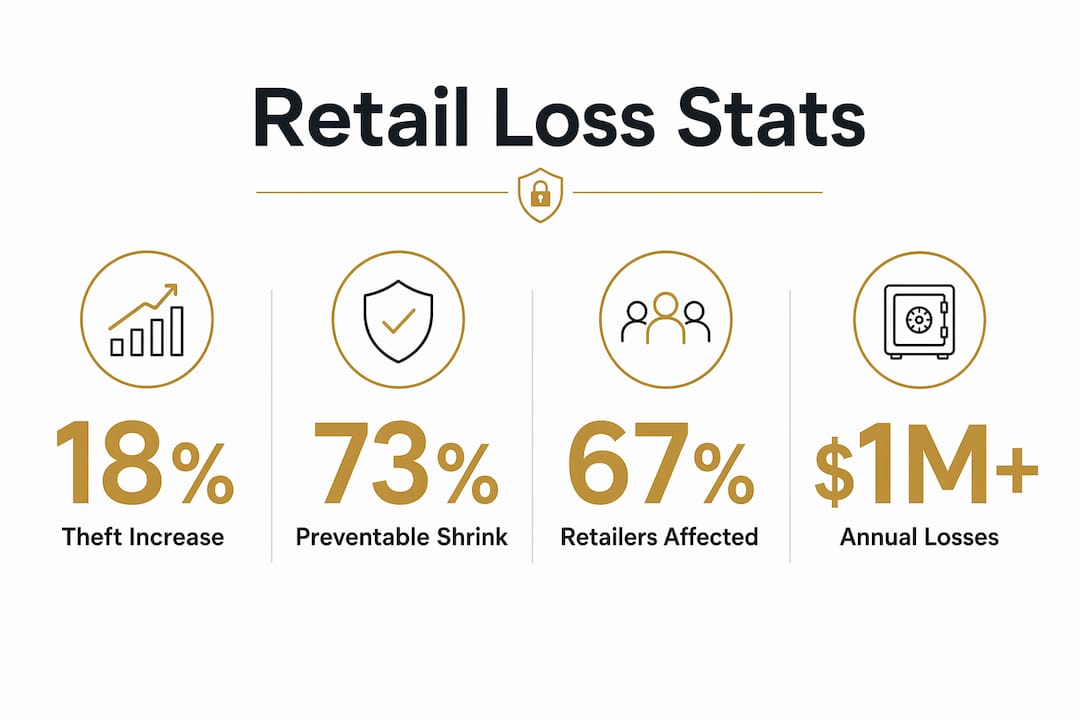
The numbers make the urgency clear. Retail theft incidents increased 18% year-over-year in 2025, with 67% of retailers impacted by organized retail crime. That figure means more than two-thirds of retail operators faced coordinated theft rings, not just opportunistic shoplifters. The financial exposure from a single organized retail crime event can exceed what a small retailer earns in a month.
Beyond direct theft, unprotected properties face cascading costs: higher insurance premiums, legal liability from customer or employee injuries, and the reputational damage that follows a publicized incident. A retail space that becomes known for poor security loses foot traffic before it loses inventory.
What are the major risks retail properties face without protection?
Retail properties without adequate security face five distinct and overlapping risk categories.
- Shoplifting and opportunistic theft. The most frequent threat, shoplifting accounts for a significant share of total shrink. Without visible deterrents like cameras or trained staff, opportunistic theft becomes routine.
- Organized retail crime (ORC). ORC groups operate with coordination and speed that overwhelms unprepared stores. The 67% of retailers affected by ORC in 2025 reported incidents involving multiple perpetrators and pre-planned exit strategies.
- Employee theft. Internal theft is often underestimated. It typically involves longer-term schemes like refund fraud, inventory manipulation, or cash skimming that go undetected for months.
- Vandalism and physical damage. Broken windows, graffiti, and property destruction generate repair costs and signal to other bad actors that a location is unmonitored.
- Violence and safety incidents. Theft events increasingly involve confrontation. NRF’s 2025 data shows a sharp rise in violence at theft events, creating liability exposure and staff turnover when employees feel unsafe.
Each of these risks compounds the others. A store that tolerates shoplifting signals low enforcement, which attracts ORC groups. ORC activity increases confrontation risk, which drives employee departures. The cycle is self-reinforcing and accelerates without intervention. Protecting your retail space is not a single decision. It is an ongoing operational commitment.
How does protecting retail property reduce shrink and financial losses?
Asset protection programs reduce shrink by targeting the sources that are actually controllable. 73% of retail shrink in 2025 was preventable, with 29% attributable to employee theft and 10% to organized retail crime. That statistic reframes the entire conversation: most retail loss is not inevitable. It is the result of gaps in detection, policy, and response.
Pro Tip: Focus your first security investment on employee theft controls, including point-of-sale monitoring and refund authorization protocols. Employee theft is the single largest preventable shrink category and often the most overlooked.
Early detection is where the financial leverage lives. Speeding detection-to-response compresses tail risk from severe incidents, limiting downstream costs like litigation and closure time. In practical terms, a camera system that flags a theft in progress and triggers a staff response costs far less than the legal fees from a violent confrontation that went unaddressed.
The table below shows how different protection investments map to specific loss categories:
| Protection measure | Primary loss category addressed |
|---|---|
| POS audit software | Employee theft, refund fraud |
| AI video analytics | Shoplifting, ORC detection |
| Access control systems | Inventory theft, after-hours intrusion |
| CPTED store layout | Opportunistic theft, vandalism |
| Commercial property insurance | Fire, catastrophic theft, liability |
Asset protection is a profit-protection strategy, not a cost center. When preventable shrinkage accounts for nearly three-quarters of total retail losses, the return on a well-structured protection program is measurable and direct.
What practical measures and technologies safeguard retail property?
Effective retail property security measures fall into four categories: physical controls, technology systems, design principles, and financial protection.
Physical and access controls
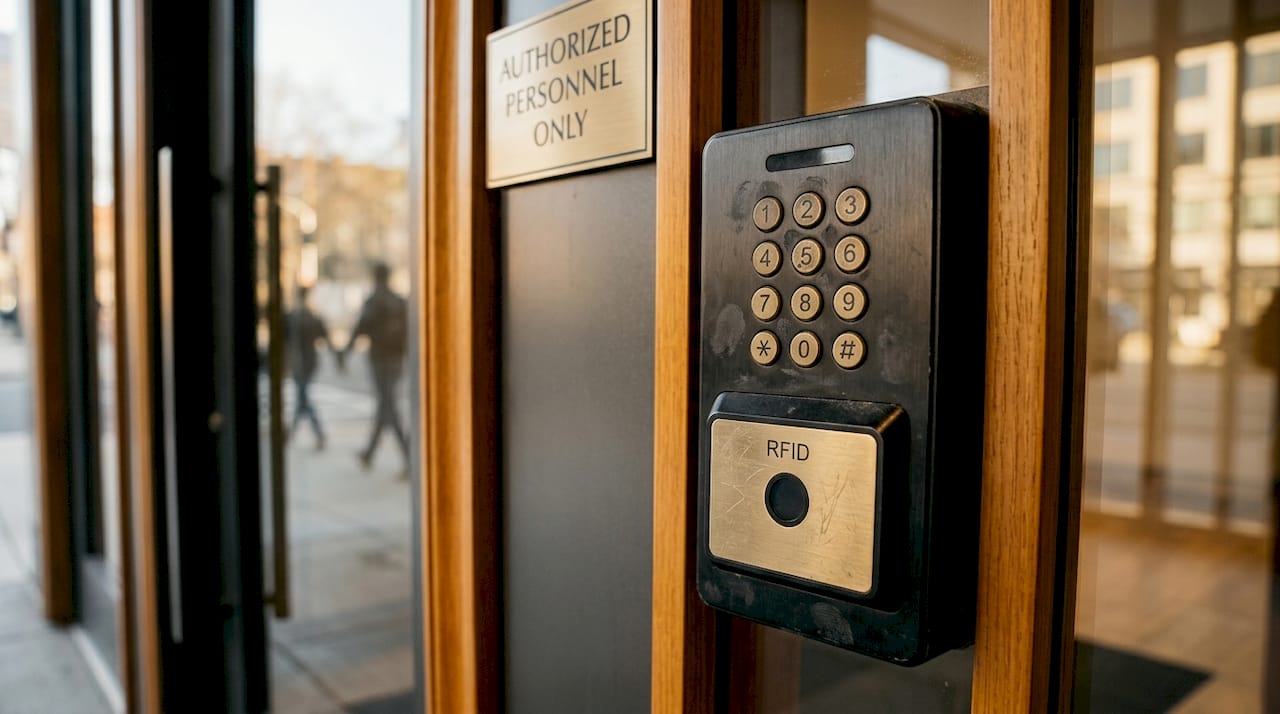
Retail access control manages entry points, reduces theft opportunities, and generates audit trails that support investigations. Programmable credential systems allow managers to set emergency lockdown states, restrict after-hours access, and trace exactly who entered which area and when. For multi-location retailers, centralized access management eliminates the vulnerability of lost keys or shared door codes. SafetyCulture’s analysis confirms that access control serves both operational and investigative roles, making it one of the highest-utility investments in the retail security stack.
AI-powered surveillance and remote monitoring
Modern security cameras deter theft and generate the evidence needed for prosecution and insurance claims. AI-powered video analytics go further by detecting behavioral patterns associated with theft before an incident completes. Remote monitoring services allow a single operator to watch multiple locations simultaneously, reducing the staffing cost of traditional security guards while maintaining coverage. The key is pairing detection capability with a defined response protocol. Technology that generates alerts nobody acts on provides no real protection.
CPTED design principles
Crime Prevention Through Environmental Design, known as CPTED, reduces theft by improving sightlines, maximizing natural surveillance, and encouraging legitimate customer interaction. CPTED-inspired layouts emphasize visibility rather than fortress-like restrictions. Locking all merchandise behind glass, for example, deters theft but also deters purchase. The goal is a store environment where staff can see the floor, customers feel comfortable, and bad actors feel observed. Shelf height, lighting placement, and register positioning all factor into a CPTED-compliant layout.
Pro Tip: Walk your store from the perspective of someone planning to steal. Identify blind spots, low-traffic aisles, and areas where staff sightlines are blocked. Those are your highest-risk zones and your first layout priorities.
Commercial property insurance
Commercial property insurance covers buildings, equipment, and inventory against incidents like fire and theft. MoneyGeek’s 2026 analysis notes that landlord insurance typically excludes tenant business property, meaning retail operators must carry separate coverage to protect their own assets. Insurance does not prevent loss, but it prevents a single catastrophic event from ending the business. It also creates a financial incentive to maintain documented security protocols, since insurers often require evidence of reasonable precautions before paying claims.
How does retail property protection support business continuity?
Protection programs that link detection, verification, evidence gathering, and response create a framework that goes beyond preventing individual incidents. They build the operational resilience that keeps a retail business running through disruptions. The five pillars of retail security program management identified by IntelliSee include threat detection, rapid response, evidence preservation, staff training, and documented compliance. Each pillar supports the others.
The business continuity benefits of a structured protection program include:
- Reduced closure time after incidents. Documented response protocols and preserved evidence speed insurance claims and law enforcement cooperation, shortening the time a store must close for investigation.
- Legal defensibility. Retailers with documented detection-and-response frameworks are better positioned in litigation. Plaintiffs in slip-and-fall or assault cases find it harder to argue negligence when a retailer can demonstrate systematic safety protocols.
- Employee retention. Staff who feel safe stay longer. High turnover in retail is expensive, and a significant driver is employees feeling exposed to theft-related confrontations without adequate support.
- Regulatory compliance. Many jurisdictions require documented safety and security protocols for retail operators. Gaps in compliance create fines and license risks that compound operational disruptions.
- Reputation management. A retail location with a public history of theft incidents or violence loses customers to competitors. Protecting your property protects your brand.
Elevating loss prevention and asset protection leaders to strategic advisors, rather than treating them as operational staff, is the structural change that makes these benefits compound over time. LP and AP leaders integrated into enterprise risk planning bring security knowledge to decisions about store layout, staffing models, and technology investment before problems emerge. Reviewing your security best practices annually with that lens is a discipline that pays for itself.
Key takeaways
Retail property protection is a profit-preservation strategy, and the 73% preventable shrink rate proves that most retail losses are the result of gaps in detection and response, not unavoidable circumstances.
| Point | Details |
|---|---|
| Shrink is mostly preventable | 73% of retail shrink is preventable; target employee theft and ORC first. |
| Detection speed reduces total cost | Faster detection-to-response limits litigation, closure time, and downstream losses. |
| CPTED balances security and sales | Store layout should maximize sightlines without restricting customer access or purchase behavior. |
| Insurance requires documented protocols | Commercial property insurance often requires evidence of security practices before paying claims. |
| LP leaders belong in strategy | Asset protection integrated into enterprise planning prevents losses before they occur. |
What most retail owners get wrong about property security
The most common mistake I see retail property owners make is treating security as a technology procurement decision rather than a program design decision. A manager buys cameras, installs them, and considers the job done. Six months later, the footage is never reviewed, the alerts are ignored, and the system exists only on paper.
Technology without response capability is theater. The retailers who actually compress their loss rates are the ones who pair detection tools with clear escalation protocols, trained staff, and regular program reviews. I have seen stores with modest camera setups outperform competitors with expensive AI systems because the modest setup had a human being who actually watched the feed and acted on what they saw.
The second mistake is treating security and customer experience as opposing forces. They are not. A well-lit, well-organized store with visible staff presence deters theft and improves the shopping experience simultaneously. The retailers who lock everything behind glass to prevent theft often find their conversion rates drop faster than their shrink does. CPTED principles exist precisely because the research shows that visibility and legitimate interaction are more effective deterrents than physical barriers.
My advice: start with a risk audit, not a product catalog. Identify your highest-loss categories, map your detection gaps, and build your response protocols before you spend a dollar on hardware. The asset protection strategies that work are the ones built around your specific store’s vulnerabilities, not a generic checklist.
— Chetna
Protect your retail property with the right security tools
Safesandsecuritydirect carries the surveillance cameras, access control systems, and commercial-grade safes that retail property owners need to build a protection program that actually works.

Whether you are securing a single storefront or managing multiple locations, Safesandsecuritydirect offers professional-grade equipment with the specifications retail environments demand. From AI-capable security cameras to fire-resistant and burglary-resistant safes for cash and sensitive documents, the product range covers every layer of a retail protection strategy. Explore the full retail security solutions at Safesandsecuritydirect, or review the asset protection checklist to identify exactly where your current setup has gaps.
FAQ
Why is retail property protection important for business survival?
Retail property protection directly prevents the financial losses that threaten business viability. With 73% of retail shrink classified as preventable, unprotected properties absorb losses that a structured asset protection program would eliminate.
What are the biggest risks of unprotected retail property?
Unprotected retail properties face shoplifting, organized retail crime, employee theft, vandalism, and violence-related liability. Retail theft incidents rose 18% year-over-year in 2025, making inaction increasingly costly.
How do access control systems help safeguard retail property?
Access control systems restrict unauthorized entry, generate audit trails for investigations, and support emergency response through programmable lockdown states. They serve both preventive and investigative functions in a retail security program.
Does commercial property insurance replace the need for active security measures?
No. Commercial property insurance covers losses after they occur but does not prevent them. Insurers also frequently require documented security protocols as a condition of coverage, making active security measures a prerequisite for full insurance protection.
How does CPTED improve retail security without hurting sales?
CPTED uses store layout, lighting, and sightlines to deter theft through natural surveillance rather than physical barriers. This approach reduces theft opportunities while preserving the open, accessible environment that supports customer conversion.
Recommended
- Industry Security Best Practices: Protect Property and Reduce Risk – Safes and Security Direct
- Why prioritize security in 2026: protect what matters – Safes and Security Direct
- Asset protection checklist 2026: secure home and business – Safes and Security Direct
- Why asset protection matters: safeguard your wealth in 2026 – Safes and Security Direct