

What is a fire-resistant safe? Protect valuables now
Most people assume any safe will protect their valuables from fire, but that’s a dangerous misconception. Standard safes are built to resist burglary, not extreme heat. Fire-resistant safes offer specialized protection designed to shield documents, electronics, and irreplaceable items from fire damage. Understanding what makes a safe truly fire-resistant, how ratings work, and which features matter most helps you make an informed choice. This guide explains everything you need to know about fire-resistant safes, from testing standards to selecting the right model for your home or business.
Table of Contents
- Key takeaways
- What is a fire-resistant safe?
- Understanding fire resistance ratings and standards
- Choosing the right fire-resistant safe for your needs
- Maintaining and using your fire-resistant safe effectively
- Protect your valuables with fire-resistant safes from Safes and Security Direct
- FAQ
Key Takeaways
| Point | Details |
|---|---|
| Not all safes fireproof | Many safes focus on burglary resistance and offer zero fire protection unless they are explicitly rated for fire resistance. |
| Fire ratings explained | Fire ratings indicate how long and at what temperature contents remain protected under test conditions. |
| Key safety features | Quality fire resistant safes include multiple insulation layers expanding seals reinforced door construction and interior temperature control systems. |
| Verify and install properly | Always verify the rated fire protection and ensure proper placement and professional installation to maximize effectiveness. |
What is a fire-resistant safe?
A fire-resistant safe is purpose-built to protect its contents from fire damage by withstanding high temperatures for a specific duration. Unlike standard safes that focus solely on preventing theft, fire-resistant safes protect contents from extreme heat using specialized insulation materials and heat-resistant seals. These safes feature multiple layers of fire-resistant material, often including gypsum board, concrete, or proprietary compounds that absorb heat and maintain cooler internal temperatures.
The technology behind fire resistance involves more than thick walls. Manufacturers incorporate expanding door seals that activate when exposed to heat, creating an airtight barrier against flames and smoke. Interior insulation prevents heat transfer, keeping contents at safe temperatures even when exterior surfaces reach extreme levels. This protection proves critical for homeowners and small business operators who store important documents, cash, backup drives, or sentimental items that can’t be replaced.
A common myth needs addressing: not all safes offer fire protection. Many safes on the market provide excellent burglary resistance with reinforced steel and advanced locking mechanisms but offer zero fire protection. If fire resistance isn’t explicitly stated in the specifications, assume the safe won’t protect your valuables from flames. Always verify fire ratings before purchasing.
According to the National Fire Protection Association, U.S. fire departments respond to a home fire every 93 seconds. Without proper protection, irreplaceable documents and valuables face complete destruction in minutes.
Fire ratings indicate both duration and temperature resistance. A safe rated for one hour at 1700°F means it maintains safe internal temperatures for 60 minutes when exposed to flames reaching 1700 degrees Fahrenheit. Understanding these ratings helps you match protection levels to your specific needs and the valuables you’re safeguarding.
Key features that define quality fire-resistant safes include:
- Multiple layers of fire-resistant insulation material throughout walls, door, and top
- Expanding intumescent seals that activate with heat exposure
- Reinforced door construction with heat-resistant hinges
- Interior temperature maintenance systems
- Verified testing and certification from recognized laboratories
The role of fireproof safes extends beyond simple storage. They provide peace of mind knowing that even in worst-case scenarios, your most important possessions remain protected. For small business owners, this means tax records, contracts, and backup systems survive. For homeowners, family photos, passports, and financial documents stay intact.
Understanding fire resistance ratings and standards
Fire resistance ratings provide standardized measurements of how long a safe protects contents during fire exposure. These ratings combine two critical factors: temperature resistance and time duration. Common ratings include 30 minutes at 1400°F, one hour at 1700°F, and two hours at 1850°F. The higher the temperature and longer the duration, the more robust the protection.
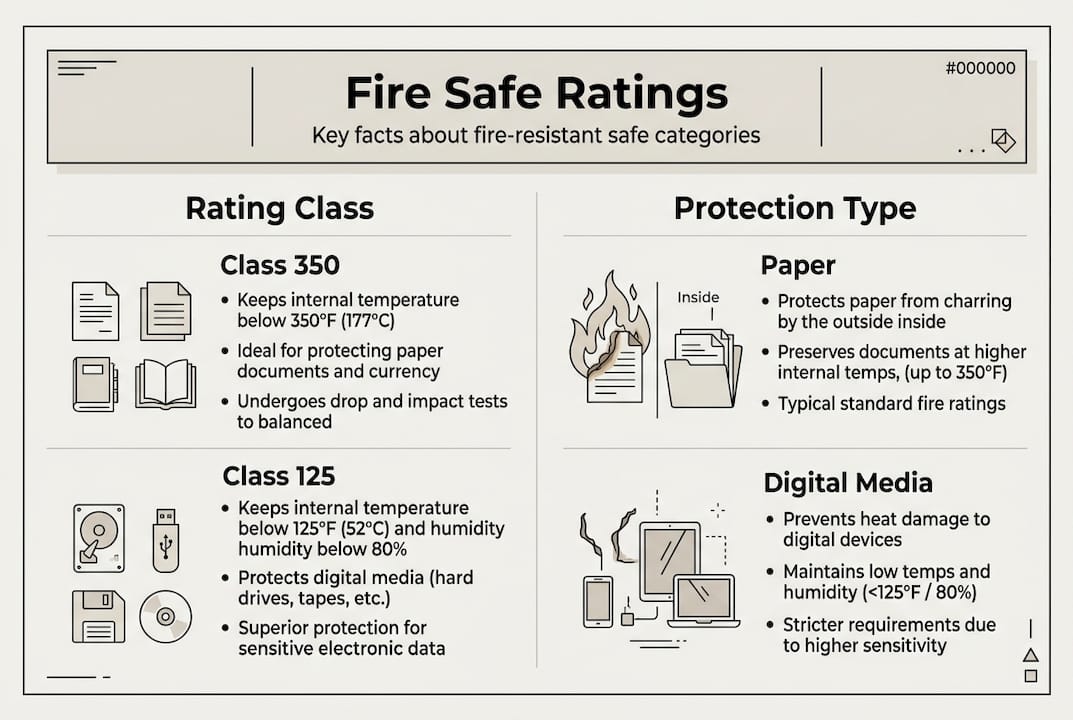
Testing organizations like Underwriters Laboratories establish these standards through rigorous testing. Safes undergo controlled fire exposure in specialized furnaces, with internal temperatures monitored throughout the test. To pass certification, the interior must stay below specified thresholds that prevent damage to paper documents, typically around 350°F, or digital media, which requires even lower temperatures around 125°F.
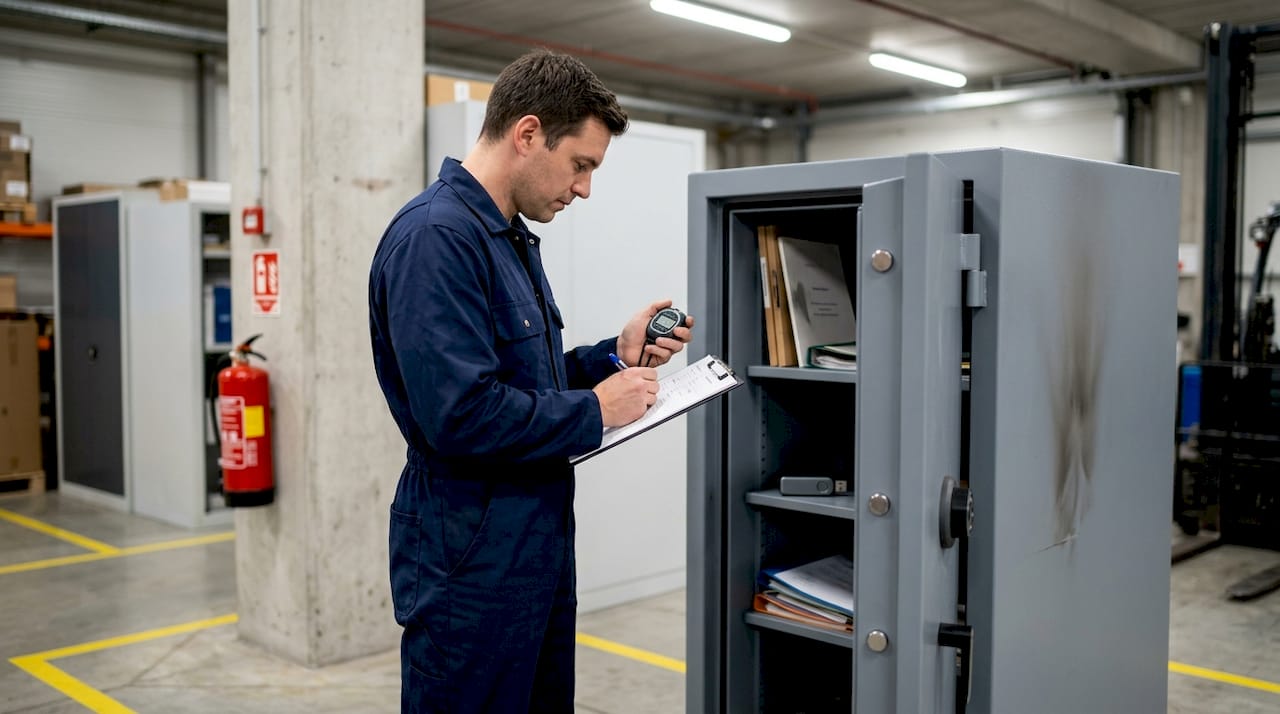
Fire-resistance ratings measure safe performance in standardized tests that simulate real-world fire conditions. Understanding these ratings helps you select appropriate protection for your valuables.
| Fire Rating | Maximum Temperature | Protection Duration | Best For |
|---|---|---|---|
| Class 350 (30 min) | 1400°F | 30 minutes | Basic document protection, small valuables |
| Class 350 (1 hour) | 1700°F | 60 minutes | Important papers, cash, standard home use |
| Class 350 (2 hours) | 1850°F | 120 minutes | Critical documents, business records |
| Class 125 (1 hour) | 1700°F | 60 minutes | Digital media, USB drives, hard drives |
| Class 125 (2 hours) | 1850°F | 120 minutes | Extensive digital archives, backup systems |
Reading fire rating labels requires attention to detail. Look for certification marks from recognized testing laboratories, not just manufacturer claims. The label should clearly state the class rating, temperature, and duration. Legitimate certifications include specific test numbers and dates you can verify.
How to interpret fire rating specifications:
- Identify the class number, which indicates maximum internal temperature during testing
- Note the time duration the safe maintained that temperature threshold
- Check for independent laboratory certification, not just manufacturer testing
- Verify the rating matches your valuables’ needs
- Confirm the certification is current and hasn’t expired
Pro Tip: Store paper documents in Class 350 rated safes, but digital media requires Class 125 protection. Hard drives and USB devices fail at much lower temperatures than paper burns, so matching the rating to your specific valuables prevents costly mistakes.
Beware of misleading claims. Terms like “fire-resistant” without specific ratings mean little. Some manufacturers use vague language suggesting fire protection without actual certification. Always demand clear, verifiable fire ratings from recognized testing organizations. The fire resistant home safe buying guide provides detailed information on evaluating certifications and avoiding products with questionable claims.
Another consideration involves impact ratings. Some fire-resistant safes include impact testing, where the safe is dropped after fire exposure to simulate building collapse. This additional certification ensures the safe remains intact and sealed even if it falls through burning floors, providing an extra layer of protection for severe fire scenarios.
Choosing the right fire-resistant safe for your needs
Selecting the ideal fire-resistant safe starts with identifying what you need to protect. Different valuables require different protection levels, and understanding these requirements prevents both over-spending and under-protection. Documents like birth certificates, property deeds, and tax records need Class 350 protection. Digital media including backup drives, photo archives, and business data require Class 125 safes that maintain lower internal temperatures.
Size and capacity planning matters more than most people realize. Measure your current valuables, then add 30% for future storage needs. Safes filled to capacity don’t allow proper air circulation, potentially reducing fire protection effectiveness. Consider vertical space too, as taller safes accommodate hanging files and larger items without cramping.
Fire rating selection depends on realistic fire scenarios in your area. Proper selection considers valuables type, fire rating, size, and installation location for best protection. Urban areas with faster fire department response times might need only 30-minute ratings, while rural locations with longer response times benefit from one or two-hour protection. Research average fire department response times in your neighborhood to make informed decisions.
Safe types offer different advantages:
- Freestanding floor safes provide maximum capacity and often combine fire and burglary resistance
- Wall safes offer concealment benefits but typically smaller capacity and lower fire ratings
- Filing cabinet safes protect documents in office settings with easy access
- Chest-style safes work well for smaller items and portable protection needs
- In-floor safes provide excellent concealment and fire protection from ground-level installation
Placement and installation dramatically affect fire protection performance. Avoid exterior walls where fire exposure is most intense. Interior closets on ground floors offer better protection than upper levels where heat rises. Never install fire-resistant safes in attics or garages where temperature extremes already exist. Concrete floors provide better heat dissipation than wooden floors, enhancing the safe’s fire resistance.
Critical features to verify when purchasing:
- Verified fire rating from recognized testing laboratory with specific class and duration
- Door seal quality and type, preferably expanding intumescent seals
- Bolt-down capability for securing safe to floor or wall
- Interior organization options like shelves and document holders
- Locking mechanism quality, ideally electronic or biometric for quick access
- Warranty coverage specifically addressing fire damage scenarios
- Weight appropriate for your installation location and floor load capacity
Pro Tip: Balance fire protection with burglary resistance for comprehensive security. Many quality safes offer both features, protecting valuables from multiple threats. While fire-resistant safes focus on heat protection, adding burglary resistance through reinforced steel and advanced locks provides complete peace of mind.
Budget considerations shouldn’t compromise essential protection. A moderately priced safe with proper fire ratings outperforms an expensive model with inadequate specifications. Focus spending on verified fire ratings and quality construction rather than unnecessary features. The fireproof safe selection guide helps identify which features deliver real value versus marketing hype.
Consider future needs when selecting safe size. Business owners should anticipate document growth, while homeowners might accumulate more valuables over time. Upgrading to a larger safe costs less initially than replacing an outgrown model later. Think about what you might store five years from now, not just today’s needs.
Maintaining and using your fire-resistant safe effectively
Proper storage techniques inside your fire-resistant safe maximize protection effectiveness. Store documents in protective sleeves or folders to prevent moisture damage and keep items organized. Electronics and digital media benefit from additional protection like anti-static bags or padded cases. Avoid overfilling the safe, as packed contents restrict air circulation and may reduce fire protection performance.
Location choices significantly impact fire resistance effectiveness. Place safes away from exterior walls where fire exposure is most severe. Interior rooms on ground floors offer superior protection compared to upper levels where heat and flames rise. Basements provide excellent fire protection due to below-grade positioning, though moisture control becomes more critical. Keep safes away from water heaters, furnaces, and other heat sources that could compromise insulation materials over time.
Regular inspection ensures ongoing protection. Check door seals quarterly for cracks, gaps, or deterioration. Test locking mechanisms monthly to verify smooth operation. Examine the safe’s exterior for rust, dents, or damage that might compromise fire resistance. Interior moisture control matters too, so use desiccant packs in humid climates and replace them every few months.
Key maintenance steps for lasting fire protection:
- Inspect door seals every three months for wear or damage
- Test locks and hinges monthly to ensure proper operation
- Clean exterior surfaces annually to prevent rust and corrosion
- Monitor interior humidity levels and use moisture control products
- Verify bolt-down security annually to ensure safe remains properly anchored
- Document safe contents with photos and lists stored separately
- Review fire rating adequacy every few years as valuables change
Combining fire-resistant safes with other security measures creates comprehensive protection. Install smoke detectors near the safe location for early fire warning. Consider residential sprinkler systems that dramatically reduce fire damage. Keep fire extinguishers accessible on each floor. These complementary measures work together, giving you more time to evacuate safely while your valuables remain protected inside the fire-resistant safe.
Proper maintenance and placement extend the life and efficacy of your fire-resistant safe. Following manufacturer guidelines for care and use ensures the safe performs as designed when fire strikes.
Timing safe replacement or upgrades depends on several factors. Fire-resistant materials can degrade over time, especially in harsh environments. Most quality safes provide reliable protection for 20 to 30 years with proper maintenance. However, if you notice significant seal deterioration, structural damage, or your protection needs change substantially, consider upgrading. Technology improvements mean newer safes often offer better protection at similar price points compared to older models.
Digital inventory management helps track safe contents. Photograph items before storing them, noting serial numbers and values. Store this inventory separately, perhaps in cloud storage or with a trusted family member. Update the inventory whenever you add or remove items. This documentation proves invaluable for insurance claims if fire does strike, and helps you remember exactly what needs protection.
Seasonal considerations affect safe performance in some climates. Extreme temperature swings can stress seals and insulation materials. In very cold climates, avoid placing safes in unheated spaces where condensation might form. In hot climates, ensure adequate ventilation around the safe to prevent heat buildup. These environmental factors don’t eliminate fire protection but can affect long-term durability.
Protect your valuables with fire-resistant safes from Safes and Security Direct
Now that you understand fire-resistant safe features, ratings, and selection criteria, finding the right model becomes straightforward. Safes and Security Direct specializes in quality fire-resistant safes designed for homeowners and small business operators who need reliable protection. Their extensive selection includes models with various fire ratings, sizes, and features to match your specific protection requirements.
The website offers expert guidance to help you navigate fire rating specifications and choose safes that truly protect your valuables. Whether you need basic document protection or advanced digital media safeguarding, their product range covers all protection levels. Each safe listing includes detailed specifications, verified fire ratings, and clear information about testing certifications, making comparison and selection easier.
Browsing fire-resistant safes at Safes and Security Direct connects you with professional-grade security equipment backed by reliable customer support. Their team understands the technical aspects of fire protection and can answer questions about ratings, installation, and maintenance. This expertise helps you invest confidently in protection that works when you need it most.
FAQ
What is the difference between fire-resistant and fireproof safes?
Fire-resistant safes protect contents from heat damage for specific time periods at defined temperatures, as verified by testing standards. The term fireproof suggests complete protection, but no safe is truly fireproof indefinitely. All safes have limits based on their fire rating, so fire-resistant is the more accurate and honest term. When shopping, focus on verified fire ratings rather than marketing terms like fireproof.
How long can a fire-resistant safe protect my valuables during a fire?
Protection duration depends entirely on the safe’s fire rating, typically ranging from 30 minutes to two hours at temperatures between 1400°F and 1850°F. A safe rated for one hour at 1700°F maintains safe internal temperatures for 60 minutes during fire exposure at that temperature. Choose ratings based on expected fire department response times in your area. Rural locations benefit from longer duration ratings, while urban areas with faster response might need only 30-minute protection.
Can I store digital media safely in a fire-resistant safe?
Yes, but you need a safe with Class 125 rating specifically designed for digital media protection. Standard Class 350 safes protect paper documents but allow internal temperatures too high for hard drives, USB devices, and other electronics. Digital media fails at around 125°F, much lower than paper’s burning point. Always verify your safe has appropriate Class 125 certification if you’re storing backup drives, photo archives, or other digital valuables.
Should a fire-resistant safe also be burglar-resistant?
Absolutely, combining both protections provides comprehensive security for your valuables. Fire-resistant safes focus on heat protection through insulation, while burglary resistance requires reinforced steel and advanced locking mechanisms. Quality safes offer both features, protecting against multiple threats. This dual protection proves especially valuable for small business owners storing cash and important documents, or homeowners safeguarding jewelry and financial records. The modest additional cost for combined protection delivers significant peace of mind.
Recommended
- Fireproof Safe Selection Guide for Secure Home Protection – Safes and Security Direct
- Role of Fireproof Safes in Asset Protection – Safes and Security Direct
- Why Invest In a Safe for Valuables: Real Protection – Safes and Security Direct
- Buying Guide For Fire Resistant Home Safe in the United States – Safes and Security Direct
- What is Flame Resistant Clothing? Understanding Its Importance – WorkWearComfort