

Why surveillance cameras protect your property and why it matters
TL;DR:
- Surveillance cameras effectively deter criminals, capture valuable evidence, and provide peace of mind when properly installed and maintained. Their success depends heavily on strategic placement, active monitoring, and integrating complementary security measures like lighting and alarms. Proper implementation and ongoing management are crucial to ensuring cameras deliver meaningful property protection rather than just surveillance.
Surveillance cameras are more common than ever on homes and small businesses, yet there’s still genuine confusion about whether they actually work. Some owners install a camera system and feel immediately safer. Others spend thousands on hardware only to find it didn’t prevent a break-in or that footage was too blurry to help police. Research on surveillance camera crime effects confirms that cameras can help homeowners and small businesses by deterring criminals and providing usable evidence, but only when the right system is chosen and deployed correctly. This guide cuts through the confusion with clear evidence and practical direction.
Table of Contents
- The core reasons people choose surveillance cameras
- Does CCTV really reduce crime? Evidence and limits
- Features that maximize the value of surveillance cameras
- Real-world considerations: implementation and pitfalls
- What most buyers overlook about surveillance cameras
- Connect surveillance insights to your property’s needs
- Frequently asked questions
Key Takeaways
| Point | Details |
|---|---|
| Essential deterrence | Visible surveillance cameras make properties less attractive to opportunistic criminals. |
| Reliable evidence | Cameras provide credible documentation for investigations and insurance claims. |
| Setup matters | Optimal placement, lighting, and monitoring determine security camera effectiveness. |
| Choose smart features | Look for remote viewing, suitable storage, and system compatibility for future needs. |
| Avoid common pitfalls | Regular checks and thoughtful installation prevent coverage gaps and maximize protection. |
The core reasons people choose surveillance cameras
People install cameras for three reasons above all others: to discourage criminals before anything happens, to capture evidence if something does happen, and to gain steady peace of mind. Each of these is legitimate. Each also depends on getting your setup right.
Deterrence is the most frequently cited benefit, and it holds up in real-world research. Deterrence and evidence are the two primary reasons property owners adopt surveillance systems, and visible cameras genuinely change how opportunistic offenders assess risk. Someone looking for an easy target will typically move on when they see cameras mounted at entrances, driveways, and parking areas. Understanding how cameras deter theft in practice reveals that placement and visibility are just as important as camera quality itself.
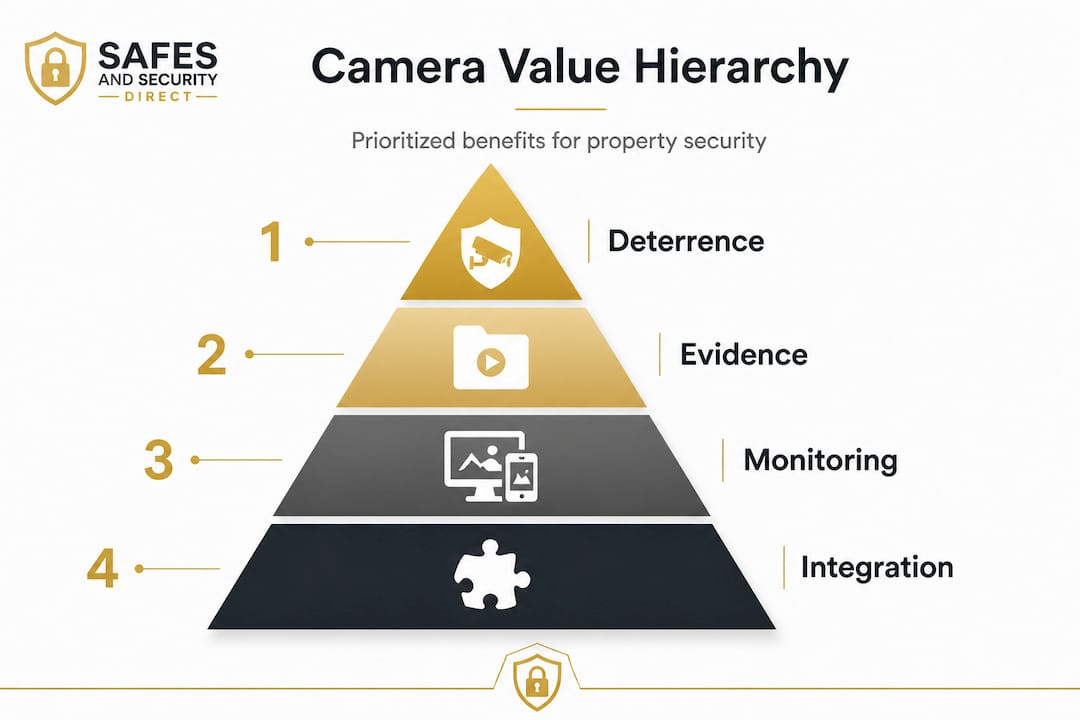
Evidence collection is the second major benefit. When a crime does occur, clear, time-stamped footage is often the deciding factor in police investigations, insurance settlements, and courtroom proceedings. Disputes between neighbors, slip-and-fall claims at a small business, and employee misconduct all become far easier to resolve when you have video documentation. Many business owners who initially installed cameras for theft prevention quickly discover that the evidence function pays off in entirely different situations they hadn’t anticipated.
Peace of mind is harder to measure but genuinely valuable. Knowing that your property is documented around the clock reduces anxiety, particularly for homeowners who travel frequently or small business owners managing multiple locations. The psychological benefit of seeing your cameras active on a phone app at midnight is real, and the room surveillance benefits extend beyond simple crime prevention into overall property management.
Here’s a quick summary of why each benefit matters:
- Deterrence: Visible cameras change a criminal’s risk calculation before any crime is attempted
- Evidence: Footage supports police, insurance claims, legal proceedings, and internal reviews
- Monitoring: Real-time access lets you respond to incidents as they happen, not hours later
- Documentation: Ongoing recording creates a record useful for disputes, liability, and audits
- Integration: Cameras paired with alarms and lighting multiply each system’s effectiveness
“A camera spotted at the right angle does more to prevent a break-in than one hidden in the shadows. Visibility is part of the protection.”
Pro Tip: Position at least one camera at eye level near every primary entry point. Visible placement signals to anyone approaching that they are being recorded, which is often enough to send an opportunistic offender elsewhere.
The best results come when cameras are integrated with complementary measures: motion-activated lighting, alarm systems, and secure door hardware. Cameras working alongside those tools address the full picture of property risk in a way that no single device can on its own. You can also read more about cameras deterring burglary to understand exactly how this works in residential settings.
Does CCTV really reduce crime? Evidence and limits
The evidence is broadly positive but genuinely nuanced. Blanket claims that “cameras stop crime” are too simple, and so is the cynical counter-claim that “cameras don’t actually help.” What the data shows is that context drives outcomes.
A study on CCTV outcomes in Detroit found that effectiveness depends heavily on the environment and implementation: the crime type being targeted, whether cameras are actively monitored, and the ambient lighting conditions all influence whether a system delivers real protection or just expensive hardware that looks good on paper.
The numbers are instructive. In controlled evaluations of camera-covered hot spots, researchers found an 8.5% crime decrease in areas with CCTV versus a 13.4% increase in control areas without cameras. That is a meaningful gap, but researchers also noted that not all findings reached statistical significance, which means context and execution consistently determine outcomes. The same hardware can produce dramatically different results depending on how and where it is deployed.
| Factor | High impact scenario | Low impact scenario |
|---|---|---|
| Lighting | Well-lit entry with camera | Dark alleyway, no supplemental light |
| Monitoring | Active staff review of live feeds | Footage only reviewed after an incident |
| Camera placement | Covers all entry/exit points | Blind spots at side doors or parking |
| Crime type | Opportunistic theft or vandalism | Planned, organized crime |
| System maintenance | Regular updates and checks | Outdated firmware, degraded lenses |
“Cameras are most effective when they are treated as an active security tool, not a passive one. A monitored system is a fundamentally different product than an unmonitored one.”
To optimize your business security with CCTV, start by identifying your property’s actual risk profile: which entry points are most exposed, what times of day see the highest activity, and whether any areas currently have zero coverage. That analysis should drive your camera placement before you think about resolution specs or brand comparisons.
Understanding how CCTV protects property means accepting that technology alone is not a solution. It is a force multiplier for good physical security practices. When lighting is adequate, placement is strategic, and someone is actually reviewing footage, cameras deliver strong results. When those conditions are absent, the same system offers far less return on investment.
Features that maximize the value of surveillance cameras
Once you understand what cameras can and cannot do, the next step is choosing the right features for your specific property and risk profile. Not all systems are equal, and the wrong feature set can leave serious gaps in your protection.
Start with these five key considerations, in priority order:
- Coverage and resolution: Higher resolution matters most at entry points where you need to identify faces or license plates. 4K resolution is increasingly affordable and worth the investment for doors and driveways.
- Night vision and lighting: Infrared (IR) night vision is standard on most modern cameras, but its effective range varies widely. Pair cameras with motion-activated lights for the best nighttime footage quality.
- Storage method: Cloud storage gives you remote access and automatic backup, but comes with monthly fees. Local storage via a network video recorder (NVR) is a one-time cost with more privacy but requires on-site hardware management.
- Connectivity and power: Wired cameras offer reliability and continuous power but require installation work. Wi-Fi cameras are more flexible but depend on network stability. Battery-powered options work well in locations without easy wiring.
- Smart integration and alerts: App-based alerts, smart home compatibility, and motion-triggered notifications let you respond to events immediately rather than reviewing footage hours or days later.
Choosing the right system involves balancing resolution, storage, connectivity, and integration to meet both current and future needs. A system that works perfectly today but can’t integrate with a new alarm or smart lock two years from now is a limited investment.
| Feature | Wired system | Wi-Fi system |
|---|---|---|
| Reliability | Very high, no interference | Moderate, signal dependent |
| Installation effort | Higher, requires cabling | Lower, flexible placement |
| Power | Continuous, no battery drain | Battery or PoE options |
| Scalability | Easier to expand on existing NVR | Varies by brand ecosystem |
| Remote access | Yes, via NVR app | Yes, via cloud or local app |
Learning about live camera features and remote access options helps you understand which systems will genuinely fit your daily life and monitoring habits. If you are new to this category, the essential guide to camera systems for beginners is an excellent starting point before diving into hardware specs.
Pro Tip: Don’t budget heavily for camera hardware and then skimp on lighting. A $50 motion-activated floodlight paired with a mid-range camera will outperform an expensive camera in poor lighting every single time. Lighting is the unsung hero of nighttime security footage.
Finally, consider that remote security monitoring can reduce false alarm rates dramatically when cameras and sensors are integrated. False alarms drain response resources and can result in fines from some municipalities. A well-integrated system that cross-references camera activity with sensor triggers sends far fewer unnecessary alerts.
Real-world considerations: implementation and pitfalls
Even a well-chosen system can underperform if installation and ongoing management are handled poorly. This is where many buyers leave protection on the table.
Common pitfalls that undermine camera systems include:
- Poor placement: Cameras aimed at the wrong angle, too high, or obscured by vegetation miss the key moments they were designed to capture
- Ignored blind spots: Every property has angles that a standard front-door camera won’t cover. Map your blind spots deliberately and add cameras or mirrors to close them
- Neglected maintenance: Dust, spider webs, and weathering degrade lens quality over months. Cameras that looked great on day one can produce unusable footage a year later without regular cleaning
- Default passwords: Most camera systems ship with default login credentials. Leaving these unchanged makes your system vulnerable to remote access by anyone who knows the brand’s default settings
- Wi-Fi dependence without backup: A Wi-Fi camera that goes offline during a power outage or router failure records nothing during exactly the kind of high-stress scenario where footage would matter most
Effectiveness depends on proper installation, ongoing monitoring, and careful attention to environmental factors. This finding from CCTV outcome research aligns with what experienced installers see in the field: the technology is proven, but the human factors around setup and maintenance drive real-world results.
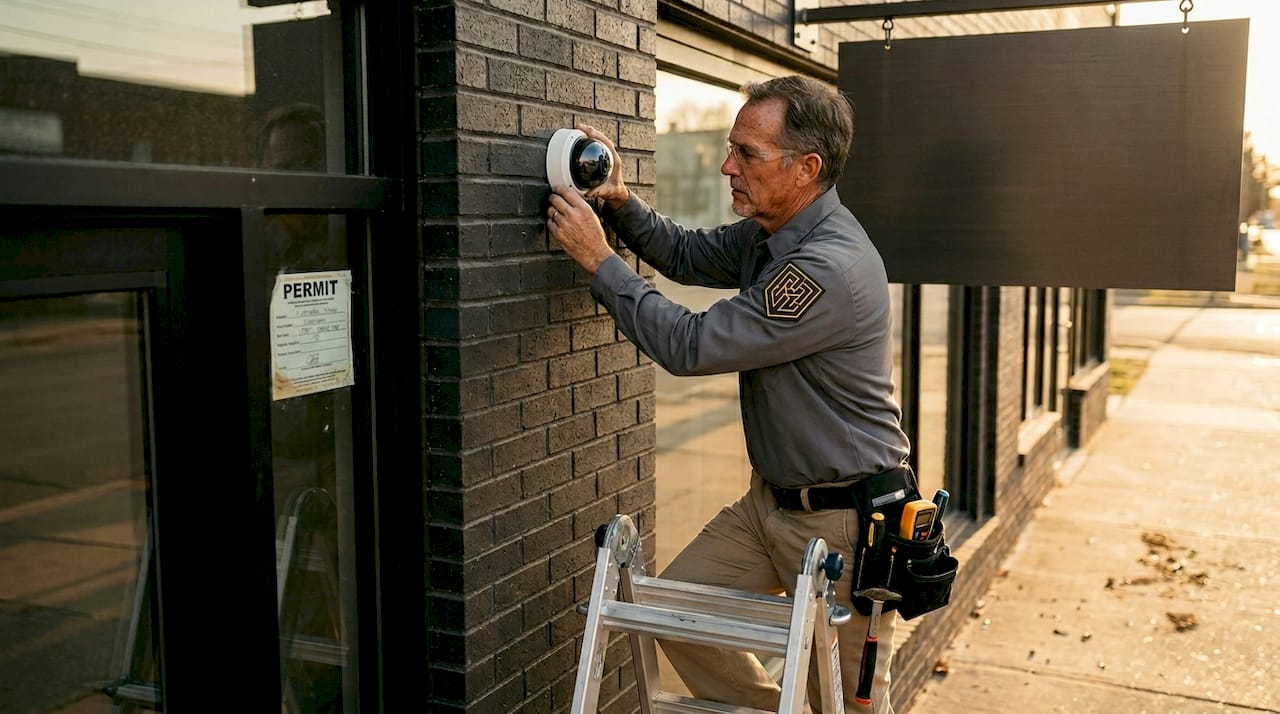
Weather is another practical factor homeowners in variable climates often overlook. Check your camera’s IP rating before mounting it outdoors. A camera rated IP66 or higher is sealed against heavy rain and dust. A camera without a proper weatherproof rating can fail within a single winter season, leaving you with a false sense of security.
Understanding wired camera systems and their pros and cons is particularly useful for anyone planning a permanent installation on a home or retail space. For properties with unusual layouts or outbuildings, satellite security camera systems offer coverage solutions that standard wired setups can’t reach.
Pro Tip: Set a calendar reminder to review your camera footage and system settings every 30 days. Check that all cameras are recording correctly, update firmware when available, and change passwords quarterly. These small habits prevent the kind of gradual system degradation that leaves owners unprotected without realizing it.
What most buyers overlook about surveillance cameras
Here’s an honest take that most camera marketing skips over entirely: buying a camera system is not the same as securing your property.
The most common mistake we see is treating camera installation as the endpoint of a security decision rather than one component of a broader strategy. A homeowner installs four cameras, signs up for cloud storage, and mentally checks “security” off the list. Six months later, they discover the side gate was never in frame, the back camera’s lens fogged over in winter, and nobody reviewed the footage after a package theft because the alert went to a silenced phone. The technology worked exactly as designed. The protection failed completely.
Real-world camera effectiveness depends consistently on deployment context, not just hardware quality. This is the insight that separates buyers who get genuine security value from those who get an expensive false reassurance. Smart deployment means auditing your property’s actual vulnerabilities first, then building a camera plan around those gaps rather than around what looks good or what’s on sale.
There’s also a community dimension that individual buyers rarely consider. Cameras covering your property do not cover your neighbor’s driveway, where a thief might park a vehicle out of frame. Coordinating coverage with nearby properties and sharing footage access with local law enforcement programs dramatically increases the practical impact of any single installation. Some neighborhoods have seen significantly stronger crime reduction outcomes when multiple properties with cameras are treated as a coordinated network rather than isolated systems.
The best approach to CCTV optimization starts with a coverage gap analysis, continues through proper installation and integration, and includes a consistent maintenance routine. That is the version of surveillance that actually reduces risk rather than just documenting it after the fact.
Connect surveillance insights to your property’s needs
Understanding what surveillance cameras can actually do is the first step. Choosing the right system for your specific home or business is where that knowledge becomes practical protection.
At Safes and Security Direct, we offer a carefully selected range of professional-grade surveillance cameras, systems, and complementary security products designed for homeowners and small business owners who want real protection, not just hardware. Whether you are starting with your first camera or upgrading an existing system, our product listings include detailed specifications, pricing, and guidance to help you match the right solution to your property. Explore the benefits of surveillance cameras and browse our full range to take the next step toward confident, comprehensive property security.
Frequently asked questions
Do visible surveillance cameras really deter criminals?
Visible surveillance cameras can deter opportunistic offenders, particularly when they are clearly positioned at entry points and supported by adequate lighting. Research finds mixed but generally positive crime effects from well-placed CCTV systems.
Is footage from surveillance cameras useful for insurance claims?
Yes, time-stamped recorded footage can verify the facts of an incident and is widely accepted in insurance claim processes. Footage supports investigations, claims, and prosecutions more effectively when captured in high resolution.
Does camera quality or lighting matter more for night security?
Both matter, but lighting is often the limiting factor. Camera effectiveness at night drops sharply in poor lighting regardless of sensor quality, so pair any camera upgrade with motion-activated exterior lighting.
Should I choose cloud or local storage for my camera system?
Cloud storage offers remote access and automatic off-site backup, while local storage provides more privacy and no recurring fees. Your storage decision should reflect your budget, privacy preferences, and how often you need to access footage remotely.
Can I integrate new cameras with existing smart home systems?
Many modern cameras support smart home integration through platforms like Google Home, Amazon Alexa, or Apple HomeKit. Always confirm compatibility before purchasing to avoid investing in hardware that won’t connect with your existing ecosystem.
Recommended
- Surveillance cameras: what they really do for your security – Safes and Security Direct
- How security cameras deter theft and protect your property – Safes and Security Direct
- How CCTV protects your home and business effectively – Safes and Security Direct
- Top Benefits of Room Surveillance Cameras – Safes and Security Direct