

Security Standards for Businesses: Reducing Risk and Ensuring Compliance
Protecting assets in a fast-changing threat environment is a daily reality for every security manager. The challenge of choosing and implementing the right policies can seem overwhelming, especially with so many standards developed for different business needs. Security standards offer a clear path forward by translating policies into consistent, measurable controls. This article guides you through proven frameworks, helping you align protection efforts with current risks, industry requirements, and regulatory demands for maximum effectiveness.
Table of Contents
- Defining Security Standards For Businesses
- Major Types Of Security Standards And Frameworks
- Legal And Regulatory Compliance Requirements
- Implementing Security Standards In Your Organization
- Risks Of Non-Compliance And Common Mistakes
Key Takeaways
| Point | Details |
|---|---|
| Importance of Security Standards | Security standards provide structured frameworks translating organizational policies into enforceable practices that enhance overall protection. |
| Framework Diversity | Organizations must evaluate their unique security needs when selecting from diverse frameworks like NIST CSF, ISO 27001, and PCI-DSS. |
| Compliance Necessity | Legal compliance is vital, requiring proactive internal processes to adapt continuously to regulatory changes and mitigate risks. |
| Risks of Non-Compliance | Non-compliance can lead to severe financial penalties, operational disruptions, and significant reputational damage to businesses. |
Defining Security Standards for Businesses
Businesses today operate in complex environments where protecting digital and physical assets requires systematic approaches. Security standards provide structured frameworks that translate organizational security policies into actionable, consistent practices. Cybersecurity standards define precise requirements organizations should follow to safeguard sensitive data and achieve comprehensive protection goals.
These standards serve multiple critical functions for modern businesses. They establish measurable security controls that enable predictable, reliable protection across different operational domains. By creating uniform processes, security standards help organizations reduce vulnerabilities, standardize risk management techniques, and ensure consistent implementation of protective measures. Repeatable methods translate policies into enforceable practices that can be consistently applied across teams, vendors, and auditing processes.
Effective security standards typically address several key domains: technological infrastructure, data protection, access management, incident response protocols, and employee training procedures. They provide comprehensive guidelines that help businesses identify potential security gaps, implement robust protective mechanisms, and create scalable security ecosystems. Organizations must select standards that align with their specific industry requirements, operational complexity, and risk profile.
Pro tip: Conduct an annual security standard review to ensure your current frameworks remain adaptive and responsive to emerging technological threats and regulatory changes.
Major Types of Security Standards and Frameworks
Businesses seeking robust security strategies must understand the diverse landscape of security standards and frameworks. Cybersecurity frameworks range from voluntary to regulatory initiatives, each offering unique approaches to protecting organizational assets and managing digital risks. These frameworks provide structured methodologies for identifying, assessing, and mitigating potential security vulnerabilities.
Some of the most prominent security standards include NIST Cybersecurity Framework (CSF), ISO 27001, SOC 2, PCI-DSS, and HIPAA. Common cybersecurity frameworks vary significantly in scope and certification methods, with each designed to address specific organizational needs. For instance, NIST CSF offers a risk-based approach focusing on identifying, protecting, detecting, responding, and recovering from potential security incidents. ISO 27001 provides a comprehensive information security management system (ISMS) framework, while PCI-DSS specifically targets payment card industry security requirements.
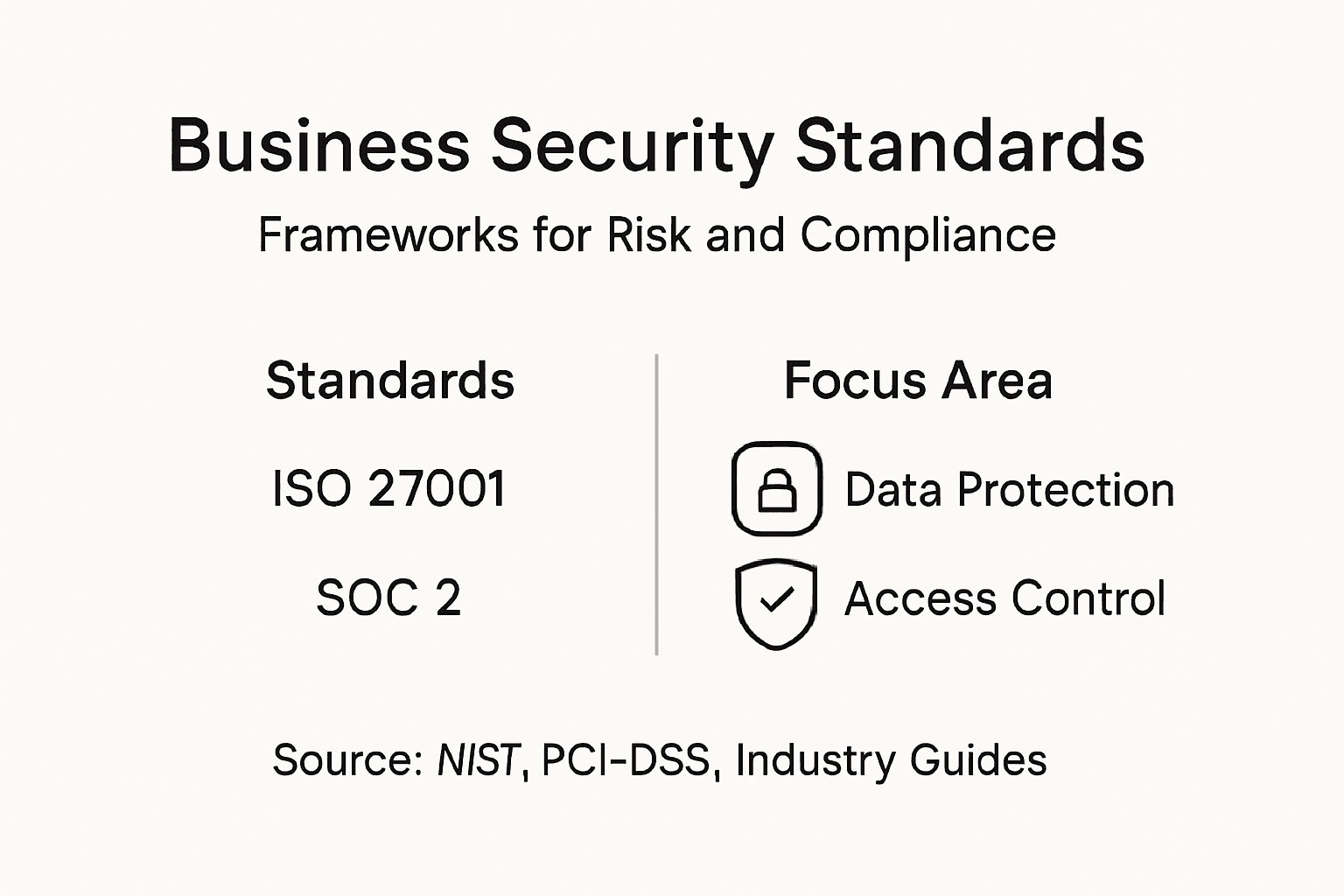
Organizations must carefully evaluate their unique security requirements when selecting an appropriate framework. Factors such as industry type, regulatory environment, organizational size, and specific security challenges play crucial roles in determining the most suitable standard. Some frameworks are more prescriptive, offering detailed control requirements, while others provide flexible guidelines that can be adapted to different business contexts. The key is to choose a framework that not only ensures compliance but also genuinely improves the organization’s overall security posture.
Here’s a comparison of major security standards to help select the right framework:
| Standard/Framework | Key Focus Area | Typical Industry Use | Certification Requirement |
|---|---|---|---|
| NIST CSF | Risk-based controls | Government, Enterprise | No, but widely adopted |
| ISO 27001 | Information Security Management | Any, especially global firms | Formal certification |
| SOC 2 | Service Provider Data Controls | Technology, SaaS providers | Voluntary audit report |
| PCI-DSS | Cardholder Data Security | Retail, E-commerce | Mandatory for merchants |
| HIPAA | Health Information Privacy | Healthcare | Regulated, ongoing audits |
Pro tip: Develop a comprehensive framework comparison matrix that maps each standard’s specific requirements against your organization’s unique security needs and regulatory obligations.
Legal and Regulatory Compliance Requirements
Legal compliance represents a critical cornerstone of comprehensive security strategies for modern businesses. Security compliance frameworks provide structured guidelines that help organizations systematically manage cybersecurity risks and meet complex regulatory requirements. These frameworks are particularly crucial in highly regulated industries such as healthcare, finance, and government, where data protection and privacy standards carry significant legal implications.
Legal frameworks shape cybersecurity governance by establishing ethical boundaries and accountability standards across different jurisdictions. Compliance requirements typically encompass multiple dimensions, including data privacy protection, breach notification protocols, user consent mechanisms, and specific technical security controls. Different regulations like the General Data Protection Regulation (GDPR) in Europe, the California Consumer Privacy Act (CCPA), and industry-specific standards such as HIPAA for healthcare and PCI-DSS for payment systems each mandate unique sets of requirements that businesses must carefully navigate.
Successful legal compliance demands a proactive and comprehensive approach. Organizations must develop robust internal processes for continuously monitoring regulatory changes, conducting regular risk assessments, and implementing adaptive security controls. This involves not just technical measures, but also comprehensive staff training, detailed documentation, and establishing clear accountability mechanisms. The complexity of compliance increases for businesses operating across multiple geographic regions, where legal requirements can vary significantly and often overlap.
Pro tip: Create a dedicated compliance tracking system that maps regulatory requirements against your current security controls, with automated alerts for upcoming regulatory changes and compliance deadlines.
Implementing Security Standards in Your Organization
Successfully implementing security standards requires a strategic and systematic approach that goes beyond simple checklist compliance. Step-by-step guidance helps organizations develop comprehensive information security frameworks that protect critical business assets and mitigate potential risks. The implementation process begins with a thorough understanding of your organization’s unique security landscape, including existing infrastructure, potential vulnerabilities, and specific regulatory requirements.
The implementation journey typically involves several critical stages. First, organizations must conduct a comprehensive risk assessment that identifies potential security gaps and prioritizes areas requiring immediate attention. This involves mapping current security controls against industry standards, analyzing potential threats, and establishing a clear baseline for improvement. Next, businesses need to develop detailed security policies that translate framework requirements into actionable guidelines, ensuring that every team member understands their role in maintaining organizational security.

Effective implementation demands more than just technical controls. It requires creating a robust security culture that empowers employees to become active participants in risk management. This means developing comprehensive training programs, establishing clear communication channels for reporting potential security incidents, and creating accountability mechanisms that incentivize proactive security practices. Leadership must demonstrate consistent commitment to security standards, allocating necessary resources and making security a strategic priority across all organizational levels.
Pro tip: Develop a phased implementation roadmap with clear milestones, assigning specific ownership for each security standard requirement and creating a continuous improvement feedback loop.
Risks of Non-Compliance and Common Mistakes
Non-compliance with security standards represents a critical vulnerability that can devastate businesses across multiple dimensions. Non-compliance exposes organizations to extensive cybersecurity risks including potential financial losses, legal penalties, operational disruptions, and irreparable reputational damage. The consequences extend far beyond simple regulatory fines, potentially threatening an organization’s entire operational stability and long-term viability.
Security compliance failures often emerge from complexity and control fatigue, creating systemic vulnerabilities that can be exploited by malicious actors. Common mistakes include inadequate risk assessments, inconsistent policy enforcement, insufficient employee training, and neglecting regular security audits. Organizations frequently underestimate the interconnected nature of security controls, treating compliance as a checkbox exercise rather than a comprehensive risk management strategy. These oversights can lead to significant blind spots in an organization’s security infrastructure, making them susceptible to data breaches, regulatory sanctions, and unexpected financial liabilities.
The most critical risks of non-compliance span multiple domains. Financial penalties can range from thousands to millions of dollars, depending on the regulatory framework and severity of violations. Regulatory bodies like GDPR, HIPAA, and PCI-DSS impose stringent requirements with escalating penalties for non-compliance. Beyond monetary consequences, businesses may face operational restrictions, loss of business licenses, mandatory external audits, and significant reputational damage that can erode customer trust and market positioning. Small and medium-sized enterprises are particularly vulnerable, as they often lack the resources to quickly recover from major compliance failures.
This table summarizes common business risks from non-compliance with security standards:
| Risk Type | Impact on Business | Example Regulatory Consequence |
|---|---|---|
| Financial Penalties | Large fines or loss of revenue | Six-figure fines under GDPR |
| Operational Disruption | Service downtime or halted projects | Mandatory operations suspension |
| Reputational Damage | Loss of customer trust | Publicized breaches |
| Legal Actions | Lawsuits or sanctions | Forced third-party audits |
Pro tip: Develop a quarterly compliance health check process that systematically reviews all security controls, documents exceptions, and creates immediate remediation plans for identified vulnerabilities.
Strengthen Your Business Security and Ensure Compliance Today
Managing security standards and staying compliant with evolving regulations is a crucial challenge for businesses determined to protect their assets and reduce risk. From implementing comprehensive cybersecurity frameworks like NIST CSF and ISO 27001 to addressing legal compliance with regulations such as GDPR and HIPAA, organizations face multiple pressures to secure their data and physical property reliably. You need professional-grade security solutions that not only help you meet these standards but also provide peace of mind against threats ranging from theft to operational disruptions.
Enhance your security posture by exploring high-quality, durable products designed for business use at Safes and Security Direct. Whether you require advanced surveillance cameras to monitor critical areas, or secure safes that protect sensitive documents and valuables, our expertly curated selection is tailored to support your compliance efforts and risk management strategies.
Take control of your business security now by visiting Safes and Security Direct. Review our comprehensive range of solutions crafted to help you implement and maintain effective security standards while reducing vulnerabilities. Do not wait until non-compliance exposes your organization to costly penalties or operational disruption. Act today and safeguard your company’s future with trusted products and expert support.
Frequently Asked Questions
What are security standards for businesses?
Security standards are structured frameworks that help organizations translate security policies into actionable practices to protect digital and physical assets from risks.
Why is it important to implement security standards?
Implementing security standards is crucial for reducing vulnerabilities, ensuring compliance with regulations, maintaining a strong security posture, and protecting sensitive data from potential breaches.
How do I choose the right security standard for my organization?
To choose the right security standard, consider factors such as your industry type, regulatory environment, organizational size, and specific security challenges. Evaluate how each framework’s focus aligns with your unique security needs.
What are the consequences of non-compliance with security standards?
Non-compliance can lead to severe financial penalties, operational disruptions, reputational damage, and legal actions. Organizations may face losing customer trust and experience increased regulatory scrutiny following compliance failures.
Recommended
- Role of Security Standards in Asset Protection – Safes and Security Direct
- Physical Security for SMEs: Protecting Assets and Growth – Safes and Security Direct
- Why Use Commercial Safes: Protecting Business Assets – Safes and Security Direct
- Business Money Safety: Use Money Drop Safes – Safes and Security Direct