

Why choose reinforced safes for ultimate protection
Most people believe all safes provide similar security, but that’s a dangerous misconception. Reinforced safes dramatically outperform standard models in resisting both break-in attempts and fire damage. This guide reveals how reinforced construction delivers superior protection and why homeowners and business owners should consider them essential investments for safeguarding irreplaceable valuables.
Table of Contents
- How Reinforced Safes Are Built To Resist Theft And Fire
- Fire Protection Performance And Real-World Testing Of Reinforced Safes
- Choosing The Right Reinforced Safe For Your Specific Needs
- Installation Tips And Maximizing Your Safe’s Security And Longevity
- Explore Reinforced Safes And Security Solutions
Key takeaways
| Point | Details |
|---|---|
| Layered construction matters | Multi-layer steel alloys and composite barriers resist cutting, drilling, and fire damage far better than single-wall designs. |
| Fire ratings guide selection | UL fire ratings specify temperature protection duration, helping you match safe capabilities to your specific documents and media. |
| Installation enhances security | Bolting safes to floors or walls prevents theft by removal, multiplying your investment’s effectiveness. |
| Match safe to threat profile | Burglary-resistant models prioritize delay tactics while fire-resistant safes focus on heat protection based on your risk assessment. |
How reinforced safes are built to resist theft and fire
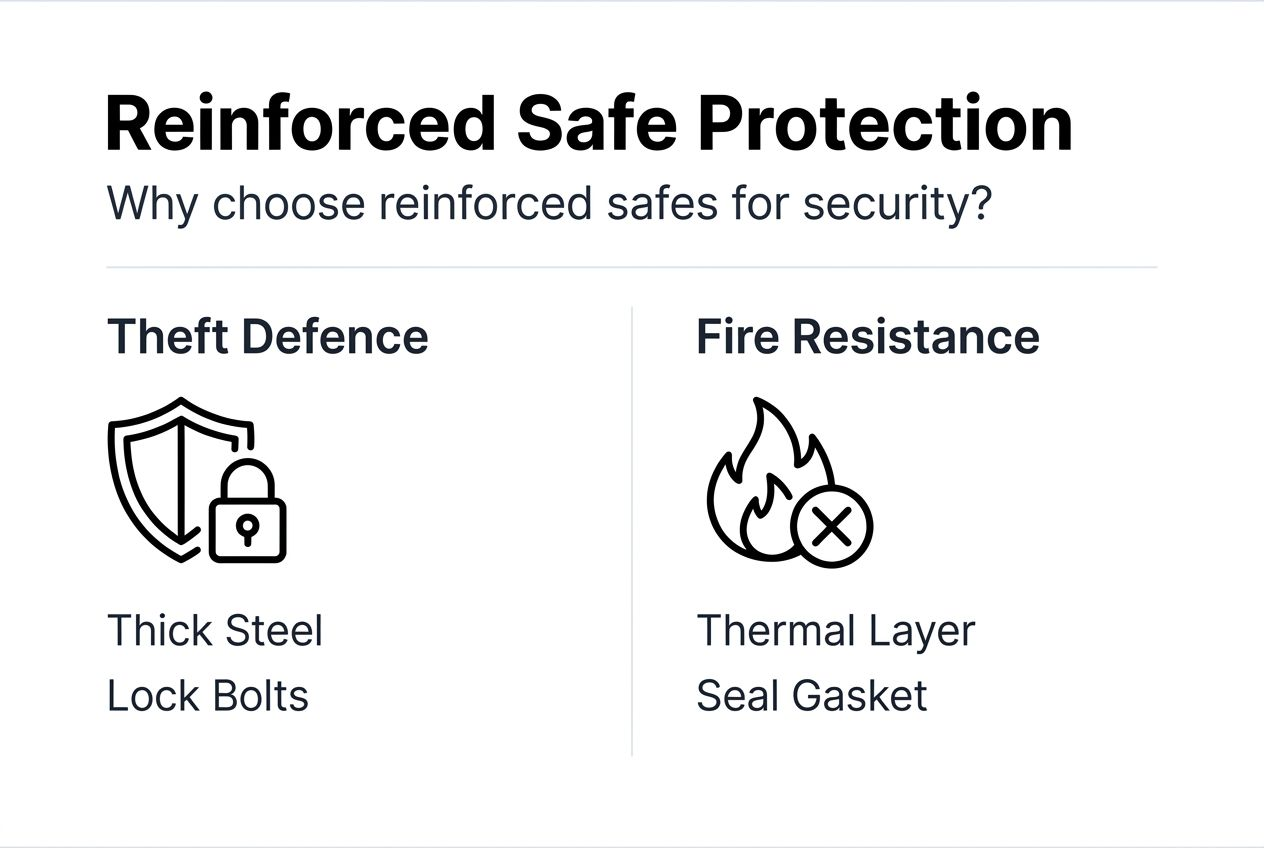
Reinforced safes achieve superior protection through sophisticated engineering that standard models simply cannot match. The secret lies in layered construction with varying steel alloys that create multiple barriers against brute-force attacks and cutting tools. Each layer serves a specific defensive purpose, forcing thieves to defeat multiple obstacles before accessing contents.
Steel thickness determines how quickly criminals can breach your safe. Professional-grade models use 7-gauge or 10-gauge steel, which resists prying and cutting far longer than the thin metal found in budget safes. Thicker steel means more time for alarm systems to alert authorities and more frustration for would-be thieves.
Composite barrier fills represent another crucial innovation in safe construction. These materials, often dense concrete or ceramic chips, serve dual purposes by providing fire resistance while simultaneously deterring cutting and drilling attacks. When a drill bit encounters these composite layers, the abrasive materials quickly dull the tool and slow progress to a crawl.
Key construction features that maximize protection include:
- Multiple steel alloy layers creating redundant security barriers
- Composite fills that resist both heat transfer and tool penetration
- Advanced door sealing systems preventing heat, water, and smoke intrusion
- Reinforced bolt work and locking mechanisms requiring specialized tools to defeat
- Strategic placement of relockers that trigger if tampering is detected
Advanced sealing systems deserve special attention because they protect against threats beyond burglary. During fires, these seals expand to block heat transfer and prevent smoke or water from fire suppression systems from damaging contents. The combination of heat-resistant seals and composite fills creates a protective envelope that maintains safe internal temperatures even as exterior surfaces reach dangerous levels.
Pro Tip: Always bolt your safe to the floor or wall using the manufacturer’s recommended hardware. Even the most sophisticated burglary-resistant safe becomes vulnerable if thieves can simply carry it away to defeat at their leisure.
Fire protection performance and real-world testing of reinforced safes
Fire ratings provide critical guidance for safe selection, but understanding what these numbers actually mean makes the difference between protected valuables and devastating loss. UL fire ratings specify duration and maximum internal temperatures safes can withstand, typically ranging from 30 minutes to two hours at temperatures exceeding 1700°F. These ratings directly correlate with how long your irreplaceable documents, family heirlooms, or digital media survive during a real fire.
The materials inside reinforced safes create this protective capability through sophisticated thermal management. Proprietary concrete-based composite aggregates containing water molecules absorb and dissipate heat, keeping internal temperatures below critical thresholds. As exterior temperatures soar, these materials release moisture that cools the safe’s interior while the composite structure blocks direct heat transfer.
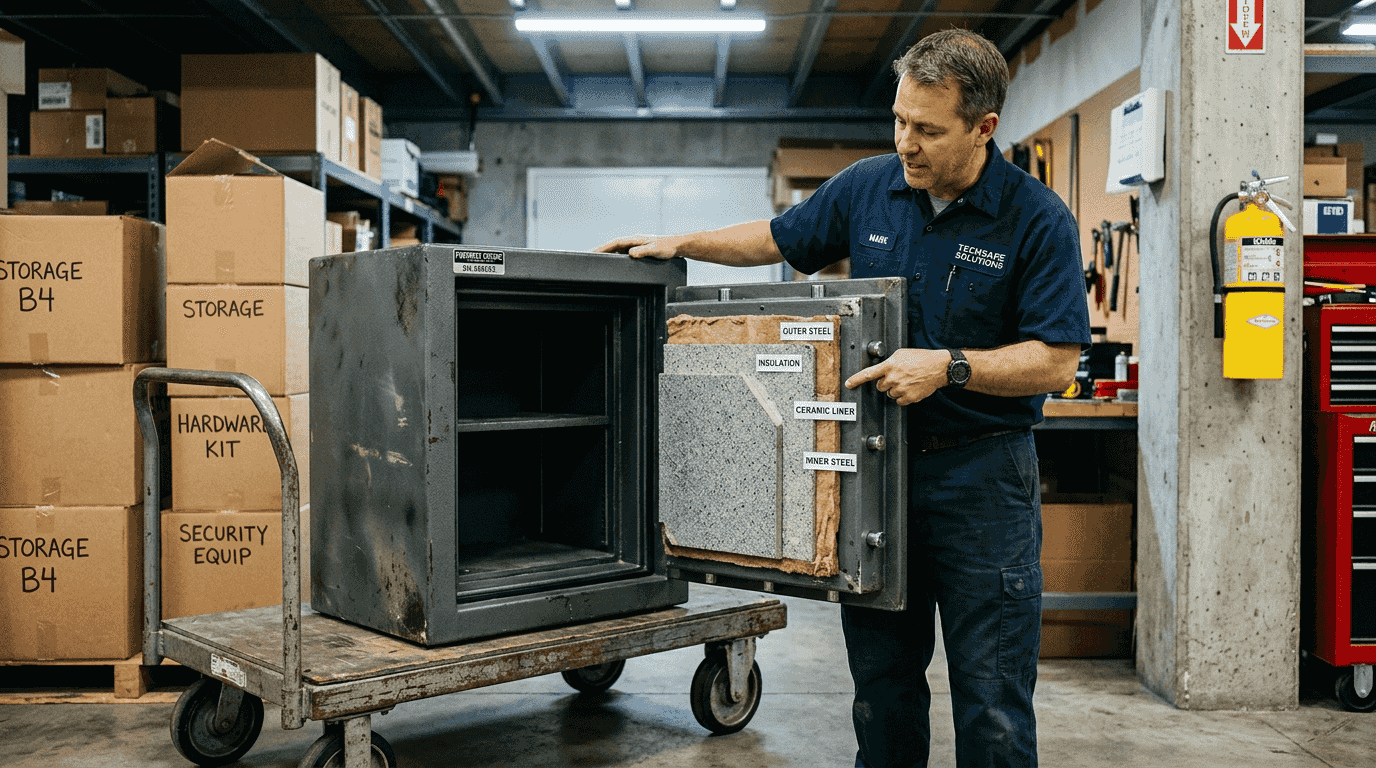
Real-world performance validates laboratory ratings in dramatic fashion. Champion safes protected valuables during catastrophic wildfires where surrounding structures completely burned. While homes reduced to ash, these safes maintained contents in pristine condition, demonstrating that proper engineering delivers on its promises when disaster strikes.
| Fire Rating | Duration | Internal Temp Limit | Best For |
|---|---|---|---|
| 30 minute | 30 min | 350°F | Paper documents |
| 1 hour | 60 min | 350°F | Important records, cash |
| 2 hour | 120 min | 350°F | Irreplaceable documents |
| Media rated | 30-120 min | 125°F | Digital media, hard drives |
Advanced sealing technology represents another critical fire protection element that many buyers overlook. Intumescent seals expand when exposed to heat, creating an airtight barrier that prevents smoke infiltration and blocks water from sprinkler systems or firefighting efforts. This three-way protection against heat, smoke, and water ensures your valuables survive not just the fire itself but the entire emergency response.
Pro Tip: Verify UL or other third-party certifications when selecting a fireproof safe. Manufacturer claims without independent testing may not reflect actual performance during real emergencies.
Understanding media ratings becomes crucial if you store digital devices, photographs, or electronic records. These items require lower internal temperatures than paper, making standard fire ratings insufficient. Media-rated safes maintain temperatures below 125°F, protecting sensitive electronics and magnetic media from heat damage that would destroy data even if physical items appear intact.
Choosing the right reinforced safe for your specific needs
Selecting the appropriate safe requires honest assessment of your threat profile and what you need to protect. Consider typical risks in your area, whether fire danger from wildfares, burglary rates in your neighborhood, or both. Your valuables themselves also dictate requirements, as jewelry demands different protection than legal documents or firearms.
Burglary-resistant safes prioritize delaying entry through thick steel, complex locking mechanisms, and hardened bolt work. These models assume thieves have limited time before detection or abandonment. Fire-resistant safes focus on thermal protection, using insulation and sealing to maintain safe internal temperatures. Many reinforced models combine both features, though specialized safes often excel in their primary purpose.
| Safe Type | Primary Protection | Secondary Features | Ideal Users |
|---|---|---|---|
| Burglary-resistant | Theft delay | Basic fire rating | Urban areas, high-value items |
| Fire-resistant | Heat protection | Light security | Wildfire zones, document storage |
| Composite reinforced | Balanced protection | Both theft and fire | Comprehensive home security |
| Gun safes | Quick access, pry resistance | Fire rating optional | Firearm owners |
Fire rating duration should match your document types and local emergency response times. Paper documents survive 350°F internal temperatures, but digital media requires 125°F or lower. If you live in remote areas where fire response takes 30 minutes or more, consider higher rated safes that provide extended protection. Safe type should match specific threats and valuables, ensuring your investment addresses your actual risks rather than theoretical scenarios.
Cost and size factor heavily into practical selection decisions. Larger safes with higher ratings cost significantly more but provide room for growing collections and future needs. Consider these factors when choosing:
- Current valuables requiring protection plus 20-30% growth capacity
- Available floor space and weight capacity of installation location
- Budget constraints balanced against replacement cost of contents
- Accessibility requirements for regular access versus long-term storage
- Insurance premium reductions that offset initial purchase cost
Bolt installation dramatically increases security regardless of safe quality. Even modest safes become far more effective when properly anchored, while premium models without bolting remain vulnerable to removal. This simple step transforms your investment in safe storage from a deterrent into a genuine barrier.
Installation tips and maximizing your safe’s security and longevity
Proper installation multiplies your safe’s effectiveness while poor placement undermines even the best construction. Choose locations that balance discretion with accessibility, avoiding obvious spots like master bedrooms that burglars search first. Basements or closets on concrete slabs provide ideal installation surfaces while keeping safes out of immediate view.
Follow these steps for secure installation:
- Select a location with solid concrete flooring or wall studs capable of supporting the safe’s weight.
- Mark bolt hole positions using the safe’s template, verifying clearance for door swing and access.
- Drill holes to manufacturer specifications, using appropriate bits for concrete or wood.
- Position the safe and insert anchor bolts, tightening evenly to avoid stress on mounting points.
- Test the installation by attempting to rock or shift the safe, adjusting bolts if any movement occurs.
Bolting safes to walls or floors prevents theft by removal, a common tactic when criminals cannot defeat locks quickly. Thieves often spend minimal time at crime scenes, grabbing what they can move easily. A properly bolted safe forces them to either abandon the attempt or make noise and spend time that increases their capture risk.
Regular maintenance preserves your safe’s protective capabilities over decades of service. Inspect door seals annually for cracks or degradation that could compromise fire protection. Test locking mechanisms quarterly to catch wear before it causes failures. Lubricate hinges and bolt work according to manufacturer guidelines, typically once or twice yearly.
Avoid storing items that could damage your safe’s interior or contaminate other contents. Perishable materials, chemicals, or moisture-producing items create corrosion risks and unpleasant odors. Keep firearms unloaded and consider desiccants to control humidity if you store moisture-sensitive items like photographs or documents.
Pro Tip: Consider professional installation to ensure proper setup and maintain warranty compliance. Many manufacturers void warranties if installation doesn’t meet their specifications, and professionals bring experience that prevents costly mistakes.
Document your safe’s contents with photographs and detailed inventories stored separately. This documentation proves invaluable for insurance claims if disaster strikes. Update records whenever you add or remove significant items, and store digital copies in cloud services for accessibility after emergencies.
Explore reinforced safes and security solutions
Protecting your most valuable possessions requires equipment engineered for real-world threats, not just basic deterrence. Reinforced safes combine advanced materials, proven construction techniques, and rigorous testing to deliver protection you can trust when it matters most.
Safes and Security Direct offers carefully selected reinforced safes tailored for both residential and commercial applications. Our collection includes models with verified fire ratings, burglary resistance certifications, and composite construction that addresses multiple threat scenarios. Expert resources guide your selection process, helping match safe capabilities to your specific security requirements. Browse our selection to find the protection level your valuables deserve, backed by proven performance and professional-grade engineering.
FAQ
What materials make reinforced safes more secure?
High-grade layered steel alloys combined with composite materials like concrete and ceramic fillers create multiple defensive barriers. These materials work together to resist cutting, drilling, heat transfer, and smoke intrusion during both burglary attempts and fires.
How do fire ratings affect safe selection?
Fire ratings specify duration and temperature limits safes can withstand while protecting contents during fires. Buyers should select ratings matching their stored items, as paper documents tolerate higher temperatures than digital media or photographs require.
Can reinforced safes really stop experienced burglars?
While no safe provides absolute burglar-proof protection, reinforced models significantly delay and deter thieves through layered defenses. Most break-ins finish within minutes, so construction that extends breach time beyond typical criminal patience proves highly effective. Proper installation enhances this security further.
What is the best way to install a reinforced safe?
Bolting your safe securely to concrete floors or wall studs prevents theft by removal, a common tactic when locks resist quick defeat. Professional installation ensures proper setup, maintains warranty coverage, and provides peace of mind that your investment delivers maximum protection.
Do I need both fire and burglary protection?
Your threat assessment determines whether specialized or combination safes better serve your needs. Urban areas with higher burglary rates prioritize theft resistance, while wildfire-prone regions emphasize fire protection. Composite reinforced safes deliver balanced protection for comprehensive security against multiple risks.
Recommended
- Top 4 Burglary-Resistant Safes 2026 for Ultimate Protection – Safes and Security Direct
- Why Invest In a Safe for Valuables: Real Protection – Safes and Security Direct
- Why Invest in Safes: Protecting Urban Homes – Safes and Security Direct
- 7 Proven Examples of Burglary-Resistant Safes for Urban Owners – Safes and Security Direct