

Wall safe guide: secure storage and expert installation
TL;DR:
- Wall safes are discreet, accessible storage solutions that blend into home or office walls.
- Proper installation, especially secure anchoring to studs, is critical for effective security.
- Fire protection is limited to 30-60 minutes at high temperatures, suitable mainly for documents and jewelry.
Most people picture a wall safe as something from a heist movie, hidden behind a painting in a mansion. The reality is far more practical. Wall safes are one of the most accessible and effective security tools available to everyday homeowners and business owners. They blend into your space, protect what matters most, and don’t require a renovation crew to install. This guide breaks down exactly what a wall safe is, how installation works, what fire protection you can realistically expect, and the honest pros and cons so you can decide whether a wall safe fits your security needs.
Table of Contents
- What is a wall safe?
- How wall safes are installed: Key steps and considerations
- Wall safe fire ratings: What to expect
- Wall safe pros, cons, and expert tips
- A practical perspective: Why wall safes aren’t always the best choice (and when they are)
- Find the right wall safe solution for your space
- Frequently asked questions
Key Takeaways
| Point | Details |
|---|---|
| Wall safes explained | Wall safes are hidden security units installed between studs for protecting valuables at home or work. |
| Installation basics | Proper placement, anchoring, and concealment are crucial for security and avoiding pitfalls. |
| Fire protection limits | Most wall safes offer 30-60 minutes of fire resistance, less than larger floor safes. |
| Ideal uses | Best suited for documents, jewelry, and items needing quick access and discreet storage. |
| Practical pros and cons | While hidden and convenient, wall safes are limited in depth and not theft-proof without careful installation. |
What is a wall safe?
A wall safe definition describes it as a recessed security container installed into a home or office wall, typically between standard 16-inch spaced studs, designed to securely store valuables like documents, jewelry, cash, passports, and small firearms while remaining concealed. That last part matters more than most people realize. The concealment itself is a layer of security.
Wall safes sit flush inside the wall cavity, which means they don’t take up floor space or look out of place. Most are hidden behind everyday objects like framed pictures, mirrors, or decorative panels. Someone walking through your home or office would never know the safe exists, and that invisibility is often more valuable than the steel casing itself.
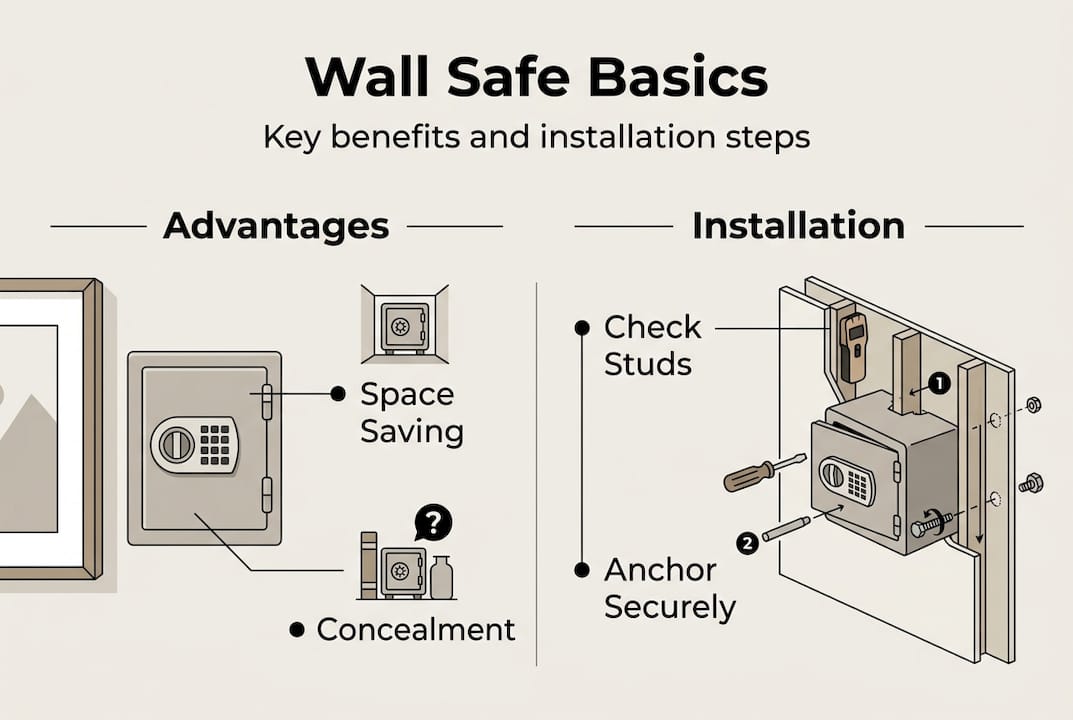
The structure of a wall safe is shaped by one key constraint: wall depth. Standard 2x4 framing leaves roughly 3.5 inches of usable cavity space. That limits how deep a wall safe can be, which directly affects what you can store inside. Most wall safes range from 0.3 to 2.0 cubic feet in capacity, making them ideal for flat or compact items rather than bulky valuables.
Here’s what people commonly store in wall safes:
- Passports and birth certificates
- Cash and credit cards
- Jewelry and watches
- USB drives and small hard drives
- Handguns and ammunition
- Small business documents
For hidden protection for valuables, wall safes offer something floor safes and drawer safes can’t: they disappear into the architecture of your space. If you’re focused on securing jewelry and documents, a wall safe gives you quick, discreet access without drawing attention.
One often overlooked advantage is psychological. Burglars typically spend fewer than 10 minutes inside a home. A well-concealed wall safe won’t be found in that window, even if other valuables are taken. That’s not a guarantee, but it’s a meaningful edge.
How wall safes are installed: Key steps and considerations
Understanding what a wall safe is sets up the practical challenge: how do you install one securely? The good news is that installation steps for wall safes are manageable for a careful DIYer, but skipping steps creates real vulnerabilities.
Here’s how a proper installation works:
- Choose the right wall. Select an interior, non-load-bearing wall away from exterior surfaces, plumbing, and electrical lines. Exterior walls invite moisture and temperature swings that damage contents.
- Locate the studs. Use a stud finder to identify the 16-inch stud spacing. Your safe needs to fit between two studs without cutting into them.
- Mark and cut the opening. Trace the safe’s outline on the drywall, cutting slightly undersized so the flange covers the edges cleanly.
- Test the fit. Slide the safe into the opening before anchoring to confirm it sits flush with the wall surface.
- Anchor with lag bolts. Secure the safe to the surrounding studs using lag bolts. This is the step most DIYers rush, and it’s the most critical one.
- Seal the flange. Apply caulk or trim around the edges to eliminate visible gaps.
- Conceal the safe. Hang a picture, mirror, or panel over the safe to complete the installation.
The tools you’ll need include a stud finder, drywall saw, drill with a 3/16-inch bit, and a level. Pilot holes prevent splitting the drywall and make anchoring cleaner and more precise.
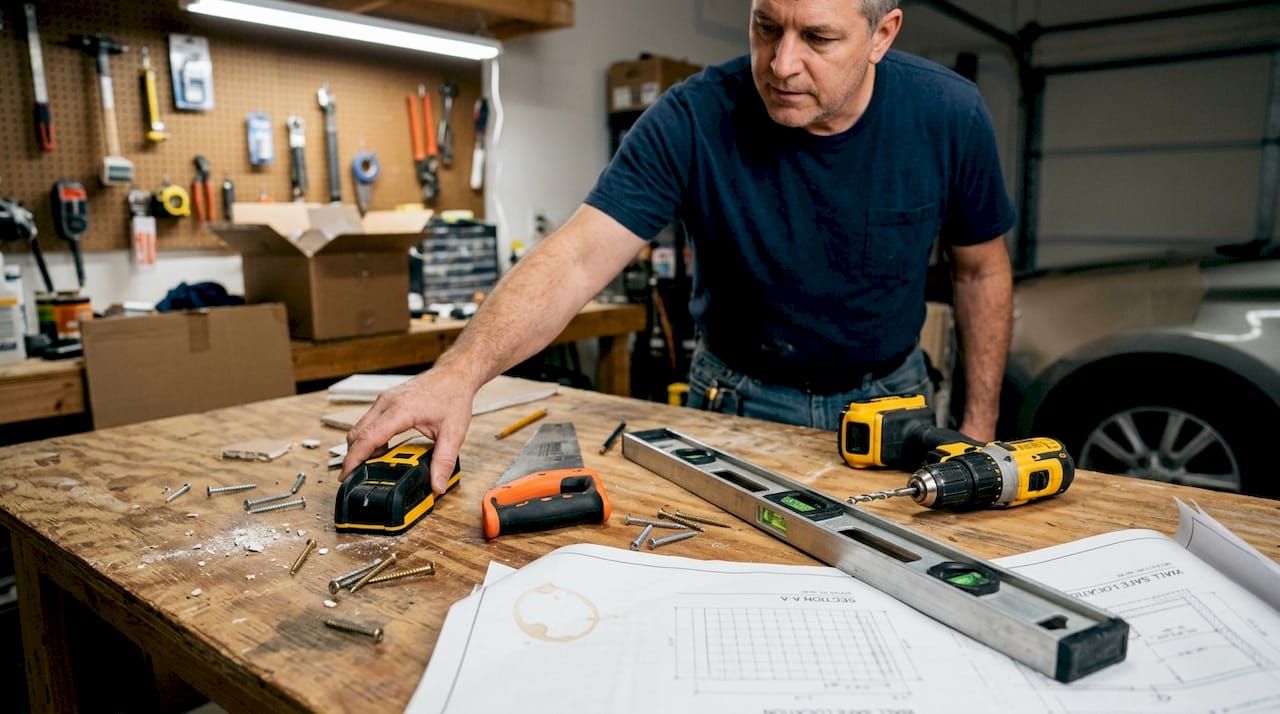
Pro Tip: Before cutting, use a long, thin probe or wire to check inside the wall cavity for electrical wires or pipes. A stud finder alone won’t catch everything.
For a more detailed breakdown, the wall safe installation guide covers every step with product-specific advice. If you’re still deciding on placement, reviewing tips on choosing wall safe location can save you from a costly mistake.
The most common installation error is poor anchoring. A safe that isn’t bolted firmly to the studs can be pried out of the wall with basic tools in under a minute. Lag bolts driven deep into solid wood framing are what separate a secure installation from a false sense of security.
Wall safe fire ratings: What to expect
Once installed, fire protection becomes a major consideration for wall safes. The honest answer is that wall safes offer limited but real fire resistance, and knowing the numbers helps you set realistic expectations.
Most wall safes provide 30 to 60 minutes of fire protection at temperatures up to 1,200°F. Some models carry a UL Class 350 rating, meaning the internal temperature stays below 350°F for at least one hour. That threshold matters because paper ignites at around 451°F, so staying below 350°F keeps documents intact.
Here’s how wall safe fire protection compares to other safe types:
| Safe type | Typical fire rating | Max temp | Best for |
|---|---|---|---|
| Wall safe | 30 to 60 minutes | 1,200°F | Documents, jewelry |
| Floor safe | 1 to 2 hours | 1,200°F | Bulk valuables, firearms |
| Fire cabinet | 1 to 2 hours | 1,200°F | Large document storage |
| Fireproof box | 30 minutes | 1,200°F | Portable, minimal items |
The limitation for wall safes comes directly from their shallow depth. Less insulating material means less thermal protection. A fireproof safe selection guide will tell you the same thing: depth equals protection time. Floor safes win on fire resistance simply because they have more room for insulation.
That said, 30 to 60 minutes is enough protection for most residential fires. The average house fire is controlled within that window. If you’re storing irreplaceable documents or digital media, look specifically for wall safe fire protection models with UL Class 350 certification rather than just a generic fire rating claim.
For a broader look at how fire ratings work across product categories, the fire resistant home safes buying guide breaks down what certifications actually mean in plain terms.
Key takeaway: A UL Class 350 rating is the standard you want for paper documents. Don’t assume any fire rating is equivalent without checking the certification.
Wall safe pros, cons, and expert tips
Now, let’s consider the real-world pros and cons of wall safes and how to make the most of their features.
Advantages of wall safes:
- Concealed from plain sight, reducing theft risk
- Convenient access without moving heavy furniture
- Space-efficient, no floor footprint
- Ideal for quick-access items like handguns or cash
- Works well in offices, bedrooms, and closets
Limitations to know before buying:
- Depth is capped at roughly 3.5 inches in standard walls
- Not suitable for large firearms, bulk cash, or oversized documents
- Poor anchoring allows prying from the wall, defeating the purpose entirely
- Moisture or electrical lines in the wall cavity can cause problems
- Fire protection is shorter than floor safe alternatives
For a full breakdown of wall safe pros and cons, including edge cases and real installation scenarios, that resource covers situations most buyers don’t think about until it’s too late.
When comparing wall safes to floor safes, the choice usually comes down to what you’re storing:
| Feature | Wall safe | Floor safe |
|---|---|---|
| Concealment | Excellent | Moderate |
| Depth and capacity | Limited | High |
| Fire protection | 30 to 60 min | 1 to 2 hours |
| Anchoring strength | Good if done right | Very high |
| Best use case | Everyday valuables | Bulk or high-value items |
If you’re storing bulk items or high-value goods, floor safe options offer significantly more capacity and anchoring strength. For compact firearms storage, in-wall gun safe solutions are purpose-built for that use case.
Pro Tip: After installation, test the lock mechanism monthly. Electronic locks can fail silently, and discovering a malfunction during an emergency is the worst time to find out.
According to expert installation guidance, the most common failure points are poor anchoring, choosing load-bearing walls that require structural headers, and ignoring moisture or electrical hazards inside the cavity. Avoiding those three mistakes puts you ahead of most DIY installations.
A practical perspective: Why wall safes aren’t always the best choice (and when they are)
Wall safes get recommended broadly, but the reality is more nuanced. We’ve seen homeowners install a wall safe, feel secure, and then store items that genuinely need a floor safe. The concealment is excellent. The depth is not.
If your priority is hiding a handgun, some cash, and a few documents, a wall safe is hard to beat. It’s accessible, invisible, and practical. But if you’re thinking about storing a collection of jewelry, multiple firearms, or business records, the 3.5-inch depth will frustrate you quickly.
The anchoring issue is where we see the biggest gap between expectation and reality. A wall safe that isn’t bolted correctly to solid studs offers little more protection than a locked box sitting on a shelf. The installation is where the security actually lives, not just the steel. We always recommend treating the anchoring step as the most important part of the whole process.
For anything beyond everyday valuables, we’d point you toward compare with floor safes before making a final decision. Wall safes are genuinely useful tools. They just work best when matched to the right job.
Find the right wall safe solution for your space
If this guide has helped clarify what a wall safe can and can’t do, the next step is finding the right product for your specific space and storage needs. Not all wall safes are built the same, and the difference between a basic model and a UL-rated, properly anchored unit is significant.
At Safes and Security Direct, we carry a curated range of wall safe products alongside expert buying guides to help you match the right safe to your situation. Whether you’re protecting documents in a home office or securing a handgun in a bedroom, we can help you find a solution that fits your wall, your budget, and your security goals. Browse our selection and get the protection your valuables deserve.
Frequently asked questions
How deep is a typical wall safe?
A typical wall safe fits in a 2x4 wall with a depth of about 3.5 inches, which suits flat items like documents, passports, and most handguns but limits bulkier storage.
Can wall safes protect documents from fire?
Most wall safes offer 30 to 60 minutes of fire protection at 1,200°F, and models with a UL Class 350 rating keep internal temperatures below 350°F, which is safe for paper documents.
Is it easy to install a wall safe yourself?
With a stud finder, drywall saw, drill, and level, most homeowners can handle installation, but avoiding load-bearing walls and utility lines inside the cavity is essential for a safe and secure result.
What valuables are best stored in a wall safe?
Wall safes work best for documents, jewelry, cash, small firearms, and similar compact items that benefit from concealment and quick access rather than bulk storage.
Are wall safes as secure as floor safes?
Wall safes offer strong concealment but are limited in depth and anchoring capacity. Floor safes secure bulkier high-value items more robustly and typically provide longer fire protection ratings.
Recommended
- Install a Wall Safe Properly: Your Guide to Secure Storage – Safes and Security Direct
- In-Wall Gun Safe: Secure & Discreet Storage Solutions – Safes and Security Direct
- Fireproof Safe Selection Guide for Secure Home Protection – Safes and Security Direct
- Wall Safes: Pros, Cons & Installation Tips – Safes and Security Direct