

Why Choose Wall Safes: Hidden Protection for Valuables
Living in a city where theft is a constant concern makes protecting your valuables more urgent than ever. Urban homeowners often struggle to find safe storage that does not attract unwanted attention. Wall safes offer discreet security containers recessed into wall cavities, blending seamlessly behind artwork or paneling. This article clarifies what wall safes truly are, why they work, and exposes misconceptions that keep many from considering this smart security solution.
Table of Contents
- Wall Safes Explained: Definition And Misconceptions
- Types Of Wall Safes And Key Distinctions
- Essential Features And How Wall Safes Work
- Common Applications For Urban Homeowners
- Risks, Limitations, And Alternatives Compared
Key Takeaways
| Point | Details |
|---|---|
| Understanding Wall Safes | Wall safes are discreet security containers that blend into home walls, providing effective protection against theft. |
| Concealment vs. Weight | Their primary advantage lies in invisibility rather than sheer weight, making them ideal for deterring opportunistic burglars. |
| Types of Wall Safes | Different locking mechanisms (electronic, combination, and key locks) and additional features (fire-resistant options) cater to varied security needs. |
| Installation Considerations | Proper installation is crucial, requiring sturdy wall structures and strategic placement to maximize concealment and access. |
Wall safes explained: Definition and misconceptions
Wall safes are security containers recessed into wall cavities, hidden behind drywall, paneling, or artwork for discretion. They balance security with accessibility, offering homeowners in high-crime urban areas a practical way to protect valuables without drawing attention. Unlike freestanding safes that announce their presence, wall safes remain invisible to casual observers.
What Wall Safes Actually Are
Wall safes consist of reinforced steel boxes embedded directly into your wall structure. The concealed nature of wall safes prevents unauthorized access by keeping them out of sight. Most models feature locking mechanisms like electronic keypads, combination dials, or key locks, storing documents, jewelry, cash, and other valuables securely.
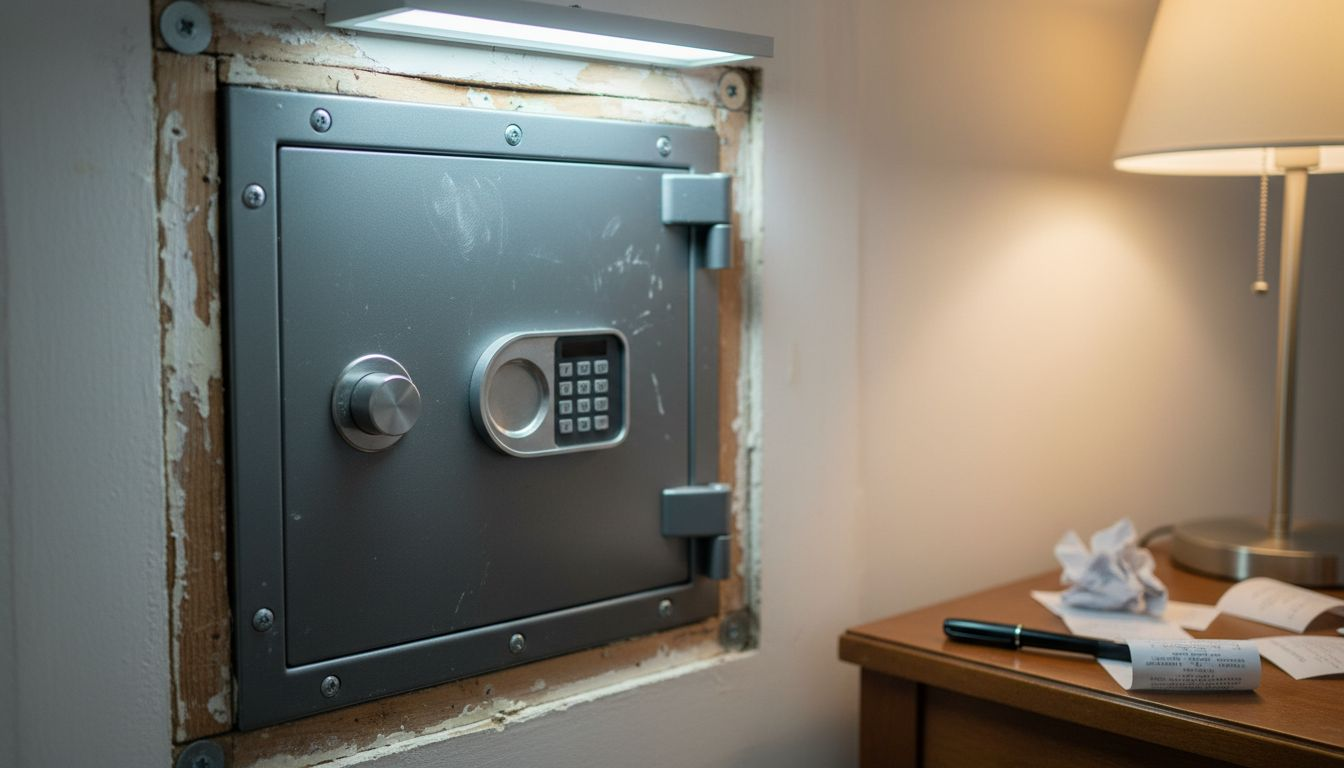
Typical wall safe dimensions range from 12 to 36 inches wide, fitting between wall studs without requiring major structural changes. Installation happens during construction or through careful wall opening in existing homes.
Common Misconceptions About Wall Safes
Many people mistakenly believe wall safes offer the same protection as massive floor safes. This is false. Wall safes are lighter and easier to breach than heavy-duty freestanding models, but their hidden installation provides a different kind of security: invisibility.
Another misconception: “Wall safes aren’t real safes.” Reality check—they absolutely are legitimate security devices when properly installed and maintained. They meet industry standards and provide meaningful protection for most household valuables.
People also think wall safes are easy to find. Wrong. A well-installed, properly concealed wall safe won’t be discovered during a typical burglary. Most thieves work quickly, scanning obvious locations like bedroom closets and nightstands.
Why Wall Safes Work Differently
Your wall safe’s strength comes from strategic concealment, not raw weight. When hidden behind artwork or a mirror, it remains undiscovered. Burglars target visible safes or obvious hiding spots. A concealed wall safe changes that equation entirely.
Here’s the key difference:
- Freestanding safes = Heavy protection through weight and material
- Wall safes = Smart protection through invisibility and location strategy
They serve different needs. Freestanding safes excel for businesses with high-value inventory. Wall safes excel for homeowners protecting personal documents and jewelry from opportunistic theft.
Wall safes rely on being found to fail—if no one discovers it exists, your valuables stay protected from casual burglars.
Installation Reality
Wall safes require careful placement. Installing wall safes properly means choosing locations that make sense for your lifestyle while remaining genuinely hidden. Mounting one behind your television is obvious. Placing one in a secondary bedroom behind a mirror is smarter.
Proper installation also means ensuring the wall cavity is deep enough for your chosen model and that wall studs won’t interfere with mounting.
Pro tip: Install your wall safe during home renovations or wall updates rather than creating new holes—less structural damage and fewer visible signs of the project.
Types of wall safes and key distinctions
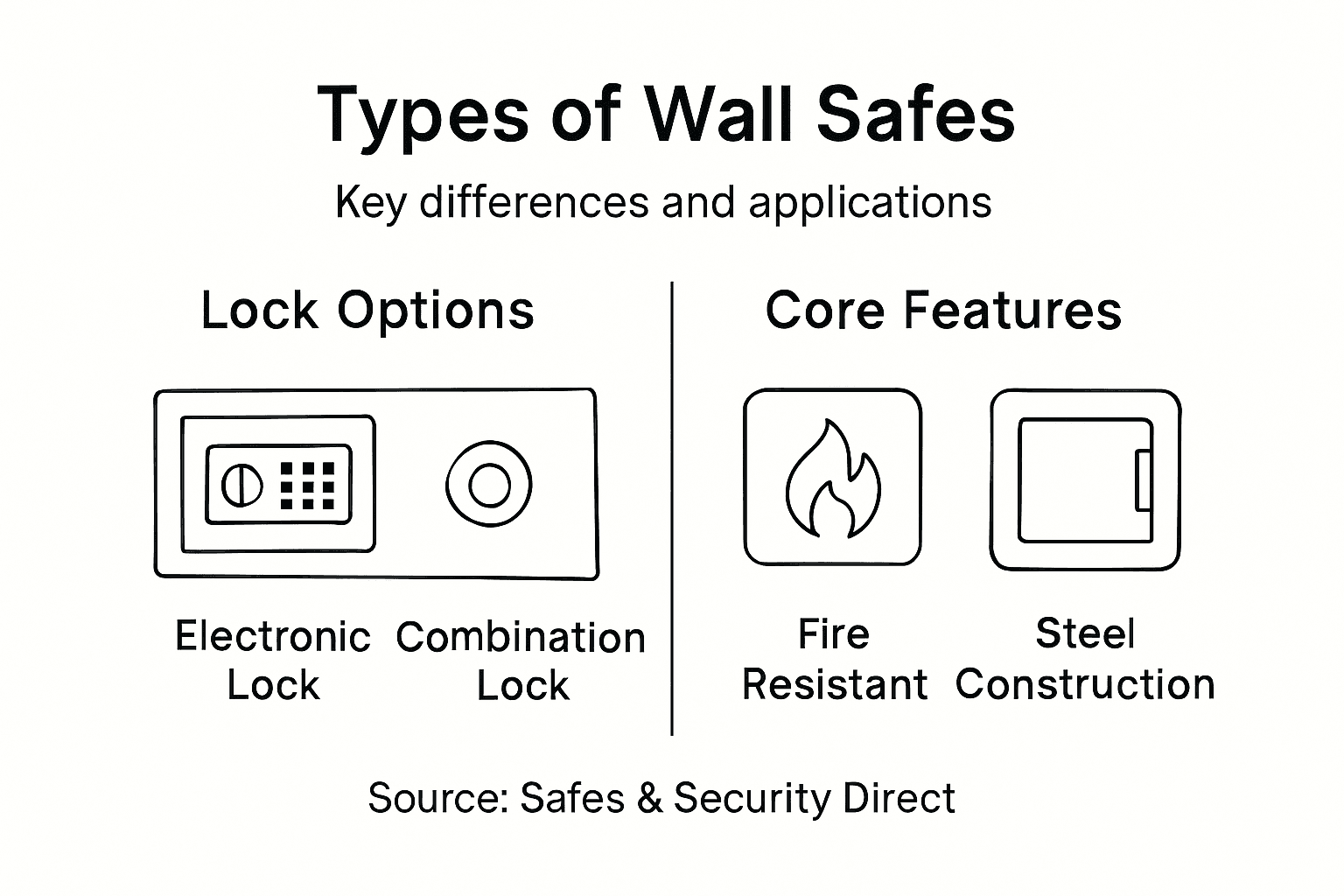
Wall safes come in several varieties, each designed for different security needs and installation scenarios. Understanding the distinctions helps you select the right model for your home and valuables. Not all wall safes function the same way, and choosing the wrong type can compromise your protection.
Electronic Lock Wall Safes
Electronic locks use keypads or touchscreens for access, allowing you to set custom codes that only you know. These models offer convenience—no key to lose—and audit trails showing who accessed the safe and when. Many urban homeowners prefer them because they’re faster to open during emergencies.
Electronic safes require batteries, so you’ll need to replace them periodically. Most include backup power options or mechanical overrides if batteries fail. The technology is reliable, though it adds cost compared to mechanical alternatives.
Combination Lock Wall Safes
Combination locks require you to dial or press a specific sequence of numbers to unlock. They’re completely mechanical with no batteries or electronics to maintain. This makes them exceptionally durable and resistant to tampering since thieves can’t disable electronics.
Combination locks take longer to open than keypads, but they provide reliable, dependable security. They’re ideal if you want zero maintenance and maximum longevity. The downside: if you forget the combination, professional locksmith services become necessary.
Key Lock Wall Safes
Key locks operate with traditional physical keys, offering straightforward mechanical security. These are the most affordable option and simplest to use—just insert the key and turn. Key locks work in any situation without battery concerns.
The vulnerability is obvious: keys can be lost, stolen, or duplicated. You’ll need secure key storage separate from your safe. This type works best as a supplementary safeguard rather than primary protection.
Fire-Resistant Wall Safes
Some wall safes include fire-resistant construction with insulating materials protecting contents during residential fires. These models cost more but protect important documents and valuables from temperature damage. Choosing fire-resistant wall safes means balancing security and fire protection based on your priorities.
Fire-resistant models are heavier and thicker than standard wall safes. Verify that your wall framing can support the extra weight before installation.
Here’s a summary of wall safe types and their best-use scenarios:
| Wall Safe Type | Key Benefit | Ideal For | Maintenance Needs |
|---|---|---|---|
| Electronic Lock | Fast access, code changes | Families, emergencies | Replace batteries periodically |
| Combination Lock | Tamper-resistant, no batteries | Long-term owners | Remember combination only |
| Key Lock | Low cost, simplicity | Supplemental security | Secure key management |
| Fire-Resistant | Fire protection, document safety | Protecting paperwork | Verify wall strength for weight |
Standard vs. Premium Wall Safes
Here’s what separates them:
- Standard models = Basic steel construction, single-layer walls, mechanical locks
- Premium models = Reinforced steel, multiple wall layers, advanced locking systems, fire ratings
The right wall safe type depends on what you’re protecting and your lifestyle—not every homeowner needs fire-resistant features, but all need reliable locking mechanisms.
Concealment Styles
Wall safes hide in different ways. Some install completely flush with your wall, covered only by paint or wallpaper. Others fit behind mirrors, artwork frames, or decorative wall panels. Mirror-style safes are popular because they serve dual purposes while remaining hidden in plain sight.
Your choice depends on your decor and desired concealment level. A flush-mounted safe behind artwork offers superior invisibility. A mirror-style safe adds functional decor while securing valuables.
Pro tip: Select an electronic lock model if you have family emergencies or need quick access, but choose a mechanical combination lock if you prioritize maintenance-free operation and absolute durability.
Essential features and how wall safes work
Wall safes rely on a combination of physical construction and strategic placement to protect your valuables. Understanding how they function helps you appreciate why they work differently from traditional safes. The mechanics are straightforward, but the protection they provide is surprisingly effective.
How Wall Safes Fit Into Your Home
Wall safes install directly into wall cavities between studs, sitting flush against the inner wall surface. They’re covered by drywall, paint, wallpaper, or decorative elements like mirrors and artwork. This concealment is the foundation of their security strategy—if no one knows the safe exists, thieves can’t target it.
The installation process involves cutting a hole in your wall, securing the safe within the cavity, and sealing it properly. Unlike floor safes that sit visibly in a corner, wall safes disappear into your home’s structure entirely.
Core Security Features
Reinforced steel construction forms the backbone of wall safe protection. The exterior and interior walls are made from hardened steel designed to resist cutting, drilling, and prying. Quality wall safes use multiple layers of steel rather than single-wall designs.
Bolt fastening systems prevent thieves from simply lifting the safe out of the wall. Bolts anchor the unit firmly to wall framing, making removal extremely difficult and time-consuming. This feature alone deters most opportunistic burglars who work quickly.
Here’s what strengthens a wall safe:
- Reinforced steel walls resistant to drilling and cutting
- Secure locking mechanisms preventing unauthorized access
- Concealed location keeping the safe unknown to intruders
- Bolt anchoring preventing removal from the wall
Locking System Operation
Wall safes use three primary locking methods. Electronic locks rely on keypads and batteries, offering fast access and tracking capability. Combination locks use mechanical dials or buttons requiring specific sequences—no electricity needed. Key locks operate with traditional keys for straightforward operation.
Regardless of lock type, the locking mechanism connects to deadbolts that secure the safe’s door. When you enter your code or turn your key, the deadbolts retract, allowing the door to swing open. Failed access attempts keep the bolts extended, rejecting unauthorized entry.
Convenience and Accessibility
Wall safes balance security with practicality. They’re easier to access than floor safes since they’re typically mounted at eye level or arm’s reach. You don’t need to bend down or move heavy objects. This convenience matters during emergencies when you need quick access to important documents or medications.
The smaller size means less storage space than floor models, but for personal documents, jewelry, and cash, wall safes provide adequate capacity. Most models hold between 1 and 2.5 cubic feet of content.
Weight and Installation Limitations
Wall safes weigh significantly less than floor safes, typically 50 to 200 pounds depending on size and construction. This lighter weight makes installation possible in standard residential walls. However, your wall framing must support the weight, and some locations won’t work structurally.
Interior dimensions vary widely. Smaller models fit within standard wall cavity widths of 14 or 16 inches. Larger models may need special wall preparation. Before purchasing, verify your wall can accommodate your chosen safe’s dimensions and weight.
A wall safe’s power comes not from weight and bulk, but from intelligent concealment combined with solid locking mechanisms.
Pro tip: Mount your wall safe in a secondary bedroom or home office rather than the master bedroom—burglars prioritize primary bedrooms, so alternative locations increase the likelihood your safe remains undiscovered.
Common applications for urban homeowners
Urban homeowners face unique security challenges in apartments, condos, and close-quarter neighborhoods where burglary rates run higher than suburban areas. Wall safes address these specific needs by protecting your most valuable items discreetly. Understanding what urban residents typically store helps you determine if a wall safe fits your lifestyle.
Protecting Important Documents
Important documents are irreplaceable and time-consuming to restore if lost to theft or fire. Birth certificates, marriage licenses, property deeds, and insurance policies deserve secure storage. Urban homeowners often lack safe deposit boxes at banks or prefer keeping critical documents at home for emergency access.
Wall safes protect these documents from both theft and fire damage when you select fire-resistant models. You’ll sleep better knowing your paperwork is secured within your home rather than vulnerable on a desk or filing cabinet.
Jewelry and Valuable Collections
Jewelry represents significant financial investment and often carries sentimental value you can’t replace with money. Rings, watches, necklaces, and heirlooms disappear quickly during home invasions in urban areas. Discreet protection for jewelry through concealment means thieves won’t find what they can’t see.
Urban apartments in high-density buildings increase robbery risk. A hidden wall safe keeps jewelry concealed while remaining accessible when you need to wear or check on pieces.
Passports and Travel Documents
Passports, visas, and travel insurance documents need protection. International travel documents are difficult to replace quickly if stolen, and identity thieves target passports for fraud. Keeping these secured in a wall safe prevents theft while keeping them accessible for last-minute trips.
Your passport stays protected from household accidents like spills, fires, or water damage when stored properly inside a fire-resistant wall safe.
Cash and Emergency Funds
Many urban homeowners maintain emergency cash reserves separate from bank accounts. Wall safes provide discrete cash storage away from visible locations like bedroom dressers or kitchen drawers. During emergencies, immediate access to cash matters when banking systems aren’t available.
Hiding cash in plain sight invites theft. A concealed wall safe keeps your emergency funds completely off-limits to burglars and household guests.
Electronic Backups and Digital Security
Hard drives, flash drives, and external storage devices containing important digital files deserve protection. Tax records, family photos, and business data backed up at home need security. Wall safes accommodate these small items while keeping them hidden.
Common storage locations for electronics include:
- External hard drives with backup files and documents
- USB flash drives containing digital copies of important records
- Memory cards with irreplaceable photos and videos
- Cryptocurrency hardware wallets and private keys
Firearms and Secure Ammunition Storage
Firearm owners prioritize responsible, secure storage. Wall safes designed for handguns keep firearms away from children and burglars while remaining quickly accessible during legitimate self-defense situations. Many urban residents prefer wall safes for firearms due to space constraints in apartments and condos.
Urban homeowners benefit most from wall safes when protecting items too valuable to lose but too important to leave accessible to theft or accident.
Strategic Placement in Urban Homes
Urban apartments rarely feature multiple bedrooms, so placement strategy matters more than in larger homes. Installing your wall safe in a bedroom or home office creates distance from common entry points. Thieves targeting quick burglaries won’t search thoroughly if the safe remains hidden.
Bedrooms are obvious locations, but secondary or guest bedrooms reduce discovery likelihood. Home offices work well if you need frequent access to documents.
Pro tip: Install your wall safe during apartment renovations or maintenance work—this hides installation signs and prevents neighbors from noticing the project, reducing awareness that you have valuable security equipment.
Risks, limitations, and alternatives compared
Wall safes excel at concealment but aren’t perfect security solutions. Understanding their genuine limitations helps you make informed decisions about which safe type matches your actual needs. No single safe option works for everyone—trade-offs exist between all approaches.
Size and Storage Limitations
Size restrictions are wall safes’ most obvious constraint. Wall cavities between studs measure 14 to 16 inches wide, limiting interior dimensions significantly. You can’t store large items, multiple firearms, or extensive document collections in most wall safe models.
Freestanding safes offer dramatically more storage capacity. If you need to secure valuable collections, important business records, or significant quantities of items, wall safes simply won’t accommodate them. Apartment dwellers often don’t need this capacity, but growing families might outgrow wall safe limitations quickly.
Wall Material and Installation Requirements
Strong wall structures are essential for secure wall safe installation. Drywall alone won’t support a quality wall safe—you need studs, concrete blocks, or reinforced concrete. Apartment buildings with weak interior walls present installation challenges that may make wall safes impossible.
If your walls can’t support the safe’s weight and mounting requirements, installation becomes difficult or impossible. Rental properties create additional complications since you can’t modify walls permanently.
Vulnerability When Discovered
Wall safes rely entirely on concealment. If discovered and forcibly removed, skilled thieves with proper tools can breach them. Experienced burglars know wall safe locations and have techniques for extraction and opening.
This differs from freestanding safes designed to resist prying, cutting, and drilling even when visible. Heavy-duty floor safes present a significantly harder target once discovered.
Here’s the protection reality:
- Wall safes = Strong if undiscovered; weak if found
- Floor safes = Strong regardless of discovery
- Combination = Best of both worlds but costs more
Comparison: Wall Safes vs. Alternatives
Freestanding safes provide maximum protection against forced entry. Their weight (600 to 1,500 pounds) makes removal nearly impossible, and their construction resists drilling, cutting, and prying. However, they’re visible, take up floor space, and announce to visitors that you own valuable items.
Floor safes are permanently bolted into concrete or structural framing. They combine the security benefits of freestanding safes with concealment under flooring. Installation costs run higher, but protection is exceptional for serious valuables.
Hidden wall safes balance concealment and security effectively for most homeowners. They’re affordable, require minimal installation, and remain invisible. Their protection depends on staying undiscovered.
Fireproof filing cabinets protect documents from fire but offer minimal theft protection. Burglars target them specifically, and they’re heavy but movable. Use them as supplements to wall safes, not replacements.
Here’s how wall safes compare to other home security solutions:
| Security Solution | Visibility to Intruders | Storage Capacity | Key Strength |
|---|---|---|---|
| Wall Safe | Hidden, hard to spot | Limited by wall size | Concealment and location |
| Freestanding Safe | Easily visible | High, large items | Sheer weight and bulk |
| Floor Safe | Concealed under flooring | Moderate to high | Bolted into structure |
| Fireproof Cabinet | Visible, targeted | Moderate | Fire protection for documents |
When Wall Safes Fall Short
Wall safes aren’t ideal if you need to secure firearms professionally, valuable jewelry collections, or business cash reserves. Homeowners with substantial valuables should consider multi-safe strategies—wall safes for daily-access items and floor safes for irreplaceable valuables.
Renters in apartments with weak walls can’t install wall safes securely. Portable safes or deposit boxes become necessary alternatives.
Wall safes shine for personal protection in stable homes, but serious valuables deserve multiple security layers and professional-grade alternatives.
Hybrid Security Strategies
Many security experts recommend combining protection methods. Install a wall safe for daily-access documents and jewelry, plus a floor safe or bank deposit box for irreplaceable items. This layered approach balances convenience with comprehensive protection.
Consider your lifestyle, the specific items you’re protecting, and your long-term plans before committing to a single solution.
Pro tip: Don’t rely solely on wall safe concealment—combine it with a security system, smart locks, and exterior cameras so even if your safe is discovered, the burglar faces multiple obstacles that increase detection risk and reduce success probability.
Secure Your Valuables with Expertly Designed Wall Safes
The article highlights the challenge homeowners face in protecting important documents, jewelry, and emergency funds while maintaining quick and discreet access. It emphasizes the value of wall safes as hidden security containers that rely on strategic concealment and reinforced steel construction rather than sheer size or weight. Many homeowners worry about burglary risks in urban settings and the limitations of common safes that are visible and bulky. Your goal is clear: maximize protection through invisibility, durability, and reliable locking mechanisms tailored to your lifestyle.
At Safes and Security Direct, we understand these concerns and offer a broad selection of wall safes that balance concealment with advanced security features like electronic keypads, combination locks, and fire-resistant models. Our products are engineered for easy installation in standard home walls without compromising structural integrity. Whether you want quick emergency access or maintenance-free security, you will find options that fit your needs. Don’t leave your valuables exposed to opportunistic theft or accidental damage when you can gain peace of mind with professional-grade protection.
Explore our expertly crafted wall safes today and experience the confidence of knowing your valuables remain both protected and hidden. Visit Safes and Security Direct now to discover the perfect wall safe for your home and take the first step toward smart, invisible security. Browse our selection and secure your home with trusted, engineered solutions designed for your peace of mind.
Frequently Asked Questions
What are wall safes, and how do they work?
Wall safes are security containers recessed into wall cavities, typically hidden behind drywall or artwork. They offer protection for valuables while remaining concealed from potential thieves. Their effectiveness comes from their strategic placement and reinforced steel construction, which prevents unauthorized access.
What are the common misconceptions about wall safes?
Many people believe wall safes provide the same level of protection as heavy-duty floor safes. However, they are designed for concealment rather than sheer weight. A well-installed wall safe can remain undetected during a burglary, making it a smart choice for protecting personal valuables without drawing attention.
How should I install a wall safe for optimal security?
It’s crucial to choose a suitable location that allows for genuine concealment, such as behind a mirror or artwork. The installation should ensure that the safe is securely mounted to the wall structure and that the wall cavity can accommodate the safe’s size and weight. Proper installation during renovations or wall updates can further reduce visibility and risks.
What types of lock systems are available for wall safes, and what are their benefits?
Wall safes typically utilize electronic locks, combination locks, or key locks. Electronic locks offer quick access and convenience, while combination locks are durable and tamper-resistant without the need for batteries. Key locks are simple and cost-effective but require secure key management. Each lock type has its advantages depending on user preference and security needs.
Recommended
- Choosing the Best Hidden Wall Safe for Home Security – Safes and Security Direct
- Top Wall Safes for Home Security & Fire Protection – Safes and Security Direct
- Wall Safes: Pros, Cons & Installation Tips – Safes and Security Direct
- In-Wall Gun Safe: Secure & Discreet Storage Solutions – Safes and Security Direct