

How security cameras deter theft and protect your property
TL;DR:
- Visible security cameras with signage greatly reduce the likelihood of property theft.
- Proper placement and choosing effective camera types enhance overall crime deterrence.
- Regular maintenance and integration with other security measures sustain long-term system effectiveness.
Security cameras are often thought of as a tool for reviewing footage after something goes wrong. But the real power is in what they prevent. Visible cameras reduce the likelihood of intruders targeting your property in the first place, turning passive recording devices into active crime deterrents. Whether you own a home, a retail shop, or a small office, understanding how cameras work psychologically and tactically can completely change how you approach property protection. This article walks you through why cameras deter theft, which types work best, how to install them strategically, and how to build a system that stays effective long term.
Table of Contents
- How security cameras deter theft
- Types of security cameras and their effectiveness
- Where and how to install cameras for optimal theft prevention
- Integrating cameras with other security measures
- What most homeowners and business owners overlook about security cameras
- Enhance your security with expert solutions
- Frequently asked questions
Key Takeaways
| Point | Details |
|---|---|
| Visible cameras deter crimes | Most theft is prevented before it starts when cameras are visible and well-placed. |
| Choose the right camera type | Smart and outdoor cameras give the best results for theft prevention in most settings. |
| Strategic placement is key | Installing cameras to cover entry points and sensitive areas maximizes deterrence. |
| Integration boosts effectiveness | Combining cameras with lights, alarms, and apps makes your security system stronger. |
| Maintenance keeps cameras reliable | Regular checks and updates ensure your cameras work when you need them most. |
How security cameras deter theft
With the main benefit introduced, let’s dig into exactly how cameras prevent crime before it starts.
Theft is largely an opportunistic crime. Most would-be intruders are not professionals casing your property for weeks. They are looking for the easiest target on the block. A visible camera changes that calculation instantly. It signals that someone is watching, that evidence will be collected, and that the risk of getting caught jumps dramatically. For most thieves, that is enough to move on.
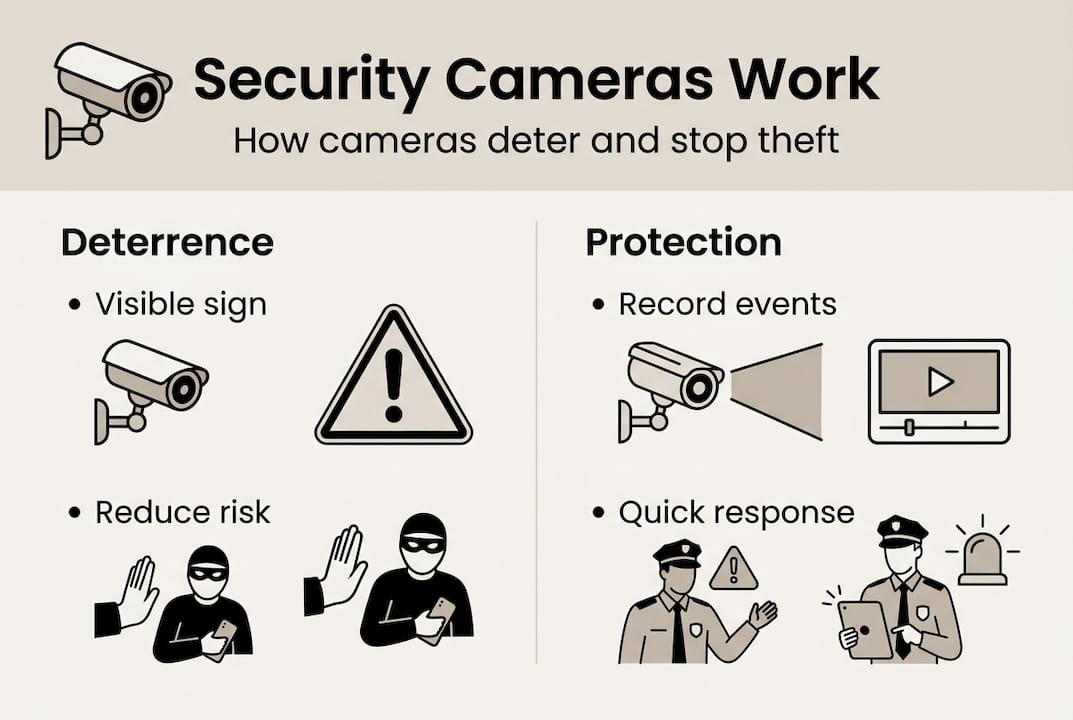
Studies show a marked decrease in attempted break-ins after camera installation at residential and commercial properties. The effect is not subtle. Properties with obvious surveillance are consistently skipped in favor of easier targets. This is the core of camera-based deterrence: not catching criminals, but making your property not worth the risk.
Here is what contributes most to that deterrent effect:
- Visibility: Cameras placed in clear sightlines, especially near entry points, signal active surveillance before a criminal even approaches.
- Signage: Warning signs that mention 24-hour monitoring reinforce the message. Even if someone does not see a camera immediately, a sign creates doubt.
- Multiple cameras: A single camera suggests gaps. Multiple units covering different angles suggest a serious, managed system.
- Lighting integration: Cameras paired with motion-activated lights draw attention to movement and eliminate the cover of darkness.
“A property with visible cameras and clear signage communicates one thing to a potential thief: this is not an easy target. Move on.”
For property security tips that go beyond cameras, layering multiple visible cues matters. Even the placement of a single camera near a front door or driveway can significantly shift how your property is perceived from the outside. You are not just recording. You are broadcasting risk.
Hidden cameras serve a different function: capturing footage of incidents that do occur, especially in interior spaces. The best approach combines both. Visible cameras deter. Hidden cameras document. Together, they create a system that is hard to defeat.
Types of security cameras and their effectiveness
Knowing that cameras work is just the start. Let’s compare which types do the best job in various settings.
Different camera technologies offer varying levels of theft deterrence based on their features, placement options, and monitoring capabilities. Choosing the right camera for the right location is what separates an effective system from one that just looks good on paper.
| Camera type | Best location | Deterrence level | Key feature |
|---|---|---|---|
| Outdoor bullet camera | Driveways, perimeters | High | Long-range visibility |
| Dome camera | Entrances, retail floors | High | Discreet, wide angle |
| Smart camera | Any critical zone | Very high | Alerts, remote access |
| PTZ (pan-tilt-zoom) | Large lots, parking | Very high | Active tracking |
| Dummy camera | Low-risk supplement | Low | Cost-effective only |
Outdoor cameras are your front line. They face approaching threats directly and signal surveillance before anyone reaches your door or window. A smart security camera system with wide-angle coverage and night vision significantly strengthens perimeter defense.
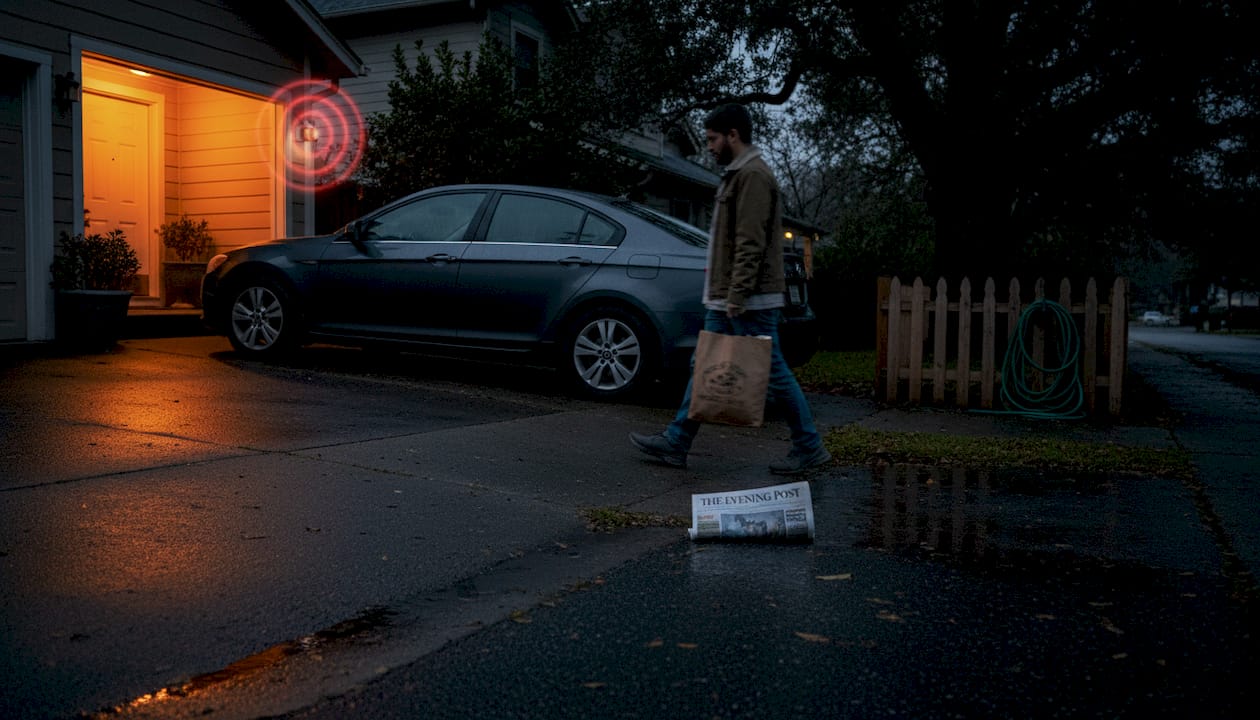
Smart cameras add a layer that older systems simply cannot match. Real-time alerts sent to your phone mean you can respond in seconds, not hours. Remote live viewing lets you check in from anywhere. When a potential intruder notices a camera moving or a light activating, that instant responsiveness becomes part of the deterrence.
Resolution and night vision matter more than most buyers realize. A camera that captures blurry, dim footage in low light is far less useful as evidence and signals less sophisticated surveillance. High-definition cameras with solid infrared range do both jobs better.
The benefits of room surveillance extend beyond break-ins. Indoor cameras help monitor employee activity, package delivery areas, and internal access points that are often overlooked.
Pro Tip: Do not rely solely on dummy cameras. Experienced criminals can often identify fakes by their fixed positions, lack of wiring, or low-quality housing. Use one or two as supplemental units, never as your primary defense.
Where and how to install cameras for optimal theft prevention
Once you have chosen the best camera types, the next key factor is where and how you install them.
Strategically placed cameras are far more effective than cameras installed without a coverage plan. A camera pointing at a wall or angled too high to capture faces is a wasted investment. Placement decisions should be made before installation begins, not during.
Follow this priority order when deciding where to mount cameras:
- Front door and back door: The majority of break-ins happen through doors. Cover both.
- Garage and side gates: These are common secondary entry points that homeowners often miss.
- Driveway and street view: Capturing approaching vehicles and individuals provides early warning and useful evidence.
- Windows on ground level: Especially on the sides of a property, which are less visible from the street.
- Interior high-value areas: For businesses, this means cash registers, server rooms, and storage areas.
- Blind spots: Any corner or alcove that is not naturally visible from inside warrants a camera.
Avoid installation mistakes like mounting cameras too high, pointing them into direct sunlight, or leaving cables exposed where they can be cut. Reliable security camera cables should be routed through walls or conduit where possible to protect against tampering.
Review your camera angles every six months. Landscaping grows, vehicles change positions, and new blind spots can appear over time. A quick walkaround with fresh eyes often reveals gaps that routine monitoring misses.
Pro Tip: Walk your own property as a stranger would. Approach from the street, check the side gates, look for shaded corners. Anywhere you find a path that feels unobserved is exactly where a camera belongs.
Integrating cameras with other security measures
After installing cameras in the right locations, maximize their value by integrating them with other proven security measures.
Multilayered security using cameras, alarms, and lights multiplies theft prevention effects. No single device offers complete protection, but combining systems creates redundancies that are much harder to defeat. If one layer fails, another compensates.
Here are the key integrations that strengthen any camera-based system:
- Motion-activated lighting: Bright lights triggered by movement remove the concealment criminals rely on. Paired with a camera, they also produce better footage in low-light conditions.
- Alarm systems: An audible alarm forces urgency, even if a camera is present. Most intruders will abort when an alarm activates.
- Smart home integration: Connecting cameras to platforms like Google Home or Amazon Alexa allows coordinated responses, such as lights and alarms triggering together when a camera detects motion.
- Mobile app alerts: Instant notifications mean you or a monitoring service can call for help in real time, not after the fact.
- Visible signage: Legally protected warning signs about surveillance create an additional psychological barrier.
| Integration | Main benefit | Difficulty to add |
|---|---|---|
| Motion-activated lights | Better visibility, disrupts concealment | Low |
| Audible alarm | Forces fast abort | Low to medium |
| Smart home platform | Coordinated response | Medium |
| Mobile monitoring app | Real-time alerts | Low |
| Surveillance signage | Psychological deterrence | Very low |
For a full breakdown of building effective systems, the surveillance systems guide covers everything from equipment selection to monitoring best practices. And if you prefer handling setup yourself, DIY security tips offer practical guidance for getting strong results without professional installation.
What most homeowners and business owners overlook about security cameras
Most people install cameras and then forget about them. That is the single biggest mistake we see. A camera that has not been checked in six months may have a blocked lens, corrupted storage, outdated firmware, or a dead battery. It looks like security but delivers none.
Ongoing maintenance and smart monitoring are crucial for sustained theft prevention. This means testing recording functions monthly, cleaning lenses seasonally, updating app and firmware regularly, and confirming that cloud or local storage is actually saving footage.
There is also a mindset issue. Many homeowners treat cameras as a one-time purchase decision rather than an active part of their security routine. The deterrent effect of a camera comes partly from the real possibility of being monitored, not just the appearance of it. Criminals who know that a neighborhood has poorly maintained systems quickly figure that out.
The good news is that business security with CCTV programs that include regular audits and maintenance schedules consistently outperform set-and-forget installations. A small time investment every few months keeps your system performing at its peak and keeps the deterrent credible.
Enhance your security with expert solutions
If you are ready to move beyond basic coverage and build a system that actually works, the right equipment makes all the difference.
At Safes and Security Direct, we offer a carefully selected range of security cameras and surveillance systems built for real-world home and business protection. From high-definition outdoor cameras to smart systems with remote monitoring, every product is chosen for reliability and deterrence effectiveness. Whether you are starting from scratch or upgrading an existing setup, our team can help you find the right fit for your property, your layout, and your budget. Browse our full catalog and take the next step toward genuine, lasting security.
Frequently asked questions
Do security cameras really prevent theft, or just record it?
Visible cameras deter many criminals before theft happens by signaling risk and increasing the chance of getting caught. For most opportunistic thieves, the presence of surveillance alone is enough to redirect them elsewhere.
Where should I place cameras to best prevent break-ins?
Prioritize entrances, driveways, blind spots, and areas with high-value items for optimal deterrence. Strategic placement maximizes both coverage and the psychological impact on potential intruders.
Are dummy cameras effective for deterring theft?
Dummy cameras can add perceived risk but are far less effective than real, functioning systems. As noted in guidance on choosing the best fit, visible and operational cameras carry significantly greater deterrence impact and should always form the core of your setup.
How often should I check or maintain my security cameras?
Test and clean cameras every one to two months, and update firmware every few months for peak performance. Ongoing maintenance ensures cameras remain effective and credible as active deterrents rather than just decorative fixtures.
Recommended
- Cameras Deterring Burglary: Effective Security Insight – Safes and Security Direct
- 7 Top Security Features Every Property Owner Should Know – Safes and Security Direct
- How Safes Prevent Theft: Real Protection Explained – Safes and Security Direct
- Top Garage Camera: Enhance Security & Peace of Mind – Safes and Security Direct
- The Importance of a Home Security Camera System: How it Can Protect Your Family and Property