

Wall safes explained: secure storage for home & work
TL;DR:
- Wall safes are hidden inside walls, offering concealment and space-saving security.
- They vary in size, lock type, and fire resistance, suitable for different valuables.
- Proper installation and concealment significantly enhance theft prevention and peace of mind.
Most people assume their valuables are safe in a drawer, a filing cabinet, or even a bulky freestanding safe sitting in the corner of a room. The problem? Burglars know exactly where to look. A visible safe is a target, and a drawer is barely a deterrent. Wall safes flip that logic entirely by hiding your most important items inside the structure of your home or office. They are one of the most underutilized security tools available, and once you understand how they work, the advantages become hard to ignore. This guide covers everything you need to know about wall safes, from their core features to smart installation tips.
Table of Contents
- What is a wall safe?
- Main features and types of wall safes
- Benefits of wall safes for homeowners and small businesses
- Tips for selecting and installing a wall safe
- Our perspective: Why hidden security is worth the investment
- Explore your wall safe options
- Frequently asked questions
Key Takeaways
| Point | Details |
|---|---|
| Wall safes are hidden storage | Wall safes keep valuables out of sight and are installed between wall studs for greater security. |
| Types and features matter | Choosing the right size, lock, and fire resistance ensures your safe fits your needs and provides optimal protection. |
| Installation requires planning | Proper placement and professional installation maximize both safety and accessibility for homeowners and businesses. |
| Wall safes offer flexible solutions | They adapt to limited space and provide efficient, cost-effective security for both homes and small offices. |
What is a wall safe?
A wall safe is exactly what it sounds like: a safe that sits inside your wall rather than on top of a surface or on the floor. It is installed between wall studs, which are the vertical wooden beams that form the frame of most residential and commercial walls. Once installed, the safe sits flush with the wall surface and can be covered by a painting, a mirror, a shelf, or even a panel of decorative trim. To anyone walking through the room, it simply does not exist.
This design solves a problem that freestanding safes cannot. A large floor safe announces itself. Even if it is bolted down, a determined thief knows it is there and can spend time working on it. A wall safe, by contrast, relies on concealment as its first layer of defense. As noted in our guide on hidden protection for valuables, wall safes are designed to fit between wall studs and are typically concealed by artwork, furniture, or mirrors.
Wall safes are well suited for storing:
- Cash and coins
- Jewelry and watches
- Passports and legal documents
- USB drives and hard drives with sensitive data
- Prescription medications or small firearms
One common misconception is that all safes are heavy, bulky, and hard to access. Wall safes challenge that idea. Many models are slim, lightweight, and designed for quick daily access. Another misconception is that installation is complicated or requires major renovation. In most cases, cutting between two standard studs is all it takes.
Wall safes offer something a freestanding safe simply cannot: invisibility. When a thief does not know a safe exists, they cannot target it.
Compared to a traditional freestanding safe, a wall safe takes up zero floor space, blends into the room, and is far harder to detect during a quick break-in. Freestanding safes are still useful for large items or bulk storage, but for everyday valuables, a wall safe is a smarter, more discreet choice.
Main features and types of wall safes
Not all wall safes are built the same. Wall safes vary in size, fire resistance, locking mechanisms, and installation requirements, which means your choice should match your specific security needs and the layout of your space.
Construction and materials are the foundation of any safe’s security. Look for heavy-gauge steel bodies with pry-resistant doors. The thicker the steel, the harder it is to force open. Some models also include concrete or composite layers for added fire resistance.
Locking mechanisms fall into two main categories:
- Digital keypad locks: Fast and convenient, no key to lose. Most allow custom PIN codes and have a backup key for emergencies.
- Mechanical combination locks: No batteries required, highly reliable, and harder to hack electronically. Slightly slower to open.
Some premium models offer biometric locks, which use fingerprint recognition for near-instant access. These are ideal for homeowners who need to retrieve items quickly.
Types of wall safes by size and use:
| Type | Best for | Typical depth |
|---|---|---|
| Small wall safe | Cash, jewelry, documents | 3.5 to 4 inches |
| Medium wall safe | Documents, electronics, valuables | 5 to 6 inches |
| Large wall safe | Bulkier items, more storage | 7 inches or more |
| In-wall gun safe | Handguns, small firearms | 4 to 5 inches |
For more guidance on matching safe depth to your wall type, review our wall safe installation tips before making a purchase. You can also browse options specifically rated for fire protection in our roundup of wall safes for fire protection.
Pro Tip: Before buying any wall safe, measure the depth between your wall studs. Standard U.S. construction uses 3.5-inch studs, but older homes or commercial buildings may differ. A safe that does not fit flush will be visible and less secure.
Benefits of wall safes for homeowners and small businesses
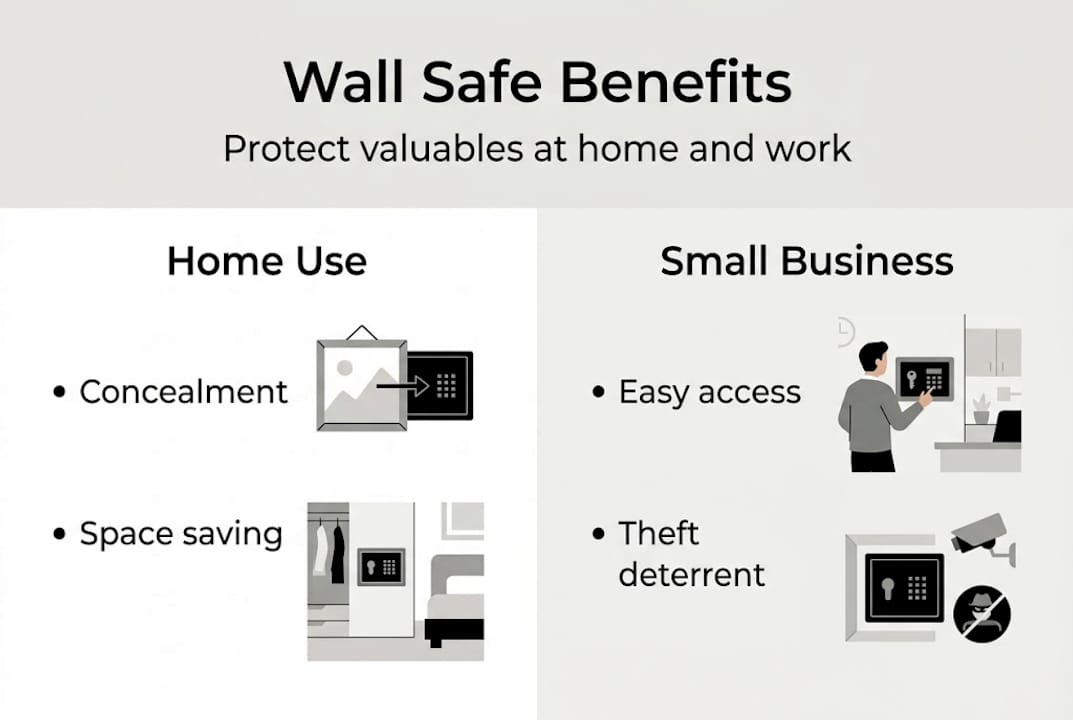
Wall safes are favored for their concealment and space-saving benefits, especially in urban environments where square footage is limited and every inch of usable space matters.
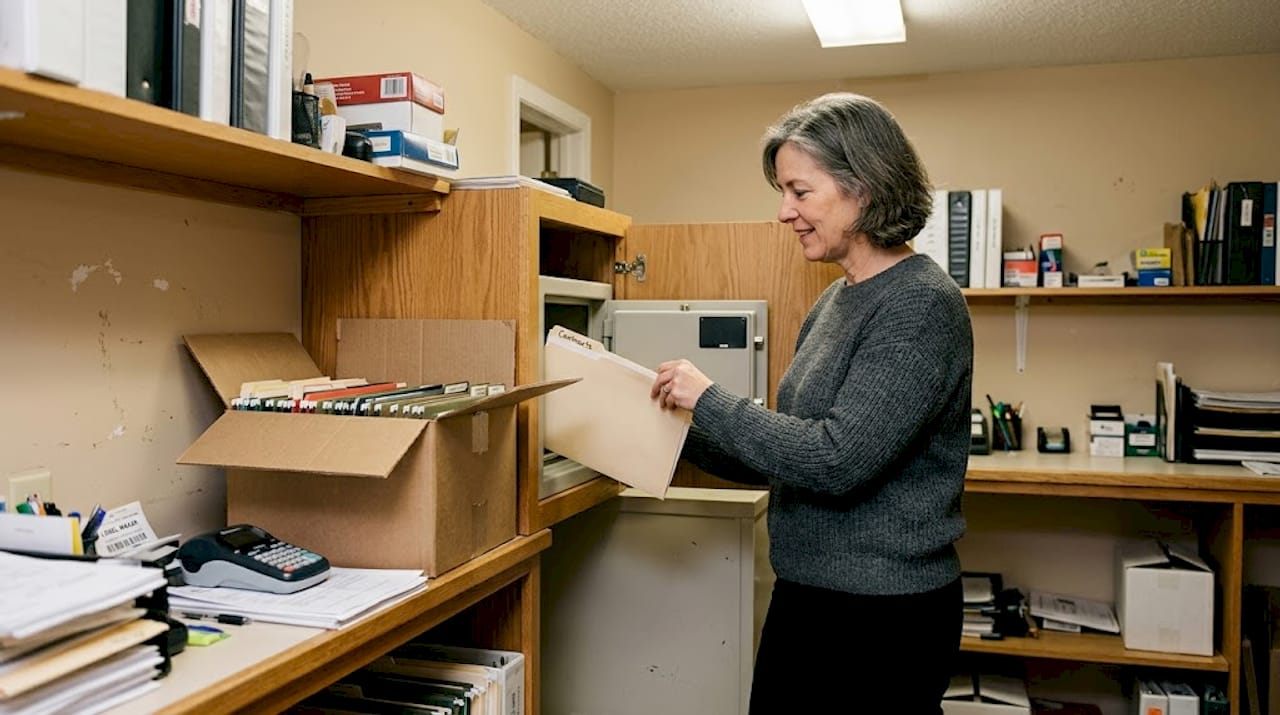
For homeowners, the core benefit is simple: what thieves cannot find, they cannot steal. Over 60% of burglars target visible safes and storage areas first during a break-in. A wall safe hidden behind a mirror in a bedroom or a painting in a home office removes that target entirely.
For small business owners, the benefits extend beyond theft prevention:
- Access control: Only authorized staff know the location and code, limiting internal theft risk.
- Space efficiency: No floor space is consumed, which matters in tight retail or office environments.
- Professional appearance: No bulky safe sitting in the corner of a client-facing room.
- Cost savings: Wall safes are generally more affordable than large commercial floor safes.
Wall safe benefits at a glance:
| Benefit | Homeowner | Small business |
|---|---|---|
| Concealment from burglars | High value | High value |
| Space efficiency | Moderate | Very high |
| Access control | Moderate | Very high |
| Cost vs. floor safes | Lower cost | Lower cost |
| Fire and water protection | Available | Available |
For a deeper look at the tradeoffs, our article on wall safe installation pros and cons walks through real-world scenarios. Urban property owners in particular will find useful context in our guide to security solutions for urban homeowners.
Another underrated benefit is psychological. Knowing your valuables are hidden and secured changes how you feel in your own space. That sense of control is worth something, especially in high-traffic environments like small retail shops or home offices where multiple people come and go.
Tips for selecting and installing a wall safe
Proper installation is crucial for maximizing security and accessibility. A wall safe installed incorrectly can shift over time, become difficult to open, or worse, become visible if the concealment panel does not sit flush.
Here is a practical step-by-step approach to selecting and installing the right wall safe:
- Measure your wall cavity. Use a stud finder to locate the studs and measure the space between them. Standard spacing is 16 inches on center, giving you roughly 14.5 inches of usable width.
- Choose the right depth. Match the safe’s depth to your wall type. Drywall over wood studs typically allows 3.5 to 5 inches of depth.
- Select your lock type. If you access the safe daily, a digital keypad or biometric lock saves time. For infrequent access, a mechanical lock is reliable and maintenance-free.
- Decide on fire and water resistance. If you store documents, external drives, or irreplaceable items, choose a model rated for at least 30 minutes of fire resistance.
- Pick a strategic location. Behind a mirror in the master bedroom, inside a closet wall, or behind a painting in a home office are all effective options. Avoid locations near exterior walls, which can be accessed from outside.
- Secure the safe properly. Bolt it to the studs using the mounting hardware provided. A safe that is not anchored can be pried out of the wall entirely.
Our full wall safe installation guide covers each step in detail, and if you are still deciding on a model, our guide to choosing hidden wall safes narrows down the options based on your priorities.
Pro Tip: Always have a licensed contractor or security professional handle the installation if you are unsure about your wall’s structure. Cutting into a wall incorrectly can damage electrical wiring or plumbing, and a poorly fitted safe defeats its own purpose.
Our perspective: Why hidden security is worth the investment
Here is something the mainstream security conversation tends to overlook: most people invest in visible security and then wonder why it does not work as well as expected. Alarm systems, cameras, and floor safes are all valuable, but they operate on the assumption that deterrence is enough. Hidden security works differently. It assumes the threat will get inside and removes the reward.
We have seen homeowners spend thousands on perimeter security while leaving their most valuable items in an obvious floor safe. The smarter move is layering. A wall safe does not replace your alarm system. It works alongside it, ensuring that even if someone gets past your first line of defense, they leave empty-handed.
Hidden safes dramatically increase the chance that valuables survive a break-in. That is not a minor benefit. It is the entire point. Even affordable wall safe models, when properly installed and concealed, outperform expensive visible safes in real-world theft scenarios. For those interested in truly discreet storage solutions, the investment pays for itself the first time it matters.
Explore your wall safe options
If this guide has made one thing clear, it is that wall safes are not a niche product for extreme security enthusiasts. They are a practical, affordable upgrade for anyone who wants their valuables to stay hidden and protected.
At Safes and Security Direct, we carry a wide range of wall safe solutions suited for homes, apartments, and small businesses. Whether you need a compact model for a bedroom or a fire-rated safe for business documents, our catalog includes options at every price point. Browse our selection, use our buying guides to narrow down your choice, and reach out to our team if you need personalized recommendations. Getting the right safe installed correctly is a one-time effort that protects you for years.
Frequently asked questions
How much do wall safes cost?
Wall safes typically range from $150 to $600 depending on size, fire resistance, and lock type. The cost depends on construction quality and locking mechanism, with biometric and fire-rated models sitting at the higher end.
Are wall safes easy to install?
Most wall safes require basic carpentry skills, but professional installation is strongly recommended for the best result. Proper installation ensures maximum protection and prevents the safe from shifting or becoming exposed over time.
Can wall safes be fireproof?
Many wall safes offer meaningful fire resistance, but higher-end models provide better protection for paper documents and electronics. Fire-resistant wall safes help safeguard both paper and digital media, with ratings typically ranging from 30 minutes to two hours.
Where should I place a wall safe?
The best locations are behind mirrors, inside closets, or under stairways where the safe stays hidden but accessible. Placement impacts both concealment and ease of access, so choose a spot you visit regularly but guests would not notice.
What happens if I forget the wall safe code?
Most manufacturers provide reset instructions in the user manual, and a licensed locksmith can help if you are fully locked out. Lockouts can be resolved with manufacturer support or professional locksmith assistance without damaging the safe.
Recommended
- Wall safe guide: secure storage and expert installation – Safes and Security Direct
- Why Choose Wall Safes: Hidden Protection for Valuables – Safes and Security Direct
- Why Invest in Safes: Protecting Urban Homes – Safes and Security Direct
- Wall Safes: Pros, Cons & Installation Tips – Safes and Security Direct
- Understanding Home Safety Check: Ensuring Your New Home Is Safe | Chicago Home Inspect LLC